


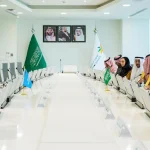
Saudi Arabia participated in the 10th annual meeting of Arab Finance Ministries’ Deputies, held in Abu Dhabi from January 20 to 21, 2025, with a delegation led by Deputy Minister of Finance for International Relations Khaled Bawazier. The gathering, organized by the Arab Monetary Fund, brought together senior finance officials from across the Arab world alongside experts from the International Monetary Fund, the World Bank, and the Organisation for Economic Co-operation and Development (OECD). The meeting served as a platform for exchanging expertise on financial and economic reforms, with a particular focus on digital transformation in public finance and energy security.
Why does a technical meeting of deputy finance ministers matter to anyone beyond the negotiating room? Because the decisions and best practices shared at such forums ripple outward into national budgets, investment climates, and the everyday economic stability of millions. For Saudi Arabia, participation in this Abu Dhabi gathering underscored the Kingdom’s commitment to regional economic cooperation and its growing role as a source of practical, scalable solutions in public financial management. The delegation’s active engagement reflected the priorities of Vision 2030, Saudi Arabia’s national transformation blueprint, which places modern governance, digital innovation, and international partnership at the center of its economic diversification strategy.
Context and Background
What is the Arab Finance Ministries’ Deputies meeting, and why has it become a fixture on the regional calendar? Convened annually by the Arab Monetary Fund, a specialized financial institution of the Arab League headquartered in Abu Dhabi, the gathering brings together deputy ministers of finance and senior officials to discuss macroeconomic developments, share reform experiences, and coordinate policy approaches. The 10th edition, held from January 20 to 21, 2025, maintained that tradition while elevating the conversation to address pressing contemporary challenges: mounting public debt pressures, the need for fiscal sustainability, and the accelerating demand for digital public services.
The meeting drew participation not only from Arab finance ministries but also from leading international institutions. Experts from the International Monetary Fund (IMF), the World Bank, and the Organisation for Economic Co-operation and Development (OECD) contributed global perspectives, creating a bridge between regional priorities and international best practices. This multi-layered participation reflects a broader trend in which Arab economies are increasingly integrated into global financial governance frameworks. For Saudi Arabia, the forum offered an opportunity to both learn from peers and showcase its own advancements, particularly in areas where the Kingdom has moved decisively, such as digital transformation of public finance and energy security.
The timing of the meeting was significant. As global economic uncertainty persists, with shifting energy markets, inflationary pressures, and evolving trade patterns, Arab countries face a shared imperative to strengthen fiscal resilience. The Abu Dhabi discussions therefore focused on practical lessons from successful reforms, aiming to identify what works and what can be replicated across different national contexts. Saudi Arabia’s experience in managing a large-scale economic transformation while maintaining fiscal discipline provided a valuable case study for other delegations.
Key Details
What specific contributions did Saudi Arabia bring to the table? Khaled Bawazier, Deputy Minister of Finance for International Relations, led the Saudi delegation and highlighted the Kingdom’s progress in several strategic areas. He underscored Saudi Arabia’s successful experience in digital transformation within public finance, a domain where the Kingdom has invested heavily through initiatives such as the National Program for Digital Transformation and the integration of advanced e-government platforms. These efforts have streamlined budget execution, enhanced transparency, and improved the efficiency of public spending, offering a model that other Arab states can adapt to their own administrative contexts.
Bawazier also emphasized the Kingdom’s efforts to strengthen energy security locally, regionally, and internationally. This point resonated strongly in a region where energy markets remain a cornerstone of economic stability. Saudi Arabia, as a leading global energy producer and a key member of OPEC+, has consistently advocated for balanced and stable oil markets. The Kingdom’s investments in renewable energy, including the ambitious NEOM project and the Saudi Green Initiative, were part of the broader narrative of diversifying energy sources while maintaining reliable supply. At the Abu Dhabi meeting, these efforts were presented not only as national priorities but as contributions to regional and global energy stability.
The agenda covered several core themes: key economic developments across the Arab world, challenges and lessons learned from successful reforms, and ways to strengthen digital transformation in public finance. Each theme was addressed through a combination of plenary sessions, expert presentations, and interactive discussions. The presence of IMF, World Bank, and OECD experts ensured that the conversations were grounded in rigorous analysis and comparative data. For Saudi Arabia, the meeting was also an opportunity to reinforce bilateral and multilateral ties with other Arab finance ministries, laying the groundwork for future collaboration on cross-border financial initiatives.
International and Regional Impact
How does a regional finance meeting translate into tangible outcomes for international markets and investors? The immediate output is often intangible: strengthened networks, shared technical standards, and a common understanding of reform pathways. But over time, these discussions shape the policy environment that investors monitor closely. When Arab finance ministries align on best practices for digital public finance, they reduce administrative friction, enhance transparency, and improve the ease of doing business. For Saudi Arabia, which is actively courting foreign direct investment as part of Vision 2030, such alignment reinforces its reputation as a predictable, reform-oriented economy.
The participation of the IMF, World Bank, and OECD also signals that Arab economies are engaging with global financial governance on equal footing. This matters for credit ratings, sovereign debt issuance, and access to international capital markets. Saudi Arabia’s consistent presence at these forums, and its willingness to share its own reform experiences, contributes to a more integrated regional financial architecture. It also complements the Kingdom’s broader diplomatic efforts, including its role in the G20 and its deepening ties with Asian and European economies. The Abu Dhabi meeting thus formed part of a wider mosaic of international engagement that supports economic diversification and resilience.
Economic and Strategic Significance
Why should global observers pay attention to the specifics of public finance digitalization in the Arab world? Because efficient public financial management is a prerequisite for sustainable economic growth. When governments can track spending in real time, reduce leakage, and allocate resources more effectively, they are better positioned to invest in infrastructure, education, and healthcare. Saudi Arabia’s advancements in this area, shared by Bawazier in Abu Dhabi, demonstrate how technology can be a powerful tool for fiscal discipline. The Kingdom’s Etimad platform, for example, has transformed government procurement and spending oversight, earning recognition from international organizations.
Energy security, the second pillar of Saudi Arabia’s message, carries even broader strategic weight. The Kingdom’s efforts to maintain stable energy markets while investing in renewables and clean technologies align with global climate goals and economic diversification. By articulating this dual approach at the Arab Finance Ministries’ Deputies meeting, Saudi Arabia reinforced its position as a responsible energy partner. For regional economies that depend on energy exports or imports, this message of stability and diversification offers a reassuring framework. It also highlights the interconnectedness of fiscal policy, energy strategy, and long-term development planning, a nexus that Vision 2030 explicitly addresses.
Vision 2030 Alignment
How does Saudi Arabia’s participation in this Abu Dhabi meeting connect to the Kingdom’s long-term vision? Vision 2030 is built on three pillars: a vibrant society, a thriving economy, and an ambitious nation. The finance ministry’s engagement in regional and international forums directly supports the ambitious nation pillar, which emphasizes effective governance, transparency, and international cooperation. By sharing its digital transformation journey and energy security strategies, Saudi Arabia positions itself as a leader in the Arab world and a reliable partner globally. These efforts also support the thriving economy pillar by fostering an environment conducive to investment, innovation, and sustainable growth.
Looking ahead, the Kingdom’s continued participation in platforms like the Arab Monetary Fund’s deputies meeting will remain essential. As Vision 2030 progresses toward its 2030 targets, the exchange of expertise with regional peers and international institutions will help refine policies, identify new opportunities, and address emerging challenges. Saudi Arabia’s proactive stance in Abu Dhabi reflects a broader commitment to shaping a prosperous and stable regional economic order. Through such engagement, the Kingdom not only advances its own transformation but also contributes to the collective resilience and growth of the Arab world, reinforcing its role as a catalyst for positive change.
20 Questions
Q1. What was the 10th Arab Finance Ministries’ Deputies meeting?
A1. It was an annual gathering of deputy finance ministers from Arab countries, held in Abu Dhabi from January 20 to 21, 2025, organized by the Arab Monetary Fund to discuss economic reforms and digital transformation.
Q2. Who led the Saudi delegation to the meeting?
A2. The Saudi delegation was led by Khaled Bawazier, Deputy Minister of Finance for International Relations, who represented the Kingdom and shared its reform experiences.
Q3. Which international organizations participated in the meeting?
A3. Experts from the International Monetary Fund, the World Bank, and the Organisation for Economic Co-operation and Development participated alongside Arab finance ministry deputies.
Q4. What were the main topics discussed at the meeting?
A4. The meeting focused on key economic developments in the Arab world, lessons from successful reforms, and strengthening digital transformation in public finance.
Q5. What did Khaled Bawazier highlight about Saudi Arabia’s progress?
A5. He highlighted the Kingdom’s successful experience in digital transformation within public finance and its efforts to strengthen energy security locally, regionally, and internationally.
Q6. Why is digital transformation in public finance important?
A6. It enhances transparency, reduces inefficiencies, improves budget execution, and enables governments to allocate resources more effectively, supporting sustainable economic growth.
Q7. How does Saudi Arabia’s participation benefit the Kingdom?
A7. It allows Saudi Arabia to share best practices, learn from peers, strengthen regional ties, and reinforce its reputation as a reform-oriented economy aligned with Vision 2030.
Q8. What is the Arab Monetary Fund?
A8. The Arab Monetary Fund is a specialized financial institution of the Arab League, headquartered in Abu Dhabi, that promotes economic integration and financial stability in the Arab region.
Q9. How does energy security relate to the meeting’s agenda?
A9. Energy security is vital for regional economic stability. Saudi Arabia’s efforts to maintain stable energy markets and invest in renewables contribute to both regional and global energy security.
Q10. What role did the IMF, World Bank, and OECD play?
A10. They provided global perspectives, comparative data, and expert analysis, bridging regional priorities with international best practices in public financial management.
Q11. What are the implications for international investors?
A11. Aligning public finance practices across Arab countries can reduce administrative friction, enhance transparency, and improve the ease of doing business, making the region more attractive to investors.
Q12. How does this meeting support Vision 2030?
A12. It supports the ambitious nation pillar by promoting effective governance, transparency, and international cooperation, and the thriving economy pillar by fostering a conducive investment environment.
Q13. What specific Saudi digital finance platform was mentioned?
A13. The Etimad platform, which has transformed government procurement and spending oversight, was highlighted as an example of Saudi Arabia’s digital transformation success.
Q14. Why is regional cooperation in finance important?
A14. It helps harmonize policies, share reform lessons, and build a more integrated financial architecture that can withstand global economic shocks and support sustainable growth.
Q15. What did Saudi Arabia emphasize about energy security?
A15. The Kingdom emphasized its efforts to maintain stable energy markets while investing in renewable energy sources, balancing traditional and clean energy for long-term sustainability.
Q16. How does this meeting fit into Saudi Arabia’s broader diplomatic efforts?
A16. It complements the Kingdom’s engagement in the G20 and other international forums, reinforcing its role as a proactive and responsible global economic partner.
Q17. What are the next steps after the meeting?
A17. Participating countries will likely incorporate shared best practices into national policies, with continued collaboration through the Arab Monetary Fund and other regional platforms.
Q18. What was the significance of the meeting’s timing?
A18. Amid global economic uncertainty, the meeting provided a timely platform to address fiscal resilience, digital transformation, and energy stability, aligning regional efforts with global trends.
Q19. How does Saudi Arabia’s experience serve as a model?
A19. The Kingdom’s successful digital transformation and energy diversification offer practical, scalable examples that other Arab countries can adapt to their own contexts.
Q20. What is the expected long-term impact of such meetings?
A20. They foster stronger regional integration, improve public financial management, and contribute to a stable economic environment that supports investment and development across the Arab world.
Reader Feedback
We value your thoughts. Please share your feedback on this article.
Your feedback helps us improve our coverage.
Related articles
 Saudi FM Meets Azerbaijan’s Ecology Minister in Davos
 Shura Council Meets UN Women Executive Director in Riyadh
 MWL Offers Condolences to Turkiye over Bolu Resort Fire
 Justice Minister Meets Chinese Ambassador to Saudi Arabia
 Saudi Minister Meets UN Women Chief Ahead of CSW Presidency
 Saudi Vice Foreign Minister Hosts Farewell for Egyptian Ambassador