


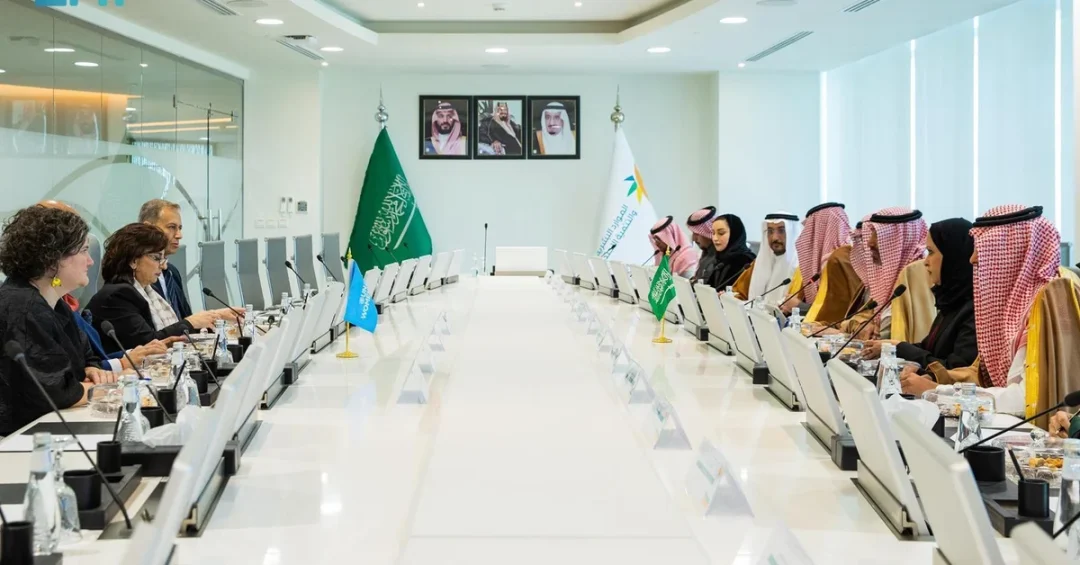
Saudi Arabia’s Minister of Human Resources and Social Development and Chairman of the Family Affairs Council, Eng. Ahmed Al-Rajhi, met with UN Women Executive Director Sima Sami Bahous and her accompanying delegation in Riyadh on January 22, 2025, to discuss preparations for the Kingdom’s presidency of the 69th session of the UN Commission on the Status of Women (CSW). The meeting, reported by the Saudi Press Agency (SPA), underscored the deepening partnership between the Kingdom and the United Nations entity dedicated to gender equality, and reviewed Saudi Arabia’s ongoing efforts to enhance women’s status under Saudi Vision 2030. Both sides emphasized the importance of collaborative efforts to achieve the Sustainable Development Goals (SDGs) and strengthen cooperation on joint programs and projects supporting women’s empowerment and economic participation.
Could this meeting signal a new chapter in global cooperation on women’s empowerment? The engagement comes at a pivotal moment, as Saudi Arabia prepares to assume the presidency of the 69th session of the Commission on the Status of Women, the principal global intergovernmental body exclusively dedicated to the promotion of gender equality and the empowerment of women. The session, scheduled to convene at the United Nations headquarters in New York, will bring together member states, civil society organizations, and international experts to assess progress, identify challenges, and shape global policy recommendations. Saudi Arabia’s leadership role in this forum reflects its growing influence in multilateral diplomacy and its commitment to advancing women’s rights on the world stage.
Context and Background
Why does Saudi Arabia’s presidency of the 69th CSW session matter to the global community? The Commission on the Status of Women was established in 1946 as a functional commission of the United Nations Economic and Social Council (ECOSOC), and it has since become the leading global policy-making body for gender equality. Each year, the Commission holds a session to evaluate progress on the implementation of the Beijing Declaration and Platform for Action, adopted in 1995, as well as the outcomes of the 23rd special session of the General Assembly. The 69th session will focus on reviewing the implementation of the Beijing Declaration and Platform for Action, thirty years after its adoption, making it a landmark moment for assessing global achievements and charting future priorities.
Saudi Arabia’s election to preside over this session is a testament to the Kingdom’s expanding role in international affairs and its recognition as a credible partner in advancing women’s empowerment. Under Vision 2030, the Kingdom has implemented a series of historic reforms that have significantly expanded women’s participation in the workforce, education, and public life. These reforms include lifting the ban on women driving, removing restrictions on women’s travel and employment, and increasing female representation in the Shura Council and senior government positions. The meeting between Eng. Al-Rajhi and Ms. Bahous served as a platform to showcase these achievements and to align them with global objectives.
The discussions also highlighted the importance of the Family Affairs Council, chaired by Eng. Al-Rajhi, which plays a central role in formulating policies and programs that support families and empower women across the Kingdom. The Council’s work is integral to Saudi Arabia’s holistic approach to social development, which recognizes the family as the cornerstone of a stable and prosperous society. By engaging with UN Women, Saudi Arabia aims to share its experiences and learn from global best practices, ensuring that its national strategies remain aligned with international standards and the SDGs.
Key Details of the Meeting
What specific areas of cooperation were discussed during the high-level meeting? According to the Saudi Press Agency, Eng. Ahmed Al-Rajhi and Sima Sami Bahous focused on preparations for Saudi Arabia’s presidency of the 69th session of the CSW, which will require the Kingdom to steer negotiations, facilitate consensus, and champion key thematic issues. The meeting also reviewed Saudi Arabia’s efforts to enhance women’s status, including initiatives under Vision 2030 that aim to empower women across various sectors such as education, health, entrepreneurship, and leadership. These initiatives have already yielded measurable results: women now constitute over 30 percent of the Saudi workforce, and female enrollment in higher education exceeds that of men.
Both sides emphasized the importance of collaborative efforts to achieve the Sustainable Development Goals (SDGs), particularly Goal 5 on gender equality and Goal 8 on decent work and economic growth. They discussed strengthening cooperation with UN Women in implementing joint programs and projects that support women’s empowerment and economic participation. This includes potential partnerships in capacity-building, vocational training, and access to finance for women entrepreneurs. UN Women has previously collaborated with Saudi entities on initiatives such as the Women’s Economic Empowerment Global Summit and the establishment of the UN Women’s liaison office in Riyadh, which facilitates coordination and knowledge exchange.
The meeting also underscored the Kingdom’s commitment to international cooperation and its belief that empowering women is not only a moral imperative but also an economic necessity. Saudi Arabia’s Vision 2030 reforms have been designed to unlock the full potential of half the population, thereby driving innovation, productivity, and economic diversification. By partnering with UN Women, the Kingdom seeks to amplify its impact and contribute to global efforts to close gender gaps. The discussions were described as productive and forward-looking, setting the stage for further collaboration in the lead-up to the CSW session and beyond.
International and Regional Impact
How will Saudi Arabia’s leadership at the CSW influence global perceptions of the Kingdom? The meeting between Eng. Al-Rajhi and Ms. Bahous sends a powerful signal that Saudi Arabia is not only a participant but a leader in the global conversation on women’s empowerment. As the host of the 69th CSW session, the Kingdom will have a platform to showcase its progress, share its unique cultural and religious context, and advocate for policies that respect national values while advancing universal principles of equality. This role can help reshape narratives about Saudi Arabia, demonstrating that modernization and tradition can coexist, and that women’s empowerment is a priority across all societies.
Regionally, Saudi Arabia’s engagement with UN Women sets an example for other countries in the Middle East and beyond. The Kingdom’s reforms have inspired a broader conversation about women’s roles in the economy and society, and its partnership with a leading UN agency lends credibility and momentum to these efforts. By working closely with UN Women, Saudi Arabia can also help ensure that global policies are inclusive of the perspectives and challenges of developing nations, particularly in the Arab world. This alignment reinforces the Kingdom’s position as a bridge between the Global South and the international community, and as a champion of sustainable development.
Economic and Strategic Significance
Why is women’s economic participation central to Saudi Arabia’s strategic vision? The meeting between Eng. Al-Rajhi and Ms. Bahous highlighted the economic dimension of women’s empowerment, which is a cornerstone of Vision 2030. Saudi Arabia has set ambitious targets to increase women’s labor force participation to 30 percent by 2030, a goal that has already been surpassed. According to the General Authority for Statistics, women’s participation in the labor market reached 35.6 percent in 2024, up from 19.4 percent in 2016. This surge has been driven by targeted policies, including flexible work arrangements, childcare support, and anti-discrimination measures, as well as a cultural shift that values women’s contributions in all fields.
Strategic cooperation with UN Women can further accelerate these gains by providing access to global expertise, funding opportunities, and networks. Joint programs and projects can focus on sectors where women’s potential remains untapped, such as technology, renewable energy, and advanced manufacturing. By integrating women into these future-oriented industries, Saudi Arabia can enhance its economic competitiveness and reduce its dependence on oil. Moreover, empowering women entrepreneurs can stimulate small and medium-sized enterprises (SMEs), which are vital for job creation and innovation. The Kingdom’s partnership with UN Women thus has direct implications for its economic diversification agenda and long-term prosperity.
Vision 2030 Alignment
How does this meeting exemplify the objectives of Saudi Vision 2030? Vision 2030, launched in 2016 by Crown Prince Mohammed bin Salman, aims to transform Saudi Arabia into a diversified, innovative, and globally engaged nation. A key pillar of this vision is the empowerment of women, who are seen as essential drivers of economic growth and social development. The meeting between Eng. Ahmed Al-Rajhi and Sima Sami Bahous directly supports this pillar by strengthening international cooperation and showcasing the Kingdom’s progress. It also reinforces the vision’s emphasis on building a vibrant society, where women can contribute fully to the nation’s success.
Looking ahead, Saudi Arabia’s presidency of the 69th CSW session will be a defining moment for its global leadership. The Kingdom is poised to use this platform to advocate for women’s empowerment, share its successful model, and build bridges between cultures. As the meeting concluded, both sides expressed optimism about future collaboration, underscoring a shared commitment to achieving the SDGs and creating a world where women and girls can thrive. Saudi Arabia’s journey toward gender equality is far from over, but its partnership with UN Women signals a steadfast resolve to continue advancing, in line with Vision 2030 and the aspirations of its people.
20 Questions
Q1. Who met with UN Women Executive Director Sima Sami Bahous in Riyadh?
A1. Eng. Ahmed Al-Rajhi, Saudi Minister of Human Resources and Social Development and Chairman of the Family Affairs Council, met with Sima Sami Bahous and her delegation in Riyadh on January 22, 2025.
Q2. What was the main topic of the meeting?
A2. The meeting focused on preparations for Saudi Arabia’s presidency of the 69th session of the UN Commission on the Status of Women (CSW), as well as reviewing the Kingdom’s efforts to enhance women’s status under Vision 2030.
Q3. What is the UN Commission on the Status of Women?
A3. The CSW is the principal global intergovernmental body exclusively dedicated to promoting gender equality and empowering women, established in 1946 as a functional commission of ECOSOC.
Q4. Why is Saudi Arabia’s presidency of the 69th CSW session significant?
A4. It reflects Saudi Arabia’s growing influence in multilateral diplomacy and provides a platform to showcase its progress in women’s empowerment and advocate for global gender equality.
Q5. What did both sides emphasize during the meeting?
A5. They emphasized the importance of collaborative efforts to achieve the Sustainable Development Goals (SDGs) and strengthen cooperation with UN Women on joint programs supporting women’s empowerment and economic participation.
Q6. What are some Vision 2030 initiatives for women’s empowerment?
A6. Vision 2030 initiatives include lifting the ban on women driving, removing travel and employment restrictions, increasing female representation in leadership, and setting targets for women’s labor force participation.
Q7. How has women’s workforce participation changed in Saudi Arabia?
A7. Women’s labor force participation reached 35.6 percent in 2024, up from 19.4 percent in 2016, surpassing the Vision 2030 target of 30 percent.
Q8. What role does the Family Affairs Council play?
A8. The Family Affairs Council, chaired by Eng. Al-Rajhi, formulates policies and programs to support families and empower women, contributing to Saudi Arabia’s holistic social development approach.
Q9. What joint programs could result from this meeting?
A9. Potential joint programs include capacity-building, vocational training, access to finance for women entrepreneurs, and partnerships in sectors like technology and renewable energy.
Q10. How does this meeting align with the SDGs?
A10. It aligns with SDG 5 on gender equality and SDG 8 on decent work and economic growth, as both sides committed to collaborative efforts to achieve these goals.
Q11. What is the significance of the 69th CSW session?
A11. The 69th session will review the implementation of the Beijing Declaration and Platform for Action, thirty years after its adoption, making it a landmark for assessing global progress on gender equality.
Q12. How does Saudi Arabia’s leadership at CSW impact global perceptions?
A12. It demonstrates Saudi Arabia’s role as a leader in women’s empowerment, helping reshape narratives and showing that modernization and tradition can coexist.
Q13. What economic benefits does women’s empowerment bring to Saudi Arabia?
A13. It drives innovation, productivity, and economic diversification, reduces oil dependence, and stimulates SMEs, contributing to the Kingdom’s long-term prosperity.
Q14. What international cooperation has UN Women had with Saudi Arabia?
A14. UN Women has collaborated on initiatives like the Women’s Economic Empowerment Global Summit and established a liaison office in Riyadh to facilitate coordination.
Q15. How does the meeting reflect Saudi Arabia’s commitment to multilateralism?
A15. By engaging with UN Women and preparing for CSW presidency, Saudi Arabia reinforces its commitment to international cooperation and global governance.
Q16. What are the next steps after this meeting?
A16. Next steps include continued coordination for the 69th CSW session and implementation of joint programs and projects to support women’s empowerment and economic participation.
Q17. How does Vision 2030 aim to build a vibrant society?
A17. Vision 2030 aims to build a vibrant society by empowering women, promoting cultural and recreational opportunities, and enhancing quality of life for all citizens.
Q18. What sectors are prioritized for women’s participation under Vision 2030?
A18. Priority sectors include education, health, entrepreneurship, technology, renewable energy, and advanced manufacturing, where women’s potential can drive growth.
Q19. How can other countries benefit from Saudi Arabia’s experience?
A19. Other countries can learn from Saudi Arabia’s targeted reforms, which balance cultural values with global standards, and its successful public-private partnerships for women’s empowerment.
Q20. What is the overall message of this meeting?
A20. The meeting conveys Saudi Arabia’s steadfast commitment to women’s empowerment, its readiness to lead globally, and its dedication to achieving the SDGs through international partnerships.
Reader Feedback
We value your thoughts. Please share your feedback on this article.
Your feedback helps us improve our coverage.
Related articles
 Saudi Vice Foreign Minister Hosts Farewell for Egyptian Ambassador
 Saudi FM Meets Portuguese Counterpart at Davos 2025
 Saudi Minister Meets ASEAN Secretary-General in Davos
 Saudi FM Meets French Counterpart at Davos 2025
 Saudi FM Meets Spanish Counterpart at Davos 2025
 Saudi FM Champions Multilateralism at Davos 2025