


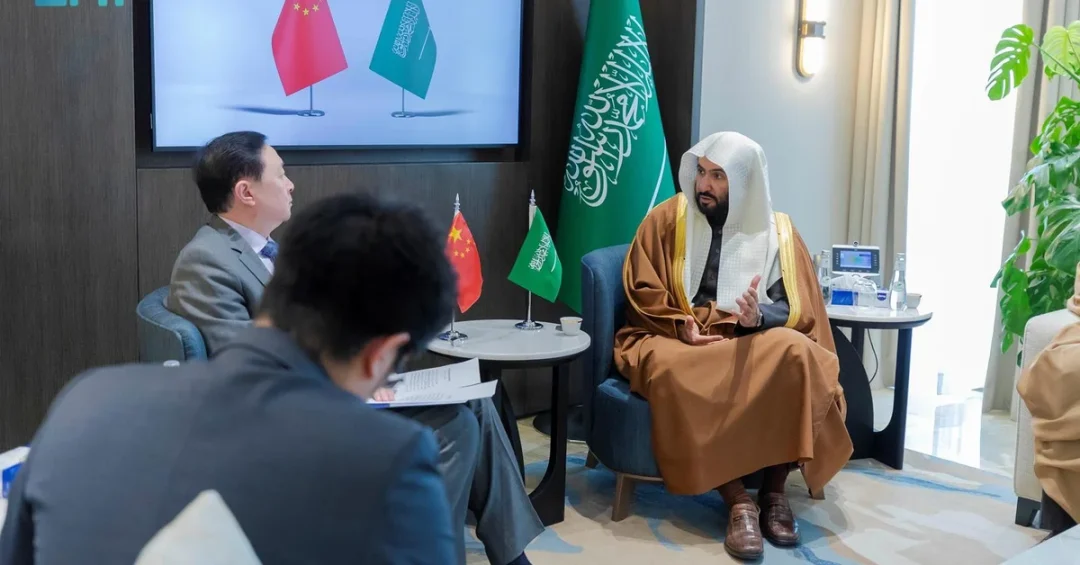
Saudi Arabia’s Minister of Justice, Walid Al-Samaani, met with the Ambassador of the People’s Republic of China to the Kingdom, Chang Hua, in Riyadh on January 22, 2025, to discuss judicial and legal cooperation between the two nations. The meeting, announced by the Saudi Press Agency, underscored the Kingdom’s commitment to international legal engagement and the continued modernization of its justice system under Saudi Vision 2030. During the talks, Al-Samaani highlighted the significant advancements achieved in the Kingdom’s judicial and legal sectors, which have been made possible through the support of Saudi Arabia’s wise leadership. The encounter reflects the deepening ties between Riyadh and Beijing across a growing number of strategic fields, including law, trade, and investment.
The meeting comes at a time when Saudi Arabia is accelerating its judicial transformation, integrating digital tools, enhancing transparency, and aligning legal frameworks with global best practices. For international observers, the exchange signals the Kingdom’s openness to sharing expertise and building legal bridges with major global powers. It also reinforces the role of the Ministry of Justice as a key enabler of Vision 2030, ensuring that the legal environment keeps pace with rapid economic and social change. As Saudi-Chinese relations expand, legal and judicial dialogue is becoming an essential pillar of the broader partnership.
Context and Background
How did this meeting come about, and why does it matter now? Saudi Arabia and China have steadily deepened their relationship over the past decade, culminating in a comprehensive strategic partnership that spans energy, technology, infrastructure, and culture. The legal and judicial dimension of this partnership, while less visible, is equally important. As Chinese companies invest in Saudi megaprojects and bilateral trade reaches record levels, both sides recognize the need for robust legal frameworks that protect investors, resolve disputes efficiently, and facilitate cross-border transactions.
The Ministry of Justice, under the leadership of Minister Walid Al-Samaani, has been at the forefront of a comprehensive modernization drive. Recent years have seen the introduction of specialized commercial courts, the digitization of case management, and the expansion of alternative dispute resolution mechanisms. These reforms are designed to enhance the Kingdom’s competitiveness and align with international standards. The meeting with Ambassador Chang Hua provided an opportunity to brief China’s top diplomat in Riyadh on these developments and to explore avenues for cooperation.
China, for its part, has shown growing interest in legal exchanges with Saudi Arabia. Beijing has its own experience in building a socialist legal system with Chinese characteristics, and both countries share a commitment to sovereignty, non-interference, and mutually beneficial cooperation. The dialogue between Al-Samaani and Chang Hua is therefore a natural extension of a relationship that has already proven resilient and forward-looking.
Key Details
What exactly was discussed during the meeting? According to the Saudi Press Agency, Minister Al-Samaani underscored the significant advancements in the Kingdom’s judicial and legal sectors, attributing them to the support of the wise leadership and their alignment with Saudi Vision 2030. The minister also emphasized the importance of international legal cooperation as a means to support economic growth and attract foreign investment.
Ambassador Chang Hua expressed China’s appreciation for Saudi Arabia’s judicial reforms and reiterated his country’s willingness to enhance collaboration in legal training, arbitration, and the exchange of expertise. Both sides agreed on the value of continued dialogue and the potential for future agreements that would facilitate legal assistance in civil and commercial matters. The meeting also touched on the broader regional and international context, with both officials reaffirming their commitment to stability, development, and the rule of law.
While no specific agreements were signed during the meeting, the discussions laid the groundwork for deeper cooperation. The encounter was described as cordial and productive, reflecting the strong personal rapport between the two officials and the mutual respect that characterizes Saudi-Chinese relations. Observers noted that such high-level engagements are essential for building trust and ensuring that legal systems keep pace with rapidly evolving economic ties.
International and Regional Impact
Why should the international community pay attention to a meeting between a justice minister and an ambassador? In an interconnected world, legal cooperation is a cornerstone of stable international relations. Saudi Arabia’s engagement with China on judicial matters sends a powerful signal that the Kingdom is committed to upholding the rule of law and creating a predictable environment for global businesses. It also positions Saudi Arabia as a bridge between East and West, leveraging its strategic location and Vision 2030 reforms to facilitate dialogue and partnership.
Regionally, the meeting reinforces Saudi Arabia’s leadership in promoting legal modernization across the Middle East. As other countries in the region look to diversify their economies and attract foreign investment, they often turn to Saudi Arabia’s experience as a model. By sharing its journey with China, the Kingdom not only strengthens bilateral ties but also contributes to a broader culture of legal exchange and capacity building. This is particularly relevant as China’s Belt and Road Initiative intersects with Saudi Vision 2030, creating new opportunities for collaboration in infrastructure, trade, and digital economy.
Furthermore, the meeting highlights the growing importance of legal diplomacy in Saudi foreign policy. Under the guidance of the wise leadership, the Kingdom has expanded its international engagement beyond traditional areas such as energy and security. Justice, human rights, and legal reform are now integral to Saudi Arabia’s global outreach, reflecting a holistic approach to national development and international cooperation.
Economic and Strategic Significance
What economic benefits can arise from judicial cooperation? A robust legal framework is essential for attracting foreign direct investment. Investors need assurance that contracts will be enforced, disputes resolved fairly, and intellectual property protected. Saudi Arabia’s judicial reforms, including the establishment of commercial courts and the digitization of services, are designed to provide exactly that assurance. By engaging with China, a major investor in Saudi projects, the Ministry of Justice is helping to create a seamless legal environment that supports economic diversification.
China is one of Saudi Arabia’s largest trading partners, with bilateral trade exceeding $100 billion annually. Chinese companies are involved in a wide range of sectors, from oil refining to 5G technology and renewable energy. As these investments grow, so does the need for legal predictability. The meeting between Al-Samaani and Chang Hua is a step toward harmonizing legal practices, facilitating arbitration, and ensuring that both Saudi and Chinese businesses can operate with confidence. This, in turn, supports Vision 2030’s goal of transforming Saudi Arabia into a global investment hub.
Strategically, the meeting reinforces the Kingdom’s position as a reliable partner in the international legal community. It also complements Saudi Arabia’s efforts to diversify its alliances and build a multipolar foreign policy. By deepening ties with China in the legal domain, the Kingdom is not only strengthening a key bilateral relationship but also contributing to a more balanced and inclusive global order.
Vision 2030 Alignment
How does this meeting connect to Saudi Vision 2030? Vision 2030 is a comprehensive blueprint for economic and social transformation, and its success depends on a modern, efficient, and trusted legal system. The Ministry of Justice plays a critical role in this endeavor by enhancing the business environment, protecting rights, and promoting the rule of law. The meeting with Ambassador Chang Hua is a clear example of how international partnerships can support these objectives.
By sharing its reform experience with China and learning from China’s own legal developments, Saudi Arabia is positioning itself as a leader in legal innovation. This aligns with Vision 2030’s emphasis on knowledge exchange, international cooperation, and sustainable development. As the Kingdom continues to open up to the world, such engagements will become increasingly common, showcasing Saudi Arabia’s commitment to progress and its readiness to collaborate with global partners.
In conclusion, the meeting between Minister of Justice Walid Al-Samaani and Ambassador Chang Hua is more than a diplomatic courtesy; it is a strategic step toward a future where legal systems are interconnected, economies are integrated, and international cooperation thrives. It reflects the wise leadership’s vision of a prosperous, open, and globally engaged Saudi Arabia. As Vision 2030 enters its final decade, the Kingdom’s judicial diplomacy will remain a vital tool for building bridges and achieving shared goals.
20 Questions
Q1. Who met with whom in Riyadh on January 22, 2025?
A1. Saudi Arabia’s Minister of Justice, Walid Al-Samaani, met with the Ambassador of the People’s Republic of China to the Kingdom, Chang Hua, in Riyadh on January 22, 2025, as reported by the Saudi Press Agency.
Q2. What was the main focus of the meeting?
A2. The meeting focused on judicial and legal cooperation between Saudi Arabia and China, with Minister Al-Samaani highlighting the significant advancements in the Kingdom’s judicial and legal sectors under Saudi Vision 2030.
Q3. What did Minister Al-Samaani emphasize about Saudi Arabia’s judicial sector?
A3. He emphasized that the Kingdom’s judicial and legal sectors have achieved significant advancements, made possible through the support of Saudi Arabia’s wise leadership and aligned with the goals of Saudi Vision 2030.
Q4. How does this meeting reflect Saudi-Chinese relations?
A4. The meeting reflects the deepening comprehensive strategic partnership between Saudi Arabia and China, extending cooperation into legal and judicial fields, which are essential for protecting investments and facilitating trade.
Q5. Why is judicial cooperation important for economic ties?
A5. Judicial cooperation ensures that contracts are enforced, disputes are resolved fairly, and intellectual property is protected, creating a predictable environment that attracts foreign direct investment and supports economic diversification.
Q6. What are some recent advancements in Saudi Arabia’s judicial system?
A6. Recent advancements include the establishment of specialized commercial courts, digitization of case management, expansion of alternative dispute resolution mechanisms, and enhanced transparency, all aimed at aligning with international best practices.
Q7. How does the meeting align with Saudi Vision 2030?
A7. The meeting aligns with Vision 2030 by promoting international legal cooperation, enhancing the business environment, and supporting the Kingdom’s transformation into a global investment hub with a trusted legal system.
Q8. What role does the Ministry of Justice play in Vision 2030?
A8. The Ministry of Justice plays a critical role by modernizing legal frameworks, protecting rights, and ensuring the rule of law, which are essential for economic growth and social development under Vision 2030.
Q9. What did Ambassador Chang Hua express during the meeting?
A9. Ambassador Chang Hua expressed China’s appreciation for Saudi Arabia’s judicial reforms and reiterated China’s willingness to enhance collaboration in legal training, arbitration, and the exchange of expertise.
Q10. Were any agreements signed during the meeting?
A10. No specific agreements were signed, but the discussions laid the groundwork for deeper cooperation and future agreements that would facilitate legal assistance in civil and commercial matters.
Q11. How does this meeting impact international legal cooperation?
A11. It signals Saudi Arabia’s commitment to upholding the rule of law and creating a predictable environment for global businesses, positioning the Kingdom as a bridge between East and West in legal dialogue.
Q12. What is the significance of Saudi-Chinese trade for legal cooperation?
A12. With bilateral trade exceeding $100 billion annually, the growing economic ties necessitate robust legal frameworks to resolve disputes and protect investments, making legal cooperation essential for sustained growth.
Q13. How does the meeting reflect Saudi Arabia’s leadership in the region?
A13. It reinforces Saudi Arabia’s leadership in legal modernization across the Middle East, as other countries look to the Kingdom’s experience as a model for their own judicial reforms.
Q14. What are the benefits of legal diplomacy for Saudi foreign policy?
A14. Legal diplomacy expands Saudi Arabia’s international engagement beyond traditional areas, promoting justice, human rights, and legal reform as integral to its global outreach and holistic national development.
Q15. How does judicial reform attract foreign investment?
A15. Judicial reform provides assurance that contracts will be enforced and disputes resolved fairly, which is crucial for attracting foreign direct investment and supporting economic diversification goals.
Q16. What is the Belt and Road Initiative’s connection to this meeting?
A16. The Belt and Road Initiative intersects with Saudi Vision 2030, creating opportunities for collaboration in infrastructure, trade, and digital economy, with legal cooperation facilitating these projects.
Q17. How does the meeting support Saudi Arabia’s multipolar foreign policy?
A17. By deepening ties with China in the legal domain, Saudi Arabia diversifies its alliances and contributes to a more balanced global order, reflecting a multipolar foreign policy approach.
Q18. What future steps might follow this meeting?
A18. Future steps may include formal agreements on legal assistance, joint training programs, and continued dialogue to harmonize legal practices, enhancing cooperation between Saudi Arabia and China.
Q19. How does this meeting showcase Saudi Arabia’s openness?
A19. It demonstrates the Kingdom’s openness to sharing expertise and building legal bridges with global powers, reflecting its commitment to international cooperation and modernization under Vision 2030.
Q20. What is the overarching message of this meeting?
A20. The meeting conveys Saudi Arabia’s dedication to judicial modernization, international partnership, and the rule of law, reinforcing its role as a responsible global leader and a key partner for China.
Reader Feedback
We value your thoughts. Please share your feedback on this article.
Your feedback helps us improve our coverage.
Related articles
 Saudi Minister Meets UN Women Chief Ahead of CSW Presidency
 Saudi Vice Foreign Minister Hosts Farewell for Egyptian Ambassador
 Saudi FM Meets Portuguese Counterpart at Davos 2025
 Saudi Minister Meets ASEAN Secretary-General in Davos
 Saudi FM Meets French Counterpart at Davos 2025
 Saudi FM Meets Spanish Counterpart at Davos 2025