


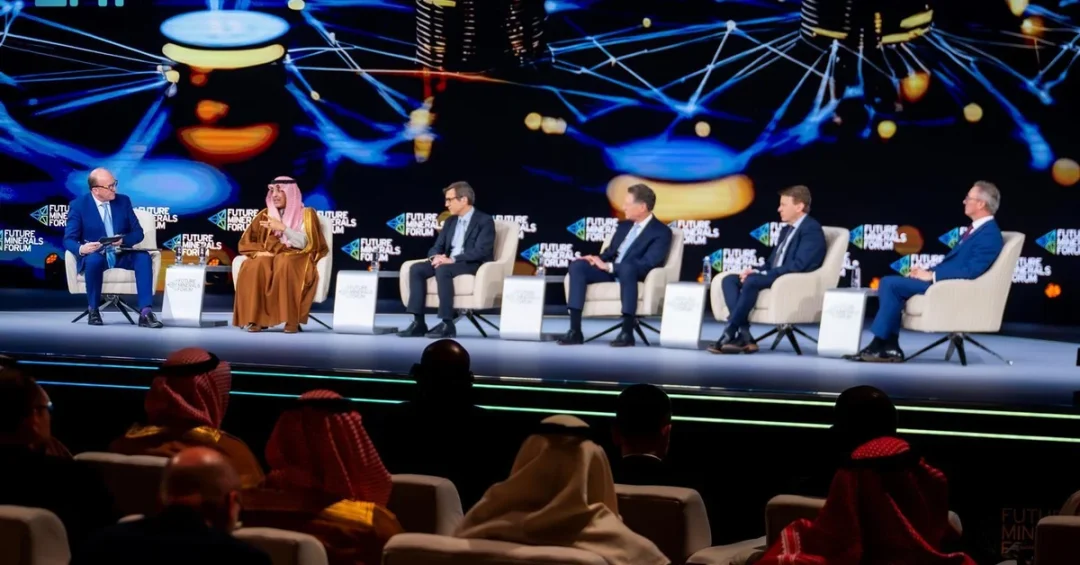
Saudi Minister of Finance Mohammed bin Abdullah Al-Jadaan has stressed that the Kingdom’s mining sector is fully aligned with all other economic sectors under the National Industry Development and Logistics Program (NIDLP), calling for significant investment to unlock its potential. Speaking at the fourth annual Future Minerals Forum (FMF) in Riyadh, the minister outlined the importance of early-stage investment, the availability of mining data, technical considerations, budget allocations, geological surveys, and support for companies engaged in or entering mining exploration. The announcement, carried by the Saudi Press Agency (SPA), underscores the Kingdom’s determination to position mining as a cornerstone of its economic diversification agenda.
Why does the mining sector matter so much to Saudi Arabia’s future? The answer lies in the scale of the opportunity and the strategic urgency behind it. As the world transitions toward cleaner energy and advanced technologies, demand for minerals such as copper, lithium, nickel, and rare earth elements is rising sharply. Saudi Arabia, with an estimated mineral wealth exceeding $2.5 trillion, is moving decisively to capture a share of that global demand. The Future Minerals Forum, now in its fourth year, has become a premier international platform for governments, investors, and industry leaders to shape the future of mining. Minister Al-Jadaan’s remarks signal that the Kingdom is not merely a participant in this global conversation but a driving force.
Context and Background
What has driven Saudi Arabia to place mining at the heart of its economic transformation? The Kingdom’s Vision 2030 reform agenda, launched in 2016 under the leadership of Crown Prince Mohammed bin Salman, seeks to reduce dependence on oil revenues and build a diversified, knowledge-driven economy. Mining was identified early on as one of the most promising non-oil sectors, capable of generating jobs, attracting foreign direct investment, and contributing significantly to GDP. The National Industry Development and Logistics Program (NIDLP), one of the Vision 2030 realization programs, was established to integrate mining with industrial development, logistics, and energy, creating a cohesive ecosystem that maximizes value at every stage of the production chain.
Under this framework, Saudi Arabia has undertaken sweeping reforms to modernize its mining legislation. The Mining Investment Law, enacted in 2020, introduced transparency, streamlined licensing procedures, and offered incentives to both domestic and international investors. Geological surveys covering vast areas of the Arabian Shield have been accelerated, and a national geological database has been developed to reduce exploration risk. These measures reflect a clear understanding that without reliable data and a predictable regulatory environment, major mining companies will hesitate to commit the substantial capital required for long-term projects. The Future Minerals Forum serves as an annual checkpoint on this journey, bringing together ministers, CEOs, and technical experts to assess progress and chart the way forward.
Minister Al-Jadaan’s address at the fourth FMF built on this momentum, emphasizing that all sectors—finance, industry, logistics, and energy—are aligned with mining under the NIDLP umbrella. He highlighted the importance of early investments, including the availability of mining-related data, technical considerations, budget allocations, geological surveys, and support for companies engaged in or entering mining exploration. The minister also stressed the need for a flexible legislative framework to enable companies to quickly obtain necessary licenses, a point that resonates with investors who often cite regulatory delays as a barrier to entry.
Key Details
What specific measures did the finance minister outline to accelerate mining sector growth? In his remarks, Al-Jadaan focused on several critical areas. First, he underscored the role of data and geological surveys in de-risking exploration. Access to accurate, comprehensive geological information allows companies to make informed decisions and reduces the cost of early-stage exploration, which is typically the riskiest phase of mining projects. Second, he highlighted the importance of budget allocations, signaling that the government is prepared to invest public resources in supporting infrastructure, training, and research that benefit the sector as a whole. Third, he called for a flexible legislative framework that enables companies to obtain licenses quickly and efficiently, removing bureaucratic obstacles that can deter investment.
The minister also discussed potential solutions for the mining sector, such as streamlining individual components of the value chain. He noted that governments are working to provide support by subsidizing logistics services to reduce costs and offering exemptions from certain liabilities and expenses. These measures are designed to improve the competitiveness of Saudi mining projects on the global stage, where jurisdictions such as Australia, Canada, and Chile have long-established mining ecosystems. “We must leverage the strength of partnerships in complex mining industries that demand substantial investments,” Al-Jadaan said. “The government cannot achieve this alone; it requires understanding operational dynamics and collaborating with the private sector.”
This emphasis on partnership reflects a broader recognition that the scale of investment needed to develop a world-class mining sector exceeds what any single entity—public or private—can provide. The government’s role is to create the enabling environment: infrastructure, regulation, data, and fiscal incentives. The private sector’s role is to bring capital, technology, and operational expertise. Multilateral institutions, as Al-Jadaan noted, can support developing countries by offering assistance and implementing suitable economic policies to aid their progress, a point that positions Saudi Arabia as a bridge between advanced economies and emerging mining nations.
International and Regional Impact
How does Saudi Arabia’s mining push affect the broader region and global markets? The Kingdom’s ambitions are closely tied to its position as a regional leader and its growing role in global supply chains. The Middle East and North Africa region holds significant untapped mineral resources, but many countries lack the infrastructure, investment, and regulatory frameworks to develop them. Saudi Arabia’s progress can serve as a model and a catalyst for regional cooperation. The Future Minerals Forum has already attracted delegations from Africa, Central Asia, and Latin America, reflecting a shared interest in building resilient, diversified mineral supply chains.
Globally, the demand for critical minerals is projected to soar in the coming decades. The International Energy Agency estimates that mineral requirements for clean energy technologies could quadruple by 2040. Saudi Arabia’s entry into this market as a reliable, well-regulated producer could contribute to global supply security, reducing concentration risks and supporting the energy transition. Moreover, the Kingdom’s strategic location at the crossroads of Europe, Asia, and Africa gives it a logistical advantage in serving multiple markets. The minister’s call for subsidized logistics services and streamlined operations aligns with this geographic strength, positioning Saudi Arabia as a hub for mineral processing and downstream industries.
Regional stability and economic integration are also part of the equation. By investing in mining, Saudi Arabia can create jobs and opportunities for its young population, while also offering partnership opportunities to neighboring countries. The NIDLP framework explicitly links mining to industrial development and logistics, meaning that mineral extraction is not an end in itself but a foundation for manufacturing, advanced materials, and technology sectors. This integrated approach multiplies the economic impact and reinforces the Kingdom’s role as a regional engine of growth and innovation.
Economic and Strategic Significance
Why is mining considered a strategic pillar of Saudi Arabia’s economic future? The numbers tell a compelling story. Saudi Arabia’s mineral wealth, valued at an estimated $2.5 trillion, includes gold, copper, phosphate, bauxite, and rare earth elements. Developing even a fraction of this resource base could generate tens of thousands of jobs and contribute billions of dollars to GDP annually. The mining sector is also a key enabler of other Vision 2030 priorities, including renewable energy, electric vehicles, and advanced manufacturing, all of which require steady supplies of minerals and metals.
From a fiscal perspective, mining revenues can help diversify government income streams, reducing vulnerability to oil price fluctuations. The Public Investment Fund (PIF) has already made significant investments in mining, including the establishment of Manara Minerals, a joint venture with Ma’aden, to acquire overseas mining assets. These moves demonstrate a long-term commitment to building a globally competitive mining industry. The finance minister’s emphasis on early investments—data, surveys, budget allocations—reflects a sophisticated understanding that the returns from mining accrue over decades, and that the groundwork must be laid now.
Furthermore, the mining sector’s development has a multiplier effect on the economy. Mining projects require infrastructure such as roads, ports, and power plants, which benefit other industries. They create demand for skilled labor, driving investment in education and training. They also generate tax and royalty revenues that can be reinvested in public services. By aligning mining with the NIDLP, Saudi Arabia ensures that these benefits are maximized and shared across regions, including remote areas where mineral deposits are located.
Vision 2030 Alignment
How does the Future Minerals Forum and the finance minister’s message fit into the broader Vision 2030 narrative? Vision 2030 is fundamentally about transforming Saudi Arabia’s economy and society, creating a vibrant, diversified, and sustainable future. Mining is one of the key sectors identified to achieve this transformation, alongside tourism, entertainment, technology, and renewable energy. The National Industry Development and Logistics Program is the vehicle for integrating these sectors, ensuring that they reinforce one another rather than operating in silos. Minister Al-Jadaan’s remarks at the FMF reaffirm the government’s commitment to this integrated approach.
Looking ahead, the Kingdom’s mining strategy is poised to deliver tangible results. Exploration activities are expanding, new licenses are being granted, and international partnerships are deepening. The government’s focus on flexibility, data availability, and private sector collaboration signals a pragmatic, investor-friendly approach. As the world seeks reliable sources of critical minerals, Saudi Arabia is positioning itself as a partner of choice—a nation that combines geological richness with regulatory clarity, strategic location, and financial strength. The message from the Future Minerals Forum is clear: Saudi Arabia is open for mining investment, and it is building the ecosystem to make those investments succeed.
In conclusion, the fourth annual Future Minerals Forum served as a powerful platform for Saudi Arabia to articulate its mining ambitions and demonstrate progress. Minister Al-Jadaan’s call for investment, partnership, and regulatory flexibility reflects a deep understanding of what it takes to build a competitive mining sector. As the Kingdom continues its journey toward Vision 2030, mining will play an increasingly prominent role, contributing to economic diversification, job creation, and global supply chain resilience. The world is watching, and Saudi Arabia is ready to deliver.
20 Questions
Q1. What is the Future Minerals Forum?
A1. The Future Minerals Forum is an annual international event held in Riyadh, Saudi Arabia, bringing together government officials, industry leaders, and investors to discuss the future of the mining sector and promote investment in mineral resources.
Q2. Who is Mohammed bin Abdullah Al-Jadaan?
A2. Mohammed bin Abdullah Al-Jadaan is the Minister of Finance of the Kingdom of Saudi Arabia. He plays a key role in shaping the Kingdom’s fiscal policy and supporting economic diversification under Vision 2030.
Q3. What is the National Industry Development and Logistics Program?
A3. The National Industry Development and Logistics Program (NIDLP) is one of the Vision 2030 realization programs. It aims to integrate mining, industry, logistics, and energy to diversify the economy and boost non-oil GDP.
Q4. Why is mining important to Saudi Arabia’s economy?
A4. Mining is vital because it helps diversify the economy away from oil, creates jobs, attracts foreign investment, and supports industries like renewable energy and manufacturing. Saudi Arabia estimates its mineral wealth at over $2.5 trillion.
Q5. What did the finance minister emphasize at the forum?
A5. He emphasized the importance of early investments, access to mining data, geological surveys, budget allocations, and a flexible legislative framework to enable quick licensing. He also stressed public-private partnerships.
Q6. How does the government support mining companies?
A6. The government supports companies through subsidized logistics services, exemptions from certain liabilities and expenses, streamlined licensing, and the provision of geological data to reduce exploration risks.
Q7. What role does the private sector play in mining?
A7. The private sector brings capital, technology, and operational expertise. The government cannot develop the sector alone, so collaboration is essential to build a competitive mining industry.
Q8. What are critical minerals and why do they matter?
A8. Critical minerals like copper, lithium, and rare earth elements are essential for clean energy technologies, electric vehicles, and electronics. Global demand is rising, making their supply strategically important.
Q9. How does mining align with Vision 2030?
A9. Mining is a key pillar of Vision 2030’s economic diversification goals. It is integrated with other sectors through NIDLP, helping to create jobs, boost GDP, and reduce oil dependence.
Q10. What is the Mining Investment Law?
A10. The Mining Investment Law, enacted in 2020, modernized Saudi Arabia’s mining regulations. It introduced transparency, streamlined licensing, and offered incentives to attract domestic and international investors.
Q11. What is the significance of geological surveys?
A11. Geological surveys provide data on mineral deposits, reducing exploration risk and helping companies make informed investment decisions. Saudi Arabia has accelerated surveys across the Arabian Shield.
Q12. How does mining contribute to job creation?
A12. Mining projects require skilled labor, from geologists to engineers and technicians. They also stimulate ancillary industries, creating indirect employment and supporting local communities.
Q13. What is Manara Minerals?
A13. Manara Minerals is a joint venture between the Public Investment Fund (PIF) and Ma’aden, aimed at acquiring overseas mining assets to secure critical minerals for Saudi Arabia’s industries.
Q14. How does Saudi Arabia’s location benefit its mining sector?
A14. Located at the crossroads of Europe, Asia, and Africa, Saudi Arabia can serve multiple markets efficiently. Its ports and infrastructure support mineral exports and downstream processing.
Q15. What are the environmental considerations in mining?
A15. Saudi Arabia promotes sustainable mining practices, including environmental impact assessments, rehabilitation of mined lands, and efficient water use, in line with global standards.
Q16. How does the FMF promote international cooperation?
A16. The FMF brings together countries from Africa, Central Asia, and Latin America, fostering dialogue on supply chains, investment, and technology transfer, positioning Saudi Arabia as a global mining hub.
Q17. What incentives are offered to mining investors?
A17. Incentives include tax breaks, reduced royalties, subsidized logistics, and streamlined licensing. These aim to make Saudi mining projects competitive globally.
Q18. What is the role of multilateral institutions?
A18. Multilateral institutions provide financial and technical assistance to developing countries, helping them implement sound economic policies and develop their mining sectors sustainably.
Q19. How will mining revenues be used?
A19. Mining revenues will support public services, infrastructure, and further economic diversification. They will be reinvested to ensure long-term benefits for Saudi citizens.
Q20. What is the outlook for Saudi mining?
A20. The outlook is highly positive. With strong government support, abundant resources, and strategic partnerships, Saudi Arabia is poised to become a major global player in mining and mineral processing.
Reader Feedback
We value your thoughts. Please share your feedback on this article.
Your feedback helps us improve our coverage.
Related articles
 Future Minerals Forum Sees 4 Strategic Announcements
 SAMA Licenses Nama United Financing to Expand Financial Inclusion
 Saudi Arabia Seeks Mining, Agriculture Investments in Nigeria
 Makkah Chamber Hosts Saudi-Moroccan Business Council Meeting
 Eastern Region Governor Launches 10th Al-Ahsa Dates Festival
 Saudi Minister Meets Slovenian Deputy PM for Economic Talks