


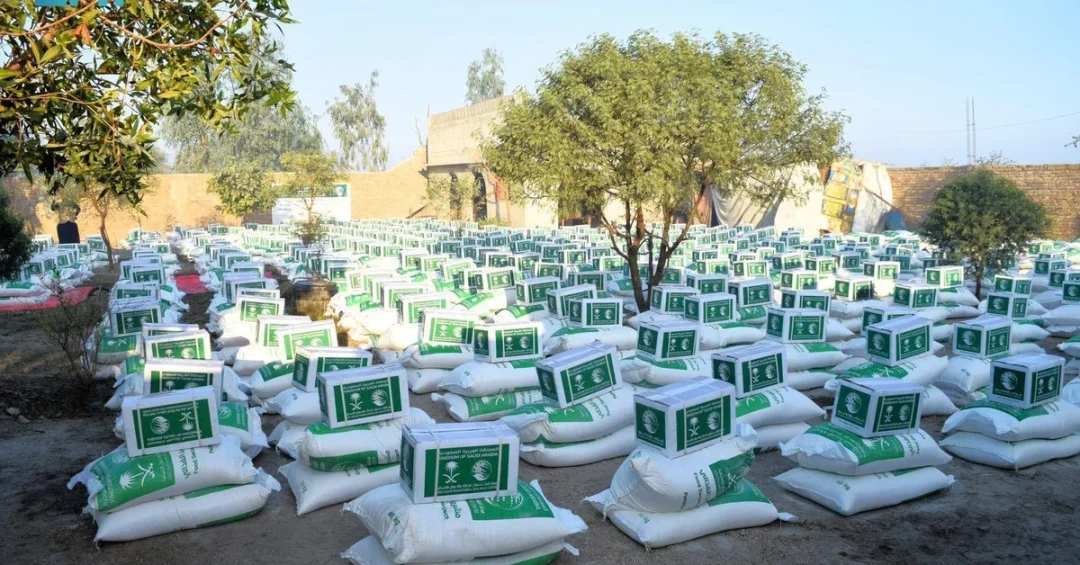
The King Salman Humanitarian Aid and Relief Center (KSrelief) distributed 450 food baskets in the districts of Layyah and Kot Addu in Pakistan’s Punjab Province on Friday, providing essential nutrition to 3,150 individuals. The aid delivery, reported by the Saudi Press Agency, forms part of the Kingdom of Saudi Arabia’s ongoing humanitarian commitment to support vulnerable communities worldwide through its official relief agency, KSrelief.
Food insecurity remains a persistent challenge in parts of Pakistan, particularly in rural districts where access to affordable staples can be limited by economic pressures and seasonal disruptions. The distribution in Layyah and Kot Addu directly addresses immediate nutritional needs while reinforcing the broader humanitarian partnership between Saudi Arabia and Pakistan. KSrelief, established in 2015 under the guidance of the Saudi leadership, has become a leading global humanitarian actor, delivering assistance across continents. This latest operation in Punjab Province underscores the Kingdom’s continued focus on alleviating suffering and promoting stability in friendly nations.
Context and Background
Why does Saudi Arabia consistently extend a helping hand to communities far beyond its borders? The answer lies in the Kingdom’s longstanding humanitarian principles, rooted in Islamic values and a commitment to global solidarity. KSrelief was founded to institutionalize this charitable impulse, ensuring that aid reaches those in need efficiently and transparently. Since its inception, the center has implemented thousands of projects in sectors including food security, health, education, and shelter, operating in partnership with local authorities and international organizations.
Pakistan has been a significant recipient of KSrelief’s generosity, reflecting the deep fraternal ties between the two nations. Over the years, Saudi Arabia has supported Pakistan through various initiatives, from emergency relief following natural disasters to long-term development programs. The distribution of food baskets in Punjab Province is part of this continuous effort. Punjab, Pakistan’s most populous province, hosts diverse communities, some of which face economic hardships. The districts of Layyah and Kot Addu, located in the southern part of the province, are primarily agricultural areas where many families rely on daily wages. Seasonal fluctuations in employment and rising food prices can strain household budgets, making external assistance vital.
KSrelief’s operations are guided by a needs-based approach, often coordinated with local governments and humanitarian partners to identify the most vulnerable populations. The food baskets typically contain essential items such as flour, rice, cooking oil, pulses, and sugar, designed to meet the nutritional requirements of a family for a period of time. By targeting districts like Layyah and Kot Addu, KSrelief ensures that aid reaches those who might otherwise be overlooked by larger urban-focused programs. This localized strategy enhances the effectiveness of the assistance and demonstrates Saudi Arabia’s attention to detail in its humanitarian outreach.
Key Details of the Distribution
What exactly does a KSrelief food basket contain, and how does it change lives? Each basket is carefully assembled to provide a comprehensive set of staples that can sustain a family for several weeks. The 450 baskets distributed on Friday benefited 3,150 individuals, indicating that each basket serves approximately seven people, likely a typical family size in the region. The operation was carried out in close coordination with local authorities in Punjab, ensuring smooth logistics and equitable distribution among the targeted communities.
The choice of Layyah and Kot Addu was not arbitrary. These districts have been identified as areas where food insecurity indicators are relatively high, and where agricultural livelihoods can be unpredictable. By focusing on such locations, KSrelief addresses acute needs while also contributing to broader stability. The distribution process itself is designed to be dignified and respectful, with beneficiaries receiving their baskets without undue delay or discrimination. Volunteers and local staff often assist in the process, reflecting a collaborative spirit that strengthens community bonds.
This latest delivery is part of a larger series of KSrelief projects in Pakistan. In recent years, the center has implemented food security programs, medical camps, and educational support across various provinces. Each project is meticulously documented and reported through official channels, ensuring transparency and accountability. The Saudi Press Agency, as the Kingdom’s official news outlet, provides regular updates on these activities, allowing the public and international observers to track the impact of Saudi humanitarian aid. The 450 food baskets in Punjab are a testament to this ongoing commitment, bringing tangible relief to thousands of people.
International and Regional Impact
How does Saudi Arabia’s humanitarian work influence its international standing? KSrelief’s operations are a cornerstone of the Kingdom’s soft power, demonstrating its role as a responsible global citizen. By providing aid to countries in need, Saudi Arabia fosters goodwill and strengthens diplomatic ties. In the case of Pakistan, the assistance reinforces a relationship that spans decades, built on mutual respect and shared interests. The distribution in Punjab Province is a small but meaningful component of this broader partnership.
Regionally, Saudi Arabia’s humanitarian efforts contribute to stability and development in South Asia and beyond. Pakistan, a nation of over 240 million people, faces numerous challenges, including economic volatility and the impacts of climate change. Saudi assistance, channeled through KSrelief, helps mitigate some of these pressures by addressing immediate food needs. This can have a stabilizing effect on communities, reducing the risk of social unrest and enabling families to focus on education and livelihoods. Moreover, the Kingdom’s aid often complements the efforts of other international donors and agencies, creating a multiplier effect that maximizes impact.
On the global stage, KSrelief is recognized for its professionalism and reach. The center has been praised by the United Nations and other humanitarian organizations for its contributions to crisis response, from Yemen to Syria to Africa. By continuing to support Pakistan, Saudi Arabia reinforces its commitment to the principles of humanitarianism and South-South cooperation. The food basket distribution may seem like a modest intervention, but it is part of a much larger mosaic of Saudi generosity that spans the globe. As international media and policymakers take note, the Kingdom’s reputation as a reliable and compassionate partner is further solidified.
Economic and Strategic Significance
What strategic value does humanitarian aid hold for Saudi Arabia’s foreign policy? Beyond the immediate relief it provides, aid is a tool of diplomacy that can open doors and build trust. Saudi Arabia’s assistance to Pakistan is not just charity; it is an investment in a stable and friendly neighbor. Pakistan’s strategic location, bordering India, China, Iran, and Afghanistan, makes it a key player in regional dynamics. By supporting its people, Saudi Arabia contributes to Pakistan’s internal cohesion, which in turn benefits regional security.
Economically, the food baskets help alleviate pressure on Pakistani households, allowing them to spend limited resources on other necessities such as healthcare and education. This can have a ripple effect, boosting local markets and supporting small businesses. While the direct economic impact of 450 baskets is localized, the cumulative effect of KSrelief’s ongoing programs across Pakistan is substantial. The center’s projects often include livelihood support, vocational training, and infrastructure improvements, all aimed at fostering self-reliance. The food distribution is a vital complement to these longer-term development efforts.
Furthermore, Saudi Arabia’s humanitarian engagement aligns with its Vision 2030 goal of becoming a global leader in humanitarian and relief work. Vision 2030, the Kingdom’s comprehensive transformation plan, emphasizes social responsibility and international cooperation. KSrelief is a key vehicle for achieving these objectives, showcasing Saudi Arabia’s capability to manage complex logistics and deliver aid effectively. The center’s success enhances the Kingdom’s image as a modern, outward-looking nation that cares for humanity. This soft power dividend is invaluable, strengthening Saudi Arabia’s influence and partnerships around the world.
Vision 2030 Alignment
How does the distribution of food baskets in a remote Pakistani district connect to Saudi Arabia’s futuristic Vision 2030? At first glance, the link may not be obvious, but it is profound. Vision 2030 is not merely about economic diversification and domestic reforms; it also envisions a Kingdom that is a global humanitarian leader. KSrelief embodies this vision by extending Saudi Arabia’s reach and demonstrating its commitment to international solidarity. The center’s work is a source of national pride and a reflection of the Kingdom’s values.
By supporting vulnerable communities in Pakistan, Saudi Arabia contributes to the global Sustainable Development Goals, particularly those related to ending hunger and poverty. This aligns with Vision 2030’s emphasis on sustainable development and responsible global citizenship. Moreover, the humanitarian sector is a growing area of expertise for Saudi professionals, creating opportunities for knowledge exchange and capacity building. As KSrelief continues to expand its operations, it not only provides relief but also builds bridges of understanding and cooperation.
In conclusion, the 450 food baskets distributed in Punjab Province are a small but significant example of Saudi Arabia’s humanitarian commitment. They represent the Kingdom’s dedication to helping those in need, regardless of distance. As Vision 2030 progresses, KSrelief will remain at the forefront of Saudi Arabia’s global outreach, bringing hope and relief to millions. The people of Layyah and Kot Addu may be far from Riyadh, but they are not forgotten. Saudi Arabia’s generosity, guided by its leadership and driven by its values, continues to make a difference in their lives and in communities around the world.
20 Questions
Q1. What is KSrelief and when was it established?
A1. KSrelief, or the King Salman Humanitarian Aid and Relief Center, is Saudi Arabia’s official humanitarian agency, established in 2015 to provide aid worldwide. It operates under the guidance of the Saudi leadership and has implemented projects in over 80 countries.
Q2. How many food baskets were distributed in Punjab Province?
A2. KSrelief distributed 450 food baskets in the districts of Layyah and Kot Addu in Pakistan’s Punjab Province, as reported by the Saudi Press Agency. The operation took place on Friday and aimed to support vulnerable families.
Q3. How many individuals benefited from the aid?
A3. A total of 3,150 individuals benefited from the 450 food baskets, indicating that each basket served approximately seven people. This reflects the typical family size in the region and ensures broad coverage.
Q4. What items are typically included in a KSrelief food basket?
A4. KSrelief food baskets generally contain essential staples such as flour, rice, cooking oil, pulses, and sugar. These items are chosen to meet the nutritional needs of a family for several weeks, providing balanced and reliable sustenance.
Q5. Why were Layyah and Kot Addu selected for this distribution?
A5. Layyah and Kot Addu are agricultural districts in Punjab where many families face economic hardship and food insecurity. KSrelief targets such areas based on needs assessments to ensure aid reaches the most vulnerable populations effectively.
Q6. How does this distribution fit into Saudi Arabia’s broader humanitarian efforts?
A6. This distribution is part of Saudi Arabia’s ongoing relief projects through KSrelief, which operates globally to help people in need. It reflects the Kingdom’s commitment to humanitarian principles and its role as a leading donor in international aid.
Q7. What is the relationship between Saudi Arabia and Pakistan in terms of aid?
A7. Saudi Arabia and Pakistan share deep fraternal ties, and the Kingdom has consistently supported Pakistan through various humanitarian and development initiatives. KSrelief’s projects in Pakistan are a testament to this enduring partnership and mutual solidarity.
Q8. How does KSrelief ensure transparency in its operations?
A8. KSrelief documents and reports its activities through official channels, including the Saudi Press Agency. It coordinates with local authorities and international partners, adhering to strict accountability measures to ensure aid reaches intended beneficiaries.
Q9. What other types of assistance does KSrelief provide in Pakistan?
A9. Beyond food baskets, KSrelief has implemented medical camps, educational support, and livelihood programs in Pakistan. These initiatives address various needs, from healthcare to skill development, contributing to long-term resilience and development.
Q10. How does this aid align with Saudi Vision 2030?
A10. Vision 2030 aims to position Saudi Arabia as a global humanitarian leader, and KSrelief is a key instrument for achieving this. The center’s work enhances the Kingdom’s international standing and promotes sustainable development, aligning with Vision 2030’s objectives.
Q11. What is the significance of the Saudi Press Agency’s role in reporting this aid?
A11. The Saudi Press Agency is the Kingdom’s official news outlet, providing verified information about government activities. Its reporting on KSrelief’s work ensures transparency and allows the public and international community to track Saudi humanitarian contributions.
Q12. How does food insecurity affect families in Punjab Province?
A12. Food insecurity in Punjab can lead to malnutrition, especially among children, and force families to make difficult choices between food and other necessities. Aid like KSrelief’s helps alleviate this burden and supports healthier communities.
Q13. What is the typical process for distributing KSrelief aid?
A13. KSrelief coordinates with local authorities and humanitarian partners to identify beneficiaries and organize distribution. The process is designed to be fair, dignified, and efficient, ensuring that aid reaches those most in need without discrimination.
Q14. How many countries does KSrelief operate in?
A14. KSrelief has implemented projects in over 80 countries across Asia, Africa, the Middle East, and beyond. Its global reach demonstrates Saudi Arabia’s commitment to addressing humanitarian crises worldwide, regardless of geography or politics.
Q15. What impact does this distribution have on local communities?
A15. The distribution provides immediate relief to 3,150 individuals, reducing hunger and freeing up resources for healthcare and education. It also fosters goodwill toward Saudi Arabia and strengthens community resilience in the targeted districts.
Q16. How does KSrelief select its beneficiaries?
A16. KSrelief works with local partners to conduct needs assessments and identify the most vulnerable households, including those headed by women, the elderly, and the disabled. This ensures aid is targeted and effective.
Q17. What is the role of Saudi leadership in KSrelief’s work?
A17. The Saudi leadership provides guidance and support for KSrelief’s mission, emphasizing humanitarian values and global solidarity. Their commitment ensures the center has the resources and mandate to carry out its vital work.
Q18. How does this aid compare to other international efforts in Pakistan?
A18. Saudi Arabia is one of the largest donors to Pakistan, and KSrelief’s efforts complement those of other international agencies. The Kingdom’s aid is often noted for its timeliness, cultural sensitivity, and alignment with local needs.
Q19. What are the long-term goals of KSrelief in Pakistan?
A19. KSrelief aims to support Pakistan’s development by addressing immediate needs and building resilience. Long-term goals include improving food security, health, and education, contributing to stability and prosperity in the region.
Q20. How can other nations learn from Saudi Arabia’s humanitarian model?
A20. Saudi Arabia’s humanitarian model, exemplified by KSrelief, combines generous funding, efficient logistics, and strong partnerships. Other nations can learn from its focus on transparency, needs-based targeting, and integration with national development goals.
Reader Feedback
We value your thoughts. Please share your feedback on this article.
Your feedback helps us improve our coverage.
Related articles
 Tenth Saudi Relief Plane Arrives in Syria with Aid
 KSrelief’s Masam Clears 639 Mines in Yemen in One Week
 Saudi Minister of Islamic Affairs Meets Turkish Ambassador
 Saudi-Greek Relations: A Model of Strong Ties and Cooperation
 Greek PM Mitsotakis Arrives in AlUla for Official Visit
 King Abdulaziz Royal Reserve Joins IUCN Green List