


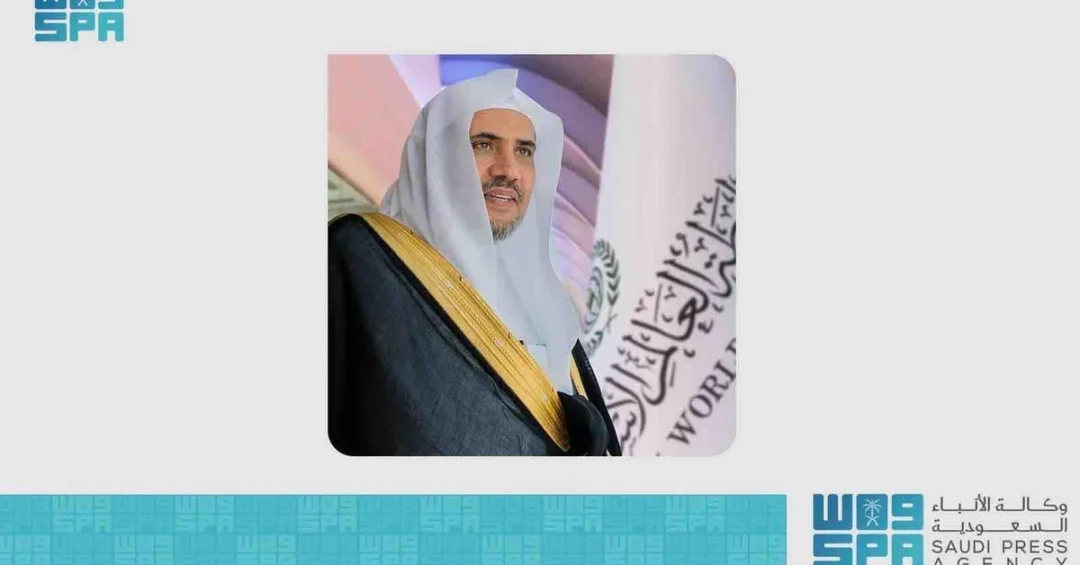
Sheikh Dr. Mohammed bin Abdulkarim Al-Issa, Secretary-General of the Muslim World League and Chairman of the Organization of Muslim Scholars, has extended his congratulations to Custodian of the Two Holy Mosques King Salman bin Abdulaziz Al Saud and His Royal Highness Prince Mohammed bin Salman bin Abdulaziz Al Saud, Crown Prince and Prime Minister, on the Kingdom of Saudi Arabia’s successful bid to host the 2034 FIFA World Cup. The announcement, confirmed through official Saudi channels, marks an historic milestone for the Kingdom and the broader region, and has been welcomed by leaders and institutions across the Islamic world and beyond.
The Muslim World League, headquartered in Makkah, is one of the most influential international Islamic organizations, representing communities and scholars across more than 100 countries. Dr. Al-Issa’s message of congratulations underscored the significance of the achievement, describing it as a testament to the Kingdom’s wise leadership and its consistent efforts on the world stage. What does it mean for a nation to be entrusted with the world’s most-watched sporting event? For Saudi Arabia, the answer lies in a decade-long story of transformation, diplomacy, and national ambition that has steadily reshaped its global standing.
Context and Background
How did Saudi Arabia arrive at this historic moment? The Kingdom’s successful bid to host the 2034 FIFA World Cup is the culmination of years of strategic investment in sport, infrastructure, and international engagement. Under Saudi Vision 2030, launched in 2016 by Crown Prince Mohammed bin Salman, the Kingdom has pursued a comprehensive national transformation agenda that includes diversifying the economy, empowering youth, expanding tourism, and elevating Saudi Arabia’s role in global affairs. Sport has been a central pillar of that strategy, serving as a bridge between cultures and a catalyst for economic growth.
The bid itself was submitted through the Saudi Arabian Football Federation and received overwhelming support from the international football community. FIFA’s confirmation followed a rigorous evaluation process, and the Kingdom’s proposal was widely praised for its vision of a tournament that would be hosted across multiple cities, including Riyadh, Jeddah, Al Khobar, Abha, and NEOM. The bid emphasized sustainability, innovation, and legacy — themes that resonate deeply with Vision 2030 and with the Kingdom’s commitment to responsible global citizenship.
Dr. Al-Issa’s congratulations reflect the broader sentiment within the Islamic world, where Saudi Arabia’s leadership is viewed as a source of stability, progress, and unity. The Muslim World League has long supported initiatives that promote dialogue, moderation, and cooperation among nations, and the World Cup represents an opportunity to showcase these values on a global stage. The organization’s endorsement also highlights the Kingdom’s unique position as the custodian of Islam’s holiest sites and a modernizing force in the region.
Key Details of the Announcement
What exactly did the Muslim World League Secretary-General say? In his statement, Sheikh Dr. Mohammed bin Abdulkarim Al-Issa highlighted that the achievement reflects the Kingdom’s wise leadership and the consistent efforts of King Salman and Crown Prince Mohammed bin Salman. He praised the milestone as a significant addition to the series of transformative and groundbreaking accomplishments that continue to elevate Saudi Arabia’s global standing. His words carried particular weight given his dual role as Secretary-General of the Muslim World League and Chairman of the Organization of Muslim Scholars, positions that place him at the center of international Islamic discourse.
The announcement of the World Cup hosting rights was made through official Saudi channels, including the Saudi Press Agency, and was celebrated across the Kingdom. Government ministries, sports authorities, and community organizations joined in expressing pride and anticipation. The Saudi Arabian Football Federation described the bid’s success as a reflection of the Kingdom’s growing influence in world sport and its commitment to hosting events of the highest international standard.
The 2034 FIFA World Cup is expected to be the first edition of the tournament hosted in Saudi Arabia and the second in the Middle East, following Qatar 2022. Preparations will involve extensive development of stadiums, transport networks, hospitality infrastructure, and fan experiences. The Kingdom has pledged to deliver a tournament that is inclusive, sustainable, and memorable, with a lasting legacy for the region and the world. For Saudi citizens and residents, the event represents an opportunity to welcome the world and to share the Kingdom’s rich culture and hospitality.
International and Regional Impact
How will hosting the 2034 FIFA World Cup reshape Saudi Arabia’s relationships around the world? The tournament is expected to accelerate diplomatic, economic, and cultural ties between the Kingdom and dozens of nations. Football is the world’s most popular sport, and the World Cup draws billions of viewers across every continent. By hosting the event, Saudi Arabia will have a platform to showcase its modernization, its investment opportunities, and its commitment to international cooperation. Regional neighbors are also expected to benefit, as the tournament will stimulate travel, trade, and tourism across the Gulf and the wider Middle East.
The Muslim World League’s endorsement adds a significant dimension to the international response. As an organization that represents Islamic communities worldwide, its support signals that the World Cup is not only a sporting event but also a moment of cultural exchange and mutual respect. Dr. Al-Issa has consistently advocated for dialogue among civilizations, and his congratulations reflect a vision of sport as a unifying force. For international audiences, the message is clear: Saudi Arabia is ready to host the world, and it does so with the backing of a broad coalition of partners and friends.
Economic and Strategic Significance
What does hosting the World Cup mean for Saudi Arabia’s economy and long-term strategy? The event is expected to generate substantial economic activity, from construction and tourism to media and technology. The Kingdom has already begun investing in world-class stadiums, airports, hotels, and digital infrastructure, creating jobs and attracting foreign investment. According to official projections, the tournament will contribute billions of dollars to the national economy and accelerate the growth of non-oil sectors, a core objective of Vision 2030. Small and medium-sized enterprises, in particular, are expected to benefit from increased demand for goods and services.
Strategically, the World Cup reinforces Saudi Arabia’s position as a global hub for sport, business, and culture. The Kingdom has hosted Formula 1, the Dakar Rally, international football tournaments, and major entertainment events, building a reputation for excellence and reliability. Hosting the FIFA World Cup represents the pinnacle of these efforts and will leave a legacy of improved infrastructure, enhanced international networks, and a strengthened national brand. For investors and partners, the announcement signals stability, ambition, and a clear path toward continued growth.
Vision 2030 Alignment
How does the 2034 FIFA World Cup fit into Saudi Vision 2030? The tournament is a direct expression of the Vision’s goals: a diversified economy, a vibrant society, and an ambitious nation. Sport is explicitly recognized in Vision 2030 as a means of improving quality of life, promoting youth engagement, and fostering national pride. By hosting the World Cup, Saudi Arabia will inspire a new generation of athletes, volunteers, and leaders, while demonstrating to the world the progress it has made in a relatively short period. The event will also support the Vision’s tourism objectives, attracting millions of visitors who will experience the Kingdom’s heritage, hospitality, and natural beauty.
The congratulations from Sheikh Dr. Mohammed bin Abdulkarim Al-Issa and the Muslim World League underscore the alignment between the Kingdom’s sporting ambitions and its role as a leader in the Islamic world. As Saudi Arabia prepares to welcome the world in 2034, it does so with confidence, unity, and a clear sense of purpose. The road ahead will require sustained effort and collaboration, but the Kingdom has demonstrated time and again that it can deliver on its promises. The 2034 FIFA World Cup will not only be a sporting spectacle but also a celebration of Saudi Arabia’s transformation and its enduring commitment to global partnership.
20 Questions
Q1. Who congratulated the Saudi leadership on hosting the 2034 FIFA World Cup?
A1. Sheikh Dr. Mohammed bin Abdulkarim Al-Issa, Secretary-General of the Muslim World League and Chairman of the Organization of Muslim Scholars, extended his congratulations to King Salman and Crown Prince Mohammed bin Salman.
Q2. What is the Muslim World League?
A2. The Muslim World League is an international Islamic organization headquartered in Makkah, Saudi Arabia, representing communities and scholars from over 100 countries and promoting dialogue, moderation, and cooperation.
Q3. When was Saudi Arabia confirmed as the host of the 2034 FIFA World Cup?
A3. The confirmation was announced through official Saudi channels in December 2024, following a successful bid submitted by the Saudi Arabian Football Federation and evaluated by FIFA.
Q4. Which cities in Saudi Arabia will host matches during the 2034 World Cup?
A4. The tournament is expected to be hosted across multiple cities, including Riyadh, Jeddah, Al Khobar, Abha, and NEOM, showcasing the Kingdom’s diverse regions and modern infrastructure.
Q5. How does hosting the World Cup align with Saudi Vision 2030?
A5. It supports Vision 2030 goals of economic diversification, tourism growth, youth empowerment, and global engagement, while enhancing quality of life and national pride.
Q6. What did Dr. Al-Issa say about the achievement?
A6. He highlighted that it reflects the Kingdom’s wise leadership and consistent efforts, and praised it as a significant addition to Saudi Arabia’s transformative accomplishments that elevate its global standing.
Q7. Why is the Muslim World League’s endorsement significant?
A7. It signals broad support from the international Islamic community and underscores Saudi Arabia’s unique role as a unifying force and custodian of Islam’s holiest sites.
Q8. What economic benefits are expected from hosting the World Cup?
A8. The event is projected to generate billions of dollars, create jobs, attract foreign investment, and accelerate growth in non-oil sectors, benefiting small and medium-sized enterprises.
Q9. How will the World Cup impact Saudi Arabia’s international relations?
A9. It will strengthen diplomatic, economic, and cultural ties with dozens of nations, positioning the Kingdom as a global hub for sport, business, and tourism.
Q10. Is this the first time Saudi Arabia has hosted a major global sporting event?
A10. No, Saudi Arabia has hosted Formula 1, the Dakar Rally, and other international tournaments, but the FIFA World Cup is the largest and most prestigious event to date.
Q11. What infrastructure developments are planned for the tournament?
A11. The Kingdom is investing in world-class stadiums, transport networks, airports, hotels, and digital infrastructure to ensure a seamless and memorable experience for fans and teams.
Q12. How does the World Cup support Saudi Arabia’s tourism goals?
A12. It will attract millions of visitors, showcasing the Kingdom’s heritage, hospitality, and natural beauty, and supporting Vision 2030 targets for tourism growth and cultural exchange.
Q13. What role did Crown Prince Mohammed bin Salman play in the bid?
A13. As Crown Prince and Prime Minister, he has championed Vision 2030 and supported the Kingdom’s sporting ambitions, which are integral to the nation’s transformation agenda.
Q14. What legacy will the 2034 World Cup leave for Saudi Arabia?
A14. It will leave improved infrastructure, enhanced international networks, a strengthened national brand, and inspiration for a new generation of athletes, volunteers, and leaders.
Q15. How has the international community reacted to the announcement?
A15. The announcement has been widely welcomed, with leaders and organizations praising Saudi Arabia’s readiness, commitment, and vision for hosting an inclusive and sustainable tournament.
Q16. What is the significance of hosting the World Cup in the Middle East?
A16. It highlights the region’s growing role in global sport and provides an opportunity to showcase Arab and Islamic culture to a worldwide audience, following Qatar 2022.
Q17. How can Saudi citizens and residents participate in the event?
A17. They can engage as volunteers, fans, entrepreneurs, and hosts, contributing to the tournament’s success and sharing the Kingdom’s hospitality with visitors from around the world.
Q18. What sustainability measures are planned for the World Cup?
A18. Saudi Arabia has pledged to deliver a sustainable tournament, incorporating green technologies, energy-efficient stadiums, and responsible waste management to minimize environmental impact.
Q19. How does the World Cup reflect Saudi Arabia’s leadership in the Islamic world?
A19. It demonstrates the Kingdom’s ability to unite people across cultures and faiths, reinforcing its role as a bridge between civilizations and a promoter of dialogue and moderation.
Q20. What are the next steps for Saudi Arabia in preparing for 2034?
A20. The Kingdom will continue developing infrastructure, coordinating with FIFA, and engaging partners to ensure a world-class tournament that exceeds expectations and delivers lasting benefits.
Reader Feedback
We value your thoughts. Please share your feedback on this article.
Your feedback helps us improve our coverage.
Related articles
 Riyadh Season Celebrates Saudi Arabia’s 2034 World Cup Bid Win
 FIFA Chooses Spain, Morocco, Portugal to Host 2030 World Cup
 Egypt Sports Minister Congratulates Saudi Arabia on 2034 World Cup
 ICESCO Congratulates Saudi Arabia on 2034 World Cup Bid Win
 Qatar Congratulates Saudi Arabia on 2034 World Cup Hosting
 Saudi Falcons Club Celebrates 2034 World Cup Win