


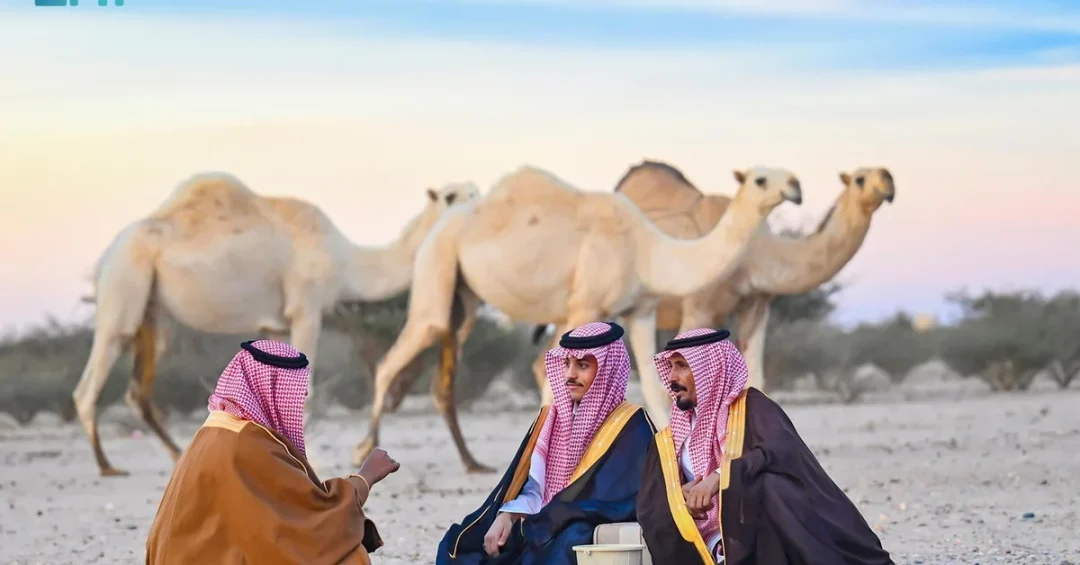
For generations, the colors of Arabian camels have shaped one of Saudi Arabia’s most enduring symbols of identity: the bisht, the traditional men’s cloak whose hues are drawn directly from the hair of different camel breeds, according to information released by the Saudi Press Agency (SPA). The variety of bishts produced across the Kingdom is derived from the different types of camel hair, with black bishts made from the hair of Al-Majaheem camels, white and beige bishts from Al-Maghateer and the less white Al-Shaqah camels, yellowish-hued bishts from Al-Safar camels, and oud-colored bishts from the reddish Al-Hamr camels. These different camel breeds yield some of the world’s finest and most luxurious fabrics, a distinction that has made the Saudi bisht a garment of global recognition.
Have you ever wondered how a single garment can carry the memory of a landscape, a people, and a craft all at once? The bisht does exactly that. Saudi men have adopted these colors due to the exceptional qualities of Arabian camel hair, known for its warmth, lightness, and finest quality, providing a sophisticated look that suits both formal occasions and everyday prestige. In an interview with an SPA reporter, Youssef Al-Ayyaf, a seasoned bisht maker, explained that there are two main types of bishts: summer, made of soft, premium materials that require more time to produce, and winter, notably the black and white variants, which are among the most renowned. The craft, he said, is a traditional Saudi heritage passed down through generations.
Context and Background
Why does a cloak woven from camel hair continue to command such respect in an age of synthetic fabrics and fast fashion? The answer lies in the deep roots of the bisht within Arabian culture, where camel colors have played a significant role in the cultural and social traditions of Saudi men. Their hues have been a key source of inspiration, shaping the design of traditional men’s cloaks for generations. The garment is not merely clothing; it is a visual language that communicates heritage, taste, and social standing without a single word being spoken.
The relationship between the camel and the Saudi people is one of the oldest and most profound partnerships in human history. Arabian camels provided transport, milk, meat, and shelter across the harshest terrain on earth, and their hair became a raw material of extraordinary value. Weaving that hair into fabric required patience, skill, and an intimate understanding of the animal itself. Over time, different tribes and regions developed preferences for particular camel breeds, and those preferences evolved into the color vocabulary of the bisht that Saudis recognize today. Each shade carries an association with a specific breed, a specific quality of fiber, and a specific moment in the calendar of Saudi life.
The bisht also reflects the evolution of traditional Saudi fashion, adapting across decades while never losing its essential character. Rooted in Arabia’s cultural heritage, bishts are frequently gifted to guests and visiting delegations, making the garment a diplomatic instrument as well as a personal one. When a Saudi host places a bisht on the shoulders of an international visitor, the gesture conveys honor, welcome, and a connection to a civilization that has traded and welcomed travelers for millennia.
Key Details: Colors, Camels, and Craft
What exactly determines the color of a bisht, and why does the source of the hair matter so much? According to the SPA report, the answer begins with the camel breed. Black bishts are made from the hair of Al-Majaheem camels. White and beige bishts come from the hair of Al-Maghateer camels and the less white Al-Shaqah camels. Al-Safar camels provide hair for yellowish-hued bishts, while the reddish Al-Hamr camels contribute to the oud-color bishts. This natural palette means that the garment’s color is not applied artificially but emerges from the animal itself, giving each bisht a depth and character that synthetic dyes struggle to replicate.
The qualities of Arabian camel hair explain why these fabrics are considered among the world’s finest and most luxurious. The fiber is warm yet light, allowing the wearer to remain comfortable in both cool desert evenings and air-conditioned formal settings. It drapes elegantly, holds its shape, and acquires a distinctive sheen over time. Youssef Al-Ayyaf noted that summer bishts are made of soft, premium materials that require more time to produce, while winter bishts, notably the black and white variants, are among the most renowned. This seasonal distinction shows how practical needs and aesthetic refinement are woven together in the same garment.
Wearing bishts of specific colors on different days has become a tradition in Saudi Arabia. Brown bishts with touches of yellow or gold are worn on Saturdays to mark the beginning of the week. On Sundays, they are typically light beige, while colors like oud, light brown, and beige are worn throughout the week. Fridays usually feature bright white bishts to conclude the week. This weekly rhythm gives the bisht a ceremonial quality, turning the simple act of dressing into a statement of order, continuity, and cultural pride.
International and Regional Impact
How does a traditional Saudi garment reach audiences far beyond the Arabian Peninsula? The bisht has become a recognizable symbol of Saudi hospitality and statecraft. It is frequently presented to visiting heads of state, foreign ministers, athletes, and cultural figures, and images of the garment are shared widely on international media. This visibility has turned the bisht into a soft-power asset, introducing global audiences to Saudi craftsmanship and to the country’s broader cultural renaissance. Regional neighbors share elements of the tradition, but the Saudi bisht, with its camel-hair pedigree and its close association with the Kingdom’s leadership, occupies a distinct place in the regional imagination.
The garment also plays a role in the growing global appreciation of Arabian heritage. Museums, fashion houses, and cultural institutions have increasingly looked to the Gulf for inspiration, and the bisht’s clean lines and natural palette translate well to contemporary design. For international readers, the bisht offers an accessible entry point into understanding Saudi culture: it is elegant, practical, and rich with meaning. Its presence at diplomatic events and international gatherings reinforces the Kingdom’s image as a nation that honors its past while engaging confidently with the world.
Economic and Strategic Significance
Could a centuries-old craft become a modern economic driver? The bisht industry supports artisans, weavers, tailors, and traders across Saudi Arabia, many of whom have inherited their skills through family lineages. As demand for authentic, high-quality garments grows, so does the potential for small businesses and heritage workshops to reach new markets. The use of genuine Arabian camel hair also links the craft to the Kingdom’s livestock and camel sectors, which are themselves subjects of investment and modernization. A thriving bisht trade therefore strengthens rural livelihoods and preserves specialized knowledge that might otherwise fade.
Strategically, the bisht contributes to Saudi Arabia’s cultural economy and its tourism ambitions. Visitors who come for heritage sites, festivals, and cultural seasons often seek out authentic Saudi products, and the bisht is among the most iconic. By presenting the garment as a living tradition rather than a museum piece, the Kingdom can attract travelers interested in craftsmanship, design, and the stories behind the products they buy. This aligns with broader efforts to diversify the economy, create jobs, and showcase Saudi culture on the world stage.
Vision 2030 Alignment
How does a camel-hair cloak connect to a national transformation plan? Saudi Vision 2030 emphasizes the preservation and promotion of Saudi heritage as a pillar of national identity and economic diversification. The bisht embodies this dual purpose: it is a cultural treasure that also generates economic activity, supports artisans, and attracts global attention. By documenting and celebrating the craft, official Saudi channels such as the Saudi Press Agency help ensure that future generations understand the skill and symbolism behind the garment. The attention given to bisht makers like Youssef Al-Ayyaf reflects a wider recognition that heritage is not a barrier to modernity but a foundation for it.
As Saudi Arabia continues to open to the world through tourism, investment, and international events, the bisht will remain a visible emblem of welcome and refinement. Whether worn on a Friday morning, presented to a visiting delegation, or admired in a design exhibition abroad, it carries the colors of the Arabian desert and the patience of its people. The timeless bisht is more than fabric woven from camel hair; it is heritage made wearable, and a reminder that the Kingdom’s future is being built on the strength of its past.
20 Questions
Q1. What is a bisht?
A1. A bisht is a traditional Saudi men’s cloak, often made from camel hair, worn for formal occasions and daily prestige. It reflects cultural heritage, social status, and elegance, and is frequently gifted to visiting guests and delegations.
Q2. Which camel breeds provide hair for black bishts?
A2. Black bishts are made from the hair of Al-Majaheem camels, according to the Saudi Press Agency. The natural dark fiber gives the garment a deep, rich tone without artificial dyeing.
Q3. Which camels supply hair for white and beige bishts?
A3. White and beige bishts are made from the hair of Al-Maghateer camels and the less white Al-Shaqah camels. These breeds yield light, soft fibers suited to elegant, understated cloaks.
Q4. What colors do Al-Safar camels contribute?
A4. Al-Safar camels provide hair for yellowish-hued bishts. Their fiber tones are prized for creating warm, golden shades that stand out in traditional Saudi menswear.
Q5. Which camels produce oud-colored bishts?
A5. The reddish Al-Hamr camels contribute to oud-color bishts. Their hair gives the fabric a distinctive reddish-brown depth associated with one of the most admired traditional shades.
Q6. Why is Arabian camel hair considered luxurious?
A6. Arabian camel hair is known for warmth, lightness, and finest quality. It provides a sophisticated look and drapes elegantly, making it one of the most prized natural fibers in traditional Saudi tailoring.
Q7. What are the two main types of bishts?
A7. According to bisht maker Youssef Al-Ayyaf, there are summer bishts, made of soft premium materials that take more time to produce, and winter bishts, notably black and white variants.
Q8. Which bisht colors are worn on Saturdays?
A8. Brown bishts with touches of yellow or gold are worn on Saturdays to mark the beginning of the week. This tradition adds a ceremonial rhythm to Saudi dressing.
Q9. What color is typical on Sundays?
A9. Sundays typically feature light beige bishts. The choice reflects a refined weekly pattern that alternates shades while maintaining elegance and cultural continuity.
Q10. What colors are worn during the week?
A10. Colors like oud, light brown, and beige are worn throughout the week. These earthy tones echo the natural palette of the Arabian desert and its camel breeds.
Q11. What is worn on Fridays?
A11. Fridays usually feature bright white bishts to conclude the week. The white garment symbolizes purity and celebration, fitting the most significant day in the Saudi week.
Q12. How is the craft of bisht weaving passed down?
A12. Bisht weaving is a traditional Saudi craft passed down through generations. Artisans learn techniques from family members and masters, preserving skills that have shaped Saudi identity for centuries.
Q13. What do bishts symbolize?
A13. Bishts are a unique blend of elegance and symbolism. They reflect social status and cultural heritage, and their colors embody the evolution of traditional Saudi fashion over time.
Q14. How are bishts used in diplomacy?
A14. Bishts are frequently gifted to guests and visiting delegations. The gesture conveys honor, welcome, and respect, making the garment an important tool of Saudi hospitality and international goodwill.
Q15. Why are camel colors important in Saudi culture?
A15. Camel colors have long played a significant role in the cultural and social traditions of Saudi men. Their hues inspire the design of bishts and connect the garment to the natural environment.
Q16. Where did the information about bishts originate?
A16. The information was released by the Saudi Press Agency, an official Saudi news authority. It included an interview with Youssef Al-Ayyaf, a seasoned bisht maker, in Taif.
Q17. How does the bisht support the Saudi economy?
A17. The bisht industry supports artisans, weavers, tailors, and traders. It links to the camel and livestock sectors and contributes to cultural tourism, helping diversify income and create jobs.
Q18. How does the bisht align with Vision 2030?
A18. Vision 2030 promotes heritage preservation and economic diversification. The bisht supports both by sustaining traditional crafts, attracting cultural tourism, and showcasing Saudi identity on the global stage.
Q19. Why is the bisht considered a global symbol of Saudi Arabia?
A19. The bisht is presented to world leaders and international visitors, and it appears at major events. Its distinctive design and camel-hair quality make it a recognizable emblem of Saudi culture worldwide.
Q20. What makes the bisht timeless?
A20. The bisht endures because it blends practicality, beauty, and meaning. Woven from camel hair and passed through generations, it remains a living tradition that connects Saudi Arabia’s past with its future.
Reader Feedback
We value your thoughts. Please share your feedback on this article.
Your feedback helps us improve our coverage.
Related articles
 CDF and Red Sea Film Foundation Sign MoU for Film Financing
 King Abdulaziz Camel Festival Welcomes Seven Nations
 Film Commission Strengthens Saudi Arabia’s Position in Global Film Industry at London Event
 Wadi Hanifah Lights Up Noor Riyadh With Art and Sustainability
 Libraries Commission to Host International Reading Forum in Riyadh
 Venezuelan Ambassador Visits King Abdulaziz Falconry Festival