


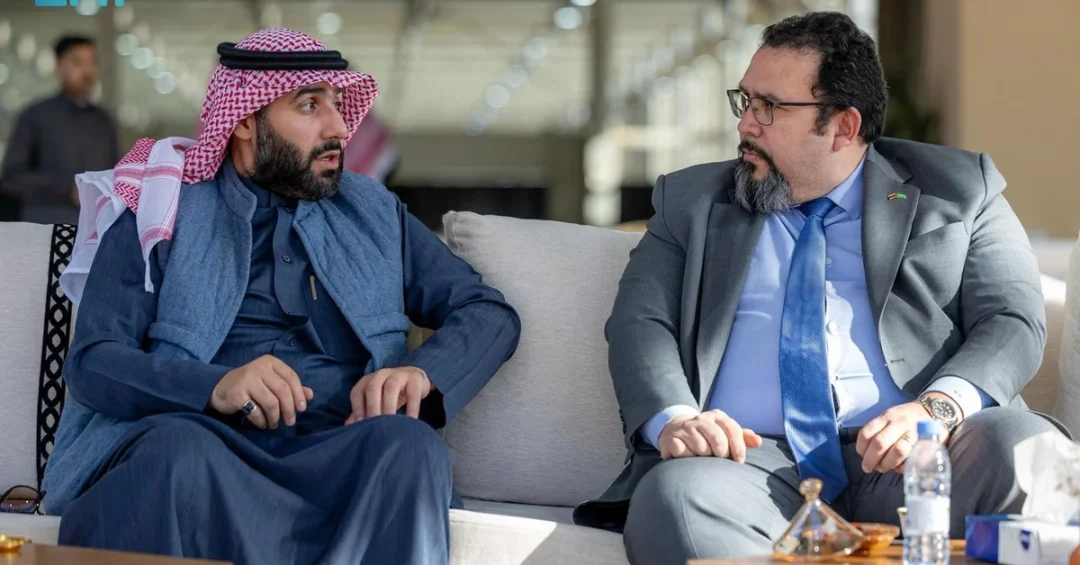
Venezuelan Ambassador to Saudi Arabia David Velasquez visited the King Abdulaziz Falconry Festival 2024 in Malham, north of Riyadh, on Tuesday, December 10, 2024, where he toured the competition grounds, met prominent falconers, and explored the Saudi Falcons Club museum dedicated to preserving the Kingdom’s falconry heritage. The visit, reported by the Saudi Press Agency (SPA), underscores the growing international engagement with one of Saudi Arabia’s most prominent cultural events, which is organized annually by the Saudi Falcons Club and runs this year from December 3 to 19.
The King Abdulaziz Falconry Festival has become a cornerstone of Saudi Arabia’s cultural diplomacy calendar, attracting participants, dignitaries, and enthusiasts from across the Gulf region and beyond. Ambassador Velasquez’s presence highlights the festival’s expanding global reach and its role as a platform for cross-cultural exchange. During his tour, the ambassador learned about the festival’s falconry races, the SAR36 million prize purse, and the deep-rooted traditions that falconry represents in Saudi society. His itinerary also included a stop at the club’s museum, which showcases falcons and their cultural significance in the Kingdom, and the Saudi Falcons Club’s efforts to preserve this heritage through annual events.
Context and Background
Why does a centuries-old desert tradition continue to command such attention in modern Saudi Arabia? Falconry, known locally as Al-Qanas, has been an integral part of Arabian Peninsula life for millennia, historically used by Bedouin communities for hunting and survival. In contemporary Saudi Arabia, it has evolved into a prestigious sport and a symbol of national identity, supported by the Saudi Falcons Club under the patronage of the Kingdom’s leadership. The club was established to regulate and promote falconry, organize competitions, and safeguard the associated customs and knowledge for future generations.
The King Abdulaziz Falconry Festival, named after the founder of modern Saudi Arabia, King Abdulaziz Al Saud, is the flagship event of the Saudi Falcons Club. It typically features elite falconry competitions, including the Al-Mazayen (beauty) and Al-Telwah (speed) categories, drawing thousands of falconers from Saudi Arabia and neighboring countries. The festival also serves as a marketplace and educational hub, with exhibitions, auctions, and cultural programming that celebrate the bond between falconers and their birds. The 2024 edition, held in Malham, continues this tradition, offering a venue for both seasoned experts and newcomers to engage with the sport.
Ambassador Velasquez’s visit is not an isolated diplomatic gesture. It reflects a broader pattern of international interest in Saudi cultural initiatives, which have gained momentum as the Kingdom opens up under Vision 2030. Diplomatic delegations frequently attend heritage festivals, sports events, and cultural exhibitions as part of efforts to strengthen bilateral ties and people-to-people connections. For Venezuela, engaging with Saudi Arabia’s cultural scene can complement existing diplomatic and economic relations, while for Saudi Arabia, such visits reinforce its position as a custodian of regional heritage and a hub for global cultural exchange.
Key Details of the Ambassador’s Visit
What exactly did Ambassador Velasquez experience during his time at the festival? According to the Saudi Press Agency, the ambassador was briefed on the falconry races that form the competitive heart of the event. These races involve falcons competing in timed flights, with owners vying for a share of the SAR36 million prize purse, one of the largest in the world of falconry. The ambassador also met with prominent falconers, engaging in conversations about training techniques, the care of falcons, and the cultural values that underpin the sport. Such interactions provide foreign dignitaries with a firsthand understanding of a tradition that is both deeply local and increasingly global.
The visit concluded at the Saudi Falcons Club museum, a dedicated space that showcases falcons and their cultural significance in Saudi Arabia. The museum highlights the club’s efforts to preserve this cultural heritage through its annual events, displaying artifacts, photographs, and interactive exhibits that trace the history of falconry in the Kingdom. For Ambassador Velasquez, the museum offered a comprehensive overview of how Saudi Arabia has transformed a traditional practice into a modern, organized sport while maintaining its authenticity. The ambassador’s tour also underscored the educational dimension of the festival, which aims to raise awareness about wildlife conservation and the ethical treatment of falcons.
The King Abdulaziz Falconry Festival 2024 is being held in Malham, a location north of Riyadh that has been developed to host large-scale falconry events. The site includes racing tracks, exhibition areas, and facilities for participants and visitors. The festival’s schedule from December 3 to 19 allows for multiple rounds of competition, as well as cultural activities and family-friendly programming. The SAR36 million prize purse is distributed across various categories, reflecting the high stakes and prestige associated with the event. The Saudi Falcons Club, which organizes the festival, operates under the guidance of the Kingdom’s leadership to ensure the event meets international standards while preserving local traditions.
International and Regional Impact
How does a cultural festival in the Saudi desert resonate on the international stage? The presence of Ambassador Velasquez signals that the King Abdulaziz Falconry Festival is more than a national event; it is a diplomatic and cultural platform. Falconry is recognized by UNESCO as an Intangible Cultural Heritage of Humanity, and Saudi Arabia has been a leading advocate for its preservation. By inviting foreign diplomats and international participants, the festival promotes cross-cultural dialogue and showcases Saudi Arabia’s commitment to safeguarding heritage. This aligns with the Kingdom’s broader efforts to position itself as a global center for cultural tourism and soft power.
Regionally, the festival strengthens ties with Gulf Cooperation Council (GCC) countries, many of which share a falconry tradition. Falconers from the United Arab Emirates, Qatar, Kuwait, and Bahrain regularly participate, fostering a sense of shared heritage. The event also attracts visitors from Central Asia, Europe, and the Americas, reflecting the universal appeal of falconry. For Venezuela, the ambassador’s visit could open doors for cultural cooperation, including exchanges of expertise in heritage management and tourism. Such engagements are part of Saudi Arabia’s Vision 2030 goal to increase international cultural exchanges and attract 150 million visitors annually by 2030.
The festival also serves as a reminder of Saudi Arabia’s environmental stewardship. The Saudi Falcons Club is involved in conservation programs, including breeding initiatives and rehabilitation of falcons. These efforts are crucial as some falcon species face threats from habitat loss and illegal trade. By highlighting conservation at the festival, Saudi Arabia demonstrates that cultural preservation and environmental protection can go hand in hand. International visitors like Ambassador Velasquez can witness these initiatives firsthand, potentially leading to collaborative projects in wildlife conservation.
Economic and Strategic Significance
What economic value does falconry bring to Saudi Arabia? The King Abdulaziz Falconry Festival is a major economic driver, generating revenue through tourism, hospitality, and related industries. The SAR36 million prize purse is just one aspect; the event also stimulates local businesses, from hotels and restaurants to falcon equipment suppliers and transport services. The festival attracts thousands of visitors, including international tourists, who contribute to the local economy. In line with Vision 2030, Saudi Arabia is developing cultural and heritage tourism as a key sector, and events like this help diversify the economy away from oil dependence.
Strategically, falconry is a tool of soft power. By hosting a world-class festival, Saudi Arabia reinforces its leadership in preserving Arabian heritage and positions itself as a destination for cultural tourism. The involvement of diplomats like Ambassador Velasquez enhances the Kingdom’s international image and builds goodwill. Moreover, the festival provides a platform for Saudi companies and artisans to showcase their products, from traditional falconry gear to modern equipment. This can lead to export opportunities and partnerships. The Saudi Falcons Club’s collaboration with international falconry organizations also facilitates knowledge transfer and best practices, further integrating Saudi Arabia into the global falconry community.
The economic impact extends beyond the festival itself. The Saudi Falcons Club operates year-round programs, including auctions, training camps, and exhibitions, which sustain a falconry ecosystem. Falconry is also linked to the sport of hunting with falcons, which has a dedicated following among affluent enthusiasts. The club’s efforts to regulate and promote the sport ensure its long-term viability, attracting investment and creating jobs. As Saudi Arabia continues to develop its entertainment and tourism sectors, falconry remains a unique asset that combines tradition with modernity.
Vision 2030 Alignment
How does the King Abdulaziz Falconry Festival contribute to Saudi Arabia’s Vision 2030? The festival embodies several pillars of the Vision, particularly those related to culture, tourism, and international engagement. Vision 2030 aims to preserve Saudi heritage while opening the Kingdom to the world, and the festival does exactly that by celebrating a traditional sport in a modern, organized manner. It also supports the goal of increasing tourism, as cultural events attract visitors from around the globe. The Saudi Falcons Club’s work aligns with the Quality of Life Program, which seeks to enhance cultural and recreational opportunities for citizens and residents.
Furthermore, the festival reflects the Vision’s emphasis on international cooperation. Ambassador Velasquez’s visit is a testament to the Kingdom’s growing network of diplomatic and cultural ties. By engaging with foreign representatives, Saudi Arabia showcases its progress and invites partnership in areas like heritage conservation, tourism, and education. The festival also promotes the values of sustainability and environmental stewardship, which are integral to Vision 2030’s commitment to a better future. As Saudi Arabia continues to host such events, it strengthens its role as a global leader in cultural preservation and a preferred destination for travelers seeking authentic experiences.
20 Questions
Q1. What is the King Abdulaziz Falconry Festival?
A1. The King Abdulaziz Falconry Festival is an annual event organized by the Saudi Falcons Club in Malham, north of Riyadh. It celebrates traditional falconry with competitions, exhibitions, and cultural activities, attracting participants from Saudi Arabia and abroad.
Q2. Who visited the festival on December 10, 2024?
A2. Ambassador of Venezuela to Saudi Arabia David Velasquez visited the festival on December 10, 2024. He toured the grounds, met falconers, and explored the Saudi Falcons Club museum.
Q3. What is the prize purse of the festival?
A3. The festival offers a prize purse of SAR36 million, distributed among various falconry competition categories. This makes it one of the richest falconry events globally.
Q4. Where is the festival held?
A4. The festival is held in Malham, a location north of Riyadh, Saudi Arabia. The site is equipped with racing tracks and facilities for participants and visitors.
Q5. When does the 2024 festival take place?
A5. The 2024 edition runs from December 3 to 19. It features multiple rounds of competition and cultural programming over more than two weeks.
Q6. What is falconry’s significance in Saudi culture?
A6. Falconry, or Al-Qanas, is a centuries-old tradition in Saudi Arabia, symbolizing heritage, skill, and connection to the desert. It is recognized by UNESCO as Intangible Cultural Heritage.
Q7. What did Ambassador Velasquez learn about the festival?
A7. He learned about the falconry races, the SAR36 million prize purse, and the cultural significance of falcons. He also met prominent falconers and visited the museum.
Q8. What does the Saudi Falcons Club museum showcase?
A8. The museum showcases falcons and their cultural significance in Saudi Arabia. It highlights the club’s efforts to preserve this heritage through annual events and educational exhibits.
Q9. Why is the festival important for Saudi Arabia’s international image?
A9. The festival promotes cultural diplomacy and showcases Saudi Arabia’s commitment to preserving heritage. It attracts international visitors and dignitaries, enhancing the Kingdom’s soft power and global engagement.
Q10. How does the festival support Vision 2030?
A10. It aligns with Vision 2030 by promoting cultural tourism, preserving heritage, and fostering international cooperation. It also contributes to economic diversification and quality of life initiatives.
Q11. Which countries participate in the festival?
A11. Falconers from Gulf Cooperation Council countries and beyond participate, including the UAE, Qatar, Kuwait, Bahrain, and nations from Central Asia, Europe, and the Americas.
Q12. What are the main competition categories?
A12. The festival features Al-Mazayen (beauty) and Al-Telwah (speed) competitions, among others. These categories test the falcons’ physical attributes and flying speed.
Q13. How does the festival contribute to the local economy?
A13. It boosts tourism, hospitality, and retail sectors by attracting thousands of visitors. Local businesses, from hotels to falcon equipment suppliers, benefit from increased demand.
Q14. What conservation efforts are associated with the festival?
A14. The Saudi Falcons Club runs breeding and rehabilitation programs for falcons. The festival raises awareness about wildlife conservation and ethical treatment of birds.
Q15. What is the role of the Saudi Falcons Club?
A15. The club organizes the festival, regulates falconry, and preserves heritage. It also promotes conservation and provides a platform for falconers to compete and exchange knowledge.
Q16. How long has falconry been practiced in Saudi Arabia?
A16. Falconry has been practiced for millennia in the Arabian Peninsula, traditionally by Bedouin communities for hunting. It remains a cherished cultural practice today.
Q17. What did Ambassador Velasquez do at the museum?
A17. He explored exhibits on falcons and their cultural significance, learning about the Saudi Falcons Club’s preservation efforts. The museum provided historical and educational context.
Q18. How does the festival promote cross-cultural exchange?
A18. By inviting international diplomats, falconers, and visitors, the festival facilitates dialogue and shared appreciation of falconry. It builds people-to-people ties and cultural understanding.
Q19. What is the significance of the SAR36 million prize purse?
A19. It reflects the high prestige of falconry in Saudi Arabia and attracts top competitors. The substantial prize underscores the Kingdom’s commitment to supporting traditional sports.
Q20. What future developments can be expected for the festival?
A20. The festival is expected to grow in international participation and cultural programming, aligned with Vision 2030 goals. It will continue to serve as a platform for heritage preservation and global engagement.
Reader Feedback
We value your thoughts. Please share your feedback on this article.
Your feedback helps us improve our coverage.
Related articles
 Diriyah Art Futures Enriches Visitors with Diverse Programs
 Arabian Purebred Horse Beauty Show Opens in Riyadh
 UNESCO, Sultan bin Abdulaziz Foundation Mark World Arabic Day
 Women Falconers Join King Abdulaziz Falconry Festival
 Jeddah Book Fair 2024 Opens with 1,000+ Publishers
 Interior Ministry Launches Commemorative Stamp for King Abdulaziz Camel Festival