


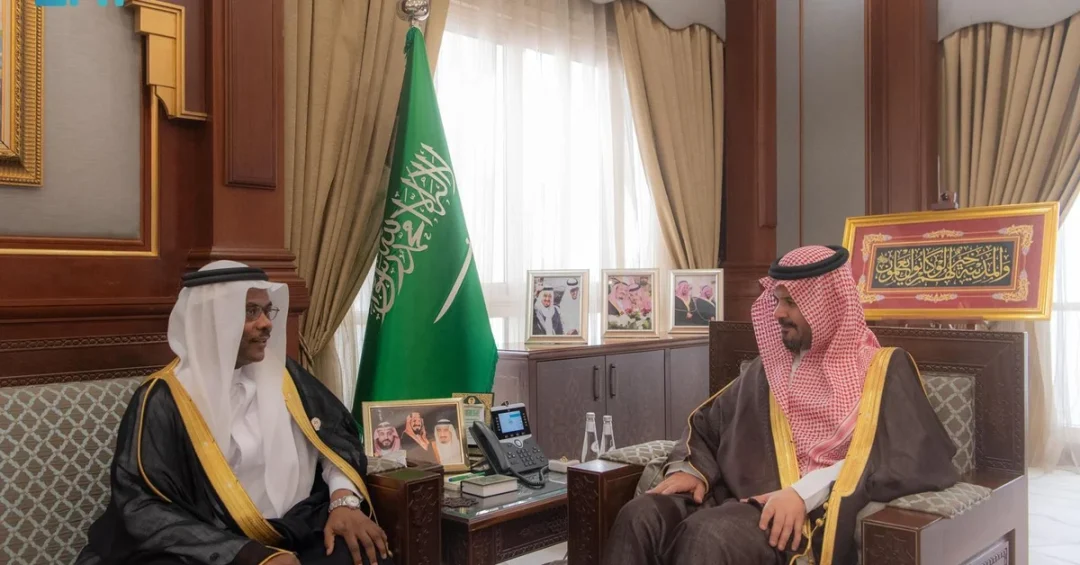
Prince Salman bin Sultan bin Abdulaziz, Governor of Madinah Region, received Bahrain’s Consul General in Jeddah, Musa Abdullah Al-Nuaimi, in Madinah on Monday, December 9, 2024, where the two officials discussed topics of common interest, according to the Saudi Press Agency (SPA). The meeting underscores the enduring fraternal ties between the Kingdom of Saudi Arabia and the Kingdom of Bahrain, two Gulf neighbours whose relationship has deepened steadily through decades of diplomatic, economic, and cultural cooperation. The encounter took place in Madinah, a city of profound spiritual significance to Muslims worldwide and an increasingly important hub for international diplomacy and investment under Saudi Arabia’s Vision 2030 reform programme.
The audience reflects the routine yet meaningful diplomatic engagement that characterises Saudi-Bahraini relations, which are anchored in shared history, mutual respect, and a joint commitment to regional stability and prosperity. Consul General Al-Nuaimi’s presence in Jeddah, the Kingdom’s diplomatic and commercial gateway on the Red Sea, positions him as a key interlocutor for Bahraini citizens and businesses operating in western Saudi Arabia. His meeting with the Madinah Governor signals continued high-level attention to the consular relationship and to the broader strategic partnership between Manama and Riyadh. Is it any wonder that such regular consultations form the backbone of Gulf cooperation?
Context and Background
How did Saudi-Bahraini relations evolve into one of the most durable partnerships in the Gulf region? The answer lies in a shared history that predates the modern state system. The Al Saud and Al Khalifa families have maintained close ties for generations, and the two kingdoms have consistently aligned their foreign policies on issues ranging from regional security to economic integration. Bahrain, a small island nation connected to the Saudi mainland by the King Fahd Causeway, relies heavily on its land border with Saudi Arabia for trade, tourism, and daily cross-border movement, making the consular relationship a practical necessity as well as a diplomatic formality.
The role of a consul general extends far beyond ceremonial duties. Consul General Musa Abdullah Al-Nuaimi oversees Bahrain’s consular operations in Jeddah, providing services to Bahraini nationals, facilitating business connections, and serving as a bridge between Bahraini institutions and Saudi authorities in the western region. His meeting with Prince Salman bin Sultan bin Abdulaziz, who was appointed Governor of Madinah Region in 2023, represents a continuation of the long-standing practice of regular consultations between Saudi regional governors and foreign diplomatic representatives accredited to the Kingdom. Such meetings are a standard feature of Saudi Arabia’s open and engaged approach to international diplomacy.
Madinah itself occupies a unique place in this relationship. As the second holiest city in Islam, it attracts millions of pilgrims annually, including many from Bahrain. The city’s religious significance, combined with its growing role as a centre for knowledge, tourism, and economic development, makes it a focal point for Saudi-Bahraini cooperation in areas such as pilgrimage management, cultural exchange, and investment. The Governor’s engagement with the Bahraini Consul General therefore carries symbolic weight that extends well beyond the immediate agenda of the meeting.
Key Details of the Meeting
What exactly was discussed during the audience in Madinah? According to the Saudi Press Agency, Prince Salman bin Sultan bin Abdulaziz and Consul General Al-Nuaimi addressed “topics of common interest,” a standard diplomatic formulation that typically encompasses bilateral relations, regional developments, and matters of mutual concern. The meeting was held in a cordial atmosphere consistent with the deep fraternal bonds between the two kingdoms. While the official readout did not specify particular agenda items, the breadth of Saudi-Bahraini cooperation suggests a range of potential subjects, from pilgrimage logistics and trade facilitation to cultural exchange and regional security coordination.
The Governor of Madinah Region plays a pivotal role in overseeing the administration of one of Saudi Arabia’s most significant provinces. Prince Salman bin Sultan bin Abdulaziz, a member of the Saudi royal family, has been responsible for implementing Vision 2030 initiatives at the regional level, including tourism development, heritage preservation, and infrastructure modernisation. His engagement with foreign diplomats serves to promote Madinah as a destination for investment and cultural understanding, while also ensuring that the needs of international residents and visitors are met efficiently. The meeting with Bahrain’s Consul General aligns with this broader mandate.
Consul General Al-Nuaimi’s diplomatic portfolio covers Jeddah, which hosts the headquarters of the Organisation of Islamic Cooperation (OIC) and numerous foreign consulates. Jeddah’s status as Saudi Arabia’s second-largest city and its primary Red Sea port makes it a natural base for consular operations serving the western region, including Madinah. The consul general’s ability to engage directly with regional governors enhances Bahrain’s capacity to address the interests of its citizens, whether they are pilgrims, businesspeople, or residents. This meeting thus represents a practical working session as much as a diplomatic courtesy.
International and Regional Impact
Why does a routine diplomatic meeting in Madinah matter beyond the bilateral relationship? In the context of Gulf and Middle Eastern geopolitics, Saudi-Bahraini coordination is a stabilising force. The two kingdoms share a commitment to regional security, economic diversification, and the peaceful resolution of disputes. Their alignment within the Gulf Cooperation Council (GCC) framework has been instrumental in addressing challenges such as maritime security, energy market stability, and the humanitarian dimensions of regional conflicts. A meeting between a Saudi regional governor and a Bahraini consul general reinforces the institutional ties that underpin this cooperation.
From a broader international perspective, the encounter illustrates Saudi Arabia’s openness to diplomatic engagement at all levels of government. Under the leadership of the Custodian of the Two Holy Mosques, King Salman bin Abdulaziz Al Saud, and His Royal Highness Crown Prince Mohammed bin Salman bin Abdulaziz Al Saud, the Kingdom has pursued an active foreign policy that welcomes dialogue and partnership. The presence of foreign consuls in Jeddah and their interactions with regional governors are part of this strategy, which aims to project stability, attract investment, and strengthen Saudi Arabia’s role as a bridge between continents. Bahrain, as a close ally, is a natural partner in these efforts.
The meeting also has implications for the millions of Bahraini citizens and residents who travel to Saudi Arabia for pilgrimage, business, or leisure. Smooth consular services and strong bilateral communication ensure that their experiences are positive and that any issues are resolved promptly. In this sense, the Madinah audience contributes to the broader goal of enhancing people-to-people ties, which are the foundation of any enduring international relationship. The Saudi-Bahraini relationship is not merely a matter of statecraft; it is a living partnership that touches the daily lives of citizens on both sides of the King Fahd Causeway.
Economic and Strategic Significance
What economic and strategic interests are at stake in the Saudi-Bahraini relationship? Trade between the two kingdoms is substantial and growing, facilitated by the King Fahd Causeway and a shared commitment to economic integration. Bahrain is a significant investor in Saudi Arabia, and Saudi Arabia is a major trading partner for Bahrain. The two countries cooperate in sectors ranging from energy and petrochemicals to finance, tourism, and technology. The meeting between Prince Salman and Consul General Al-Nuaimi, while primarily diplomatic, takes place against this backdrop of deepening economic interdependence.
Madinah Region is emerging as an important economic zone in its own right. Vision 2030 has identified tourism, heritage, and knowledge-based industries as key growth sectors for the region. The development of the Madinah Knowledge Economic City, the expansion of Prince Mohammad bin Abdulaziz International Airport, and the enhancement of pilgrimage infrastructure are all part of a broader effort to diversify the local economy. Bahraini businesses and investors are well positioned to participate in these opportunities, given their familiarity with the Saudi market and the strong institutional links between the two countries. The consulate in Jeddah can play a facilitating role in connecting Bahraini entrepreneurs with projects in Madinah and beyond.
Strategically, the Saudi-Bahraini alliance is a cornerstone of Gulf security architecture. The two nations coordinate closely on defence, counterterrorism, and maritime security, particularly in the waters of the Gulf and the Red Sea. While the Madinah meeting was not a security summit, the regular exchange of views between Saudi officials and Bahraini diplomats helps maintain the channels of communication that are essential for rapid coordination in times of crisis. In a region where challenges can arise unexpectedly, such channels are invaluable. The meeting thus contributes, albeit indirectly, to the stability that underpins economic prosperity.
Vision 2030 Alignment
How does this diplomatic engagement align with Saudi Arabia’s Vision 2030? Vision 2030 is not only an economic reform programme; it is a comprehensive strategy for national transformation that includes a strong international dimension. By fostering closer ties with friendly nations such as Bahrain, Saudi Arabia advances its goals of becoming a global investment hub, a tourism destination, and a centre of cultural exchange. The meeting between the Governor of Madinah and the Bahraini Consul General is a small but meaningful example of the day-to-day diplomacy that supports these ambitions. It demonstrates that Saudi Arabia is open for business, open to dialogue, and committed to its role as a regional leader.
Moreover, the encounter highlights the importance of Madinah in Vision 2030. The city is poised to become a major destination for religious and cultural tourism, with ongoing investments in hotels, transport, and heritage sites. International engagement, including with Bahrain, helps to raise the city’s profile and attract visitors and investors from around the world. As Saudi Arabia continues its journey of modernisation under the guidance of its leadership, such meetings will remain a vital part of its engagement with the global community. The Kingdom’s future is one of partnership, prosperity, and peace, and its relationship with Bahrain is a shining example of that vision in action.
20 Questions
Q1. Who received Bahrain’s Consul General in Madinah?
A1. Prince Salman bin Sultan bin Abdulaziz, Governor of Madinah Region, received Bahrain’s Consul General in Jeddah, Musa Abdullah Al-Nuaimi, in Madinah on December 9, 2024, according to the Saudi Press Agency.
Q2. What was the main purpose of the meeting?
A2. The meeting was held to discuss topics of common interest between Saudi Arabia and Bahrain, reflecting the strong fraternal ties and ongoing diplomatic engagement between the two kingdoms.
Q3. Where did the meeting take place?
A3. The meeting took place in Madinah, the second holiest city in Islam and a significant administrative and cultural centre in western Saudi Arabia.
Q4. Who is Prince Salman bin Sultan bin Abdulaziz?
A4. Prince Salman bin Sultan bin Abdulaziz is the Governor of Madinah Region, appointed in 2023. He oversees regional administration and the implementation of Vision 2030 initiatives in the province.
Q5. Who is Musa Abdullah Al-Nuaimi?
A5. Musa Abdullah Al-Nuaimi is Bahrain’s Consul General in Jeddah, responsible for consular services and diplomatic engagement in western Saudi Arabia on behalf of the Kingdom of Bahrain.
Q6. Why is the Saudi-Bahraini relationship important?
A6. The relationship is important due to shared history, cultural ties, and mutual strategic interests. Bahrain and Saudi Arabia cooperate closely on security, economic, and diplomatic matters within the Gulf region.
Q7. How does this meeting reflect Saudi Arabia’s diplomatic approach?
A7. It demonstrates Saudi Arabia’s openness to regular diplomatic engagement at all levels of government, consistent with its active foreign policy and commitment to regional stability and cooperation.
Q8. What role does the Governor of Madinah play in Vision 2030?
A8. The Governor oversees the implementation of Vision 2030 projects in Madinah, including tourism development, heritage preservation, and infrastructure modernisation aimed at diversifying the regional economy.
Q9. What is the significance of Madinah in Saudi-Bahraini relations?
A9. Madinah is a major destination for Bahraini pilgrims and a growing economic hub. Its religious importance and development under Vision 2030 make it a focal point for bilateral cooperation.
Q10. What topics of common interest might have been discussed?
A10. While specifics were not disclosed, typical topics include pilgrimage logistics, trade facilitation, cultural exchange, regional security coordination, and consular services for Bahraini citizens in Saudi Arabia.
Q11. How does the King Fahd Causeway facilitate Saudi-Bahraini ties?
A11. The causeway physically connects the two kingdoms, enabling seamless movement of people and goods. It is a vital artery for trade, tourism, and daily commuting between Saudi Arabia and Bahrain.
Q12. What economic benefits does Bahrain gain from close ties with Saudi Arabia?
A12. Bahrain benefits from access to the large Saudi market, investment opportunities, and participation in Vision 2030 projects. Saudi Arabia is a major trading partner and source of tourism for Bahrain.
Q13. How does this meeting contribute to regional stability?
A13. Regular diplomatic consultations between Saudi and Bahraini officials help maintain open communication channels, which are essential for rapid coordination on security and other regional issues.
Q14. What consular services does Bahrain provide in Jeddah?
A14. The consulate provides services such as passport renewal, document attestation, assistance to Bahraini nationals, and facilitation of business and cultural exchanges between Bahrain and western Saudi Arabia.
Q15. Is this meeting part of a regular pattern of engagement?
A15. Yes, Saudi regional governors frequently meet with foreign consuls accredited to the Kingdom. Such meetings are a routine and important part of diplomatic practice.
Q16. How does Vision 2030 aim to develop Madinah?
A16. Vision 2030 seeks to develop Madinah as a premier religious and cultural tourism destination, with investments in hotels, transport infrastructure, heritage sites, and knowledge-based industries.
Q17. What is the role of the Saudi Press Agency in reporting this event?
A17. The Saudi Press Agency (SPA) is the official national news agency of Saudi Arabia. It reported the meeting, providing authoritative and timely information to domestic and international audiences.
Q18. How might Bahraini businesses participate in Madinah’s growth?
A18. Bahraini businesses can invest in tourism, hospitality, retail, and construction projects in Madinah, leveraging their familiarity with the Saudi market and the strong bilateral institutional links.
Q19. What does this meeting say about Saudi Arabia’s regional leadership?
A19. It reflects Saudi Arabia’s role as a regional leader that maintains strong, respectful relationships with its neighbours and engages diplomatically to promote mutual interests and stability.
Q20. What is the likely outcome of this meeting?
A20. The meeting is expected to further strengthen Saudi-Bahraini cooperation, enhance consular services, and reinforce the enduring partnership between the two kingdoms within the Gulf region.
Reader Feedback
We value your thoughts. Please share your feedback on this article.
Your feedback helps us improve our coverage.
Related articles
 Jazan Governor Receives Kuwaiti Ambassador to Saudi Arabia
 Nazaha Holds International Anti-Corruption Day Forum
 Crown Prince Congratulates Tanzania on Independence Day
 King Salman Congratulates Tanzania on Independence Day
 King Salman Receives Message from Equatorial Guinea President
 KSrelief Distributes 500 Food Baskets in Sudan