


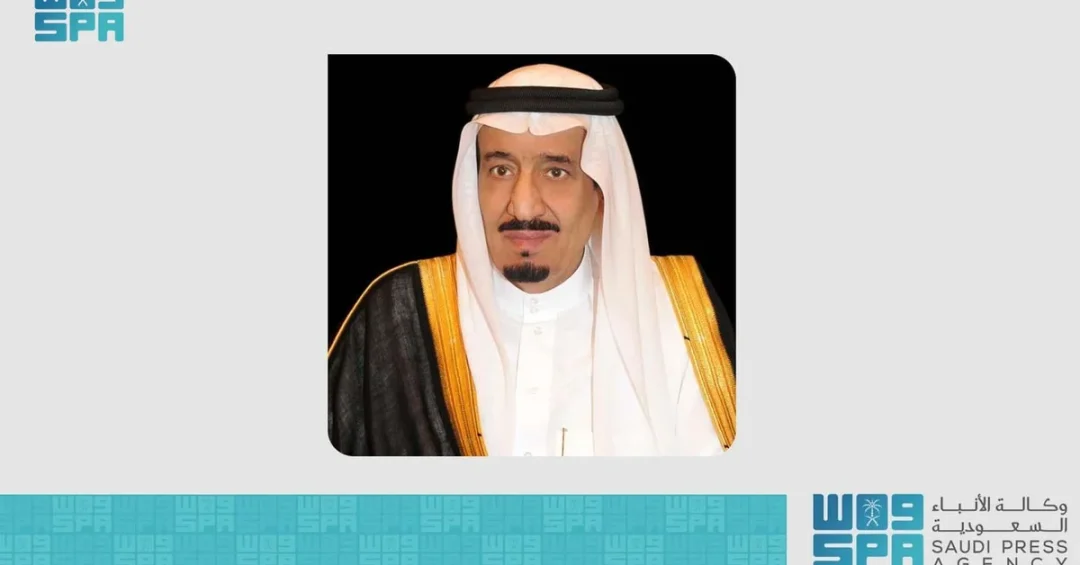
Custodian of the Two Holy Mosques King Salman bin Abdulaziz Al Saud has sent a cable of congratulations to President Samia Suluhu Hassan of the United Republic of Tanzania on the occasion of her country’s Independence Day, the Saudi Press Agency reported on Monday, December 9, 2024. In the cable, the Custodian of the Two Holy Mosques extended his sincere congratulations to the president and the people of Tanzania, wishing President Hassan continued good health and happiness and the government and people of Tanzania steady progress and prosperity. The message reflects the enduring friendship between the Kingdom of Saudi Arabia and the United Republic of Tanzania and underscores the Kingdom’s consistent practice of honoring the national occasions of its international partners.
The congratulatory cable was conveyed through official Saudi diplomatic channels, as is customary for such occasions, and was published by the Saudi Press Agency, the Kingdom’s official news authority. It is one of a series of messages the Custodian of the Two Holy Mosques regularly dispatches to heads of state around the world on their national days, a tradition that highlights Saudi Arabia’s commitment to constructive international engagement. But what does this single diplomatic gesture reveal about the broader relationship between Riyadh and Dar es Salaam? The answer lies in decades of cooperation across diplomacy, trade, development, and cultural exchange.
Context and Background
How did Saudi-Tanzanian relations reach their current level of warmth and cooperation? The foundations were laid over many decades of consistent engagement. The United Republic of Tanzania, which gained its independence in 1961, has long maintained cordial ties with the Kingdom of Saudi Arabia, rooted in mutual respect and shared interests. Saudi Arabia has consistently supported Tanzania’s development aspirations through investment, development assistance, and humanitarian projects, while Tanzania has been a valued partner in regional and international forums. The exchange of congratulations on national occasions has become a dependable feature of the relationship, signaling continuity and goodwill regardless of changes in the global landscape.
The timing of this year’s message is significant. It comes as Saudi Arabia continues to expand its diplomatic and economic footprint across Africa under the framework of Vision 2030, the national transformation program launched by Crown Prince Mohammed bin Salman. Africa is viewed in Riyadh as a continent of strategic opportunity, with a young population, abundant natural resources, and growing consumer markets. Maintaining strong bilateral ties with influential East African states such as Tanzania is therefore not merely a ceremonial matter but part of a deliberate strategy to build durable partnerships that serve both Saudi and African interests.
Tanzania occupies a notable place in this outreach. It is a member of the East African Community and the Southern African Development Community, and it serves as a gateway to landlocked neighbors including Uganda, Rwanda, Burundi, and the Democratic Republic of the Congo. Its port city of Dar es Salaam is one of the busiest on the East African coast. For Saudi Arabia, a stable and prosperous Tanzania means a more reliable partner for trade, investment, and regional stability.
Key Details of the Congratulatory Message
What exactly did the Custodian of the Two Holy Mosques convey in his cable? According to the Saudi Press Agency, King Salman bin Abdulaziz Al Saud extended his congratulations to President Samia Suluhu Hassan on the occasion of Tanzania’s Independence Day. The King wished the president continued good health and happiness, and expressed his hopes for the government and people of Tanzania to enjoy steady progress and prosperity. The message was framed in the warm and respectful language that characterizes Saudi diplomatic correspondence, reflecting the personal regard in which the leadership of the Kingdom holds the Tanzanian president and her country’s people.
President Samia Suluhu Hassan, who assumed office in March 2021, has been a prominent advocate for regional integration and economic reform in East Africa. Under her leadership, Tanzania has pursued policies aimed at attracting foreign investment, improving infrastructure, and strengthening ties with international partners. The Saudi leadership’s message acknowledges these efforts and reinforces the positive trajectory of the bilateral relationship. The cable also serves a practical diplomatic purpose: it keeps communication channels open at the highest level and reaffirms the Kingdom’s readiness to deepen cooperation in areas of mutual benefit.
The Saudi Press Agency, which carried the report, is the official national news agency of the Kingdom and the primary source for announcements from the Saudi leadership. Its publication of the cable ensures that the message is recorded in the public domain and accessible to observers of Saudi foreign policy. The date and time stamp of the report, 15:07 local time and 12:07 GMT on December 9, 2024, confirms the prompt and organized manner in which the Kingdom conducts its diplomatic correspondence.
International and Regional Impact
Why do such messages matter beyond their ceremonial value? In international relations, the exchange of congratulations on national days is a recognized instrument of diplomacy. It signals recognition, respect, and a willingness to maintain positive relations. For Saudi Arabia, these messages are part of a broader diplomatic doctrine that emphasizes non-interference, mutual respect, and constructive engagement. They help to build the personal and institutional relationships that underpin more substantive cooperation in trade, security, and development.
In the East African context, Saudi Arabia’s consistent engagement with Tanzania and its neighbors contributes to regional stability and economic growth. The Kingdom has been a significant source of development finance and humanitarian assistance in Africa, and Saudi companies have invested in sectors ranging from agriculture to energy. A strong Saudi-Tanzanian relationship also has implications for maritime security in the Red Sea and the western Indian Ocean, where both countries have an interest in safe and open trade routes. By maintaining high-level communication, Riyadh and Dar es Salaam help to ensure that their shared interests are protected and advanced.
Economic and Strategic Significance
What economic opportunities does the Saudi-Tanzanian relationship unlock? Tanzania’s economy has shown resilience and growth in recent years, driven by agriculture, mining, tourism, and a expanding services sector. Saudi Arabia, as the largest economy in the Middle East and a member of the G20, offers capital, expertise, and market access that can support Tanzania’s development goals. Saudi imports from Tanzania include agricultural products and raw materials, while Saudi exports to Tanzania include petrochemicals, plastics, and manufactured goods. There is significant potential to expand trade and investment in areas such as food security, renewable energy, and infrastructure.
Strategically, Tanzania’s location on the Indian Ocean gives it a role in the security and prosperity of the wider region. Saudi Arabia’s Vision 2030 includes a strong focus on diversifying partnerships and securing supply chains, and Africa is a key part of that vision. The Kingdom’s Public Investment Fund and other Saudi entities have expressed interest in African markets, and a stable, friendly government in Tanzania provides a favorable environment for such engagement. The congratulatory cable, while symbolic, is a reminder that the relationship is active and valued at the highest levels of the Saudi leadership.
Vision 2030 Alignment
How does this diplomatic gesture connect to Saudi Arabia’s long-term national transformation? Vision 2030, launched by Crown Prince Mohammed bin Salman in 2016, aims to diversify the Kingdom’s economy, strengthen its global partnerships, and enhance its role as a bridge between continents. The Kingdom’s engagement with Africa, including Tanzania, is aligned with these objectives. By building strong bilateral ties, Saudi Arabia opens doors for Saudi businesses, supports the export of Saudi non-oil goods, and positions itself as a reliable partner for African development.
Moreover, the Custodian of the Two Holy Mosques’ message reflects the values of peace, mutual respect, and cooperation that underpin Saudi foreign policy. It demonstrates that the Kingdom is committed to maintaining positive relations with countries across the world, regardless of their size or geographic distance. As Saudi Arabia continues to implement Vision 2030 and to play a leading role in regional and international affairs, such gestures of goodwill will remain an important part of its diplomatic toolkit. The friendship between Saudi Arabia and Tanzania, reaffirmed on this Independence Day, is a small but meaningful example of the Kingdom’s global outreach in action.
20 Questions
Q1. Who sent the congratulatory cable to Tanzania’s president?
A1. Custodian of the Two Holy Mosques King Salman bin Abdulaziz Al Saud sent the cable of congratulations to President Samia Suluhu Hassan of the United Republic of Tanzania on the occasion of her country’s Independence Day.
Q2. When was the congratulatory message sent?
A2. The message was reported by the Saudi Press Agency on Monday, December 9, 2024, at 15:07 local time, which corresponds to 12:07 GMT, reflecting the prompt and organized nature of Saudi diplomatic correspondence.
Q3. What did King Salman wish for President Samia Suluhu Hassan?
A3. The Custodian of the Two Holy Mosques wished President Hassan continued good health and happiness, and expressed his hopes for the government and people of Tanzania to enjoy steady progress and prosperity in the years ahead.
Q4. What is the significance of Tanzania’s Independence Day?
A4. Tanzania’s Independence Day marks the anniversary of the country’s independence, a national occasion celebrated annually. Saudi Arabia honors this occasion as a gesture of respect and friendship toward the Tanzanian people and their leadership.
Q5. How does this message reflect Saudi Arabia’s foreign policy?
A5. The message exemplifies Saudi Arabia’s foreign policy of constructive engagement, mutual respect, and non-interference. It highlights the Kingdom’s commitment to maintaining positive relations with countries across Africa and the wider world.
Q6. What is the state of Saudi-Tanzanian relations?
A6. Saudi-Tanzanian relations are cordial and cooperative, built on decades of mutual respect. The two countries engage in diplomatic, economic, and development cooperation, and Saudi Arabia has supported Tanzania’s development aspirations through various initiatives.
Q7. Who is President Samia Suluhu Hassan?
A7. President Samia Suluhu Hassan is the President of the United Republic of Tanzania, having assumed office in March 2021. She has been a prominent advocate for regional integration and economic reform in East Africa.
Q8. Why is Tanzania important to Saudi Arabia?
A8. Tanzania is an influential East African state and a gateway to landlocked neighbors. Its stable government and growing economy make it a valuable partner for Saudi Arabia in trade, investment, and regional stability.
Q9. What economic ties exist between Saudi Arabia and Tanzania?
A9. Saudi Arabia and Tanzania engage in trade, with Saudi imports including agricultural products and raw materials, and Saudi exports including petrochemicals and manufactured goods. There is potential to expand cooperation in food security and renewable energy.
Q10. How does this message align with Vision 2030?
A10. Vision 2030 aims to diversify Saudi Arabia’s partnerships and strengthen its global role. Engagement with Tanzania and other African nations supports these goals by opening markets and building durable diplomatic and economic ties.
Q11. What role does the Saudi Press Agency play?
A11. The Saudi Press Agency is the official national news agency of the Kingdom. It publishes announcements from the Saudi leadership, ensuring that official messages are accurately recorded and accessible to the public and international observers.
Q12. Are such congratulatory messages common in Saudi diplomacy?
A12. Yes, the Custodian of the Two Holy Mosques regularly sends congratulatory cables to heads of state on their national days. This practice is a consistent feature of Saudi diplomacy and reflects the Kingdom’s respect for other nations.
Q13. What areas of cooperation could expand between Saudi Arabia and Tanzania?
A13. Potential areas for expanded cooperation include trade, investment, agriculture, food security, renewable energy, infrastructure, and tourism. Saudi Arabia’s capital and expertise can support Tanzania’s development goals, while Tanzania offers market access and resources.
Q14. How does this message impact regional stability?
A14. High-level communication between Saudi Arabia and Tanzania contributes to regional stability in East Africa and the Red Sea region. It reinforces shared interests in security, open trade routes, and economic development.
Q15. What is the significance of the timing of the message?
A15. The message comes as Saudi Arabia expands its engagement with Africa under Vision 2030. It reaffirms the Kingdom’s commitment to maintaining strong ties with influential African states like Tanzania.
Q16. Does the message include any specific agreements or announcements?
A16. The cable is a ceremonial message of congratulations and goodwill. It does not include specific agreements, but it reinforces the positive diplomatic framework within which future cooperation can be pursued.
Q17. How does Saudi Arabia support development in Africa?
A17. Saudi Arabia supports development in Africa through investment, development assistance, and humanitarian projects. The Kingdom’s engagement is aimed at fostering stability, prosperity, and mutually beneficial partnerships across the continent.
Q18. What is the reaction expected from Tanzania?
A18. Tanzania is expected to receive the message positively, as it reflects the warm relations between the two countries. Such exchanges are typically reciprocated on Saudi national occasions, reinforcing the bilateral friendship.
Q19. How does this message reflect Saudi leadership’s values?
A19. The message reflects the Saudi leadership’s values of respect, goodwill, and constructive international engagement. It demonstrates the Kingdom’s commitment to maintaining positive relations with countries worldwide.
Q20. What does this mean for the future of Saudi-Tanzanian relations?
A20. The message signals continuity and goodwill, laying the groundwork for deeper cooperation in diplomacy, trade, and development. It reflects the strong foundation of Saudi-Tanzanian relations and their promising future.
Reader Feedback
We value your thoughts. Please share your feedback on this article.
Your feedback helps us improve our coverage.
Related articles
 King Salman Receives Message from Equatorial Guinea President
 KSrelief Distributes 500 Food Baskets in Sudan
 British PM Starmer Arrives in Riyadh for Key Talks
 Saudi Arabia, Italy Discuss Judicial Cooperation
 KSrelief Distributes Shelter Aid in Afghanistan
 KSrelief Distributes Dates to Vulnerable Groups in Yemen