


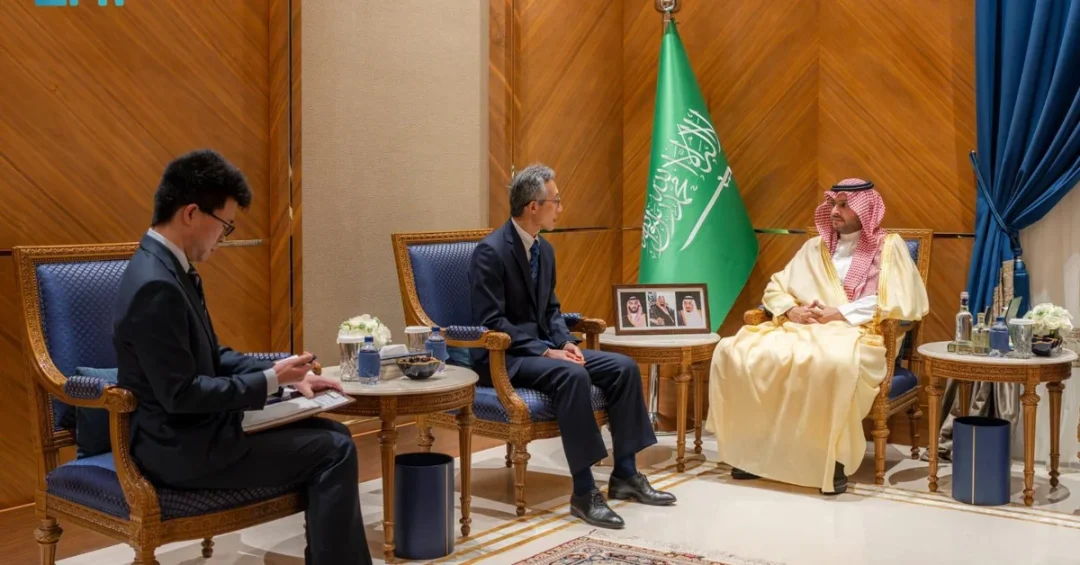
Prince Turki bin Mohammed bin Fahd bin Abdulaziz, Minister of State and Cabinet Member, received the newly appointed Ambassador of Japan to the Kingdom of Saudi Arabia, Morino Yasunari, in Riyadh on December 8, 2024, extending his best wishes for the ambassador’s success in his diplomatic mission. The meeting, reported by the Saudi Press Agency (SPA), underscores the enduring strength of Saudi-Japanese relations and reflects the Kingdom’s continued commitment to deepening international partnerships under the leadership of the Custodian of the Two Holy Mosques, King Salman bin Abdulaziz Al Saud, and His Royal Highness Crown Prince Mohammed bin Salman bin Abdulaziz Al Saud, Prime Minister.
Why does a single diplomatic courtesy call in Riyadh carry significance far beyond the two men in the room? Because Saudi Arabia and Japan share one of the most consequential energy and economic relationships in the world, and every new ambassador represents a fresh opportunity to expand that partnership into new frontiers. Ambassador Morino Yasunari arrives in the Kingdom at a time when Riyadh is accelerating its Vision 2030 transformation, and Tokyo is seeking reliable, long-term energy security and new investment avenues. The meeting between Prince Turki and Ambassador Morino therefore serves as an early, positive signal that both nations intend to keep their strategic dialogue active, high-level, and forward-looking.
Context and Background
How did Saudi-Japanese relations become so deeply intertwined? The foundation was laid in the twentieth century, when Japan’s post-war industrial boom required stable energy supplies and Saudi Arabia emerged as a reliable source of crude oil. Over decades, this commercial relationship evolved into a comprehensive strategic partnership encompassing energy, petrochemicals, infrastructure, technology, and cultural exchange. Japan is consistently among Saudi Arabia’s largest trading partners, and Japanese companies have long been involved in major Saudi industrial projects, from refineries to petrochemical complexes. Saudi Aramco’s historical ties with Japanese refiners and trading houses illustrate the depth of this interdependence.
In recent years, the relationship has diversified well beyond oil. Under Saudi Vision 2030, the Kingdom is building new economic sectors, including renewable energy, hydrogen, digital technology, entertainment, and tourism. Japan, with its advanced technology and global corporate reach, is a natural partner in many of these fields. The Saudi-Japanese Vision 2030, a bilateral framework launched in 2016, formalized cooperation in areas such as health care, small and medium enterprises, energy efficiency, and cultural exchange. The appointment of a new Japanese ambassador is therefore not merely a routine diplomatic rotation; it is a moment to recalibrate and energize a partnership that both capitals regard as strategically vital.
Prince Turki bin Mohammed bin Fahd bin Abdulaziz, as Minister of State and Cabinet Member, plays a significant role in the Kingdom’s governance and international outreach. His reception of Ambassador Morino reflects the Saudi leadership’s hands-on approach to diplomacy and its desire to maintain close personal ties with allied nations. The meeting also highlights the importance Saudi Arabia places on Asia as a region of growing economic and geopolitical weight. With the global energy transition reshaping markets, Saudi Arabia and Japan have strong incentives to coordinate closely on stable oil supplies, clean energy technologies, and investment flows.
Key Details of the Meeting
What exactly happened during this diplomatic engagement? According to the official Saudi Press Agency report, Prince Turki bin Mohammed bin Fahd bin Abdulaziz received Ambassador Morino Yasunari in Riyadh and wished him success in his endeavors. While the statement was brief, such meetings typically involve an exchange of views on bilateral relations, regional developments, and opportunities for enhanced cooperation. The ambassador’s credentials presentation earlier in the process marked the formal beginning of his tenure, and this courtesy call with a senior Saudi official signals the Kingdom’s readiness to work closely with him.
The timing of the meeting, in early December 2024, is notable. It follows a period of intense Saudi diplomatic activity, including major international summits, investment conferences, and cultural events that have drawn global attention to the Kingdom’s transformation. Japan has been an active participant in many of these engagements, with Japanese firms signing agreements in areas such as hydrogen production, electric vehicles, and smart city technologies. Ambassador Morino’s early meeting with Prince Turki thus helps set a positive tone for his mission and opens channels for follow-up discussions at the ministerial and commercial levels.
It is also worth noting the protocol and symbolism involved. Prince Turki, a senior member of the Saudi royal family and a cabinet-level official, receiving a newly appointed ambassador is a mark of respect and a sign that the Kingdom values the bilateral relationship. For Ambassador Morino, the meeting provides an early opportunity to build relationships with key Saudi decision-makers and to gain firsthand insight into the Kingdom’s priorities. Such personal diplomacy often lays the groundwork for more concrete agreements and initiatives in the months and years ahead.
International and Regional Impact
How does this meeting resonate beyond Riyadh and Tokyo? Saudi Arabia sits at the crossroads of global energy markets and regional diplomacy, and its partnerships with major economies like Japan have implications for Asia, the Middle East, and the wider world. Japan relies heavily on imported energy, and Saudi Arabia remains a cornerstone supplier. A stable, cooperative relationship between the two countries contributes to global energy security and price stability, which benefits consumers and industries worldwide. Moreover, as both nations invest in renewable energy and hydrogen, their collaboration could accelerate the deployment of clean technologies and help shape international standards.
Regionally, the meeting reinforces Saudi Arabia’s role as a bridge between Asia and the Middle East. The Kingdom’s Look East policy, which emphasizes deeper ties with Asian powers, has gained momentum in recent years. Japan, along with China, India, and South Korea, is a key partner in this strategy. By maintaining high-level diplomatic contacts, Saudi Arabia ensures that its voice is heard in Asian capitals and that its economic interests are protected. For Japan, close ties with Saudi Arabia offer not only energy security but also opportunities to participate in the Kingdom’s giga-projects and to contribute to regional stability.
The meeting also takes place against the backdrop of shifting global alliances and economic uncertainties. As the world navigates geopolitical tensions and supply chain challenges, Saudi Arabia and Japan have a shared interest in promoting multilateral cooperation, free trade, and investment. Their partnership can serve as a model for constructive engagement between developed and emerging economies, demonstrating that mutual respect and shared goals can overcome differences. The courtesy call between Prince Turki and Ambassador Morino is a small but meaningful step in that ongoing process.
Economic and Strategic Significance
What economic and strategic stakes underpin this diplomatic encounter? Bilateral trade between Saudi Arabia and Japan is substantial, encompassing crude oil, petrochemicals, machinery, vehicles, and advanced electronics. Japanese automakers, electronics firms, and engineering companies have a significant presence in the Saudi market, and Saudi Aramco has long-standing supply agreements with Japanese refiners. In addition, the two countries are exploring joint ventures in hydrogen, ammonia, carbon capture, and renewable energy, aligning with Saudi Arabia’s goal of achieving net-zero emissions by 2060 and Japan’s own decarbonization targets.
Strategically, the relationship extends to defense and security cooperation, though often quietly. Japan has sought to strengthen its ties with Gulf states to ensure the safe passage of energy shipments and to counter regional threats. Saudi Arabia, for its part, values Japan’s technological expertise and its role as a stable, like-minded partner in Asia. The appointment of a new ambassador provides an opportunity to deepen these strategic consultations, including on maritime security, counterterrorism, and cyber defense. While the public readout of the meeting did not detail these topics, the diplomatic engagement itself keeps the channels open for such discussions.
Furthermore, the meeting underscores the importance of people-to-people ties. Japan has been actively promoting cultural exchange with Saudi Arabia, including through exhibitions, educational scholarships, and sports partnerships. The Saudi-Japanese Vision 2030 includes initiatives in education, health care, and cultural heritage. Ambassador Morino’s tenure is likely to see continued growth in these areas, which help build goodwill and mutual understanding between the two societies. Such soft-power engagement complements the hard economic and security interests that bind the two nations.
Vision 2030 Alignment
How does this diplomatic meeting align with Saudi Arabia’s long-term vision? Vision 2030, the Kingdom’s ambitious blueprint for economic diversification and social transformation, places a premium on international partnerships that bring technology, investment, and expertise into the country. Japan is a key partner in this endeavor, with its advanced industrial base and commitment to innovation. The meeting between Prince Turki and Ambassador Morino reaffirms Saudi Arabia’s openness to global collaboration and its determination to build a diversified, knowledge-based economy. It also highlights the role of the Ministry of State and Cabinet affairs in coordinating such high-level engagements.
Looking ahead, the Kingdom aims to strengthen its position as a global hub for trade, investment, and diplomacy. By maintaining robust ties with Japan, Saudi Arabia not only secures its energy markets but also gains a valuable ally in promoting sustainable development and technological progress. The meeting is a reminder that Vision 2030 is not just an internal reform program but also a foreign policy agenda that seeks mutually beneficial relationships around the world. As Ambassador Morino begins his mission, the foundations are in place for a new chapter in Saudi-Japanese relations, one that promises to deliver tangible benefits for both nations and contribute to regional and global stability.
20 Questions
Q1. Who received the newly appointed Japanese Ambassador to Saudi Arabia?
A1. Prince Turki bin Mohammed bin Fahd bin Abdulaziz, Minister of State and Cabinet Member, received Ambassador Morino Yasunari in Riyadh on December 8, 2024, according to the Saudi Press Agency.
Q2. Who is the new Japanese Ambassador to Saudi Arabia?
A2. The new Japanese Ambassador is Morino Yasunari, who was appointed to represent Japan in the Kingdom of Saudi Arabia and has now formally begun his diplomatic mission in Riyadh.
Q3. What did Prince Turki wish the ambassador?
A3. Prince Turki wished Ambassador Morino success in his endeavors, a standard diplomatic courtesy that reflects the Kingdom’s respect for Japan and its desire for a productive tenure.
Q4. When did the meeting take place?
A4. The meeting took place on December 8, 2024, in Riyadh, as reported by the Saudi Press Agency, which is the official news agency of the Kingdom.
Q5. Why is this meeting significant for Saudi-Japanese relations?
A5. It signals the continuation of high-level diplomatic engagement between Saudi Arabia and Japan, reinforcing a strategic partnership that spans energy, trade, investment, technology, and cultural exchange.
Q6. What is the history of Saudi-Japanese relations?
A6. Saudi-Japanese relations date back decades, rooted in energy trade and expanded through the Saudi-Japanese Vision 2030 framework, which promotes cooperation in various economic and social sectors.
Q7. What is the Saudi-Japanese Vision 2030?
A7. It is a bilateral framework launched in 2016 to deepen cooperation in areas such as energy, health care, SMEs, education, and cultural exchange, aligning with Saudi Arabia’s broader Vision 2030.
Q8. How important is Japan as a trade partner for Saudi Arabia?
A8. Japan is one of Saudi Arabia’s largest trading partners, with significant exchanges in crude oil, petrochemicals, machinery, and vehicles, making the relationship economically vital for both nations.
Q9. What role does Prince Turki play in the Saudi government?
A9. Prince Turki bin Mohammed bin Fahd bin Abdulaziz serves as Minister of State and Cabinet Member, a senior position that involves advising on key policies and representing the Kingdom in diplomatic engagements.
Q10. What are the key areas of cooperation between Saudi Arabia and Japan?
A10. Key areas include energy, petrochemicals, renewable energy, hydrogen, infrastructure, health care, education, cultural exchange, and advanced technology, reflecting a diversified partnership.
Q11. How does this meeting align with Saudi Vision 2030?
A11. It supports Vision 2030 by fostering international partnerships that bring investment, technology, and expertise, helping Saudi Arabia diversify its economy and strengthen global ties.
Q12. What is the Look East policy mentioned in the article?
A12. The Look East policy refers to Saudi Arabia’s strategic focus on deepening ties with Asian nations, including Japan, China, and India, to diversify partnerships and tap into growing markets.
Q13. What energy cooperation exists between Saudi Arabia and Japan?
A13. Saudi Arabia supplies crude oil to Japan, and both countries collaborate on clean energy technologies such as hydrogen, ammonia, and carbon capture to support global decarbonization efforts.
Q14. How does this meeting affect regional stability?
A14. By maintaining strong diplomatic ties, Saudi Arabia and Japan contribute to regional stability, energy security, and economic cooperation, which are essential for peace and prosperity in the Middle East and Asia.
Q15. What cultural exchanges occur between Saudi Arabia and Japan?
A15. Cultural exchanges include exhibitions, educational scholarships, sports partnerships, and heritage initiatives, which help build mutual understanding and people-to-people ties between the two nations.
Q16. What is the significance of the Saudi Press Agency report?
A16. The Saudi Press Agency is the official news outlet of the Kingdom, and its report confirms the meeting’s occurrence and reflects the government’s transparency in sharing diplomatic engagements with the public.
Q17. What can we expect from Ambassador Morino’s tenure?
A17. Ambassador Morino is expected to strengthen bilateral relations, facilitate high-level visits, promote trade and investment, and enhance cultural exchange, building on the strong foundation already in place.
Q18. How does Saudi Arabia benefit from ties with Japan?
A18. Saudi Arabia benefits through access to Japanese technology, investment, and expertise, which support Vision 2030 goals, as well as through a reliable market for its energy exports.
Q19. What are the future prospects for Saudi-Japanese relations?
A19. The future looks promising, with opportunities to expand cooperation in renewable energy, digital technology, health care, and tourism, all of which align with the strategic visions of both countries.
Q20. Why is this meeting important for international audiences?
A20. It illustrates Saudi Arabia’s active diplomacy and its commitment to global partnerships, showing how the Kingdom engages with key allies like Japan to promote stability, prosperity, and innovation.
Reader Feedback
We value your thoughts. Please share your feedback on this article.
Your feedback helps us improve our coverage.
Related articles
 Saudi Reserve Launches First Marine Patrol Boats
 COP16 People’s Day: Indigenous, Youth Rally Against Land Degradation
 FMF2024 Report: $5.4 Trillion Mineral Investment Needed by 2035
 Cambodian Senate President Arrives in Riyadh for Official Visit
 GCC Chief Emphasizes Dialogue and Diplomacy for Peace
 Saudi Arabia Monitors Syria Developments, Backs Stability