


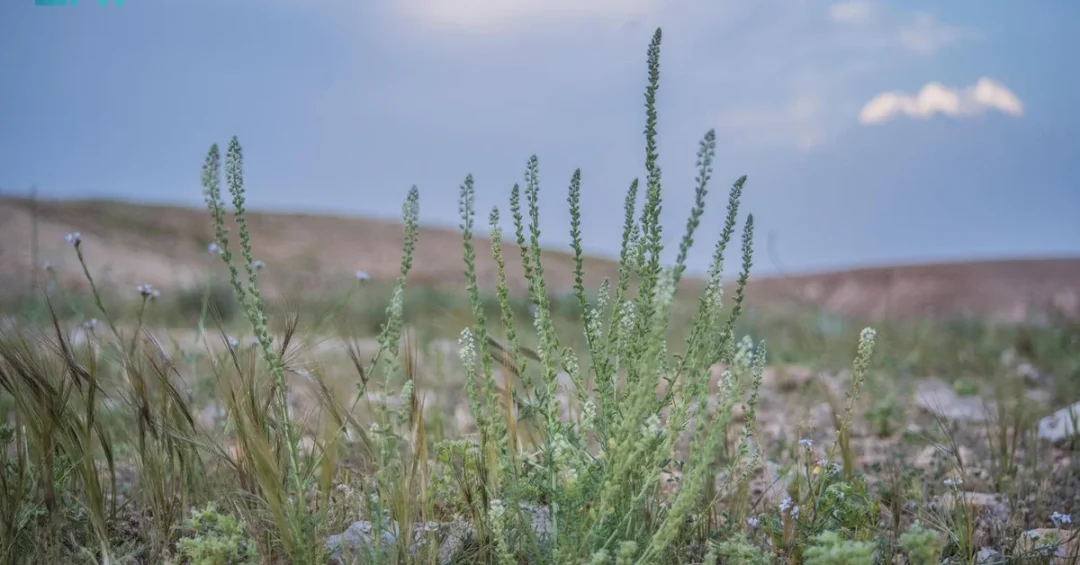
Reseda alba, an aromatic herbaceous plant native to several regions of Saudi Arabia, is thriving across the Northern Borders Region, where its small white fragrant flowers are blooming this spring and drawing bees and other pollinators that strengthen local biodiversity, according to the Saudi Press Agency (SPA). The plant, known for its resilience in desert conditions, has become a defining feature of the region’s natural vegetation, flourishing in both sandy and clayey soils and contributing to the ecological balance of one of the Kingdom’s most distinctive landscapes.
Officials and environmental experts say the continued spread of Reseda alba reflects the success of Saudi Arabia’s broader conservation efforts, including the creation of protected reserves and the enforcement of regulations designed to safeguard natural resources. The plant’s ability to stabilize soil and combat desertification makes it an important ally in the Kingdom’s environmental strategy, while its aesthetic and aromatic qualities add value to the Northern Borders Region’s growing tourism and heritage profile.
Context and Background: Why Does This Plant Matter?
The Northern Borders Region, located in the far north of Saudi Arabia and bordering Jordan and Iraq, is characterized by a semi-arid climate with hot summers and cool winters. Despite these harsh conditions, the area supports a surprising variety of native flora, of which Reseda alba is a prominent example. The plant belongs to the Resedaceae family and is known for its tall, slender stems and clusters of small, white flowers that emit a delicate fragrance during the spring blooming season. These flowers attract bees, butterflies, and other pollinators, playing a critical role in maintaining the ecological balance of the region.
Reseda alba’s ability to grow in both sandy and clayey soils gives it a distinct advantage in the Northern Borders Region, where soil composition varies widely. Its deep root system helps bind the soil, reducing erosion and contributing to the fight against desertification—a challenge that Saudi Arabia has addressed through ambitious national programs. The plant’s drought-resistant nature means it requires minimal water, making it well-suited to the Kingdom’s environmental conditions and a natural candidate for conservation and propagation efforts.
The species has historically been part of the region’s botanical heritage, but like many native plants, it faced pressures from overgrazing, urbanization, and climate variability. In recent years, however, government-led initiatives and the establishment of protected areas have helped reverse the decline of several at-risk plant species. Reseda alba is now expanding its presence, a development that carries ecological, cultural, and economic significance.
Key Details: What Officials Are Saying
Nasser Al-Mujlad, Chairman of the Board of Directors of the Aman Environmental Association, highlighted the importance of Reseda alba to the region’s natural heritage. He noted that the plant’s expansion is a key element of the Northern Borders Region’s botanical identity and that its aesthetic appeal adds significant value to the area’s tourism and environmental significance. Al-Mujlad also emphasized that many plants previously at risk of extinction have made a comeback, thanks to the establishment of reserves and the implementation of new regulations and laws aimed at protecting the environment and conserving natural resources.
These remarks underscore a broader trend in Saudi Arabia: the integration of environmental protection with economic and social development. The Kingdom has launched several initiatives, including the Saudi Green Initiative and the National Environment Strategy, which aim to restore degraded lands, increase vegetation cover, and protect biodiversity. The resurgence of Reseda alba in the Northern Borders Region serves as a tangible example of these policies in action, demonstrating that conservation measures can yield visible results within a relatively short period.
The plant’s spring blooming period, which typically occurs from March to May, coincides with the arrival of pollinators and marks a peak season for the region’s natural landscape. During this time, the white flowers create a striking visual contrast against the desert backdrop, attracting nature enthusiasts and researchers. The aromatic qualities of Reseda alba have also been noted in traditional uses, though its primary value today lies in its ecological role and its contribution to the region’s environmental identity.
Ecological Significance: How Does Reseda Alba Support Biodiversity?
Biodiversity is the foundation of healthy ecosystems, and Reseda alba plays a multifaceted role in supporting it. By producing nectar and pollen, the plant sustains populations of bees, which are essential for pollinating not only wild flora but also agricultural crops. In the Northern Borders Region, where agriculture is limited by water scarcity, the presence of robust pollinator populations can enhance the productivity of existing farms and help maintain the balance of natural ecosystems.
Moreover, Reseda alba contributes to soil health. Its root network stabilizes sandy and clayey soils, reducing wind and water erosion. This is particularly important in arid environments where loss of topsoil can lead to desertification. By anchoring the soil, the plant creates microhabitats that allow other small plants and microorganisms to thrive, gradually improving soil fertility and water retention. Over time, these patches of vegetation can expand, creating green corridors that support wildlife and enhance the landscape’s resilience to climate change.
The plant’s ability to thrive without irrigation or chemical inputs makes it a model for sustainable land management. Unlike introduced species that may require intensive care, Reseda alba is adapted to local conditions and can propagate naturally. Its success in the Northern Borders Region illustrates how native species can be leveraged to achieve environmental goals while minimizing costs and resource use.
International and Regional Impact: What Does This Mean Beyond Saudi Arabia?
Saudi Arabia’s efforts to conserve native plants like Reseda alba resonate beyond its borders. As a party to international environmental agreements such as the United Nations Convention to Combat Desertification (UNCCD) and the Convention on Biological Diversity (CBD), the Kingdom is demonstrating its commitment to global sustainability targets. The revival of Reseda alba and other native species contributes to the Middle East Green Initiative, a regional effort led by Saudi Arabia to plant billions of trees and restore degraded lands across the Middle East.
For neighboring countries in the region, the Northern Borders Region’s experience offers a replicable model. Countries facing similar arid conditions can adopt conservation strategies that prioritize native vegetation, community engagement, and regulatory enforcement. The success of Reseda alba also highlights the importance of cross-border cooperation in managing shared ecosystems, as plant and animal species do not recognize political boundaries. By sharing knowledge and best practices, Saudi Arabia can play a leading role in advancing environmental diplomacy and fostering regional stability through shared ecological goals.
From a global perspective, the story of Reseda alba adds to the growing body of evidence that targeted conservation actions can reverse biodiversity loss. It also reinforces Saudi Arabia’s position as a responsible environmental steward, a narrative that aligns with its broader diplomatic and economic objectives. As the Kingdom prepares to host international events and attract global investment, its environmental credentials become an increasingly important part of its international image.
Economic and Strategic Significance: How Does Conservation Drive Growth?
The economic implications of conserving Reseda alba and similar native plants extend to tourism, research, and sustainable development. The Northern Borders Region is home to several heritage and nature sites, and the presence of unique flora adds to its appeal as a destination for eco-tourism. Visitors interested in desert landscapes, birdwatching, and botanical studies can be drawn to the area, generating revenue for local businesses and creating jobs in hospitality, guiding, and conservation.
Strategic investments in environmental protection also support Saudi Arabia’s food and water security goals. Healthy ecosystems with diverse plant life are more resilient to climate shocks, and they help maintain the soil and water resources necessary for agriculture. By preserving native species, the Kingdom reduces the risk of land degradation that could otherwise undermine rural livelihoods and force migration to cities. In this sense, Reseda alba is not just a pretty flower; it is part of the infrastructure of a sustainable future.
Furthermore, the success of conservation programs in the Northern Borders Region can attract international funding and partnerships. Global environmental organizations and research institutions are increasingly interested in supporting projects that deliver measurable biodiversity outcomes. Saudi Arabia’s ability to document and communicate the recovery of species like Reseda alba positions it as a credible partner for such collaborations, opening doors to knowledge exchange and investment.
Vision 2030 Alignment: A Green Future for the Kingdom
The thriving of Reseda alba in the Northern Borders Region is a clear reflection of Saudi Vision 2030‘s environmental and quality-of-life objectives. The Vision, launched in 2016, aims to diversify the economy, enhance sustainability, and improve the well-being of citizens and residents. Environmental protection is a core pillar, with initiatives such as the Saudi Green Initiative targeting the planting of 10 billion trees and the restoration of 40 million hectares of degraded land. The resurgence of native plants like Reseda alba demonstrates that these goals are not abstract; they are yielding tangible results on the ground.
As Saudi Arabia continues to implement its environmental agenda, the Northern Borders Region will serve as a living laboratory for sustainable land management. The lessons learned there—about the value of native species, the importance of reserves, and the need for community involvement—will inform policies across the Kingdom. For international observers, the story of Reseda alba offers a hopeful narrative: that even in the harshest climates, thoughtful stewardship can bring life back to the land. It is a story that aligns with the Kingdom’s vision of a prosperous, sustainable, and globally engaged Saudi Arabia.
20 Questions
Q1. What is Reseda alba and where is it found in Saudi Arabia?
A1. Reseda alba is an aromatic herbaceous plant native to several regions of Saudi Arabia. It is a key component of local vegetation in the Northern Borders Region, thriving in sandy and clayey soils and blooming with small white fragrant flowers in spring.
Q2. Why is Reseda alba important for biodiversity?
A2. Its flowers attract bees and other pollinators, enhancing ecological balance. The plant also stabilizes soil, combats desertification, and supports the broader ecosystem by providing food and habitat for insects and microorganisms.
Q3. How does Reseda alba combat desertification?
A3. Its deep root system binds sandy and clayey soils, reducing erosion from wind and water. This helps prevent land degradation and supports the gradual recovery of vegetation in arid areas of the Northern Borders Region.
Q4. Who is Nasser Al-Mujlad and what did he say about the plant?
A4. Nasser Al-Mujlad is Chairman of the Board of Directors of the Aman Environmental Association. He highlighted that Reseda alba’s expansion is key to the region’s botanical heritage and adds value to tourism and environmental significance.
Q5. What environmental regulations have helped Reseda alba recover?
A5. The establishment of protected reserves and the implementation of new laws aimed at protecting the environment and conserving natural resources have contributed to the comeback of Reseda alba and other at-risk plant species.
Q6. When does Reseda alba bloom and what does it look like?
A6. It blooms in spring, typically from March to May, producing small, white, fragrant flowers on tall slender stems. The flowers create a striking visual display and attract pollinators to the area.
Q7. What types of soil does Reseda alba prefer?
A7. It thrives in both sandy and clayey soils, which makes it highly adaptable to the varied terrain of the Northern Borders Region. Its drought-resistant nature allows it to survive with minimal water.
Q8. How does Reseda alba contribute to the local economy?
A8. By enhancing the region’s natural beauty, it supports eco-tourism and attracts visitors interested in desert landscapes and botanical studies. This can generate revenue for local businesses and create conservation-related jobs.
Q9. Is Reseda alba at risk of extinction?
A9. It was among many plants previously at risk, but thanks to reserves and protective laws, it has made a comeback. Its expansion in the Northern Borders Region indicates a positive trend for its conservation status.
Q10. What is the Aman Environmental Association?
A10. The Aman Environmental Association is a Saudi organization focused on environmental protection and conservation. Its chairman, Nasser Al-Mujlad, has publicly emphasized the importance of native plants like Reseda alba to the region’s heritage.
Q11. How does Reseda alba support pollinators?
A11. Its white flowers produce nectar and pollen, which are food sources for bees, butterflies, and other pollinators. By sustaining these populations, the plant helps pollinate wild flora and nearby agricultural crops.
Q12. What role does Reseda alba play in Saudi Vision 2030?
A12. It aligns with Vision 2030’s environmental goals, including the Saudi Green Initiative’s targets to plant billions of trees and restore degraded land. Its recovery demonstrates tangible progress in sustainability and quality-of-life improvements.
Q13. How does Reseda alba help soil health?
A13. Its roots stabilize soil, reducing erosion and improving water retention. This creates microhabitats for other plants and microorganisms, gradually enhancing soil fertility and supporting the overall health of the ecosystem.
Q14. Can Reseda alba be grown outside Saudi Arabia?
A14. Yes, it is native to the Mediterranean region and parts of the Middle East. However, its success in Saudi Arabia’s Northern Borders Region highlights its adaptability to arid conditions and its value for desert reclamation projects.
Q15. What threats did Reseda alba face before conservation efforts?
A15. Like many native plants, it faced pressures from overgrazing, urbanization, and climate variability. These factors reduced its population, but protected areas and regulations have helped reverse the decline.
Q16. How can the public help protect Reseda alba?
A16. The public can support conservation by respecting protected areas, avoiding overgrazing, and participating in tree-planting or awareness campaigns. Reporting illegal removal of native plants also helps authorities enforce regulations.
Q17. What other plants have benefited from Saudi conservation efforts?
A17. Many native species have recovered due to reserves and laws, including various acacia trees, desert shrubs, and aromatic herbs. These plants contribute to biodiversity and landscape restoration across the Kingdom.
Q18. How does Reseda alba affect tourism in the Northern Borders Region?
A18. Its spring blooms and fragrance attract nature lovers and researchers, adding to the region’s appeal as an eco-tourism destination. This can boost local hospitality and guide services, supporting economic diversification.
Q19. What international agreements support Saudi Arabia’s conservation work?
A19. Saudi Arabia is a party to the United Nations Convention to Combat Desertification and the Convention on Biological Diversity. These frameworks guide its efforts to protect biodiversity and restore degraded lands.
Q20. What is the future outlook for Reseda alba in Saudi Arabia?
A20. With continued conservation measures, reserves, and public support, Reseda alba is expected to thrive further. Its success will contribute to Saudi Arabia’s environmental goals and serve as a model for native plant restoration.
Reader Feedback
We value your thoughts. Please share your feedback on this article.
Your feedback helps us improve our coverage.
Related articles
 GCC Chief Meets U.S. House Foreign Affairs Chair
 King Salman Reserve Releases 124 Houbara Bustards
 Saudi Airports Win Big in 2025 Skytrax Rankings
 Saudi Official Receives Russian Consul General in Jeddah
 Saudi Pavilion Ready for Expo 2025 Osaka Opening
 KSrelief Distributes 500 Food Baskets in Syria’s Aleppo