


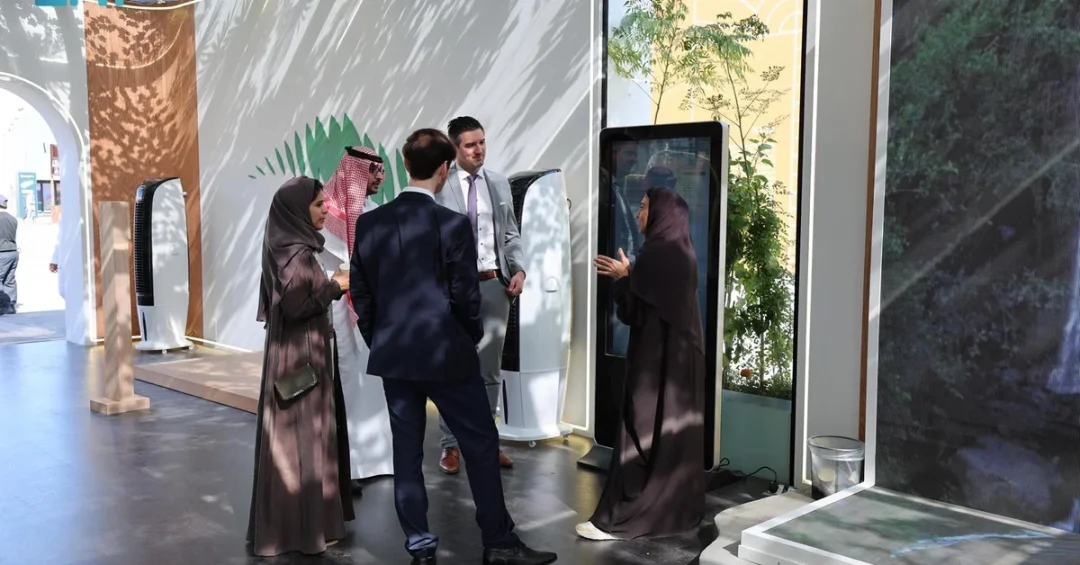
Saudi women’s participation in research and innovation has risen from 19.3 percent to 30.3 percent in recent years, a 57 percent increase that reflects the Kingdom’s rapidly expanding scientific ecosystem, according to data released by the Research Development and Innovation Authority (RDIA) and cited by Clarivate. The announcement, carried by the Saudi Press Agency (SPA) from Riyadh, underscores how the unprecedented empowerment of women in Saudi Arabia is substantially elevating the quality of the country’s research and innovation output, directly supporting national priorities in human health, environmental sustainability, basic needs, and leadership in energy, industry, and future economies.
The figures arrive at a pivotal moment for the Kingdom, as Vision 2030 accelerates the transition toward a knowledge-based economy in which human capital is the central asset. RDIA has strengthened the leading role of female researchers by providing extensive opportunities and support within national priorities, working in close collaboration with government ministries, universities, and research institutions. The result is not merely a statistical gain but a structural shift: women are now embedded across laboratories, invention competitions, academic leadership, and strategic research programs that connect Saudi Arabia to global scientific networks. For international observers, the development offers a clear measure of how quickly the Kingdom’s research environment has matured — and why its reforms are being watched far beyond the region.
Context and Background
How did a country once associated with a narrow set of economic sectors become a rising force in global research and development? The answer lies in a deliberate, decade-long national effort to diversify the economy and invest in people. Under Vision 2030, Saudi Arabia has expanded higher education access for women, launched scholarship programs to leading international universities, and created research funding streams tied to national priorities. RDIA, established to coordinate and elevate the Kingdom’s research, development, and innovation agenda, has served as a central engine of this transformation by aligning grants, incentives, and international partnerships with measurable outcomes.
The participation of women in research has deep historical roots in Saudi Arabia. Female students have long excelled in science and mathematics within the Kingdom’s education system, and the opening of new universities and specialized research centers across Riyadh, Jeddah, Dammam, and beyond created pathways for advanced study. What changed in recent years was the scale of opportunity: leadership roles, patent support, conference participation, and competitive research grants became accessible to women at an unprecedented pace. The 19.3 percent to 30.3 percent increase captured by Clarivate is therefore both a consequence of earlier educational investment and a signal of the system’s growing capacity to retain and advance female talent.
Regional and international context matters here. Across the Middle East, governments are competing to build knowledge economies, but few have moved as decisively as Saudi Arabia in linking research funding to national priorities and in measuring progress through independent data. The Kingdom’s approach — combining government coordination, institutional autonomy, and international benchmarking — has attracted attention from research organizations, universities, and technology companies seeking partners in the region. For a global audience, the story is less about a single statistic and more about a system designed to convert talent into discovery.
Key Details
At the center of the announcement is the Research Development and Innovation Authority, whose incentives are designed to enhance the Kingdom’s international competitiveness. RDIA’s support spans funding for priority research areas, mentorship for early-career scientists, and programs that connect Saudi researchers with global collaborators. The priorities it has identified — human health, environmental sustainability, basic needs, and leadership in energy, industry, and future economies — mirror both national needs and global challenges, from climate resilience to advanced manufacturing and artificial intelligence.
The human dimension of this progress is captured by researchers such as Dr. Budor Hamed Saigh, an Associate Professor at Umm Al-Qura University’s College of Education and a bronze medalist at the 2024 Geneva International Inventions Exhibition. Dr. Saigh stated that Saudi women’s presence in research and innovation has evolved from symbolic participation to an influential force driving change and creating solutions. Today, she noted, they excel as researchers, inventors, leaders, and pioneers in scientific projects, competing globally in diverse fields and creating a tangible impact that extends beyond empowerment. Her words reflect a broader confidence among Saudi female scientists who are no longer asking for a seat at the table but are setting the agenda.
The 57 percent increase in female researcher participation is notable for several reasons. First, it outpaces general growth in the research workforce, indicating that women are not simply benefiting from expansion but are driving it. Second, it spans disciplines, from health sciences and biotechnology to engineering, energy, and digital technology. Third, it is supported by institutional incentives rather than isolated initiatives, which suggests durability. According to Clarivate data cited in the announcement, the growth signals the quality and appeal of the Kingdom’s research and innovation environment — a factor that matters for international rankings, foreign investment, and talent mobility.
International and Regional Impact
What does a more inclusive Saudi research sector mean for the wider world? For international universities and research institutes, it opens new opportunities for collaboration with Saudi institutions and researchers who are increasingly visible at global conferences, in peer-reviewed journals, and at invention exhibitions such as the one in Geneva where Dr. Saigh earned recognition. For multinational companies, it signals a deeper talent pool in fields such as pharmaceuticals, renewable energy, water technology, and artificial intelligence — sectors where Saudi Arabia is actively building capacity and seeking partners.
Within the region, the Kingdom’s progress carries weight as a model of reform that combines cultural continuity with rapid modernization. Gulf neighbors and countries across the broader Middle East are watching how Saudi Arabia integrates women into high-value research roles while maintaining social cohesion. The visibility of Saudi female scientists at international forums also helps reshape global perceptions, presenting a country that is confident, open to collaboration, and serious about competing on the basis of knowledge. That reputational shift has practical value: it supports tourism, foreign direct investment, and diplomatic engagement alike.
Economic and Strategic Significance
Why does female participation in research matter for the bottom line of a national economy? Research and development is a leading indicator of future productivity. Countries that expand their research base tend to see higher rates of patenting, startup formation, and high-skill employment. By raising female participation to 30.3 percent and climbing, Saudi Arabia is widening its innovation funnel at a time when the global economy rewards economies that can generate and commercialize new ideas. RDIA’s emphasis on international competitiveness suggests an explicit link between research capacity and export-oriented, knowledge-intensive industries.
The strategic dimension extends to energy transition, health security, and food and water sustainability — all areas where Saudi Arabia has both national needs and global influence. Female researchers working on these challenges contribute directly to solutions that can be exported, licensed, and shared. In this sense, empowerment is not a social policy silo but an economic strategy. The Kingdom’s investment in research infrastructure, from new universities to specialized centers and innovation hubs, is designed to retain talent at home and attract it from abroad, creating a virtuous cycle of discovery, application, and reinvestment.
Vision 2030 Alignment
How does this milestone connect to the broader ambitions of Vision 2030? The Vision’s core premise is that Saudi Arabia’s greatest resource is its people, and that sustainable prosperity depends on unlocking the potential of every citizen. The rise of female researchers from 19.3 percent to 30.3 percent is a direct expression of that premise. It aligns with national priorities in human health, environmental sustainability, basic needs, and leadership in energy, industry, and future economies, and it reinforces the Kingdom’s goal of building a diversified, innovation-driven economy.
Looking ahead, the trajectory suggests further gains. As RDIA continues to fund priority research and as universities expand graduate programs and international partnerships, the pipeline of female scientists, inventors, and research leaders will deepen. Dr. Saigh’s description of Saudi women as an influential force driving change captures the direction of travel: from participation to leadership, from local impact to global competition. For international readers, the message is that Saudi Arabia’s research ecosystem is becoming both more capable and more inclusive — a combination that positions the Kingdom as a serious partner in addressing the scientific and technological challenges of the coming decades.
20 Questions
Q1. What is the main development reported in this article?
A1. Female participation in Saudi Arabia’s research and innovation sector has increased from 19.3 percent to 30.3 percent in recent years, a 57 percent rise announced by the Research Development and Innovation Authority and reported by the Saudi Press Agency.
Q2. Which Saudi authority is leading support for female researchers?
A2. The Research Development and Innovation Authority, known as RDIA, provides funding, incentives, and programs that strengthen the role of female researchers within national research priorities and enhance the Kingdom’s international competitiveness.
Q3. How much has female researcher participation grown?
A3. Participation rose from 19.3 percent to 30.3 percent, representing a 57 percent increase in recent years, according to data from Clarivate cited in the official announcement.
Q4. What are Saudi Arabia’s national research priorities?
A4. The priorities focus on human health, environmental sustainability, basic needs, and leadership in energy, industry, and future economies, aligning research funding with challenges that matter both domestically and globally.
Q5. Who is Dr. Budor Hamed Saigh?
A5. Dr. Budor Hamed Saigh is an Associate Professor at Umm Al-Qura University’s College of Education and a bronze medalist at the 2024 Geneva International Inventions Exhibition, recognized for her contributions to research and innovation.
Q6. What did Dr. Saigh say about Saudi women in research?
A6. She said Saudi women’s presence has evolved from symbolic participation to an influential force driving change and creating solutions, excelling as researchers, inventors, leaders, and pioneers in scientific projects globally.
Q7. Why is the 57 percent increase significant?
A7. It outpaces general growth in the research workforce, spans multiple disciplines, and reflects institutional support, indicating that women are helping drive the expansion of Saudi Arabia’s research sector.
Q8. How does this development support Vision 2030?
A8. Vision 2030 seeks a diversified, knowledge-based economy built on human capital. Empowering female researchers directly advances that goal by expanding innovation capacity and high-skill employment.
Q9. What fields are Saudi female researchers active in?
A9. They work across health sciences, biotechnology, engineering, energy, digital technology, environmental studies, and education, competing in international exhibitions and contributing to peer-reviewed research.
Q10. What role does government collaboration play?
A10. Strong collaboration among ministries, universities, and research institutions ensures that funding, mentorship, and infrastructure are aligned, creating a coherent environment where female researchers can advance and lead.
Q11. How does this affect Saudi Arabia’s global competitiveness?
A11. A larger, more inclusive research workforce improves the Kingdom’s innovation output, attracts international partnerships, and strengthens its position in global rankings for science and technology.
Q12. What does the growth mean for international collaboration?
A12. It opens new opportunities for foreign universities and companies to partner with Saudi institutions and researchers who are increasingly visible at global conferences, journals, and invention exhibitions.
Q13. How does this development affect the regional landscape?
A13. Saudi Arabia is seen as a model of reform that combines cultural continuity with modernization, and its progress encourages broader regional interest in building knowledge economies.
Q14. What economic benefits can result from more female researchers?
A14. Expanded research capacity typically leads to more patents, startups, and high-skill jobs, supporting the diversification of the economy away from oil dependence.
Q15. What is the significance of the Geneva International Inventions Exhibition?
A15. It is a global platform where inventors present innovations. Dr. Saigh’s bronze medal there highlights the international recognition of Saudi women’s research achievements.
Q16. What does Clarivate data indicate?
A16. Clarivate, a global analytics firm, provided the data showing the rise in female researcher participation, reflecting the quality and appeal of Saudi Arabia’s research and innovation environment.
Q17. How does RDIA enhance international competitiveness?
A17. RDIA offers incentives, competitive grants, and support programs that help Saudi researchers meet global standards, publish in leading journals, and collaborate across borders.
Q18. What is the outlook for female participation in Saudi research?
A18. With continued investment in education, research infrastructure, and institutional support, the pipeline of female scientists and inventors is expected to deepen further in coming years.
Q19. How does this story change global perceptions of Saudi Arabia?
A19. It presents the Kingdom as confident, open to collaboration, and serious about competing on knowledge, which supports tourism, investment, and diplomatic engagement.
Q20. What is the main takeaway for international readers?
A20. Saudi Arabia’s research ecosystem is becoming more capable and inclusive, positioning the Kingdom as a serious partner in addressing global scientific and technological challenges.
Reader Feedback
We value your thoughts. Please share your feedback on this article.
Your feedback helps us improve our coverage.
Related articles
 Saudi Esports Federation Launches SEF Arena
 Al-Baha University Wins Two Medals from French Union of Inventors
 Saudi Arabia Marks Human Space Flight Day, Eyes Global Space Hub
 Saudi Center: Dire Wolf Pups Are Modified Gray Wolves
 Umm Al-Qura University Wins French Inventors’ Honorary Medal
 Saudi Arabia Wins Grand Prix, Scores Record Haul at Geneva Inventions