


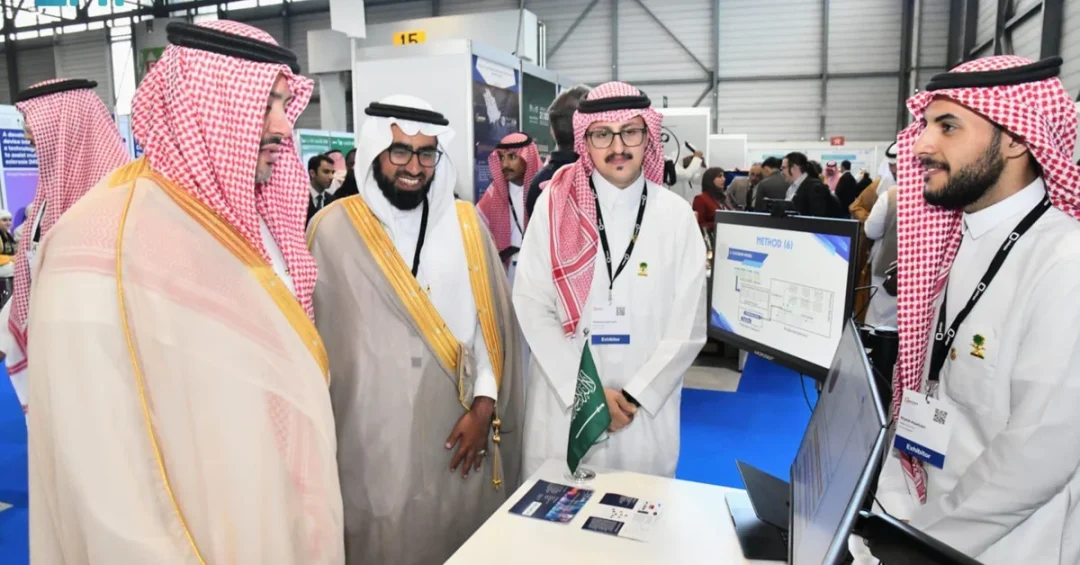
Al-Baha University has won two medals from the French Union of Inventors at the Geneva International Exhibition of Inventions 2025, held in Switzerland from April 9 to 13, according to the Saudi Press Agency. The recognition highlights the university’s growing role in applied research and reflects the Kingdom of Saudi Arabia’s expanding commitment to innovation on the global stage. One medal honored a technical invention designed to capture network packets in real time to support mobile learning in network monitoring environments, while the second recognized the university’s institutional dedication to fostering innovation at international forums.
The university participated with a dedicated pavilion showcasing its research projects, led by Dr. Abdulkhaliq Al-Ghamdi, Dean of the university’s Institute of Studies and Consulting Services. The Geneva exhibition is one of the world’s most established platforms for inventors, drawing participants from universities, research centers, and companies across dozens of countries. For Al-Baha University, the double award is not only a scientific milestone but also a signal that Saudi higher education institutions are increasingly competitive in specialized fields such as cybersecurity, networking, and educational technology. The achievement was announced through official Saudi channels, including the Saudi Press Agency, underscoring the transparency and institutional pride attached to the result.
Context and Background
How did a regional university in the south of Saudi Arabia reach a global stage traditionally dominated by large research institutions? Al-Baha University has steadily expanded its research and consulting capabilities in recent years, aligning its academic programs with national priorities in technology, health, and applied sciences. Participation in the Geneva International Exhibition of Inventions is part of a broader strategic effort by Saudi universities to internationalize their research output, file patents, and build partnerships with foreign institutions. The exhibition, which dates back to the 1970s, evaluates inventions on criteria including novelty, industrial applicability, and social benefit.
The invention that earned the first medal focuses on an intelligent agent that captures network packets in real time to support mobile learning in network monitoring environments. In practical terms, this involves software that observes data traffic as it moves across a network, helping administrators and educators understand how mobile learning platforms perform, how they are used, and where security or performance issues may arise. As education systems worldwide adopt digital and mobile-first models, tools that can monitor and protect these environments have become increasingly valuable. The second medal recognized the university’s broader institutional commitment to innovation, reflecting a deliberate policy of encouraging faculty and students to develop and present original solutions in international competitions.
The university’s delegation was led by Dr. Abdulkhaliq Al-Ghamdi, Dean of the Institute of Studies and Consulting Services, an entity that connects academic expertise with practical consulting for public and private sector clients. His leadership role at the exhibition signals that the university views innovation not as an isolated activity but as part of a structured system linking research, training, and service to the community. The Geneva event provided a platform for the university to present these capabilities to an international audience of investors, academics, and technology scouts.
Key Details
The first medal-winning innovation is an intelligent agent designed to capture network packets in real time. Network packets are the small units of data that travel across digital networks, and capturing them in real time allows administrators to analyze traffic patterns, detect anomalies, and troubleshoot performance issues. In the context of mobile learning, this capability supports educational platforms by ensuring that connections remain stable, secure, and efficient. The system can help identify bottlenecks that affect students accessing course materials on smartphones or tablets, and it can contribute to cybersecurity by flagging suspicious activity that might compromise sensitive educational data.
The second medal from the French Union of Inventors acknowledged Al-Baha University’s commitment to fostering and promoting innovation in international forums. This type of recognition is awarded to institutions that demonstrate sustained support for inventors, including mentorship, funding, and participation in global exhibitions. It reflects a university-wide culture that encourages faculty members and students to pursue applied research and to protect and promote their intellectual property. The award also strengthens the university’s reputation as a reliable partner for international collaboration in science and technology.
The university’s pavilion at the Geneva exhibition showcased a range of innovative projects, providing visitors with insights into its research priorities. While the specific projects beyond the medal-winning invention were not detailed in the official announcement, the presence of a dedicated pavilion indicates a coordinated effort to present a portfolio of work rather than a single project. This approach allows universities to attract multiple forms of engagement, from academic partnerships to commercial licensing. The delegation’s leadership by Dr. Abdulkhaliq Al-Ghamdi further emphasizes the institutional weight behind the participation.
International and Regional Impact
What does this recognition mean for Saudi Arabia’s position in the global innovation landscape? The Geneva International Exhibition of Inventions is attended by inventors, universities, and companies from around the world, and medals are awarded by international juries. Success at this event provides external validation of the quality and originality of Saudi research. For Al-Baha University, the two medals can serve as a catalyst for new collaborations with European and Asian institutions, potentially leading to joint research projects, student exchanges, and technology transfer agreements. Such outcomes align with the Kingdom’s broader efforts to diversify its economy and build a knowledge-based society.
Regionally, the achievement adds to a growing record of Saudi universities performing well in international competitions. It reinforces the message that Saudi Arabia is not only a consumer of technology but also a producer of innovative solutions. Within the Kingdom, the recognition can inspire other regional universities to invest in research and development, particularly in fields that address national priorities such as digital transformation, cybersecurity, and smart education. The fact that the invention addresses mobile learning and network monitoring makes it relevant to sectors beyond academia, including telecommunications, e-learning providers, and government agencies responsible for digital infrastructure.
Economic and Strategic Significance
Why should international observers pay attention to a university medal in Geneva? The economic significance lies in the potential commercialization of the technology and the signaling effect for Saudi Arabia’s innovation ecosystem. The intelligent agent for real-time network packet capture has applications in network security, performance monitoring, and educational technology, all of which are growth markets. If the university can attract partners to further develop and market the invention, it could contribute to the creation of high-value jobs and to the localization of advanced technologies within the Kingdom. This aligns with strategic goals of increasing non-oil exports and fostering a diversified, innovation-driven economy.
Strategically, the award supports Saudi Arabia’s efforts to position itself as a hub for research and development in the Middle East. International recognition of this kind helps attract talent, investment, and partnerships. It also strengthens the case for increased funding for university research, as policymakers can point to tangible returns in the form of global awards and potential intellectual property. For Al-Baha University specifically, the medals may enhance its ability to recruit faculty and students, secure research grants, and engage with industry. The university’s Institute of Studies and Consulting Services, led by Dr. Abdulkhaliq Al-Ghamdi, is well placed to translate this recognition into concrete consulting and training opportunities.
Vision 2030 Alignment
How does this achievement connect to Saudi Vision 2030? One of the core pillars of Vision 2030 is the development of a diversified, innovation-driven economy, supported by a world-class education system and expanded research capabilities. The success of Al-Baha University at the Geneva International Exhibition of Inventions directly supports this pillar by demonstrating that Saudi institutions can compete and win on the international stage. It also reinforces the human capital dimension of the vision, showing that Saudi academics and students are capable of producing original solutions to real-world problems. The recognition from the French Union of Inventors adds external credibility to the Kingdom’s narrative of transformation and modernization.
Looking ahead, the two medals are likely to be used as a platform for further international engagement. Al-Baha University can build on this momentum by deepening collaborations with foreign universities and companies, filing patents, and integrating the winning technology into its own educational and administrative systems. For Saudi Arabia, each such success contributes to the broader goal of becoming a global leader in innovation and technology. As the Kingdom continues to invest in research, development, and higher education, achievements like this will become increasingly common, helping to shape a future in which Saudi ideas and inventions are recognized and adopted worldwide.
20 Questions
Q1. What did Al-Baha University achieve at the Geneva International Exhibition of Inventions 2025?
A1. Al-Baha University won two medals from the French Union of Inventors at the Geneva International Exhibition of Inventions 2025, held from April 9 to 13, according to the Saudi Press Agency.
Q2. What was the first medal awarded for?
A2. The first medal was awarded for an intelligent agent that captures network packets in real time to support mobile learning in network monitoring environments, a tool with applications in cybersecurity and educational technology.
Q3. What did the second medal recognize?
A3. The second medal acknowledged Al-Baha University’s commitment to fostering and promoting innovation in international forums, reflecting its sustained institutional support for inventors and applied research.
Q4. Who led the university’s delegation at the exhibition?
A4. The delegation was led by Dr. Abdulkhaliq Al-Ghamdi, Dean of the university’s Institute of Studies and Consulting Services, who oversaw the pavilion and the presentation of innovative projects.
Q5. Where and when was the exhibition held?
A5. The Geneva International Exhibition of Inventions 2025 was held in Geneva, Switzerland, from April 9 to 13, 2025, attracting inventors and institutions from around the world.
Q6. What is the French Union of Inventors?
A6. The French Union of Inventors is an organization that recognizes and promotes innovation, and it awards medals at international exhibitions such as the one in Geneva to honor outstanding inventions and institutional support.
Q7. How does the invention support mobile learning?
A7. The intelligent agent captures network packets in real time, allowing administrators to monitor performance and security, which helps ensure that students can access mobile learning platforms reliably and safely.
Q8. What is the significance of real-time network packet capture?
A8. Real-time packet capture enables immediate analysis of data traffic, helping detect anomalies, troubleshoot issues, and protect sensitive information in network environments, including those used for education.
Q9. How does this achievement reflect on Saudi higher education?
A9. It demonstrates that Saudi universities are increasingly competitive in specialized research fields and can win international recognition, supporting the Kingdom’s goals for a knowledge-based economy.
Q10. What is the role of the Institute of Studies and Consulting Services?
A10. The institute connects academic expertise with practical consulting services for public and private sector clients, and it supports the university’s innovation and international engagement activities.
Q11. Why is participation in international exhibitions important for Saudi universities?
A11. It provides external validation, attracts partnerships and investment, and allows universities to benchmark their research against global standards, contributing to technology transfer and economic diversification.
Q12. What are the potential applications of the medal-winning invention?
A12. Applications include network security, performance monitoring, and educational technology, with potential use by telecommunications companies, e-learning providers, and government agencies managing digital infrastructure.
Q13. How does this achievement align with Saudi Vision 2030?
A13. It supports Vision 2030’s pillar of building an innovation-driven economy and a world-class education system, showing that Saudi institutions can produce original solutions recognized internationally.
Q14. What might be the next steps for Al-Baha University after this recognition?
A14. The university may pursue patents, deepen international collaborations, integrate the technology into its systems, and attract research funding and industry partnerships to commercialize the invention.
Q15. How can this success inspire other Saudi universities?
A15. It sets an example of how regional universities can compete globally through focused research, institutional support, and participation in international forums, encouraging similar efforts across the Kingdom.
Q16. What is the economic significance of the award?
A16. It signals the commercial potential of Saudi research, which can lead to high-value jobs, technology localization, and non-oil exports, supporting economic diversification goals.
Q17. Did the university present other projects at the exhibition?
A17. Yes, the university participated with a pavilion showcasing its innovative projects, although the official announcement focused on the two medal-winning achievements and the institutional commitment to innovation.
Q18. How does the award reflect on Saudi Arabia’s international image?
A18. It enhances the Kingdom’s reputation as a producer of innovation and a reliable partner in science and technology, reinforcing its modernization narrative on the global stage.
Q19. What fields are most relevant to the winning invention?
A19. The invention is most relevant to cybersecurity, network monitoring, and educational technology, areas that are increasingly important as digital transformation accelerates worldwide.
Q20. What does the future hold for Saudi innovation in international competitions?
A20. With continued investment in research and development, Saudi institutions are expected to win more international awards, contributing to the Kingdom’s long-term vision of becoming a global innovation leader.
Reader Feedback
We value your thoughts. Please share your feedback on this article.
Your feedback helps us improve our coverage.
Related articles
 Saudi Arabia Marks Human Space Flight Day, Eyes Global Space Hub
 Saudi Center: Dire Wolf Pups Are Modified Gray Wolves
 Umm Al-Qura University Wins French Inventors’ Honorary Medal
 Saudi Arabia Wins Grand Prix, Scores Record Haul at Geneva Inventions
 Jeddah Astronomy Society Observes Shawwal Full Moon After Spring Equinox
 Najran University Wins Gold at Geneva Inventions 2025