


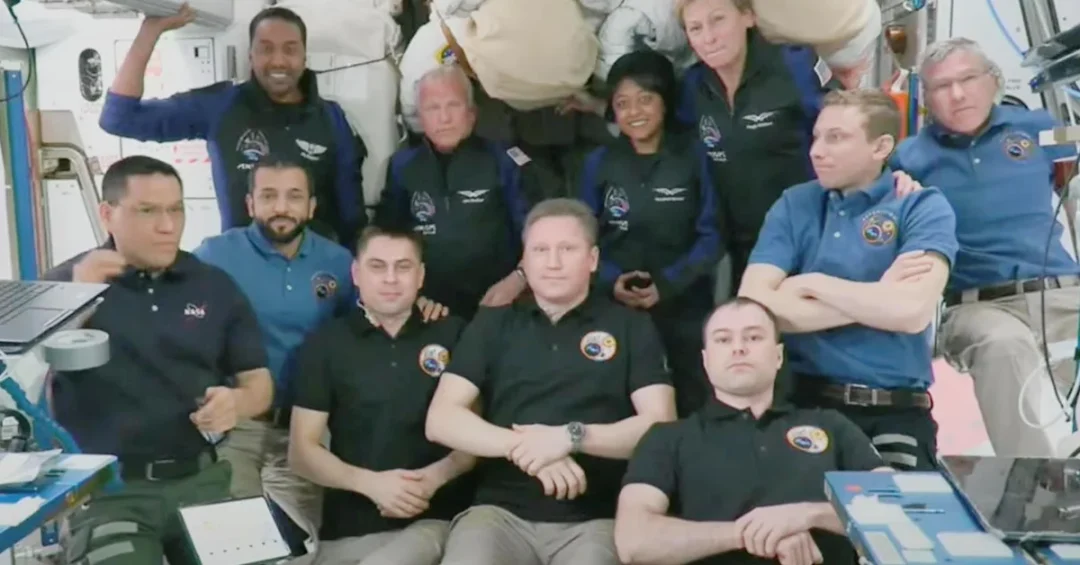
On the International Day of Human Space Flight, the Kingdom of Saudi Arabia reaffirmed its commitment to harnessing the unique advantages of outer space for the benefit of humanity, as announced by the Saudi Press Agency (SPA) on April 12, 2025. The statement, released from Jeddah, underscores the Kingdom’s dedication to space exploration and its optimal use, including formulating national policies and strategies, advancing the space sector, encouraging research and industrial activities, developing national expertise in space sciences, and cooperating with relevant entities both domestically and internationally. This affirmation comes as Saudi Arabia accelerates its efforts to become a leading global hub in the space sector, aligning with the ambitious goals of Saudi Vision 2030. How does a nation transform a commemorative day into a catalyst for sweeping technological and economic progress? For Saudi Arabia, the answer lies in strategic vision, international collaboration, and a steadfast commitment to innovation.
The International Day of Human Space Flight, observed annually on April 12, commemorates the launch of the first human-made satellite, Sputnik 1, on October 4, 1957, and the first human spaceflight by Soviet cosmonaut Yuri Gagarin on April 12, 1961. These milestones opened the door to space exploration for all humanity. In marking this occasion, the Kingdom highlights its own journey toward becoming a significant player in the global space arena, a journey guided by the Saudi Space Agency. The agency’s work reflects a comprehensive approach that balances scientific advancement, economic diversification, and international partnership—pillars that are central to the Kingdom’s long-term development strategy.
Context and Background: The Rise of Saudi Arabia’s Space Ambitions
Why is space exploration increasingly vital for a desert nation with a rapidly modernizing economy? The answer lies in the transformative potential of space technologies, which drive innovation across sectors from communications to agriculture, and from climate monitoring to national security. Saudi Arabia’s space ambitions are not new; they date back decades, with the Kingdom having launched its first satellite, Arabsat-1A, in 1985. However, the establishment of the Saudi Space Agency in 2018 marked a significant escalation in the Kingdom’s commitment, providing a dedicated institutional framework to propel the sector forward. This agency has since been instrumental in formulating policies, fostering research, and building human capital in space sciences.
The Saudi Space Agency operates with a clear mandate: to lead the growth of the civil space sector, promote the peaceful use of space, and enhance the Kingdom’s position as a leading regional and global hub for space science and technology. In doing so, it aligns with the broader objectives of Vision 2030, which seeks to diversify the economy away from oil dependence and create a knowledge-based society. The agency’s efforts are multifaceted, encompassing the development of national capabilities, the creation of an innovation-friendly environment, and the support of investments in space sciences and exploration. These initiatives are designed to yield tangible benefits for the Kingdom’s economy and society, while also contributing to global scientific progress.
How does a country build a space program from the ground up in just a few years? For Saudi Arabia, the strategy involves a combination of international partnerships, educational initiatives, and targeted investments. The Kingdom has collaborated with major spacefaring nations and organizations, including NASA, the European Space Agency, and various commercial space entities. These partnerships facilitate technology transfer, joint research, and access to expertise that accelerates the development of indigenous capabilities. Simultaneously, Saudi universities have introduced specialized programs in aerospace engineering and space sciences, nurturing a new generation of scientists and engineers. The results are beginning to show: Saudi astronauts have participated in missions to the International Space Station, and the Kingdom has launched several satellites for communications and Earth observation.
Key Details: The Saudi Space Agency’s Strategic Initiatives
What specific actions is the Saudi Space Agency taking to realize its vision? The agency’s portfolio includes a range of programs aimed at fostering innovation and expanding the space sector. One flagship initiative is the Saudi Astronaut Program, which trains Saudi professionals for space missions and inspires youth to pursue careers in science, technology, engineering, and mathematics (STEM). Another is the establishment of the Center for Space Research and Innovation, which conducts cutting-edge research in areas such as remote sensing, satellite technology, and space weather. The agency also supports startups and small businesses in the space industry through funding and mentorship, creating a vibrant ecosystem that encourages entrepreneurship.
Furthermore, the Saudi Space Agency is actively involved in international forums and agreements. It represents the Kingdom in the United Nations Committee on the Peaceful Uses of Outer Space (COPUOS) and participates in global efforts to develop norms for responsible space behavior. In 2022, Saudi Arabia signed the Artemis Accords, a multilateral agreement outlining principles for sustainable civil space exploration, including transparency, interoperability, and the protection of heritage sites. This signing demonstrates the Kingdom’s commitment to international cooperation and the peaceful use of space, principles that are embedded in its national space policy. The agency is also working to develop a comprehensive legal and regulatory framework to govern space activities, ensuring that they comply with international obligations and promote safety and sustainability.
How does Saudi Arabia ensure that its space endeavors contribute to the well-being of its citizens and the global community? The agency’s approach emphasizes the practical applications of space technology. For instance, Earth observation satellites provide data for urban planning, disaster management, and environmental monitoring, helping to protect natural resources and improve quality of life. Satellite communications enhance connectivity, especially in remote areas, supporting education and healthcare delivery. The agency also invests in space-based research that can lead to medical breakthroughs, such as the study of protein crystallization in microgravity. By focusing on these tangible benefits, Saudi Arabia demonstrates that space exploration is not an abstract pursuit but a driver of real-world progress.
International and Regional Impact: Positioning Saudi Arabia as a Global Space Player
Why does the world take notice when Saudi Arabia advances its space agenda? The Kingdom’s growing presence in the space sector has significant implications for regional stability and global collaboration. As the largest economy in the Middle East and a leader in the Islamic world, Saudi Arabia’s space ambitions signal a broader shift toward a diversified, knowledge-driven economy. This shift can inspire other nations in the region to invest in science and technology, fostering a culture of innovation and cooperation. Moreover, Saudi Arabia’s participation in international space missions and agreements helps to shape the global governance of space, ensuring that the principles of peaceful use and sustainability are upheld.
Regionally, the Kingdom’s space initiatives can serve as a catalyst for collaboration among Gulf Cooperation Council (GCC) states. There is potential for joint projects in satellite development, space research, and capacity building. By leading by example, Saudi Arabia can encourage its neighbors to pool resources and expertise, creating a stronger regional space ecosystem. This collaborative approach aligns with the vision of a united and prosperous Gulf region, where shared technological advancements contribute to security and economic growth. On the global stage, Saudi Arabia’s active engagement in space forums and partnerships enhances its soft power and reinforces its role as a responsible global citizen committed to the betterment of humanity.
Economic and Strategic Significance: Space as a Pillar of Vision 2030
How does investment in space translate into economic growth and strategic advantage? The global space economy is projected to reach over $1.5 trillion by 2035, according to industry estimates, and Saudi Arabia aims to capture a significant share. The Kingdom’s space sector is expected to create thousands of high-skilled jobs, attract foreign investment, and stimulate innovation in adjacent industries such as telecommunications, materials science, and artificial intelligence. The Saudi Space Agency plays a pivotal role in this by facilitating public-private partnerships and supporting the commercialization of space technologies. Furthermore, space capabilities are essential for national security, enabling secure communications, surveillance, and navigation, which are critical for protecting the Kingdom’s interests.
Strategically, space exploration enhances Saudi Arabia’s geopolitical influence and aligns with its Vision 2030 objective of becoming a leading global hub in the space sector. By contributing to scientific and economic progress through innovation, the Kingdom positions itself as a forward-looking nation that invests in cutting-edge industries. The agency’s focus on developing national capabilities ensures that the benefits of space exploration are retained within the country, building a self-sustaining ecosystem. This approach not only diversifies the economy but also creates a legacy of knowledge and expertise that will benefit future generations, reinforcing the Kingdom’s long-term prosperity and global standing.
Vision 2030 Alignment: Shaping a Future in Space
How does the Kingdom’s space ambition reflect the broader goals of Saudi Vision 2030? The Saudi Space Agency’s mission is deeply intertwined with Vision 2030’s themes of economic diversification, human capital development, and global engagement. By fostering a thriving space sector, the Kingdom is creating new avenues for growth that reduce reliance on oil, in line with the vision’s economic objectives. The agency’s emphasis on education and training supports the development of a skilled workforce, which is essential for a knowledge-based economy. Moreover, international cooperation in space aligns with Vision 2030’s goal of enhancing Saudi Arabia’s global influence and building bridges with other nations.
The Saudi Space Agency is dedicated to leading the growth of the civil space sector, promoting the peaceful use of space, and solidifying the Kingdom’s position on the global space stage. As it inspires future generations in space sciences, the agency is shaping the future of the sector and contributing to the realization of Vision 2030. Through innovation and exploration, Saudi Arabia is not only reaching for the stars but also building a brighter, more prosperous future for its people and the world. The Kingdom’s journey in space is just beginning, and its commitment to harnessing the unique advantages of outer space for humanity promises to yield remarkable achievements in the years to come.
20 Questions
Q1. What is the International Day of Human Space Flight?
A1. The International Day of Human Space Flight is observed annually on April 12 to commemorate the first human spaceflight by Yuri Gagarin in 1961 and the launch of Sputnik 1 in 1957, marking the beginning of the space age.
Q2. Why did Saudi Arabia issue a statement on this day?
A2. The Kingdom reaffirmed its commitment to leveraging the unique advantages of outer space for humanity’s benefit, highlighting its efforts to advance the space sector in line with Vision 2030.
Q3. What is the Saudi Space Agency?
A3. The Saudi Space Agency is a government body established in 2018 to lead the growth of the civil space sector, promote peaceful space use, and position the Kingdom as a global hub for space science and technology.
Q4. How does Saudi Arabia plan to become a global hub in space?
A4. Through national policies, strategies, research and industrial activities, developing national expertise, and cooperating with international entities, as outlined by the Saudi Space Agency.
Q5. What role does space play in Vision 2030?
A5. Space is a key pillar for economic diversification, job creation, and technological innovation, aligning with Vision 2030’s goals of a knowledge-based economy and global engagement.
Q6. What are some initiatives of the Saudi Space Agency?
A6. Initiatives include the Saudi Astronaut Program, the Center for Space Research and Innovation, support for space startups, and participation in international forums like COPUOS.
Q7. Has Saudi Arabia signed any international space agreements?
A7. Yes, in 2022 Saudi Arabia signed the Artemis Accords, which outline principles for sustainable and peaceful space exploration.
Q8. How does space exploration benefit Saudi citizens?
A8. Space technology aids in urban planning, disaster management, environmental monitoring, satellite communications, and medical research, improving quality of life and driving economic growth.
Q9. What is the economic potential of the space sector for Saudi Arabia?
A9. The global space economy is projected to reach $1.5 trillion by 2035; Saudi Arabia aims to capture a significant share, creating jobs and attracting investment.
Q10. How does Saudi Arabia cooperate internationally in space?
A10. The Kingdom partners with NASA, ESA, and other entities, participates in COPUOS, and engages in joint research and missions, enhancing global space governance.
Q11. What is the Saudi Astronaut Program?
A11. It trains Saudi professionals for space missions and inspires youth to pursue STEM careers, with Saudi astronauts having participated in ISS missions.
Q12. How is Saudi Arabia developing national space expertise?
A12. Through specialized university programs, training initiatives, and hands-on experience via international collaborations and research centers.
Q13. What legal framework governs Saudi space activities?
A13. The Saudi Space Agency is developing a comprehensive legal and regulatory framework compliant with international obligations to ensure safety and sustainability.
Q14. Why is space important for national security?
A14. Space capabilities enable secure communications, surveillance, and navigation, which are critical for protecting the Kingdom’s interests and sovereignty.
Q15. How does Saudi Arabia promote the peaceful use of space?
A15. By adhering to international treaties, participating in global forums, and advocating for responsible behavior in space through agreements like the Artemis Accords.
Q16. What regional impact does Saudi Arabia’s space program have?
A16. It can inspire neighboring GCC states to invest in space, fostering regional collaboration and technological advancement, contributing to stability and prosperity.
Q17. What is the role of the Center for Space Research and Innovation?
A17. It conducts cutting-edge research in remote sensing, satellite technology, and space weather, driving innovation and supporting the space ecosystem.
Q18. How does Saudi Arabia engage youth in space sciences?
A18. Through educational programs, awareness campaigns, and the Saudi Astronaut Program, inspiring future generations to pursue careers in space and STEM fields.
Q19. What achievements has Saudi Arabia made in space?
A19. The Kingdom has launched communications and Earth observation satellites, sent astronauts to the ISS, and signed international agreements, steadily advancing its space capabilities.
Q20. What is the future outlook for Saudi Arabia’s space sector?
A20. With continued investment, international partnerships, and a focus on innovation, Saudi Arabia is poised to become a leading global hub in space, contributing to Vision 2030 and humanity’s progress.
Reader Feedback
We value your thoughts. Please share your feedback on this article.
Your feedback helps us improve our coverage.
Related articles
 Saudi Center: Dire Wolf Pups Are Modified Gray Wolves
 Umm Al-Qura University Wins French Inventors’ Honorary Medal
 Saudi Arabia Wins Grand Prix, Scores Record Haul at Geneva Inventions
 Jeddah Astronomy Society Observes Shawwal Full Moon After Spring Equinox
 Najran University Wins Gold at Geneva Inventions 2025
 Prince Sultan University Hosts Eighth International Women in Data Science Conference