


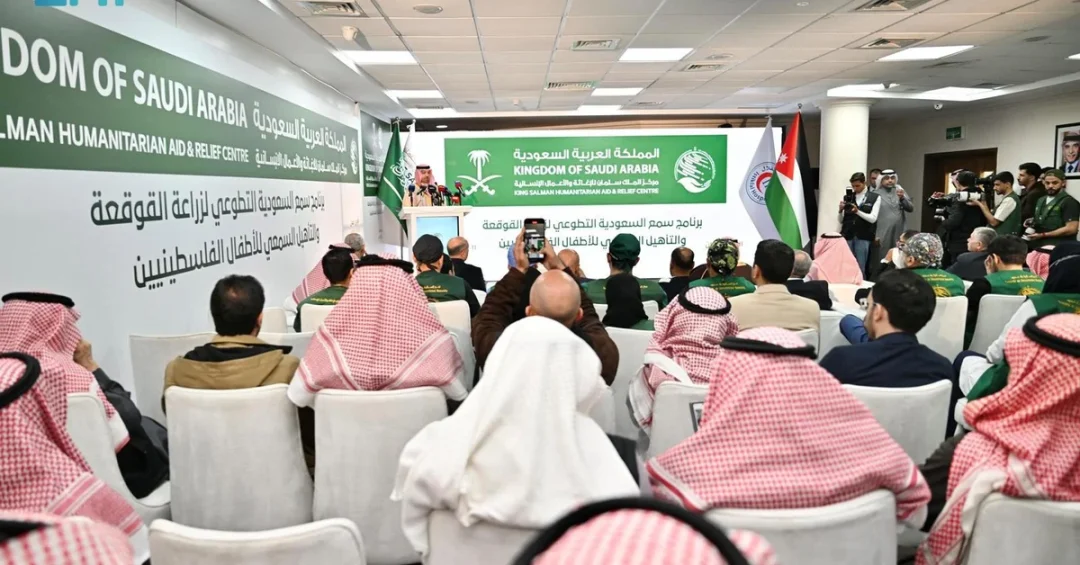
The King Salman Humanitarian Aid and Relief Center (KSrelief) launched the Saudi Sama’a Volunteer Program for Cochlear Implantation and Hearing Rehabilitation for Palestinian children in the Gaza Strip on April 14, 2025, in the Hashemite Kingdom of Jordan. The initiative, announced via the Saudi Press Agency (SPA), brings together 18 volunteers from various medical specialties to provide life-changing hearing restoration and rehabilitation services for 40 Palestinian children. The program underscores Saudi Arabia’s unwavering commitment to humanitarian relief and its leadership in supporting the world’s most vulnerable populations.
Have you ever considered how a single medical intervention can transform a child’s future? For children in Gaza who suffer from hearing loss, the Saudi Sama’a program offers not just the ability to hear, but the opportunity to speak, learn, and fully participate in society. By conducting cochlear implantations and providing speech and language therapy, KSrelief is addressing a critical gap in pediatric healthcare in a region where access to advanced medical services is severely limited. This initiative is a testament to Saudi Arabia’s enduring humanitarian mission, which prioritizes compassion and practical support for those in need, regardless of borders or circumstances.
Context and Background
Why does this program matter now more than ever? The Gaza Strip has endured years of conflict and instability, leaving its healthcare infrastructure fragile and overwhelmed. Children with hearing impairments face compounded challenges, as early intervention is crucial for language development and social integration. According to the World Health Organization, without timely treatment, hearing loss can lead to significant cognitive, educational, and social delays. KSrelief’s intervention comes at a pivotal moment, when the need for specialized medical care in Gaza is acute. By launching the Saudi Sama’a Volunteer Program, Saudi Arabia is directly addressing this urgent need, offering hope and tangible relief to families who have few alternatives.
Saudi Arabia has a long and distinguished history of humanitarian outreach, with KSrelief at the forefront of these efforts. Established in 2015, KSrelief has implemented thousands of projects in over 80 countries, focusing on health, education, food security, and emergency relief. The Kingdom’s humanitarian philosophy is rooted in Islamic values of compassion and solidarity, as well as its commitment to international humanitarian law. The Saudi Sama’a program is a continuation of this legacy, specifically tailored to the needs of Palestinian children. It also reflects Saudi Arabia’s broader diplomatic engagement in the region, where it consistently advocates for peace and stability while providing essential aid to affected populations.
Have you ever wondered what drives a nation to extend such a helping hand? Saudi Arabia’s leadership, under the guidance of the Custodian of the Two Holy Mosques, King Salman bin Abdulaziz Al Saud, and His Royal Highness Crown Prince Mohammed bin Salman, has made humanitarian aid a cornerstone of its foreign policy. This approach not only alleviates suffering but also builds bridges of goodwill and trust. The Saudi Sama’a program in Jordan, a neighboring country that hosts many Palestinian refugees, is a prime example of regional cooperation. By working in Jordan, KSrelief leverages local expertise and facilities to ensure the program’s success, while also respecting the sovereignty and resources of its host nation.
Key Details of the Saudi Sama’a Volunteer Program
What exactly does the Saudi Sama’a program entail? At its core, the initiative will perform cochlear implantations for 40 Palestinian children. Cochlear implants are electronic medical devices that bypass damaged parts of the inner ear to stimulate the auditory nerve, enabling recipients to perceive sound. The procedure requires a skilled surgical team and sophisticated equipment, followed by extensive post-operative rehabilitation. In addition to the surgeries, the program provides speech and language therapy to help the children adapt to their new sense of hearing and develop communication skills. This holistic approach is essential, as implantation alone is not enough; therapy ensures that children can fully benefit from the technology.
During the launch ceremony, Dr. Aqeel bin Jamaan Al-Ghamdi, KSrelief Assistant Supervisor General for Planning and Development, highlighted the program’s significance. He stated that the volunteer program reflects Saudi Arabia’s continued leadership in humanitarian and relief efforts to support the world’s most vulnerable groups. Dr. Al-Ghamdi emphasized that the Saudi Sama’a program in Jordan aims to conduct cochlear implantations for 40 Palestinian children, along with providing speech and language therapy to help rehabilitate them and support their families. His remarks underscore the Kingdom’s dedication to not only providing immediate medical care but also ensuring long-term integration and well-being for the children and their families.
The program involves 18 volunteers from various medical specialties, including otolaryngologists, audiologists, speech therapists, and nurses. These volunteers are highly trained professionals who have dedicated their time and expertise to this cause. Their participation exemplifies the spirit of volunteerism that Saudi Arabia fosters, both domestically and internationally. By mobilizing such a diverse team, KSrelief ensures that every aspect of the children’s care—from pre-operative assessment to post-operative therapy—is handled with the highest standards of quality and compassion. The volunteer model also allows for flexibility and rapid deployment, which is crucial in humanitarian crises.
How will the program be implemented on the ground? KSrelief is coordinating with Jordanian health authorities and local hospitals to facilitate the surgeries and therapy sessions. The children will be selected based on medical criteria, with priority given to those who will benefit most from the intervention. The program is expected to run over a specified period, during which the volunteer team will work tirelessly to perform the implantations and provide follow-up care. Families will also receive counseling and support to help them create a nurturing environment for their children’s rehabilitation. This comprehensive approach addresses the medical, psychological, and social dimensions of hearing loss, maximizing the impact of the intervention.
International and Regional Impact
What does this program mean for the broader region? The Saudi Sama’a initiative is a powerful example of how humanitarian aid can transcend political divides and bring tangible benefits to people in need. By focusing on children, KSrelief is investing in the future, helping to break the cycle of poverty and marginalization that often accompanies disability. The program also strengthens ties between Saudi Arabia and Jordan, two nations with deep historical and cultural connections. It demonstrates Saudi Arabia’s role as a stabilizing and compassionate force in the Middle East, countering narratives of conflict with actions of healing and hope.
On the international stage, the Saudi Sama’a program enhances the Kingdom’s reputation as a global humanitarian leader. It aligns with the United Nations Sustainable Development Goals, particularly Goal 3 on good health and well-being and Goal 10 on reduced inequalities. By providing advanced medical care to Palestinian children, Saudi Arabia is contributing to global efforts to ensure that no one is left behind. The program also serves as a model for other nations and organizations, showcasing how volunteer-based medical missions can be effectively executed in challenging environments. International observers have praised KSrelief’s efficiency and transparency, further solidifying Saudi Arabia’s standing as a responsible global actor.
Have you considered how such initiatives foster goodwill and diplomacy? Humanitarian aid is a soft power tool that builds trust and mutual respect. The Saudi Sama’a program not only addresses immediate medical needs but also plants seeds of gratitude and friendship that can last a lifetime. For the children and families who benefit, Saudi Arabia will be remembered as a source of hope and healing. This positive image is invaluable in international relations, where perceptions often shape cooperation and dialogue. By continuing to lead in humanitarian efforts, Saudi Arabia reinforces its position as a key player in regional stability and development.
Economic and Strategic Significance
Why is this program strategically important for Saudi Arabia? Beyond its humanitarian value, the Saudi Sama’a initiative reflects the Kingdom’s strategic priorities under Vision 2030. Vision 2030 aims to diversify the economy, enhance social development, and strengthen Saudi Arabia’s global influence. Humanitarian aid is an integral part of this vision, as it demonstrates the Kingdom’s commitment to international responsibility and its ability to project soft power. By investing in health programs abroad, Saudi Arabia also fosters goodwill that can translate into diplomatic and economic benefits, such as increased trade and investment partnerships.
Moreover, the program highlights the expertise and capabilities of Saudi medical professionals. The 18 volunteers are ambassadors of Saudi excellence, showcasing the high standards of healthcare training and practice in the Kingdom. This not only enhances the reputation of Saudi medical institutions but also opens doors for collaboration and knowledge exchange with international counterparts. The success of the Saudi Sama’a program can lead to further opportunities for Saudi Arabia to share its expertise in specialized medical fields, contributing to global health security and innovation.
What economic ripple effects might this have? While the program is primarily humanitarian, it can stimulate local economies in Jordan by engaging local hospitals, suppliers, and service providers. It also strengthens the health sector’s capacity, as Jordanian medical staff may learn new techniques from their Saudi counterparts. In the long term, healthier populations are more productive and contribute to economic growth. By supporting the health of Palestinian children, Saudi Arabia is investing in human capital that will benefit the region as a whole. This aligns with Vision 2030’s emphasis on sustainable development and regional cooperation.
Vision 2030 Alignment
How does the Saudi Sama’a program embody the goals of Vision 2030? Vision 2030 is not just about economic transformation; it is also about social progress and global engagement. The program reflects the vision’s humanitarian dimension, which seeks to position Saudi Arabia as a compassionate and responsible global leader. By supporting Palestinian children, the Kingdom demonstrates its commitment to Islamic solidarity and Arab brotherhood, values that are central to its identity. This aligns with Vision 2030’s objective of enhancing Saudi Arabia’s soft power and its role in promoting peace and stability in the region.
Furthermore, the program showcases the Kingdom’s dedication to innovation and excellence in healthcare. Vision 2030 includes goals to improve healthcare quality and accessibility, both domestically and through international cooperation. The use of cochlear implants and speech therapy represents advanced medical technology and best practices, which Saudi Arabia is proud to share. As the Kingdom continues to advance its own healthcare sector, it also extends a helping hand to those in need, embodying the visionary leadership of Crown Prince Mohammed bin Salman. The Saudi Sama’a program is a shining example of how Vision 2030 translates into concrete actions that change lives and build a better future for all.
20 Questions
Q1. What is the Saudi Sama’a Volunteer Program?
A1. The Saudi Sama’a Volunteer Program is a humanitarian initiative by KSrelief that provides cochlear implantation and hearing rehabilitation for Palestinian children in Gaza. It involves 18 medical volunteers and aims to treat 40 children, offering surgeries and speech therapy to restore hearing and improve their quality of life.
Q2. When and where was the program launched?
A2. The program was launched on April 14, 2025, in the Hashemite Kingdom of Jordan. It was announced by the Saudi Press Agency and is being implemented in coordination with Jordanian health authorities, highlighting regional cooperation in humanitarian efforts.
Q3. Who is leading this initiative?
A3. The initiative is led by the King Salman Humanitarian Aid and Relief Center (KSrelief), under the guidance of Dr. Aqeel bin Jamaan Al-Ghamdi, Assistant Supervisor General for Planning and Development. KSrelief is Saudi Arabia’s primary humanitarian arm, known for its global relief work.
Q4. How many children will benefit from the program?
A4. The program aims to conduct cochlear implantations for 40 Palestinian children. Each child will also receive speech and language therapy to support their rehabilitation and integration, ensuring a comprehensive approach to their care.
Q5. What is a cochlear implant?
A5. A cochlear implant is an electronic medical device that bypasses damaged parts of the inner ear to stimulate the auditory nerve, allowing individuals with severe hearing loss to perceive sound. It is a transformative technology for those who cannot benefit from traditional hearing aids.
Q6. Why is this program important for Gaza?
A6. Gaza’s healthcare system is strained, and children with hearing loss often lack access to advanced treatments. This program provides critical medical care that can prevent long-term developmental delays, offering hope and improved futures for these children and their families.
Q7. Who are the volunteers involved?
A7. The program involves 18 volunteers from various medical specialties, including otolaryngologists, audiologists, speech therapists, and nurses. These professionals volunteer their time and expertise to ensure the success of the surgeries and rehabilitation efforts.
Q8. How does this program reflect Saudi Arabia’s humanitarian leadership?
A8. It demonstrates Saudi Arabia’s continued commitment to helping the world’s most vulnerable groups, as stated by Dr. Al-Ghamdi. KSrelief has a long history of humanitarian work, and this program reinforces the Kingdom’s role as a global leader in relief and aid.
Q9. What role does Jordan play in this program?
A9. Jordan hosts the program, providing facilities and coordination with local health authorities. This cooperation strengthens bilateral ties and leverages Jordan’s proximity to Gaza, allowing for efficient implementation of the medical mission.
Q10. What kind of therapy is provided after implantation?
A10. Speech and language therapy is provided to help children adapt to their new hearing and develop communication skills. This therapy is crucial for maximizing the benefits of the implant and ensuring children can fully participate in social and educational settings.
Q11. How are the children selected for the program?
A11. Children are selected based on medical criteria, with priority given to those who will benefit most from cochlear implantation. The selection process involves assessments by medical experts to ensure the procedure is appropriate and effective for each child.
Q12. What is KSrelief’s track record in humanitarian aid?
A12. KSrelief has implemented thousands of projects in over 80 countries since its establishment in 2015, focusing on health, education, food security, and emergency relief. It is recognized globally for its efficiency, transparency, and impactful interventions.
Q13. How does this program align with Vision 2030?
A13. Vision 2030 emphasizes social development and global engagement. The program reflects Saudi Arabia’s commitment to humanitarian values and soft power, enhancing its international standing while contributing to the well-being of children in need, in line with the vision’s objectives.
Q14. What impact will the program have on the children’s families?
A14. Families will receive support and counseling to help them nurture their children’s rehabilitation. The program aims to alleviate the emotional and financial burdens on families, empowering them to support their children’s integration and success.
Q15. Are there plans to expand the program?
A15. While specific expansion plans are not detailed in the announcement, the success of this initiative could lead to similar programs in the future. KSrelief continuously assesses needs and may replicate successful models in other regions.
Q16. How does the program contribute to regional stability?
A16. By providing humanitarian aid, the program fosters goodwill and reduces suffering, which can contribute to stability. It demonstrates Saudi Arabia’s constructive role in the region, countering extremism and promoting peace through compassionate action.
Q17. What medical specialties are represented among the volunteers?
A17. The volunteers include otolaryngologists (ear, nose, and throat specialists), audiologists, speech therapists, nurses, and other support staff. Their diverse expertise ensures comprehensive care from surgery to rehabilitation.
Q18. How can other countries learn from this initiative?
A18. The program serves as a model for volunteer-based medical missions, showcasing best practices in planning, coordination, and execution. Other nations can adopt similar approaches to address health disparities in conflict-affected areas.
Q19. What is the expected timeline for the program?
A19. The program is expected to run over a specified period, with surgeries and therapy sessions conducted in phases. KSrelief will monitor progress and provide follow-up care to ensure sustainable outcomes for the children.
Q20. How does this program reflect Saudi Arabia’s values?
A20. It embodies Islamic principles of compassion and solidarity, as well as Saudi Arabia’s commitment to helping those in need. The program reflects the Kingdom’s leadership, generosity, and dedication to improving lives globally, in line with its cultural and humanitarian values.
Reader Feedback
We value your thoughts. Please share your feedback on this article.
Your feedback helps us improve our coverage.
Related articles
 Saudi Media Academy Trains 127 in Q1 2025 Programs
 Diriyah Company Sets Guinness World Record for Largest Construction Safety Lesson
 KSrelief and GPE Discuss Global Education Support
 Saudi Arabia Calls for Global Water Cooperation to Advance Integrated Management
 Saudi Minister, Kazakhstan Senate Chairman Discuss Islamic Ties
 Saudi Arabia, Kazakhstan Sign MoU to Combat Corruption