


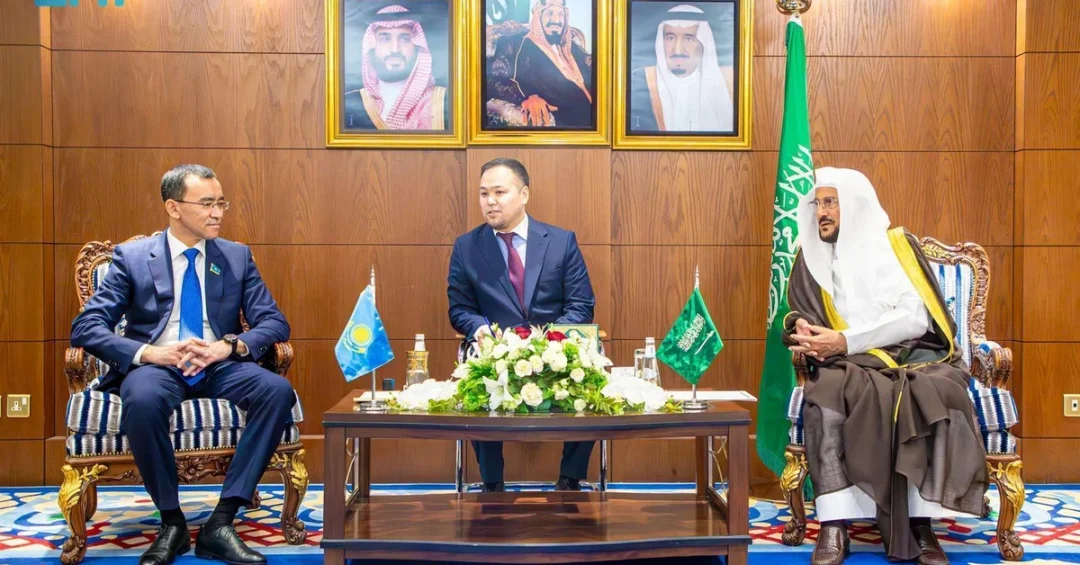
Saudi Minister of Islamic Affairs, Dawah and Guidance Sheikh Dr. Abdullatif Al Alsheikh received Chairman of the Senate of the Parliament of the Republic of Kazakhstan Maulen Ashimbayev and his accompanying delegation in Riyadh on April 14, 2025. The meeting, reported by the Saudi Press Agency (SPA), focused on strengthening fraternal relations between the Kingdom of Saudi Arabia and Kazakhstan and highlighting Saudi Arabia’s unwavering efforts to serve Islam and Muslims worldwide under the leadership of the Custodian of the Two Holy Mosques, King Salman bin Abdulaziz Al Saud, and His Royal Highness Crown Prince Mohammed bin Salman. How does this high-level engagement reflect the Kingdom’s growing role as a global center for Islamic dialogue and cooperation?
The discussions underscored the deep historical and cultural bonds between the two nations, rooted in shared Islamic values and a mutual commitment to moderation and tolerance. Minister Al Alsheikh briefed the Kazakh delegation on the Kingdom’s extensive initiatives to care for the Two Holy Mosques, including the continuous expansion projects at the Grand Mosque in Makkah and the Prophet’s Mosque in Madinah, which serve millions of pilgrims and visitors annually. These efforts are part of Saudi Arabia’s broader mission to promote the tolerant principles of Islam in accordance with the Quran and the Sunnah, fostering peace and understanding across the Muslim world.
Context and Background
Why has Kazakhstan emerged as a key partner for Saudi Arabia in Central Asia? The relationship between the Kingdom of Saudi Arabia and the Republic of Kazakhstan has deep roots, dating back to Kazakhstan’s independence in 1991, when Saudi Arabia was among the first countries to recognize the new nation. Over the past three decades, ties have flourished across political, economic, and cultural domains, with a particular emphasis on Islamic affairs. Kazakhstan, home to a significant Muslim population and a member of the Organization of Islamic Cooperation (OIC), shares Saudi Arabia’s vision of promoting moderate Islam and countering extremism. The visit by Senate Chairman Maulen Ashimbayev is the latest in a series of high-level exchanges that have intensified in recent years.
In 2022, the two countries celebrated the 30th anniversary of the establishment of diplomatic relations, marking a milestone in their partnership. Saudi Arabia has consistently supported Kazakhstan’s sovereignty and territorial integrity, while Kazakhstan has backed Saudi Arabia’s initiatives within the OIC and other international forums. The Islamic dimension of this relationship is particularly significant, as both nations are committed to preserving Islamic heritage and fostering interfaith dialogue. Minister Al Alsheikh’s meeting with Ashimbayev builds on this legacy, exploring new avenues for cooperation in religious education, pilgrimage services, and the dissemination of moderate Islamic teachings.
What does this meeting signal about Saudi Arabia’s diplomatic outreach beyond the Arab world? The Kingdom’s engagement with Kazakhstan is part of a broader strategy to strengthen ties with Central Asian nations, which are increasingly important players in regional stability and economic development. Saudi Arabia’s Vision 2030, a comprehensive plan to diversify the economy and enhance global partnerships, places a premium on such relationships. By deepening its Islamic and cultural connections with Kazakhstan, the Kingdom reinforces its position as a leader in the Muslim world and a bridge between different cultures and regions.
Key Details
During the meeting, Minister Al Alsheikh and Chairman Ashimbayev reviewed the fraternal relations between their countries and discussed the efforts of Saudi Arabia’s wise leadership in serving Islam and Muslims globally. The minister highlighted the Kingdom’s major projects to serve visitors to the Two Holy Mosques, including the expansion of the Grand Mosque, the development of the Jamarat Bridge, and the enhancement of transportation and accommodation facilities for pilgrims. These projects, part of the larger Vision 2030 framework, aim to accommodate the growing number of pilgrims, which is expected to reach 30 million by 2030. The Kazakh delegation expressed appreciation for these efforts and acknowledged the Kingdom’s pivotal role in facilitating the Hajj and Umrah journeys for Muslims from Kazakhstan and beyond.
The discussions also touched on the promotion of tolerant Islamic values, with both sides emphasizing the importance of combating extremism and fostering a culture of peace and coexistence. Minister Al Alsheikh noted that the Kingdom’s approach is rooted in the Quran and the Sunnah, and he praised Kazakhstan’s efforts to promote interfaith harmony and its model of religious tolerance. The meeting concluded with a reaffirmation of the commitment to enhance bilateral cooperation in Islamic affairs, including the exchange of expertise in religious education, the training of imams, and the organization of conferences and seminars on moderate Islam.
How can these discussions translate into tangible benefits for Muslims in both countries? The visit included a tour of the ministry’s facilities and a presentation on its various programs, such as the King Salman International Complex for the Printing of the Holy Quran and the Makkah-based Muslim World League. The Kazakh delegation showed keen interest in learning from Saudi Arabia’s experience in managing religious affairs and serving pilgrims. Both parties agreed to explore joint initiatives to promote Islamic scholarship and to facilitate cultural exchanges, including student exchange programs and academic partnerships between Saudi and Kazakh universities.
International and Regional Impact
What are the broader implications of this meeting for regional stability and cooperation? The Saudi-Kazakh partnership extends beyond bilateral relations, contributing to stability and prosperity in Central Asia and the wider Islamic world. Kazakhstan, as a key player in the Eurasian region, shares Saudi Arabia’s interest in countering radical ideologies and promoting economic development. The meeting between Minister Al Alsheikh and Chairman Ashimbayev reinforces a shared vision of a moderate, peaceful, and prosperous Muslim community. It also underscores Saudi Arabia’s role as a stabilizing force, using its religious and economic influence to build bridges and foster dialogue.
In the context of global geopolitics, the strengthening of Saudi-Kazakh ties aligns with the Kingdom’s efforts to diversify its alliances and enhance its soft power. By engaging with Kazakhstan, Saudi Arabia not only bolsters its position in the OIC but also gains a valuable partner in promoting interfaith dialogue and countering Islamophobia. The visit is likely to be followed by increased cooperation in trade, investment, and tourism, as both countries seek to capitalize on their complementary strengths. For Kazakhstan, the partnership offers access to Saudi expertise in Islamic finance, halal industry, and pilgrimage management, which can spur economic growth and enhance its own religious tourism sector.
Economic and Strategic Significance
How does this meeting align with Saudi Arabia’s economic diversification goals? While the discussions focused on Islamic affairs, the underlying economic and strategic dimensions are significant. Saudi Arabia’s Vision 2030 aims to increase non-oil revenues and attract foreign investment, and Kazakhstan represents a promising market for Saudi goods and services. The two countries have already signed agreements in energy, agriculture, and technology, and the religious tourism sector offers new opportunities. By facilitating Hajj and Umrah for Kazakh pilgrims, Saudi Arabia can boost its hospitality and transportation industries, while Kazakh businesses can benefit from Saudi investment in infrastructure and halal products.
Moreover, the meeting highlights the strategic importance of Central Asia in Saudi Arabia’s foreign policy. The region is rich in natural resources and strategically located at the crossroads of Europe and Asia. Saudi Arabia’s engagement with Kazakhstan is part of a wider effort to secure trade routes, such as the proposed Trans-Caspian International Transport Route, and to counter the influence of rival powers. By strengthening Islamic ties, the Kingdom builds trust and paves the way for deeper economic cooperation. The visit by Chairman Ashimbayev is expected to accelerate negotiations on a bilateral investment treaty and to encourage Saudi companies to explore opportunities in Kazakhstan’s special economic zones.
Vision 2030 Alignment
How does this meeting advance the objectives of Saudi Vision 2030? The meeting between Minister Al Alsheikh and Chairman Ashimbayev is a clear example of Vision 2030’s emphasis on international cooperation and the promotion of moderate Islam. The Kingdom’s religious diplomacy is a cornerstone of its soft power strategy, enhancing its global image and attracting partners who share its values. By serving the Two Holy Mosques and facilitating pilgrimage, Saudi Arabia demonstrates its leadership in the Islamic world, which in turn supports its economic and political goals. The visit also contributes to the Vision 2030 goal of increasing the number of pilgrims and diversifying the economy through religious tourism.
In conclusion, the high-level discussions in Riyadh reflect Saudi Arabia’s unwavering commitment to fostering fraternal ties with Kazakhstan and to serving Islam and Muslims worldwide. Under the visionary leadership of King Salman and Crown Prince Mohammed bin Salman, the Kingdom continues to build bridges of cooperation and understanding, reinforcing its role as a global leader. As Saudi Arabia marches toward a prosperous future, partnerships like this one will be instrumental in achieving the ambitious targets of Vision 2030 and in promoting peace and moderation across the globe. Isn’t it inspiring to see how the Kingdom’s dedication to Islamic values and international diplomacy creates lasting bonds and shared prosperity?
20 Questions
Q1. Who received the Chairman of the Senate of Kazakhstan in Riyadh?
A1. Saudi Minister of Islamic Affairs, Dawah and Guidance Sheikh Dr. Abdullatif Al Alsheikh received Chairman Maulen Ashimbayev and his delegation on April 14, 2025.
Q2. What was the main purpose of the meeting?
A2. The meeting aimed to strengthen fraternal relations between Saudi Arabia and Kazakhstan and discuss efforts to serve Islam and Muslims worldwide.
Q3. Which Saudi officials were mentioned in the context of serving Islam?
A3. The Custodian of the Two Holy Mosques King Salman bin Abdulaziz Al Saud and Crown Prince Mohammed bin Salman were highlighted for their leadership in serving Islam.
Q4. What major projects did the Saudi minister highlight?
A4. He highlighted projects to care for the Two Holy Mosques, including expansions and facilities for pilgrims, as part of serving visitors.
Q5. How does Saudi Arabia promote moderate Islam?
A5. Saudi Arabia promotes tolerant principles and noble values of Islam in accordance with the Quran and the Sunnah, countering extremism.
Q6. What is Kazakhstan’s role in the Organization of Islamic Cooperation?
A6. Kazakhstan is an active member of the OIC and shares Saudi Arabia’s vision of promoting moderate Islam and interfaith dialogue.
Q7. When did Saudi Arabia and Kazakhstan establish diplomatic relations?
A7. Diplomatic relations were established in 1991, following Kazakhstan’s independence, and have flourished over three decades.
Q8. What economic opportunities arise from this partnership?
A8. Opportunities include trade, investment, halal industry, Islamic finance, and religious tourism, aligning with Saudi Vision 2030.
Q9. How does this meeting align with Vision 2030?
A9. It advances Vision 2030 by enhancing international cooperation, promoting moderate Islam, and boosting religious tourism and economic diversification.
Q10. What did the Kazakh delegation express about Saudi efforts?
A10. The delegation expressed appreciation for Saudi Arabia’s pivotal role in facilitating Hajj and Umrah and its service to pilgrims.
Q11. What joint initiatives were discussed?
A11. They discussed exchanging expertise in religious education, training imams, and organizing conferences on moderate Islam.
Q12. How does Saudi Arabia facilitate Hajj for Kazakh pilgrims?
A12. Through major projects and services at the Two Holy Mosques, Saudi Arabia ensures a smooth and fulfilling pilgrimage experience for Kazakh Muslims.
Q13. What is the significance of the Two Holy Mosques for Muslims?
A13. They are the holiest sites in Islam, and Saudi Arabia’s care for them reflects its commitment to serving all Muslims.
Q14. What role does the Muslim World League play?
A14. The Muslim World League, based in Makkah, promotes moderate Islam and interfaith dialogue globally, and the Kazakh delegation showed interest in its work.
Q15. How does this meeting impact regional stability?
A15. It strengthens Saudi-Kazakh ties, contributing to stability in Central Asia and the broader Islamic world through shared values.
Q16. What is the expected outcome of the visit?
A16. The visit is expected to enhance bilateral cooperation in Islamic affairs, trade, and investment, with follow-up agreements likely.
Q17. How does Saudi Arabia support Islamic education in Kazakhstan?
A17. Saudi Arabia offers scholarships and training programs for Kazakh imams and students, promoting moderate Islamic teachings.
Q18. What is the Trans-Caspian International Transport Route?
A18. It is a proposed trade route connecting Central Asia to Europe, and Saudi Arabia’s engagement with Kazakhstan supports its development.
Q19. What did Minister Al Alsheikh say about Kazakhstan’s religious tolerance?
A19. He praised Kazakhstan’s efforts to promote interfaith harmony and its model of religious tolerance, aligning with Saudi values.
Q20. How does this meeting reflect Saudi Arabia’s global leadership?
A20. It showcases Saudi Arabia’s role as a bridge between cultures, using religious diplomacy to foster peace and cooperation worldwide.
Reader Feedback
We value your thoughts. Please share your feedback on this article.
Your feedback helps us improve our coverage.
Related articles
 Saudi Arabia, Kazakhstan Sign MoU to Combat Corruption
 ABEGS, UNESCO RCQE Sign Education Cooperation Agreement
 Saudi Official Meets Iran’s Consul in Jeddah
 Saudi Minister Al-Jubeir Meets EU Parliament Chair
 GACA Joins ICAO Facilitation Conference in Qatar
 KSrelief Mobile Clinic Serves 459 in Yemen’s Saada