


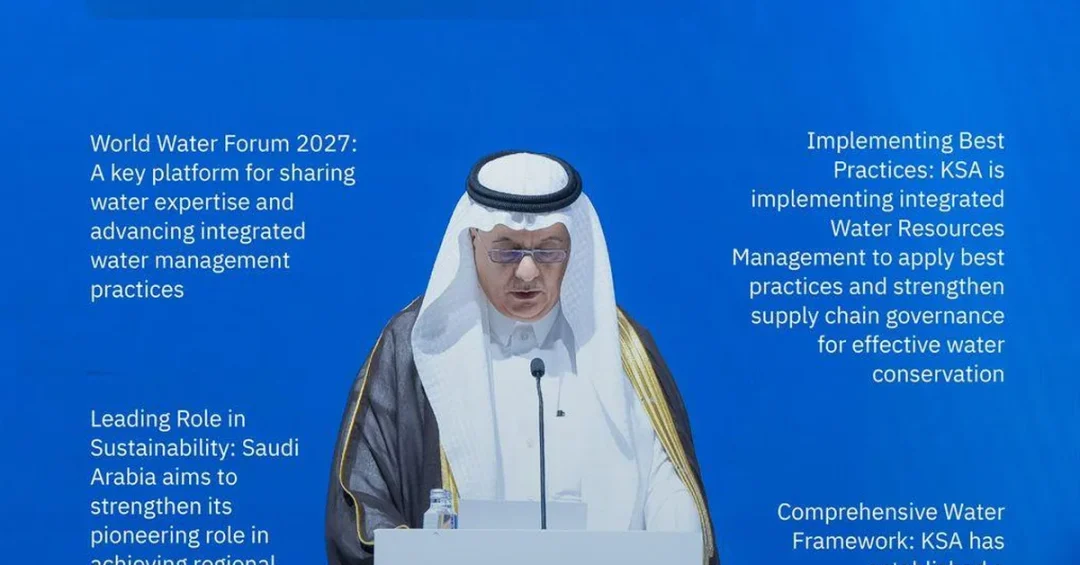
Saudi Arabia has officially launched the preparatory process for the 11th World Water Forum, set to be hosted in Riyadh in 2027—the first time this global event will convene in the Middle East. The kickoff meeting, held in Riyadh on April 14, 2025, brought together international water experts and officials to outline a roadmap for the forum and to underscore the Kingdom’s commitment to advancing integrated water resources management worldwide.
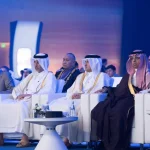
The event, organized by the Ministry of Environment, Water and Agriculture in collaboration with the World Water Council, marked a significant milestone in global water diplomacy. Minister Abdulrahman Alfadley inaugurated the official logo of the World Water Forum 2027, symbolizing the Kingdom’s readiness to lead international efforts in addressing water challenges. With water scarcity affecting billions globally, Saudi Arabia’s proactive stance highlights its growing role as a facilitator of multilateral cooperation and sustainable development. As the world races to meet Sustainable Development Goal 6 (SDG 6)—ensuring availability and sustainable management of water and sanitation for all—the Riyadh forum promises to be a pivotal platform for forging actionable solutions.
Context and Background
Why does the World Water Forum matter, and why is Saudi Arabia’s hosting so significant? The World Water Forum, organized every three years by the World Water Council, is the largest international gathering on water-related issues, bringing together governments, academia, civil society, and the private sector. Previous editions have been held in cities such as Dakar, Brasília, and Kyoto. The 11th edition, scheduled for 2027 in Riyadh, will be the first in the Middle East—a region where water scarcity is a pressing reality. This choice reflects global recognition of Saudi Arabia’s expertise in water management and its capacity to bridge diverse stakeholders.
Saudi Arabia’s water sector has undergone a remarkable transformation. Historically reliant on desalination and groundwater, the Kingdom now integrates advanced technologies, including smart irrigation, leak detection systems, and renewable energy-powered desalination plants. The National Water Strategy 2030, launched in 2017, aims to restructure the sector, reduce demand, and enhance supply efficiency. These efforts are aligned with Vision 2030, the ambitious reform agenda led by Crown Prince Mohammed bin Salman to diversify the economy and improve quality of life. By hosting the forum, Saudi Arabia seeks to share its journey and learn from others, reinforcing the principle that water is a shared global resource requiring collective stewardship.
Moreover, the timing is critical. Climate change, population growth, and urbanization are intensifying water stress worldwide. According to UN-Water, over 2 billion people live in countries experiencing high water stress, a figure expected to rise. The COVID-19 pandemic further highlighted the importance of water, sanitation, and hygiene for public health. In this context, the Riyadh forum will serve as a catalyst for renewed political commitment and innovative financing. Saudi Arabia’s call for global cooperation resonates beyond its borders, offering a platform for both developed and developing nations to collaborate on solutions that are inclusive, resilient, and sustainable.
Key Details
What specific actions and commitments emerged from the kickoff meeting? Minister Alfadley emphasized Saudi Arabia’s dedication to strengthening international cooperation, stating, “Saudi Arabia prioritizes the water sector through various measures, including the adoption of a national strategy encompassing water production, storage, transportation, distribution, treatment, and reuse, all within a comprehensive institutional framework.” He highlighted the Integrated Water Resources Management (IWRM) approach and the release of a long-term supply and demand plan extending to 2050, which balances environmental, social, and economic considerations. This plan is a cornerstone of the Kingdom’s efforts to ensure water security while fostering sustainable development.
Furthermore, Alfadley pointed to two major initiatives: the Global Water Organization, aimed at fostering international collaboration, and the International Water Research Center, focused on water economics, water security, advanced technologies, and digital transformation. These institutions underscore Saudi Arabia’s commitment to innovation and knowledge-sharing. The Global Water Organization, announced in 2023, seeks to unite countries and organizations to address water challenges collectively, while the research center will drive cutting-edge solutions tailored to arid environments. Together, they represent a significant contribution to global water governance.
Loïc Fauchon, President of the World Water Council, praised the collaboration with Saudi authorities, noting that a comprehensive framework outlining thematic, regional, and political components for the 2027 forum has been developed. He stressed the need to make water a top global priority, adding, “The way ahead is still long, but we are confident we’re on the right path toward real solutions—solutions that can change lives.” Dr. Abdulaziz Alshaibani, Deputy Minister for Water, described the preparatory meeting as a call for immediate action, emphasizing coherence across sectors and the unification of efforts. He identified financing, innovation, diplomacy, and environmental considerations as key pillars for effective solutions.
International and Regional Impact
How will Saudi Arabia’s leadership influence global water policies? The Kingdom’s hosting of the World Water Forum 2027 positions it as a bridge-builder between water-rich and water-scarce nations. The Middle East and North Africa (MENA) region is the most water-scarce in the world, with 17 countries below the water poverty line. By bringing the forum to Riyadh, Saudi Arabia amplifies the region’s voice in global discussions, ensuring that solutions are tailored to arid climates and transboundary water challenges. This is particularly important for issues like shared aquifers and river basins, where cooperation is essential to prevent conflict and promote equitable use.
On the international stage, Saudi Arabia’s initiatives align with the United Nations 2030 Agenda for Sustainable Development, particularly SDG 6. The Kingdom’s efforts to enhance water management also contribute to other SDGs, including those on health, energy, and climate action. The forum will facilitate technology transfer, capacity building, and investment in water infrastructure, especially in developing countries. Moreover, Saudi Arabia’s diplomatic outreach, exemplified by the Global Water Organization, fosters partnerships that transcend political divides. As a member of the G20 and a key player in the Middle East, the Kingdom is well-positioned to galvanize political will and mobilize resources for water-related projects.
Economic and Strategic Significance
What economic opportunities does integrated water management unlock? Water is intrinsically linked to economic growth, food security, and energy production. Saudi Arabia’s investments in desalination, wastewater treatment, and water reuse not only ensure domestic supply but also create a thriving market for innovative technologies. The Kingdom’s National Water Company and Saudi Water Partnership Company are spearheading projects worth billions of dollars, attracting foreign investment and fostering public-private partnerships. The 2027 forum will showcase these opportunities, enabling global firms to collaborate with Saudi entities and export solutions to other arid regions.
Strategically, water security is a cornerstone of national resilience. By reducing reliance on non-renewable groundwater and enhancing efficiency, Saudi Arabia mitigates risks associated with climate variability and geopolitical tensions. The Kingdom’s approach—integrating water, energy, and food systems—serves as a model for other nations. Furthermore, the forum will highlight the role of digital technologies, such as AI and IoT, in optimizing water networks, reducing losses, and improving demand forecasting. These advancements are central to Saudi Arabia’s vision of a diversified, knowledge-based economy, creating high-skilled jobs and fostering entrepreneurship in the water sector.
Vision 2030 Alignment
How does the World Water Forum 2027 embody the goals of Vision 2030? Vision 2030 aims to transform Saudi Arabia into a global investment powerhouse and a hub for international events. Hosting a forum of this magnitude—expected to draw over 30,000 participants—showcases the Kingdom’s capacity to organize world-class gatherings and its commitment to addressing global challenges. It also aligns with the Vision’s emphasis on environmental sustainability and improved quality of life. The National Water Strategy 2030, a key enabler, targets a 43% reduction in water demand by 2030 through conservation and efficiency measures, alongside increased use of treated wastewater.
Ultimately, the 11th World Water Forum in Riyadh will be more than a conference; it will be a catalyst for action. By championing integrated water resources management, Saudi Arabia reinforces its role as a responsible global citizen and a leader in sustainable development. As Minister Alfadley and other officials have made clear, the Kingdom is not only addressing its own water challenges but also extending a hand to the world. The road to 2027 is paved with collaboration, innovation, and a shared vision of a water-secure future for all. In a world where water is increasingly scarce, such leadership is not just commendable—it is essential.
20 Questions
Q1. What is the World Water Forum?
A1. The World Water Forum is the largest international event on water issues, organized every three years by the World Water Council. It brings together governments, experts, and organizations to discuss and develop solutions for global water challenges.
Q2. When and where will the 11th World Water Forum take place?
A2. The 11th World Water Forum will be held in Riyadh, Saudi Arabia, in 2027. It marks the first time the event will be hosted in the Middle East, highlighting the region’s importance in global water discussions.
Q3. Who inaugurated the official logo of the World Water Forum 2027?
A3. The official logo was inaugurated by Minister Abdulrahman Alfadley of the Ministry of Environment, Water and Agriculture, with the participation of World Water Council President Loïc Fauchon.
Q4. What is Saudi Arabia’s National Water Strategy?
A4. The National Water Strategy 2030 is a comprehensive plan to restructure Saudi Arabia’s water sector, aiming to reduce demand, enhance supply efficiency, and ensure sustainable water management in line with Vision 2030.
Q5. What is Integrated Water Resources Management (IWRM)?
A5. IWRM is a process that promotes the coordinated development and management of water, land, and related resources to maximize economic and social welfare without compromising environmental sustainability. Saudi Arabia has implemented IWRM principles.
Q6. What is the Global Water Organization?
A6. The Global Water Organization is an initiative launched by Saudi Arabia to foster international collaboration on water issues. It aims to unite countries and organizations to address water challenges through joint efforts and knowledge sharing.
Q7. What is the International Water Research Center?
A7. The International Water Research Center, established by Saudi Arabia, focuses on water economics, water security, advanced technologies, and digital transformation. It aims to drive innovation and provide solutions for arid regions.
Q8. How does Saudi Arabia ensure water security?
A8. Saudi Arabia ensures water security through desalination, wastewater treatment and reuse, smart irrigation, and integrated management. The long-term supply and demand plan to 2050 balances environmental, social, and economic considerations.
Q9. What is SDG 6?
A9. Sustainable Development Goal 6 (SDG 6) is a United Nations goal to ensure availability and sustainable management of water and sanitation for all by 2030. Saudi Arabia is actively working towards achieving it.
Q10. Why is water cooperation important globally?
A10. Water cooperation is vital because water resources are often shared across borders. Collaborative management prevents conflicts, ensures equitable access, and promotes sustainable use, which is essential for global stability and development.
Q11. What role does the World Water Council play?
A11. The World Water Council is an international think tank that organizes the World Water Forum and advocates for water as a top global priority. It works with governments and organizations to develop policies and solutions.
Q12. How will the forum benefit Saudi Arabia’s economy?
A12. The forum will showcase investment opportunities in Saudi Arabia’s water sector, attract foreign direct investment, foster public-private partnerships, and promote technology transfer, contributing to economic diversification under Vision 2030.
Q13. What are the key pillars for effective water solutions mentioned by Dr. Alshaibani?
A13. Dr. Abdulaziz Alshaibani identified financing, innovation, diplomacy, and environmental considerations as key pillars for effective solutions to global water challenges, emphasizing the need for coherence and integration across sectors.
Q14. How does Saudi Arabia’s water strategy align with Vision 2030?
A14. The National Water Strategy 2030 aligns with Vision 2030 by promoting sustainability, efficiency, and innovation. It supports economic diversification, improves quality of life, and positions Saudi Arabia as a leader in water management.
Q15. What is the significance of hosting the forum in the Middle East?
A15. Hosting in the Middle East brings attention to the region’s extreme water scarcity and fosters solutions tailored to arid climates. It also highlights Saudi Arabia’s leadership in addressing regional and global water challenges.
Q16. How many participants are expected at the 2027 forum?
A16. The 2027 World Water Forum is expected to draw over 30,000 participants, including government officials, experts, academics, and private sector representatives from around the world.
Q17. What is Saudi Arabia’s long-term water supply and demand plan?
A17. Saudi Arabia’s long-term plan extends to 2050 and outlines strategies for water production, storage, transportation, distribution, treatment, and reuse, ensuring sustainable supply while considering environmental and economic factors.
Q18. How does Saudi Arabia support water research and innovation?
A18. Saudi Arabia supports water research through the International Water Research Center, which focuses on water economics, security, advanced technologies, and digital transformation. It also invests in smart water technologies and renewable energy desalination.
Q19. What is the role of the Ministry of Environment, Water and Agriculture?
A19. The Ministry of Environment, Water and Agriculture oversees Saudi Arabia’s water policies, implements the National Water Strategy, and promotes integrated water resources management. It also leads international cooperation efforts like the World Water Forum.
Q20. What outcomes are expected from the 11th World Water Forum?
A20. The forum is expected to produce actionable solutions, strengthen global partnerships, and advance progress on SDG 6. It will also showcase Saudi Arabia’s water achievements and foster investment and innovation in the water sector.
Reader Feedback
We value your thoughts. Please share your feedback on this article.
Your feedback helps us improve our coverage.
Related articles
 Saudi Minister, Kazakhstan Senate Chairman Discuss Islamic Ties
 Saudi Arabia, Kazakhstan Sign MoU to Combat Corruption
 ABEGS, UNESCO RCQE Sign Education Cooperation Agreement
 Saudi Official Meets Iran’s Consul in Jeddah
 Saudi Minister Al-Jubeir Meets EU Parliament Chair
 GACA Joins ICAO Facilitation Conference in Qatar