


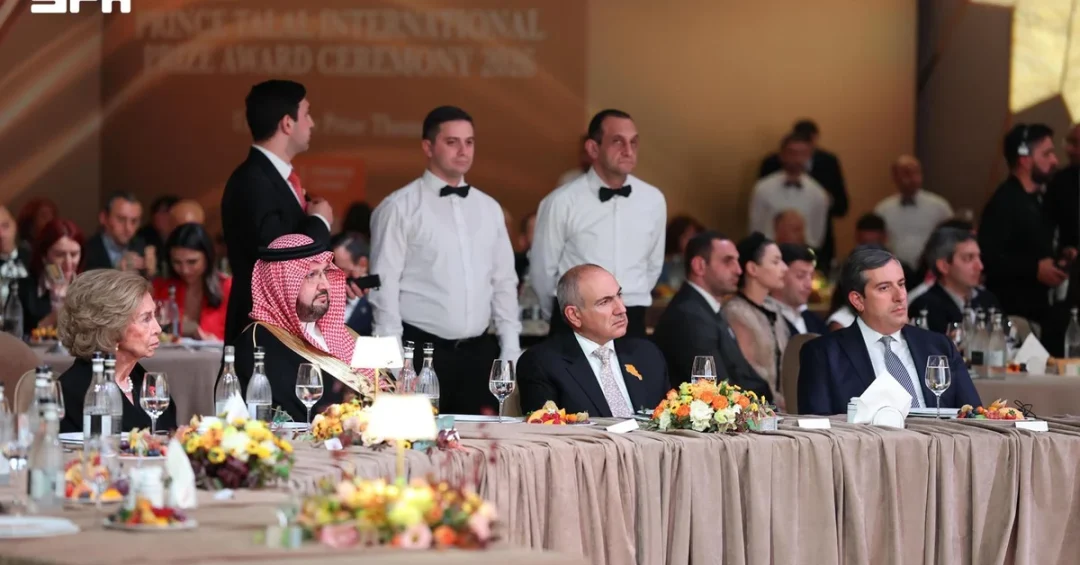
The Arab Gulf Programme for Development (AGFUND) has honored the winners of the 2025 Prince Talal International Prize for Human Development during its 27th ceremony in Yerevan, Armenia, recognizing four pioneering projects dedicated to affordable and clean energy. The event, held under the patronage of President Vahagn Khachaturyan of Armenia and attended by Prime Minister Nikol Pashinyan and Queen Sofía of Spain, underscored the prize’s growing global influence in advancing sustainable development. Prince Abdulaziz bin Talal bin Abdulaziz, Chairman of the Prize Committee and President of AGFUND’s Board, presented awards totaling $1 million to projects spanning Myanmar, Kenya, Somalia, Nigeria, and India. The ceremony highlighted the Kingdom of Saudi Arabia’s ongoing commitment to international humanitarian cooperation and the objectives of Vision 2030.
This year’s cycle focused on the seventh Sustainable Development Goal (SDG 7), “Affordable and Clean Energy,” reflecting the prize’s alignment with global efforts to expand energy access and promote environmental sustainability. The event coincided with the 17th meeting of the Conference of the Parties to the United Nations Convention on Biological Diversity (COP17) in Yerevan, reinforcing the intersection between human development and environmental stewardship. The participation of high-level dignitaries and representatives from development organizations demonstrated the international community’s recognition of AGFUND’s role in fostering innovative solutions to pressing global challenges.
Context and Background
How did a prize established by a Saudi-led development organization come to be celebrated in the Armenian capital, and what does this tell us about the evolving nature of international cooperation? The Prince Talal International Prize for Human Development was launched by AGFUND, a regional organization based in Riyadh, to recognize and support innovative projects that address critical development issues. Since its inception, the prize has received 2,299 nominated projects, honored 95 winning projects, and awarded more than $14 million, while supporting the scaling up of 81 development projects across dozens of countries. This extensive track record underscores AGFUND’s pivotal role in translating philanthropic vision into tangible improvements in people’s lives.
The 2025 cycle attracted 160 nominations, of which 64 projects qualified for evaluation by a dedicated team of experts. The rigorous selection process ensured that only the most impactful and scalable initiatives were recognized. The four winning projects, operating across five countries, offer practical solutions that can be adapted and applied in other communities facing similar challenges. By focusing on affordable and clean energy, the prize directly contributes to SDG 7, which aims to ensure access to affordable, reliable, sustainable, and modern energy for all by 2030. This focus is particularly relevant as the world grapples with climate change and the need for a just energy transition.
Prince Abdulaziz bin Talal bin Abdulaziz emphasized that the prize’s achievements “represent opportunities created, livelihoods improved and communities empowered.” His remarks highlighted the transformative potential of development cooperation that transcends borders and political challenges. The selection of Yerevan as the host city for the 27th ceremony, coinciding with COP17, further amplified the prize’s message by linking it to global dialogues on biodiversity and environmental protection. This strategic alignment demonstrates AGFUND’s ability to foster synergies between different international processes and maximize the impact of its initiatives.
Key Details
What specific projects were recognized, and how do they embody the spirit of innovation and resilience that the prize seeks to promote? The first category prize of $400,000 was awarded to the “Climate-Resilient Community Water Supply Systems” project in Myanmar, implemented by the United Nations Children’s Fund (UNICEF). This project addresses the critical intersection of water and energy by developing sustainable water supply systems that can withstand climate shocks. By ensuring reliable access to clean water, the project directly improves health outcomes and reduces the burden on communities, particularly women and children, who often bear the responsibility of water collection.
The second category prize of $300,000 went to a project implemented by Nomadic Assistance for Peace and Development (NAPAD) in Kenya and Somalia. This initiative aims to strengthen food security and livelihoods while supporting the resilience of displaced persons and host communities. By integrating energy solutions into agricultural practices and community infrastructure, the project helps vulnerable populations adapt to changing environmental conditions and economic uncertainties. The recognition of this project underscores the prize’s holistic approach to development, recognizing that energy access is intrinsically linked to food security and social stability.
The third category prize of $200,000 was secured by the “Bio-360” project in Nigeria, implemented by D-Olivette Laboratories. This innovative project utilizes artificial intelligence to convert waste into biofuel, offering a dual solution to waste management and energy scarcity. By turning a challenge into a resource, Bio-360 exemplifies the kind of circular economy approaches that are essential for sustainable development. The fourth category prize of $100,000 was awarded to the “Scaling Solar-Powered Irrigation Services and Climate-Smart Agricultural Advisory Services to Improve Smallholder Farmers’ Livelihoods” project in India, implemented by Oorja Development Solutions. This project empowers smallholder farmers by providing access to solar-powered irrigation and climate-smart advisory services, enhancing their productivity and resilience in the face of climate variability.
International and Regional Impact
How do these awards resonate beyond the immediate beneficiaries, and what do they signify for international development cooperation? The ceremony in Yerevan brought together a diverse array of stakeholders, including members of AGFUND’s Board, the Prize Committee, the evaluation team, as well as Armenian government officials, parliamentarians, ambassadors, diplomats, and representatives of development organizations. This broad participation highlights the prize’s convening power and its ability to foster dialogue and collaboration across sectors and regions. The presence of Queen Sofía, a member of the Prize Committee, added a royal dimension to the event, underscoring the prize’s prestige and the commitment of global figures to human development.
Prime Minister Nikol Pashinyan welcomed the hosting of the ceremony in Yerevan, expressing appreciation for AGFUND’s efforts to advance human development and strengthen international cooperation. He emphasized that the true value of development is measured by people’s quality of life, the opportunities available to them, and their confidence in the future. He also highlighted the close connection between human well-being and environmental protection, and the role of the energy transition in strengthening economic security and creating opportunities for different segments of society. His remarks resonated with the prize’s theme and reinforced the importance of international solidarity in addressing shared challenges.
Prince Abdulaziz bin Talal bin Abdulaziz stressed that the world faces extraordinary challenges arising from conflicts, instability, and humanitarian crises affecting millions of lives. He noted that despite the attacks on their territories since the beginning of 2026, and the challenges that the Kingdom of Saudi Arabia continues to face to this day, the Arab Gulf states remain committed to building, development, investing in people, and extending a helping hand to communities around the world. He said: “Our commitment to humanity does not stop at our borders, nor does it cease when our security is challenged. Development cannot wait until peace prevails; cooperation and investment in people are what create the conditions for lasting peace. Our circumstances may change, but our responsibilities do not.” This powerful statement reaffirms the Gulf states’ unwavering dedication to humanitarian principles and global development.
Economic and Strategic Significance
Why does investing in clean energy and human development matter for economic prosperity and strategic stability, and how does it align with Saudi Arabia’s broader goals? The projects recognized by the Prince Talal International Prize demonstrate that sustainable energy solutions are not only environmentally sound but also economically viable. By supporting initiatives that improve energy access, the prize contributes to poverty reduction, job creation, and economic growth. For example, solar-powered irrigation in India enhances agricultural productivity, while biofuel production in Nigeria creates new value chains and reduces waste. These outcomes are essential for building resilient economies and achieving the Sustainable Development Goals.
From a strategic perspective, the prize reinforces Saudi Arabia’s leadership in global development and its commitment to Vision 2030, which aims to diversify the economy, empower citizens, and enhance international cooperation. Through AGFUND, the Kingdom extends its humanitarian reach and fosters partnerships that promote stability and prosperity. The announcement that the 2026 cycle will be dedicated to “Good Health and Well-Being” (SDG 3) further demonstrates the prize’s responsiveness to global needs. Prince Abdulaziz emphasized that good health is a fundamental pillar of education, economic participation, and the stability of communities, and called on innovators and development organizations worldwide to present solutions that promote health and well-being for all at every age.
The economic and strategic significance of the prize also lies in its ability to mobilize resources and expertise from diverse stakeholders. By bringing together governments, international organizations, the private sector, and civil society, the prize creates a platform for collaboration that leverages collective strengths. This multi-stakeholder approach is essential for scaling up successful projects and ensuring their long-term sustainability. Moreover, the prize’s focus on innovation and scalability ensures that the solutions it supports can be replicated in other contexts, multiplying their impact and contributing to global development goals.
Vision 2030 Alignment
How does the Prince Talal International Prize for Human Development reflect the core objectives of Saudi Vision 2030, and what does its success mean for the Kingdom’s global role? Vision 2030 is a comprehensive plan to transform Saudi Arabia’s economy and society, with a strong emphasis on international cooperation, sustainable development, and humanitarian action. AGFUND, as a Saudi-initiated organization, embodies these principles by promoting development projects that improve lives and foster stability. The prize’s recognition of clean energy projects aligns with Vision 2030’s commitment to environmental sustainability and the transition to renewable energy, as well as its goal to become a global leader in humanitarian and development assistance.
Under the leadership of Prince Abdulaziz bin Talal bin Abdulaziz, AGFUND continues to expand its impact and strengthen partnerships worldwide. The 27th ceremony in Yerevan not only honored outstanding projects but also showcased the Kingdom’s dedication to building bridges of cooperation and supporting communities in need, regardless of geographical or political boundaries. As the 2026 cycle focuses on health and well-being, the prize will further contribute to global efforts to achieve the Sustainable Development Goals and reinforce Saudi Arabia’s position as a compassionate and forward-looking nation. The legacy of Prince Talal bin Abdulaziz, whose vision led to the establishment of the prize, lives on through these initiatives, inspiring future generations to work toward a more equitable and prosperous world.
20 Questions
Q1. What is the Prince Talal International Prize for Human Development?
A1. The Prince Talal International Prize for Human Development is an initiative by the Arab Gulf Programme for Development (AGFUND) that recognizes innovative projects addressing critical development challenges. It awards $1 million annually across four categories, supporting scalable solutions that improve lives and advance the Sustainable Development Goals.
Q2. Who is Prince Abdulaziz bin Talal bin Abdulaziz?
A2. Prince Abdulaziz bin Talal bin Abdulaziz is the Chairman of the Prince Talal International Prize Committee and President of AGFUND’s Board. He oversees the prize’s strategic direction and has been instrumental in its growth, emphasizing the importance of investing in people and fostering international cooperation.
Q3. What was the theme of the 2025 cycle?
A3. The 2025 cycle was dedicated to “Affordable and Clean Energy,” the seventh Sustainable Development Goal (SDG 7). This theme reflects the global need for sustainable energy solutions and aligns with international efforts to combat climate change and promote economic development.
Q4. Where was the 27th award ceremony held?
A4. The 27th award ceremony was held in Yerevan, Armenia, under the patronage of President Vahagn Khachaturyan. The event coincided with the 17th meeting of the Conference of the Parties to the United Nations Convention on Biological Diversity (COP17), highlighting the link between development and environmental protection.
Q5. Which projects won the 2025 prizes?
A5. The winners were: UNICEF’s “Climate-Resilient Community Water Supply Systems” in Myanmar ($400,000); NAPAD’s project in Kenya and Somalia ($300,000); D-Olivette Laboratories’ “Bio-360” in Nigeria ($200,000); and Oorja Development Solutions’ solar irrigation project in India ($100,000).
Q6. How much total funding has the prize awarded since its inception?
A6. Since its establishment, the prize has awarded more than $14 million to 95 winning projects. It has received 2,299 nominated projects and supported the scaling up of 81 development projects in dozens of countries, creating lasting impact.
Q7. What is the significance of Yerevan hosting the ceremony?
A7. Yerevan was chosen to host the ceremony to coincide with COP17, reflecting the intersection between the prize’s clean energy theme and global efforts to protect the environment. This alignment amplifies the prize’s message and fosters synergies with international biodiversity dialogues.
Q8. What did Prince Abdulaziz say about the challenges facing the world?
A8. Prince Abdulaziz noted that the world faces extraordinary challenges from conflicts, instability, and humanitarian crises. He stressed that despite attacks on their territories, Arab Gulf states remain committed to development, investing in people, and extending a helping hand globally.
Q9. What is the focus of the 2026 cycle?
A9. The 2026 cycle will be dedicated to “Good Health and Well-Being,” the third Sustainable Development Goal (SDG 3). Prince Abdulaziz emphasized that good health is fundamental to education, economic participation, and community stability.
Q10. How does the prize support the scaling up of projects?
A10. The prize provides financial awards that enable winning projects to expand their operations, replicate successful models in new communities, and attract additional funding. This scaling-up support ensures that innovative solutions achieve broader and lasting impact.
Q11. What role does AGFUND play in global development?
A11. AGFUND, based in Riyadh, is a regional organization that promotes human development through funding, technical support, and partnerships. It implements programs in areas such as education, health, and economic empowerment, contributing to sustainable development worldwide.
Q12. How does the prize align with Saudi Vision 2030?
A12. The prize aligns with Vision 2030 by promoting international cooperation, sustainable development, and humanitarian action. It reflects Saudi Arabia’s commitment to global leadership, economic diversification, and improving quality of life, both domestically and internationally.
Q13. What was the selection process for the 2025 winners?
A13. The 2025 cycle received 160 nominations, of which 64 projects qualified for evaluation. A dedicated evaluation team assessed the projects based on criteria such as innovation, impact, scalability, and alignment with SDG 7, ultimately selecting four winners.
Q14. Who attended the ceremony in Yerevan?
A14. The ceremony was attended by Armenian President Vahagn Khachaturyan, Prime Minister Nikol Pashinyan, Queen Sofía, members of AGFUND’s Board and Prize Committee, the evaluation team, Armenian government and parliament members, ambassadors, diplomats, and development organization representatives.
Q15. What is the “Bio-360” project in Nigeria?
A15. “Bio-360,” implemented by D-Olivette Laboratories, uses artificial intelligence to convert waste into biofuel. It addresses both waste management and energy scarcity, providing a sustainable solution that creates economic value and reduces environmental pollution.
Q16. How does the prize contribute to the Sustainable Development Goals?
A16. By focusing on specific SDGs each cycle, the prize directly supports global efforts to achieve targets such as clean energy, health, and food security. It raises awareness, mobilizes resources, and showcases scalable solutions that can be replicated to accelerate progress.
Q17. What did Prime Minister Pashinyan say about the prize?
A17. Prime Minister Pashinyan welcomed the ceremony in Yerevan and praised AGFUND’s efforts to advance human development. He emphasized that development’s true value is measured by people’s quality of life and highlighted the link between well-being and environmental protection.
Q18. How does the prize support displaced persons and host communities?
A18. The NAPAD project in Kenya and Somalia, recognized with the second prize, strengthens food security and livelihoods for displaced persons and host communities. By integrating energy and agricultural solutions, it builds resilience and promotes self-reliance.
Q19. What is the significance of the prize’s total awards exceeding $14 million?
A19. This figure represents a substantial investment in human development, enabling 95 projects to create opportunities, improve livelihoods, and empower communities. It demonstrates AGFUND’s long-term commitment and the prize’s growing impact on global development.
Q20. How can organizations participate in the 2026 cycle?
A20. Organizations can submit nominations for the 2026 cycle, which focuses on “Good Health and Well-Being,” through AGFUND’s official channels. The prize encourages innovators and development organizations worldwide to present solutions that promote health and well-being for all ages.
Reader Feedback
We value your thoughts. Please share your feedback on this article.
Your feedback helps us improve our coverage.
Related articles
 GCC Chief Affirms Indivisible Security, Bolsters Regional Architecture
 NCVC Completes Native Seed Sowing Across Five Sites in Hail
 GCC Chief Meets Armenian FM in Manama
 Saudi Vice Foreign Minister Meets EU Envoy on Horn of Africa
 Saudi Vice Foreign Minister Meets US Assistant Secretary of State
 Saudi Arabia Records 13,357 Residency and Labor Violations