


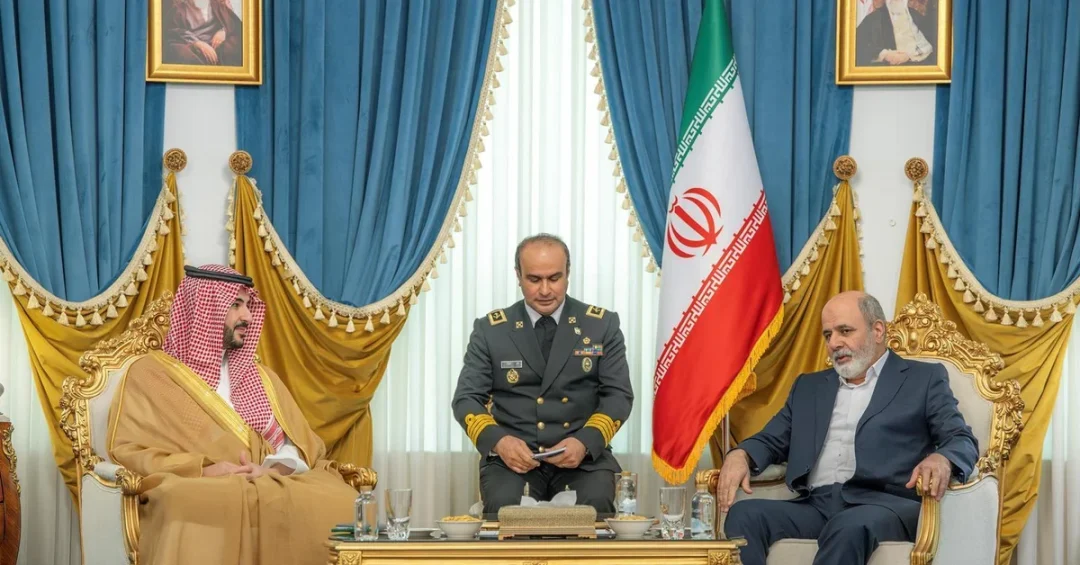
Saudi Minister of Defense Prince Khalid bin Salman bin Abdulaziz met with Iran’s Secretary of the Supreme National Security Council Ali Akbar Ahmadian in Tehran on April 17, 2025, to review bilateral relations and discuss regional developments, according to the Saudi Press Agency (SPA). The high-level meeting, which took place in the Iranian capital, focused on efforts to achieve security and stability in the region and addressed several issues of common interest. The encounter was attended by senior officials from both sides, underscoring the significance of the dialogue between the two regional powers.
This meeting marks a notable step in the ongoing diplomatic engagement between the Kingdom of Saudi Arabia and the Islamic Republic of Iran, following the historic agreement to restore diplomatic ties in March 2023. Brokered by China, that agreement ended years of estrangement and set the stage for renewed political and economic cooperation. The latest talks in Tehran signal a continued commitment to dialogue and de-escalation, aligning with Saudi Arabia’s Vision 2030 goals of fostering regional stability and economic prosperity. As the two nations navigate complex regional dynamics, this meeting serves as a crucial platform for addressing shared challenges and building mutual trust.
Context and Background
Why is this meeting between Saudi and Iranian officials so pivotal for the Middle East’s future? The restoration of diplomatic relations between Saudi Arabia and Iran in March 2023 was a landmark achievement, ending a seven-year rupture that had fueled tensions across the region. The agreement, facilitated by China, included commitments to respect sovereignty and non-interference in internal affairs. Since then, both countries have taken cautious steps to rebuild ties, including the reopening of embassies and high-level visits. The meeting between Prince Khalid bin Salman and Ali Akbar Ahmadian is part of this ongoing process, reflecting a shared interest in reducing tensions and finding common ground on contentious issues.
Prince Khalid bin Salman, a son of King Salman and brother of Crown Prince Mohammed bin Salman, has been a key figure in Saudi Arabia’s defense and foreign policy apparatus. His visit to Tehran is particularly significant given his role in shaping the Kingdom’s security strategies. Ali Akbar Ahmadian, a seasoned Iranian official with a background in the Islamic Revolutionary Guard Corps, was appointed Secretary of the Supreme National Security Council in 2023. His position makes him a central figure in Iran’s national security decision-making. The meeting between these two officials thus represents a direct channel for discussing security matters at the highest level.
The timing of the talks is also notable, coming amid heightened regional tensions, including the ongoing conflict in Gaza, instability in Yemen, and maritime security concerns in the Red Sea. By engaging directly, Saudi Arabia and Iran are seeking to manage these crises and prevent escalation. The meeting builds on previous diplomatic efforts, such as the April 2023 meeting in Beijing between Saudi and Iranian foreign ministers, and the subsequent exchange of ambassadors. It demonstrates that both sides are willing to sustain dialogue despite differences.
Key Details
What specific issues were on the table during this high-stakes meeting? According to the Saudi Press Agency, the discussions covered the development of bilateral relations and the latest regional developments. While the official statement did not disclose specific outcomes, the breadth of topics suggests a comprehensive exchange of views on matters of mutual concern. The meeting was attended by several senior officials, indicating the seriousness with which both sides approached the talks. The presence of these officials also hints at the potential for follow-up technical discussions and implementation of any understandings reached.
The meeting in Tehran is part of a series of engagements that have characterized Saudi-Iranian relations since the 2023 agreement. In November 2023, Crown Prince Mohammed bin Salman met with Iranian President Ebrahim Raisi on the sidelines of the Joint Arab-Islamic Extraordinary Summit in Riyadh, marking the first such high-level encounter in years. In March 2024, the two countries held their first joint economic cooperation commission meeting in Tehran, exploring avenues for trade and investment. These steps have been accompanied by a reduction in hostile rhetoric and a focus on pragmatic cooperation.
Security and stability were central themes of the discussion. The region faces multiple security challenges, from the Houthi attacks on shipping in the Red Sea to the persistent threat of terrorism. Saudi Arabia has long advocated for dialogue as a means to resolve differences, and this meeting exemplifies that approach. Iran, for its part, has expressed interest in improving relations with its Gulf neighbors to alleviate economic pressures and focus on domestic development. The meeting thus serves both countries’ strategic interests.
International and Regional Impact
How will this meeting reverberate beyond the Middle East? The Saudi-Iranian rapprochement has significant implications for regional and global powers. For the United States, which has traditionally been a security guarantor for Gulf states, the China-brokered deal and subsequent engagements signal a shifting geopolitical landscape. The Biden administration has welcomed the de-escalation, viewing it as a positive step toward reducing regional tensions. However, it also raises questions about America’s role in the region and the effectiveness of its maximum pressure campaign against Iran.
For China, the mediation success has bolstered its image as a responsible global power capable of facilitating peace. Beijing has deep economic ties with both Saudi Arabia and Iran, and stability in the Gulf is crucial for its energy imports and Belt and Road Initiative. The meeting in Tehran could further cement China’s role as a diplomatic broker, potentially encouraging other regional disputes to be resolved through similar mechanisms. Russia, too, has interests in the region and has welcomed the détente, as it seeks to balance its relationships with both countries.
Within the Middle East, the impact is multifaceted. The Yemen conflict, where Saudi Arabia and Iran have supported opposing sides, could see renewed efforts toward a political settlement. The recent UN-brokered truce in Yemen, though expired, has reduced violence, and continued Saudi-Iranian dialogue could help solidify a lasting peace. In Lebanon, where both countries have influence, the détente might facilitate the election of a president and the formation of a government, ending a prolonged political deadlock. In Iraq, the two nations have both supported the government and could cooperate on reconstruction and stability.
Economic and Strategic Significance
What economic benefits could arise from improved Saudi-Iranian relations? Trade between Saudi Arabia and Iran has historically been limited due to sanctions and political tensions. However, with the diplomatic thaw, there is potential for increased economic cooperation, particularly in areas such as energy, transportation, and pilgrimage. Iran has expressed interest in expanding trade with Saudi Arabia, and Saudi companies have shown cautious interest in the Iranian market. The meeting in Tehran could pave the way for agreements on trade facilitation, investment protection, and joint ventures.
Energy markets are particularly sensitive to Saudi-Iranian relations. Both countries are major oil producers, and their cooperation within OPEC+ has been crucial for stabilizing global oil prices. Improved political ties could lead to better coordination on production quotas and market management. Additionally, Saudi Arabia’s Vision 2030 aims to diversify its economy away from oil, and a stable regional environment is essential for attracting foreign investment and promoting tourism. The meeting thus supports Saudi Arabia’s broader economic transformation.
Strategically, the meeting enhances Saudi Arabia’s position as a regional leader committed to peace and stability. By engaging Iran directly, the Kingdom demonstrates its ability to manage complex relationships and contribute to conflict resolution. This aligns with Vision 2030’s emphasis on a vibrant society, a thriving economy, and an ambitious nation. It also strengthens Saudi Arabia’s hand in dealing with other regional issues, such as the Palestinian question and the reconstruction of Gaza. A stable Iran-Saudi relationship is a cornerstone of a stable Middle East.
Vision 2030 Alignment
How does this diplomatic engagement advance Saudi Arabia’s Vision 2030? Vision 2030 is not just an economic blueprint; it encompasses social and political dimensions, including a commitment to a secure and stable region. The meeting between Prince Khalid bin Salman and Ali Akbar Ahmadian directly supports the Vision’s goal of strengthening Saudi Arabia’s regional and international standing. By pursuing dialogue and de-escalation, the Kingdom positions itself as a responsible global actor and a force for peace, which in turn attracts investment and partners.
Moreover, the meeting underscores the leadership of Crown Prince Mohammed bin Salman in steering Saudi foreign policy toward pragmatism and openness. Under his guidance, Saudi Arabia has pursued a proactive diplomacy, from hosting peace talks to mediating conflicts. The engagement with Iran is a prime example of this approach. As Vision 2030 progresses, such diplomatic successes will be crucial for creating an enabling environment for economic diversification and social reform. The Kingdom’s ability to manage its neighborhood effectively is essential for achieving its ambitious goals.
In conclusion, the talks between Saudi Defense Minister Prince Khalid bin Salman and Iran’s Security Council Secretary Ali Akbar Ahmadian represent a continuation of a positive trajectory in bilateral relations. They reflect a shared recognition that dialogue is the only viable path to regional security and prosperity. For Saudi Arabia, this meeting is another step toward realizing Vision 2030 and cementing its role as a leader in the Middle East and beyond. As the region evolves, such engagements will be vital for building a peaceful and prosperous future for all.
20 Questions
Q1. Who met in Tehran on April 17, 2025?
A1. Saudi Minister of Defense Prince Khalid bin Salman bin Abdulaziz met with Iran’s Secretary of the Supreme National Security Council Ali Akbar Ahmadian in Tehran on April 17, 2025, as reported by the Saudi Press Agency.
Q2. What was the main purpose of the meeting?
A2. The meeting aimed to review the development of relations between Saudi Arabia and Iran and discuss the latest regional developments, several issues of common interest, and efforts to achieve security and stability.
Q3. Who attended the meeting besides the two principals?
A3. Several senior officials from both Saudi Arabia and Iran attended the meeting, although their names were not disclosed in the official statement from the Saudi Press Agency.
Q4. When did Saudi Arabia and Iran restore diplomatic relations?
A4. Saudi Arabia and Iran restored diplomatic relations in March 2023 through an agreement brokered by China, ending a seven-year rupture that had heightened regional tensions.
Q5. What is the significance of this meeting for regional stability?
A5. The meeting signifies continued dialogue between two major regional powers, which is crucial for reducing tensions, preventing escalation, and fostering stability in the Middle East.
Q6. How does this meeting align with Saudi Vision 2030?
A6. It supports Vision 2030’s goals of a stable region and a strengthened international standing for Saudi Arabia, which are essential for economic diversification and attracting foreign investment.
Q7. What role did China play in Saudi-Iranian relations?
A7. China brokered the historic 2023 agreement to restore diplomatic ties between Saudi Arabia and Iran, enhancing its role as a diplomatic mediator in the Middle East.
Q8. What are some regional issues discussed?
A8. The discussions likely covered the conflict in Gaza, instability in Yemen, maritime security in the Red Sea, and other matters of mutual concern affecting regional peace.
Q9. Who is Prince Khalid bin Salman?
A9. Prince Khalid bin Salman bin Abdulaziz is the Saudi Minister of Defense and a son of King Salman, playing a key role in shaping Saudi Arabia’s defense and foreign policies.
Q10. Who is Ali Akbar Ahmadian?
A10. Ali Akbar Ahmadian is the Secretary of Iran’s Supreme National Security Council, appointed in 2023, and a senior official with a background in the Islamic Revolutionary Guard Corps.
Q11. What economic benefits could result from improved ties?
A11. Improved ties could lead to increased trade, investment, and cooperation in energy, transportation, and pilgrimage, benefiting both economies and supporting Saudi Vision 2030.
Q12. How has the international community reacted?
A12. The international community, including the US, China, and Russia, has generally welcomed the de-escalation, viewing it as a positive step toward regional stability and peace.
Q13. What previous high-level meetings have occurred?
A13. Previous meetings include the November 2023 encounter between Crown Prince Mohammed bin Salman and Iranian President Ebrahim Raisi, and the March 2024 joint economic commission in Tehran.
Q14. What is the state of the Yemen conflict amid these talks?
A14. The Yemen conflict, though a UN-brokered truce has reduced violence, remains unresolved; continued Saudi-Iranian dialogue could facilitate a lasting political settlement.
Q15. How might this meeting affect Lebanon?
A15. The détente could encourage cooperation to end Lebanon’s political deadlock, facilitating the election of a president and government formation, as both countries have influence there.
Q16. What is the role of the Saudi Press Agency in this context?
A16. The Saudi Press Agency (SPA) is the official Saudi news agency that released the statement about the meeting, ensuring transparency and accuracy in reporting official diplomatic engagements.
Q17. What are the implications for OPEC+?
A17. Improved Saudi-Iranian relations could enhance coordination within OPEC+, leading to more stable oil markets and better management of production quotas to balance global prices.
Q18. How does this meeting reflect Saudi Arabia’s foreign policy?
A18. It reflects Saudi Arabia’s pragmatic and proactive foreign policy under Crown Prince Mohammed bin Salman, prioritizing dialogue and de-escalation to achieve regional security and prosperity.
Q19. What challenges remain in Saudi-Iranian relations?
A19. Challenges include deep-rooted mistrust, differing regional alliances, and unresolved conflicts, but ongoing dialogue aims to manage these differences and build confidence.
Q20. What is the expected outcome of this meeting?
A20. The meeting is expected to sustain diplomatic engagement, potentially leading to further talks and cooperation on regional security, economic ties, and conflict resolution, in line with Vision 2030.
Reader Feedback
We value your thoughts. Please share your feedback on this article.
Your feedback helps us improve our coverage.
Related articles
 Saudi Defense Minister Meets Iran President in Tehran
 NCW and UK Oceanography Center Sign Marine Biodiversity MoU
 Saudi Industry Minister Explores Partnerships in Indonesia
 GASTAT Organizes First Saudi Statistics Forum in Riyadh
 Crown Prince Receives Written Message from Senegal’s President
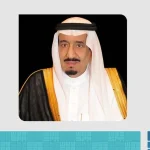 Saudi Defense Minister Delivers King Salman’s Message to Iran