


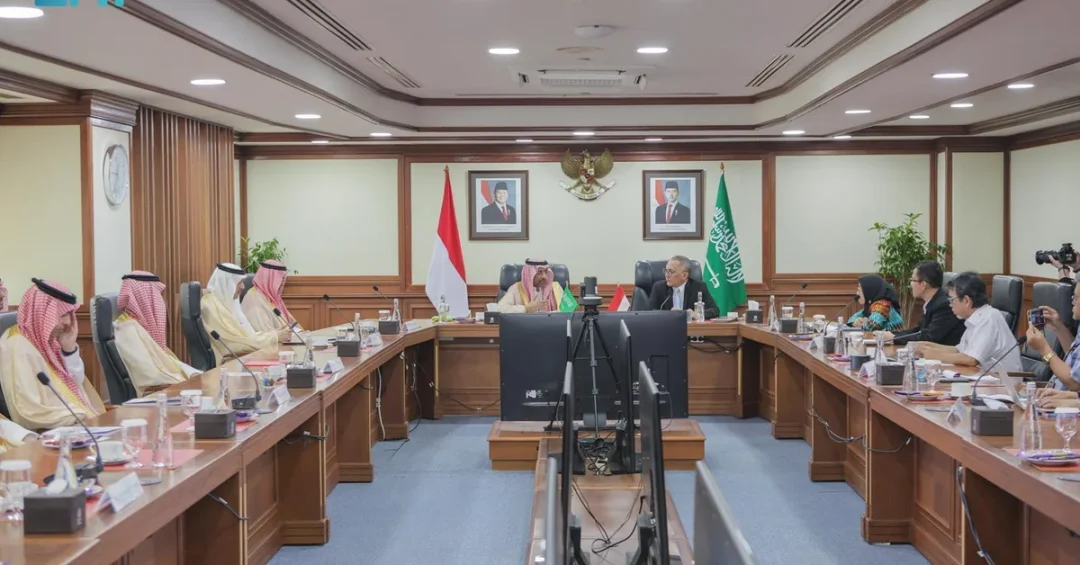
Saudi Minister of Industry and Mineral Resources Bandar AlKhorayef visited Indonesia’s Pusat Industri Digital Indonesia 4.0 and the National Research and Innovation Agency (BRIN) on April 17, 2025, exploring strategic partnerships in research, innovation, and industrial development. The official visit, reported by the Saudi Press Agency (SPA), underscores the Kingdom’s commitment to international collaboration under Vision 2030, focusing on digital transformation, renewable energy, and advanced technologies. Minister AlKhorayef’s tour of these key Indonesian institutions highlights Saudi Arabia’s proactive approach to diversifying its economy and fostering global partnerships.
During the visit, AlKhorayef was briefed on Indonesia’s latest successes in industrial development, renewable energy, water solutions, and technology. The Pusat Industri Digital Indonesia 4.0, a national center dedicated to advancing digital transformation in the industrial sector, showcased its role in enhancing the competitiveness of Indonesian businesses through training, innovation support, and technical assistance for smart factories. At BRIN, Chairman Laksana Tri Handoko presented an overview of the agency’s work, emphasizing potential cooperation with Saudi Arabia in mining, pharmaceuticals, and education. This visit marks a significant step in strengthening bilateral ties and aligning with Saudi Arabia’s strategic priorities.
Context and Background
Why is Saudi Arabia’s Minister of Industry and Mineral Resources engaging with Indonesia’s research and innovation sectors? The visit reflects Saudi Arabia’s broader strategy to diversify its economy beyond oil, as outlined in Vision 2030. Indonesia, as a rapidly growing economy in Southeast Asia, offers valuable opportunities for collaboration in sectors critical to Saudi Arabia’s industrial advancement. The Kingdom has been actively seeking international partnerships to enhance its technological capabilities, improve industrial efficiency, and develop sustainable solutions. This visit is part of a series of diplomatic and economic engagements aimed at positioning Saudi Arabia as a global leader in innovation and industry.
The Pusat Industri Digital Indonesia 4.0 is a national center focused on Industry 4.0 technologies, which integrate digitalization into manufacturing. It provides training, innovation support, and technical assistance to help Indonesian businesses adopt smart factory solutions. For Saudi Arabia, learning from Indonesia’s experience in digital industrial transformation could inform the Kingdom’s own initiatives, such as the National Industrial Development and Logistics Program (NIDLP). Similarly, BRIN, Indonesia’s premier research agency, coordinates research and development across various scientific fields. Its focus on mining, pharmaceuticals, and education aligns with Saudi Arabia’s priorities under Vision 2030, which aims to localize industries, enhance healthcare, and boost human capital.
The visit also comes amid Saudi Arabia’s efforts to expand its global footprint in mining and mineral resources. As part of Vision 2030, the Kingdom aims to increase the mining sector’s contribution to GDP from $17 billion to $64 billion by 2030. Collaborating with countries like Indonesia, which has significant mineral resources and research capabilities, could help Saudi Arabia achieve this goal. Furthermore, the exchange of knowledge in renewable energy and water solutions is crucial for Saudi Arabia, given its environmental challenges and the need for sustainable development.
Key Details of the Minister’s Visit
What specific insights did Minister AlKhorayef gain from his tour of Indonesia’s innovation hubs? At Pusat Industri Digital Indonesia 4.0, he was briefed on Indonesia’s advancements in industrial development, renewable energy, water solutions, and technology. The center’s work in smart factories and digital transformation could serve as a model for Saudi Arabia’s own industrial cities and special economic zones. The minister also learned about Indonesia’s success stories in enhancing business competitiveness through innovation, which aligns with Saudi Arabia’s goals to create a vibrant private sector and improve the ease of doing business.
At BRIN, Chairman Laksana Tri Handoko presented the agency’s work, with a particular focus on the industrial and mining sectors. He welcomed cooperation with Saudi Arabia in mining, pharmaceuticals, and education. This is significant as Saudi Arabia seeks to develop its mining sector as the ‘third pillar’ of its economy, alongside oil and petrochemicals. The Kingdom has vast untapped mineral resources, estimated at $1.3 trillion, and partnerships with countries like Indonesia can provide the necessary technology and expertise to extract and process these resources efficiently. In pharmaceuticals, Saudi Arabia aims to localize production and reduce reliance on imports, and Indonesia’s experience in this field could be valuable.
The visit also included discussions on education and human capital development. Saudi Arabia has been investing heavily in education and training to prepare its youth for the jobs of the future. Collaborating with BRIN, which oversees research and innovation, could facilitate exchange programs, joint research projects, and capacity-building initiatives. This aligns with Vision 2030’s goal to increase the number of Saudi students in top universities and enhance vocational training. The minister’s tour is expected to pave the way for concrete agreements and partnerships in these areas.
International and Regional Impact
How does Saudi Arabia’s engagement with Indonesia impact the broader region and international relations? This visit strengthens the ties between two influential nations: Saudi Arabia, a leader in the Middle East and the Islamic world, and Indonesia, the largest economy in Southeast Asia and the world’s most populous Muslim-majority country. Enhanced cooperation between them can promote stability, economic growth, and innovation across Asia and the Middle East. It also aligns with Saudi Arabia’s foreign policy objectives of building strategic partnerships beyond traditional allies, as part of Vision 2030’s international engagement pillar.
For Indonesia, partnering with Saudi Arabia offers access to investment, markets, and expertise in areas like mining and renewable energy. Indonesia has ambitious plans to develop its downstream industries and renewable energy sector, and Saudi Arabia’s experience in large-scale projects and its financial resources could be beneficial. Moreover, the collaboration could serve as a model for South-South cooperation, showcasing how countries can work together to achieve sustainable development goals. The visit also highlights Saudi Arabia’s role as a bridge between the Middle East and Asia, fostering economic integration and cultural exchange.
On a regional level, this partnership could influence other Gulf countries to explore similar collaborations with Southeast Asian nations, potentially leading to increased trade and investment flows. It also reinforces Saudi Arabia’s position as a global player in innovation and industry, countering perceptions of the Kingdom as solely an oil-based economy. The visit is part of a series of high-level exchanges, including the recent Saudi-Indonesian Business Forum, which further cements the growing economic relationship.
Economic and Strategic Significance
What are the economic and strategic benefits of this collaboration for Saudi Arabia? The Kingdom is actively pursuing economic diversification, and partnerships in research and innovation are key to achieving this. By collaborating with Indonesia in mining, pharmaceuticals, and education, Saudi Arabia can accelerate the development of these sectors, create jobs, and attract foreign investment. The mining sector, in particular, is poised for growth, with the government aiming to make it a major contributor to the non-oil GDP. Indonesia’s expertise in mining technology and sustainable practices could help Saudi Arabia unlock its mineral wealth while adhering to environmental standards.
In pharmaceuticals, Saudi Arabia aims to become a regional hub for healthcare and life sciences. Collaborating with BRIN, which has research capabilities in drug development, could support the localization of pharmaceutical manufacturing. This would reduce import dependency and enhance health security. In education, joint initiatives could improve the skills of Saudi workers and researchers, fostering a knowledge-based economy. Strategically, this partnership diversifies Saudi Arabia’s international alliances, reducing reliance on traditional partners and enhancing its geopolitical influence.
Furthermore, the visit underscores Saudi Arabia’s commitment to sustainable development. Indonesia’s advancements in renewable energy and water solutions are relevant to Saudi Arabia’s environmental goals, including the Saudi Green Initiative and the Middle East Green Initiative. By learning from Indonesia’s experiences, the Kingdom can accelerate its transition to clean energy and improve water management, critical for its arid climate. The economic spillovers from such collaborations could be substantial, driving innovation and entrepreneurship.
Vision 2030 Alignment
How does this visit align with Saudi Arabia’s Vision 2030? Vision 2030 is a comprehensive plan to transform the Kingdom’s economy and society, with pillars focused on a vibrant society, a thriving economy, and an ambitious nation. The collaboration with Indonesia in research and innovation directly supports the thriving economy pillar by diversifying income sources, localizing industries, and enhancing non-oil exports. It also supports the ambitious nation pillar by fostering international partnerships and knowledge exchange. The minister’s visit is a concrete step towards realizing these goals, demonstrating Saudi Arabia’s proactive approach to global engagement.
Under Vision 2030, Saudi Arabia aims to increase the private sector’s contribution to GDP from 40% to 65% and to boost foreign direct investment. Partnerships like this can attract Indonesian companies to invest in Saudi Arabia and vice versa, creating new opportunities. Additionally, the focus on mining and pharmaceuticals aligns with the National Industrial Development and Logistics Program (NIDLP), one of the Vision 2030 realization programs. By learning from Indonesia’s success in digital industrial transformation, Saudi Arabia can accelerate its own Industry 4.0 adoption, making its industries more competitive globally.
In conclusion, Minister AlKhorayef’s visit to Indonesia’s research and innovation institutions marks a significant milestone in Saudi Arabia’s journey towards economic diversification and global collaboration. It exemplifies the Kingdom’s commitment to Vision 2030 and its proactive role in shaping a prosperous future. As Saudi Arabia continues to build bridges with nations around the world, such partnerships will be instrumental in achieving its ambitious goals and contributing to global innovation and sustainability.
20 Questions
Q1. Who is the Saudi Minister of Industry and Mineral Resources?
A1. Bandar AlKhorayef is the Saudi Minister of Industry and Mineral Resources. He led the official visit to Indonesia to explore partnerships in research and innovation.
Q2. What is Pusat Industri Digital Indonesia 4.0?
A2. It is a national center in Indonesia dedicated to advancing digital transformation in the industrial sector, providing training and support for smart factories.
Q3. What is BRIN?
A3. BRIN is Indonesia’s National Research and Innovation Agency, responsible for coordinating research and development across scientific and technological fields.
Q4. When did the Saudi minister visit Indonesia?
A4. The visit took place on April 17, 2025, as reported by the Saudi Press Agency.
Q5. What sectors were highlighted during the visit?
A5. The visit highlighted industrial development, renewable energy, water solutions, technology, mining, pharmaceuticals, and education.
Q6. Who is the Chairman of BRIN?
A6. Laksana Tri Handoko is the Chairman of BRIN. He presented an overview of the agency’s work and welcomed cooperation with Saudi Arabia.
Q7. What areas of cooperation did BRIN propose?
A7. BRIN proposed cooperation in mining, pharmaceuticals, and education, aligning with Saudi Arabia’s Vision 2030 goals.
Q8. Why is Saudi Arabia interested in Indonesia’s research sector?
A8. Saudi Arabia seeks to diversify its economy and can benefit from Indonesia’s expertise in digital transformation, mining, and renewable energy.
Q9. How does this visit align with Vision 2030?
A9. It supports Vision 2030 by fostering international partnerships, economic diversification, and knowledge exchange in key sectors.
Q10. What is the significance of the mining sector for Saudi Arabia?
A10. Mining is a key pillar of Saudi Arabia’s economic diversification, with vast untapped resources estimated at $1.3 trillion.
Q11. What are Saudi Arabia’s goals in pharmaceuticals?
A11. Saudi Arabia aims to localize pharmaceutical production, reduce import dependency, and become a regional healthcare hub.
Q12. How can Indonesia benefit from this partnership?
A12. Indonesia can gain access to Saudi investment, markets, and expertise in large-scale projects and renewable energy.
Q13. What is the Pusat Industri Digital Indonesia 4.0’s role?
A13. It enhances Indonesian business competitiveness through training, innovation support, and technical assistance for smart factories.
Q14. What renewable energy solutions were discussed?
A14. Indonesia’s advancements in renewable energy and water solutions were presented, relevant to Saudi Arabia’s environmental goals.
Q15. How does this visit impact Saudi-Indonesian relations?
A15. It strengthens bilateral ties, promotes economic cooperation, and fosters cultural exchange between the two nations.
Q16. What is the National Industrial Development and Logistics Program?
A16. NIDLP is a Vision 2030 program aimed at developing Saudi Arabia’s industrial and logistics sectors to diversify the economy.
Q17. What educational opportunities might arise?
A17. Joint research projects, exchange programs, and capacity-building initiatives could enhance Saudi human capital and innovation.
Q18. How does this partnership affect the region?
A18. It promotes stability and economic growth across Asia and the Middle East, serving as a model for South-South cooperation.
Q19. What are Saudi Arabia’s environmental initiatives?
A19. The Saudi Green Initiative and Middle East Green Initiative aim to reduce emissions and promote sustainability.
Q20. What is the expected outcome of the visit?
A20. The visit is expected to pave the way for concrete agreements and partnerships in mining, pharmaceuticals, education, and technology.
Reader Feedback
We value your thoughts. Please share your feedback on this article.
Your feedback helps us improve our coverage.
Related articles
 GASTAT Organizes First Saudi Statistics Forum in Riyadh
 Crown Prince Receives Written Message from Senegal’s President
 Saudi Defense Minister Delivers King Salman’s Message to Iran
 Saudi Air Defenses Intercept 18 Drones in Eastern Region
 Prophet’s Mosque Imam Urges Pilgrims to Avoid Disputes
 AlUla Showcases Sustainable Biodiversity Model on World Biodiversity Day