


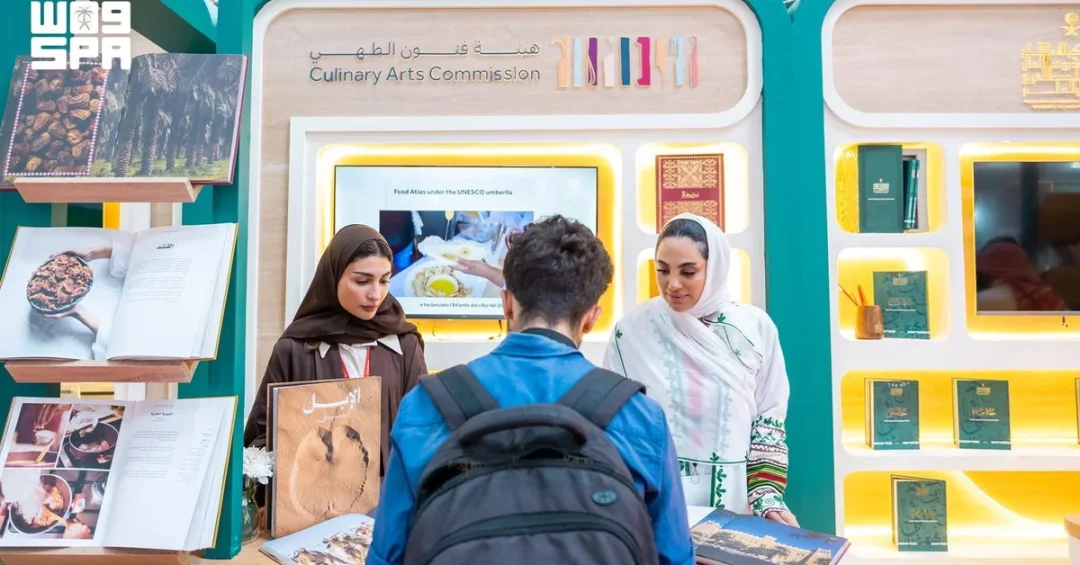
The Culinary Arts Commission is showcasing Saudi Arabia’s rich gastronomic heritage at the Algiers International Book Fair 2026, presenting a curated collection of publications that celebrate the Kingdom’s diverse culinary traditions. The participation, announced by the Saudi Press Agency, highlights Saudi Arabia’s commitment to cultural diplomacy and the promotion of its national identity on the international stage. The exhibit features works such as “Sufra: Saudi Feast,” which documents recipes and food customs from all 13 regions of the Kingdom, and “Buraidah,” a deep dive into the culinary heritage of the Qassim Region.
This cultural showcase comes as Saudi Arabia continues to expand its global cultural footprint under Vision 2030, the ambitious national transformation plan spearheaded by Crown Prince Mohammed bin Salman. The Algiers International Book Fair, a major cultural event in North Africa, provides a strategic platform for Saudi Arabia to share its culinary arts with a wider audience, fostering cross-cultural understanding and appreciation. The Kingdom’s participation underscores the role of food as a bridge between nations, offering a taste of Saudi hospitality and tradition to visitors from around the world.
Context and Background
What drives a nation to present its culinary heritage on an international stage? For Saudi Arabia, it is a reflection of a broader cultural awakening that has been gaining momentum in recent years. The Culinary Arts Commission, established in 2020 as part of the Ministry of Culture, is tasked with preserving, promoting, and advancing Saudi culinary arts both domestically and internationally. Its presence at the Algiers International Book Fair 2026 is a testament to the Kingdom’s dedication to sharing its cultural narrative with the world.
The Algiers International Book Fair, held annually in the Algerian capital, is one of the largest book fairs in the Arab world, attracting publishers, authors, and cultural enthusiasts from across the region and beyond. Saudi Arabia’s pavilion, organized by the Literature, Publishing, and Translation Commission, serves as a hub for cultural exchange, showcasing not only culinary publications but also works on Saudi history, art, and literature. The fair provides an ideal setting for the Culinary Arts Commission to present its publications, as it brings together a diverse audience interested in exploring different cultures through the written word.
The culinary publications on display are more than just cookbooks; they are meticulously researched volumes that document the intangible cultural heritage of Saudi Arabia. “Sufra: Saudi Feast,” for instance, is a comprehensive guide that takes readers on a journey through the Kingdom’s 13 regions, each with its own distinct flavors, ingredients, and cooking techniques. From the coastal dishes of the Eastern Province to the hearty mountain fare of Asir, the book captures the essence of Saudi hospitality and the centrality of food in social gatherings. Its recognition with two Gourmand Awards in 2024—Best Hospitality Book and Best Arab Cuisine Cookbook—underscores its quality and significance in the global culinary landscape.
Key Details of the Saudi Participation
What exactly is on display at the Saudi pavilion, and why do these publications matter? The collection is led by “Sufra: Saudi Feast,” a book that has already garnered international acclaim. It provides a region-by-region exploration of Saudi cuisine, highlighting signature dishes such as Kabsa, Jareesh, and Ma’amoul, and explaining the cultural rituals associated with them. The book also delves into the influence of trade routes and pilgrimage on Saudi culinary traditions, illustrating how the Kingdom’s position as a crossroads of civilizations has enriched its food culture.
Complementing “Sufra” is “Buraidah,” a publication that focuses on the Qassim Region, known for its agricultural bounty and traditional markets. Buraidah, the region’s capital, is famous for its date palm groves and its vibrant food scene, which includes dishes like Qursan and Margoog. The book explores how the region’s agricultural environment has shaped its culinary identity, and it profiles local chefs and home cooks who are keeping these traditions alive. By presenting “Buraidah,” the Culinary Arts Commission not only highlights a specific region but also demonstrates the diversity within Saudi cuisine, which varies greatly from one area to another.
These publications are part of a larger effort by the Culinary Arts Commission to document and disseminate Saudi culinary heritage. The Commission has been actively collecting recipes, interviewing elders, and collaborating with historians and chefs to ensure that traditional knowledge is preserved for future generations. The books are available in multiple languages, including Arabic, English, and French, making them accessible to a wide international audience. At the Algiers fair, visitors can browse through these publications, attend cooking demonstrations, and sample some of the dishes described in the books, creating an immersive cultural experience.
International and Regional Impact
How does Saudi Arabia’s participation in the Algiers International Book Fair contribute to its regional and international relations? Cultural diplomacy is a key pillar of Saudi foreign policy, and food is a universal language that can foster goodwill and mutual understanding. By sharing its culinary heritage, Saudi Arabia presents a nuanced image of the Kingdom that goes beyond headlines, highlighting its rich history, hospitality, and the warmth of its people. This is particularly important in North Africa, where cultural ties with the Arabian Peninsula run deep, and where Saudi cuisine can find a receptive audience.
The fair also serves as a networking opportunity for Saudi publishers, authors, and cultural institutions to connect with their counterparts from Algeria and other countries. Such interactions can lead to collaborations, translations, and joint cultural projects that further enrich the global culinary landscape. Moreover, the presence of Saudi culinary experts at the fair allows for the exchange of ideas and techniques, benefiting both Saudi and international culinary communities. The Kingdom’s participation is thus not just a display of its own culture but also an invitation for dialogue and partnership.
Economic and Strategic Significance
What economic and strategic benefits does the promotion of Saudi culinary arts bring? The culinary sector is an integral part of Saudi Arabia’s economic diversification efforts under Vision 2030. By elevating Saudi cuisine on the world stage, the Kingdom aims to boost culinary tourism, attract investments in the hospitality sector, and create opportunities for Saudi chefs and food entrepreneurs. The global gastronomy tourism market is growing, and Saudi Arabia is positioning itself as a must-visit destination for food lovers, with its unique blend of traditional and modern culinary experiences.
Furthermore, the publications themselves are economic products that can be exported, generating revenue and soft power. The Gourmand Awards won by “Sufra: Saudi Feast” have already brought international recognition, which can translate into increased sales and interest in Saudi cuisine. The Culinary Arts Commission’s efforts align with the National Strategy for Culture, which seeks to make culture a contributor to the national economy. By supporting culinary arts, Saudi Arabia is investing in a sector that not only preserves heritage but also drives innovation and economic growth.
Vision 2030 Alignment
How does this cultural showcase align with Saudi Arabia’s long-term vision? Vision 2030, launched in 2016, aims to transform the Kingdom into a global investment powerhouse and a hub for cultural and entertainment activities. The Culinary Arts Commission’s participation in the Algiers International Book Fair is a direct manifestation of Vision 2030’s cultural objectives, which include promoting Saudi culture internationally, enhancing the quality of life for citizens, and diversifying the economy away from oil. Food is a central element of Saudi culture, and its promotion supports the vision’s goal of a vibrant society.
As Saudi Arabia continues to open up to the world, initiatives like this demonstrate the Kingdom’s commitment to sharing its heritage and building bridges of understanding. The Culinary Arts Commission’s work ensures that Saudi culinary traditions are not only preserved but also celebrated and adapted for contemporary global audiences. Through such efforts, Saudi Arabia reinforces its role as a leader in cultural diplomacy and a destination of choice for travelers seeking authentic experiences. The Algiers International Book Fair 2026 is yet another milestone in this journey, showcasing the best of Saudi Arabia to the world.
20 Questions
Q1. What is the Culinary Arts Commission presenting at the Algiers International Book Fair 2026?
A1. The Culinary Arts Commission is presenting a collection of Saudi publications on local culinary arts, including “Sufra: Saudi Feast” and “Buraidah,” which document the Kingdom’s diverse culinary heritage and traditions.
Q2. What is “Sufra: Saudi Feast” and what awards has it won?
A2. “Sufra: Saudi Feast” is a book that documents culinary traditions across Saudi Arabia’s 13 regions. It received two Gourmand Awards in 2024: Best Hospitality Book and Best Arab Cuisine Cookbook.
Q3. What does the book “Buraidah” focus on?
A3. “Buraidah” explores the culinary and cultural heritage of the Qassim Region, highlighting its traditional dishes that are often associated with the region’s agricultural environment and traditional markets.
Q4. Why is Saudi Arabia participating in the Algiers International Book Fair?
A4. Saudi Arabia is participating to promote its cultural identity, share its culinary heritage internationally, and strengthen cultural ties with Algeria and other nations through the universal language of food.
Q5. How does this participation align with Vision 2030?
A5. It aligns with Vision 2030’s cultural objectives by promoting Saudi culture globally, enhancing quality of life, and diversifying the economy through cultural tourism and creative industries.
Q6. What is the significance of the Gourmand Awards for Saudi cuisine?
A6. The Gourmand Awards recognize excellence in food writing and publishing, bringing international prestige to Saudi cuisine and validating the quality and richness of the Kingdom’s culinary traditions.
Q7. How many regions of Saudi Arabia are covered in “Sufra: Saudi Feast”?
A7. The book covers all 13 regions of Saudi Arabia, providing a comprehensive overview of the Kingdom’s diverse culinary landscape, from coastal areas to mountainous terrains.
Q8. What role does the Culinary Arts Commission play in preserving Saudi heritage?
A8. The Commission documents traditional recipes, supports culinary research, and promotes Saudi cuisine locally and internationally, ensuring that culinary heritage is passed down to future generations.
Q9. What types of dishes are highlighted in “Buraidah”?
A9. The book highlights traditional Qassim dishes such as Qursan and Margoog, which reflect the region’s agricultural abundance and the culinary customs of its people.
Q10. How can international audiences access these Saudi culinary publications?
A10. The publications are available in multiple languages, including Arabic, English, and French, and can be found at international book fairs, cultural events, and through online retailers.
Q11. What impact does cultural diplomacy have on Saudi Arabia’s global image?
A11. Cultural diplomacy showcases Saudi Arabia’s rich heritage and modern achievements, fostering mutual understanding and presenting a positive image of the Kingdom as a forward-looking nation.
Q12. Are there any cooking demonstrations at the Saudi pavilion?
A12. Yes, the Culinary Arts Commission often organizes cooking demonstrations and tastings at international events, allowing visitors to experience Saudi hospitality and flavors firsthand.
Q13. How does the Algiers International Book Fair benefit Saudi publishers?
A13. The fair provides a platform for Saudi publishers to network with international counterparts, explore translation opportunities, and showcase Saudi literary and cultural works to a broader audience.
Q14. What is the historical significance of food in Saudi culture?
A14. Food is central to Saudi culture, symbolizing hospitality, community, and identity. Traditional dishes are often served during gatherings, festivals, and religious occasions, reflecting the Kingdom’s values.
Q15. How does the Culinary Arts Commission support Saudi chefs?
A15. The Commission offers training programs, culinary competitions, and international exposure opportunities, helping Saudi chefs develop their skills and gain recognition on the global stage.
Q16. What other cultural initiatives is Saudi Arabia undertaking under Vision 2030?
A16. Vision 2030 includes initiatives in entertainment, sports, heritage preservation, and the arts, such as the establishment of cultural festivals, museums, and creative hubs across the Kingdom.
Q17. What makes Saudi cuisine unique compared to other Middle Eastern cuisines?
A17. Saudi cuisine is distinguished by its regional diversity, use of aromatic spices, and dishes like Kabsa and Jareesh, which reflect the Kingdom’s history as a crossroads of civilizations.
Q18. How can tourism benefit from the promotion of Saudi culinary arts?
A18. Culinary tourism attracts visitors seeking authentic food experiences, boosting local economies, supporting restaurants and food producers, and enhancing Saudi Arabia’s appeal as a travel destination.
Q19. What future plans does the Culinary Arts Commission have?
A19. The Commission plans to expand its publications, participate in more international events, and launch initiatives to integrate Saudi cuisine into global culinary trends while preserving its authenticity.
Q20. Where can I learn more about Saudi culinary arts?
A20. Information is available through the Culinary Arts Commission’s official website, Saudi cultural centers, and publications like “Sufra: Saudi Feast,” which can be found at major book retailers.
Reader Feedback
We value your thoughts. Please share your feedback on this article.
Your feedback helps us improve our coverage.
Related articles
 Saudi Academy Showcases Arabic Language Initiatives in Algiers
 Islamic Affairs Ministry Draws Crowds at Algiers Book Fair
 Japanese Speech Contest in Jeddah Strengthens Saudi-Japan Ties
 Harissa Festival in Tunisia Celebrates Culinary Heritage, Innovation
 Two Falcons Fetch SAR182,000 at Saudi Auction
 Saudi Performing Arts Captivate Visitors at Algiers Book Fair