


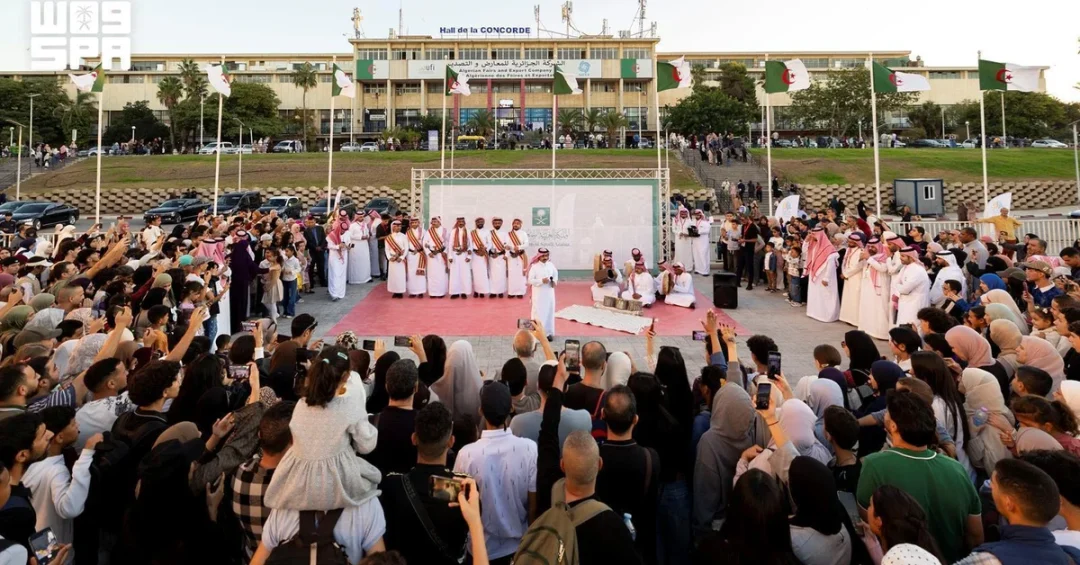
Saudi Arabia’s Theater and Performing Arts Commission is presenting daily live performances at the 29th Algiers International Book Fair, where the Kingdom is serving as guest of honor, drawing large crowds and enthusiastic engagement from the Algerian public and international visitors. The shows, staged across indoor venues and the fair’s outdoor plazas, feature a rich selection of traditional Saudi folk arts, including Al-Khubaiti, Al-Khutwa from Aseer Region, and Al-Yanbawi, according to the Saudi Press Agency. The performances reflect the depth and diversity of the Kingdom’s heritage across its regions. Have you ever wondered how a nation’s cultural heritage can transcend borders and speak directly to the hearts of people from different backgrounds?
The participation is led by the Literature, Publishing, and Translation Commission, which is coordinating Saudi Arabia’s presence at the fair as part of broader efforts to strengthen the Kingdom’s cultural footprint at major international forums. The commission is also showcasing national initiatives that support books and authors, reinforcing Saudi Arabia’s position as a leading cultural destination and a center of intellectual contribution. The event marks another milestone in Saudi Arabia’s expanding cultural diplomacy, which has become a cornerstone of its international engagement under Vision 2030. What does it mean for a country to share its soul through rhythm and movement on a global stage?
Context and Background
The 29th Algiers International Book Fair represents one of North Africa’s most significant cultural gatherings, attracting publishers, authors, artists, and cultural institutions from across the Arab world and beyond. Saudi Arabia’s selection as guest of honor underscores the Kingdom’s growing influence in regional cultural affairs and its commitment to fostering cross-cultural dialogue. The Theater and Performing Arts Commission, established as part of Saudi Arabia’s cultural infrastructure development, has been instrumental in bringing authentic Saudi folk arts to international audiences. Isn’t it remarkable how cultural exchanges can build bridges that political dialogues sometimes cannot?
The commission’s participation aligns with the broader mandate of the Literature, Publishing, and Translation Commission, which oversees Saudi Arabia’s cultural engagement at international book fairs and literary events. These efforts are part of a comprehensive strategy to project Saudi cultural soft power and showcase the Kingdom’s artistic heritage to global audiences. The performances at the Algiers fair follow similar successful presentations at other international venues, where Saudi folk arts have consistently generated significant public interest and engagement. The Kingdom’s cultural diplomacy strategy recognizes that artistic expression serves as a universal language capable of transcending linguistic and geographical barriers.
Saudi Arabia’s cultural sector has undergone a remarkable transformation in recent years, with the establishment of dedicated commissions for various artistic disciplines, including theater, music, film, and visual arts. These institutions operate under the Ministry of Culture, which was restructured to support the Kingdom’s Vision 2030 objectives of diversifying the economy and enhancing quality of life. The Theater and Performing Arts Commission has been particularly active in documenting, preserving, and promoting traditional Saudi performing arts, ensuring that these heritage forms reach both domestic and international audiences. How often do international audiences get the opportunity to experience the authentic rhythms of Saudi Arabia’s diverse regional cultures?
Key Details
The live performances feature three distinctive Saudi folk art forms, each representing different regions and cultural traditions within the Kingdom. Al-Khubaiti is a traditional performance art that combines rhythmic movement with poetic recitation, reflecting the heritage of specific Saudi regions. Al-Khutwa from Aseer Region represents the distinctive cultural identity of Saudi Arabia’s southwestern highlands, known for its unique musical traditions and expressive dance forms. Al-Yanbawi draws from the maritime heritage of Yanbu, a historic port city on the Red Sea coast, reflecting the intersection of land and sea cultures that has shaped Saudi Arabia’s western region for centuries.
These performances embody Saudi Arabia’s historical richness and geographical diversity, offering visitors a direct opportunity to explore the Kingdom’s cultural identity. Through distinctive rhythms and expressive styles, the presentations bring authentic national heritage to the international stage, underscoring its artistic and aesthetic value, which is drawn from the heart of the local environment. The outdoor plaza performances have generated particularly remarkable public engagement, underscoring the power of direct interaction to create emotional bonds and holistic sensory experiences. This strengthens cultural exchange and contributes to a shared celebration of humanity’s legacy between the two nations.
The Theater and Performing Arts Commission has carefully curated these performances to showcase the breadth of Saudi cultural expression while ensuring authenticity and respect for traditional forms. Each performance style carries centuries of historical memory, with rhythms and movements that have been passed down through generations. The commission’s work in documenting and presenting these arts internationally represents a significant contribution to global cultural preservation efforts. What could be more powerful than witnessing a nation’s living heritage performed with pride and artistry in front of an international audience?
International and Regional Impact
The enthusiastic response from Algerian audiences and other international visitors at the fair demonstrates the universal appeal of Saudi cultural expression. The performances have drawn large crowds, with attendees expressing appreciation for the opportunity to experience authentic Saudi heritage firsthand. This positive reception reinforces the effectiveness of cultural diplomacy as a tool for building international understanding and goodwill. The interaction between Saudi performers and Algerian audiences creates meaningful connections that extend beyond the duration of the fair, fostering lasting impressions of Saudi Arabia as a culturally rich and welcoming nation.
Regional cultural cooperation between Saudi Arabia and Algeria has deep historical roots, and events like the Algiers International Book Fair provide important platforms for strengthening these ties. Both nations share rich cultural heritage traditions that resonate with shared Arab and Islamic values while maintaining distinctive regional characteristics. The exchange of cultural performances and artistic expressions contributes to a broader understanding of the diversity within the Arab world, challenging stereotypes and promoting appreciation for different regional traditions. How valuable are these cultural exchanges in an era when mutual understanding between nations is more important than ever?
Economic and Strategic Significance
Saudi Arabia’s cultural diplomacy efforts, including participation in events like the Algiers International Book Fair, form an integral part of the Kingdom’s strategic vision for international engagement. Cultural exchange initiatives complement economic and political partnerships, creating multifaceted relationships that are more resilient and sustainable. The Literature, Publishing, and Translation Commission’s leadership in this area reflects Saudi Arabia’s recognition that cultural soft power is an essential component of comprehensive national strength in the modern world.
The Kingdom’s investment in cultural infrastructure and international cultural engagement yields significant returns in terms of international goodwill, enhanced reputation, and expanded opportunities for collaboration across multiple sectors. Cultural events serve as platforms for showcasing Saudi Arabia’s broader transformation under Vision 2030, including its economic diversification, social modernization, and commitment to international cooperation. The positive impressions generated by cultural performances can translate into enhanced tourism interest, business partnerships, and diplomatic goodwill. Isn’t it fascinating how a single performance can open doors to countless possibilities for cooperation and understanding?
Vision 2030 Alignment
Saudi Arabia’s participation in the Algiers International Book Fair and the Theater and Performing Arts Commission’s performances directly support Vision 2030 objectives of diversifying the economy, promoting cultural enrichment, and enhancing the Kingdom’s international standing. The cultural sector has been identified as a key pillar of the Kingdom’s transformation, with investments in arts, entertainment, and heritage preservation creating new economic opportunities while strengthening national identity. The commission’s work in bringing Saudi folk arts to international audiences represents the intersection of cultural preservation and global engagement that defines Vision 2030’s holistic approach to national development.
As Saudi Arabia continues to expand its cultural presence on the world stage, initiatives like the Algiers performances demonstrate the Kingdom’s commitment to sharing its heritage while embracing global connections. The Literature, Publishing, and Translation Commission’s leadership in this effort reflects the institutional framework that Vision 2030 has established to support cultural development and international engagement. These performances are not merely entertainment but represent Saudi Arabia’s invitation to the world to discover the Kingdom’s authentic cultural identity and participate in its remarkable journey of transformation. How will future generations remember this era of Saudi cultural renaissance and global engagement?
20 Questions
Q1. What is the 29th Algiers International Book Fair?
A1. The 29th Algiers International Book Fair is a major cultural event held in Algeria, bringing together publishers, authors, and cultural institutions from across the Arab world and internationally. Saudi Arabia is participating as guest of honor, highlighting its growing cultural influence.
Q2. Which Saudi commission is leading the cultural performances in Algiers?
A2. The Theater and Performing Arts Commission is presenting the daily performances, while the Literature, Publishing, and Translation Commission leads Saudi Arabia’s overall participation as guest of honor at the fair.
Q3. What traditional Saudi folk arts are being performed at the fair?
A3. The performances feature Al-Khubaiti, Al-Khutwa from Aseer Region, and Al-Yanbawi, each representing distinct regional traditions and cultural heritage from different parts of the Kingdom of Saudi Arabia.
Q4. Where are the Saudi performances taking place at the fair?
A4. The performances are being staged across both indoor venues and the fair’s outdoor plazas, allowing visitors to experience Saudi cultural heritage in multiple settings throughout the event.
Q5. How has the Algerian public responded to the Saudi performances?
A5. The performances have drawn large crowds and enthusiastic engagement from the Algerian public and other visitors, demonstrating the universal appeal of Saudi cultural expression and the effectiveness of cultural diplomacy.
Q6. What does Al-Khubaiti represent in Saudi cultural heritage?
A6. Al-Khubaiti is a traditional Saudi performance art combining rhythmic movement with poetic recitation, reflecting the heritage of specific Saudi regions and representing centuries of cultural tradition passed through generations.
Q7. What is significant about Al-Khutwa from Aseer Region?
A7. Al-Khutwa represents the distinctive cultural identity of Saudi Arabia’s southwestern highlands, known for unique musical traditions and expressive dance forms that reflect the region’s geographical and historical character.
Q8. What does Al-Yanbawi reflect about Saudi culture?
A8. Al-Yanbawi draws from the maritime heritage of Yanbu, a historic Red Sea port city, reflecting the intersection of land and sea cultures that has shaped Saudi Arabia’s western region for centuries.
Q9. Why is Saudi Arabia participating as guest of honor at the fair?
A9. Saudi Arabia’s selection as guest of honor reflects the Kingdom’s growing influence in regional cultural affairs and its commitment to fostering cross-cultural dialogue and international understanding through cultural exchange.
Q10. How does this participation support Saudi cultural diplomacy?
A10. The participation strengthens Saudi Arabia’s cultural presence at major international forums, showcases national initiatives supporting books and authors, and reinforces the Kingdom’s position as a leading cultural destination and center of intellectual contribution.
Q11. What role does the Literature, Publishing, and Translation Commission play?
A11. The commission leads Saudi Arabia’s participation at the fair, coordinating efforts to strengthen the Kingdom’s cultural presence internationally and showcasing initiatives that support books, authors, and cultural exchange.
Q12. How do these performances reflect Saudi Arabia’s geographical diversity?
A12. The performances showcase folk arts from different regions, including Aseer’s highlands and Yanbu’s coastal heritage, demonstrating the Kingdom’s rich geographical and cultural diversity across its vast territory.
Q13. What is the significance of outdoor plaza performances?
A13. Outdoor performances generate remarkable public engagement, underscoring the power of direct interaction to create emotional bonds and holistic sensory experiences that strengthen cultural exchange between nations.
Q14. How does this event contribute to Saudi-Algerian relations?
A14. The cultural exchange strengthens ties between Saudi Arabia and Algeria, contributing to shared celebration of humanity’s legacy and fostering mutual understanding between the two nations through artistic expression.
Q15. What makes Saudi folk arts appealing to international audiences?
A15. Saudi folk arts feature distinctive rhythms and expressive styles rooted in historical memory, bringing authentic national heritage to the international stage with artistic and aesthetic value drawn from local environments.
Q16. How does this participation align with Vision 2030?
A16. The participation supports Vision 2030 objectives of diversifying the economy, promoting cultural enrichment, and enhancing Saudi Arabia’s international standing through cultural diplomacy and global engagement.
Q17. What is the Theater and Performing Arts Commission’s role?
A17. The commission documents, preserves, and promotes traditional Saudi performing arts, ensuring heritage forms reach both domestic and international audiences while supporting the Kingdom’s cultural development objectives.
Q18. How do cultural performances create emotional bonds with audiences?
A18. Direct interaction through live performance creates holistic sensory experiences that transcend language barriers, allowing audiences to connect with Saudi cultural heritage on an emotional level and fostering lasting impressions.
Q19. What does Saudi Arabia hope to achieve through cultural participation?
A19. Saudi Arabia aims to strengthen cultural presence at international forums, showcase national initiatives, reinforce its position as a cultural destination, and build bridges of understanding with nations worldwide.
Q20. How does this event reflect Saudi Arabia’s cultural transformation?
A20. The event demonstrates Saudi Arabia’s commitment to sharing its heritage globally, reflecting the cultural renaissance underway under Vision 2030 that positions the Kingdom as a dynamic participant in international cultural exchange.
Reader Feedback
We value your thoughts. Please share your feedback on this article.
Your feedback helps us improve our coverage.
Related articles
 Poetry Evening Highlights Saudi Participation at Algiers International Book Fair
 King Abdulaziz Public Library Preserves Over 32,000 Rare Titles
 National Center for Falcons Auction Records SAR168,000 in Sales
 Saudi-Algerian Cuisine Panel at Algiers Book Fair 2026
 Sanctuary Pigeons of Makkah: An Enduring Living Legacy
 Testour Celebrates 10th Pomegranate Festival