


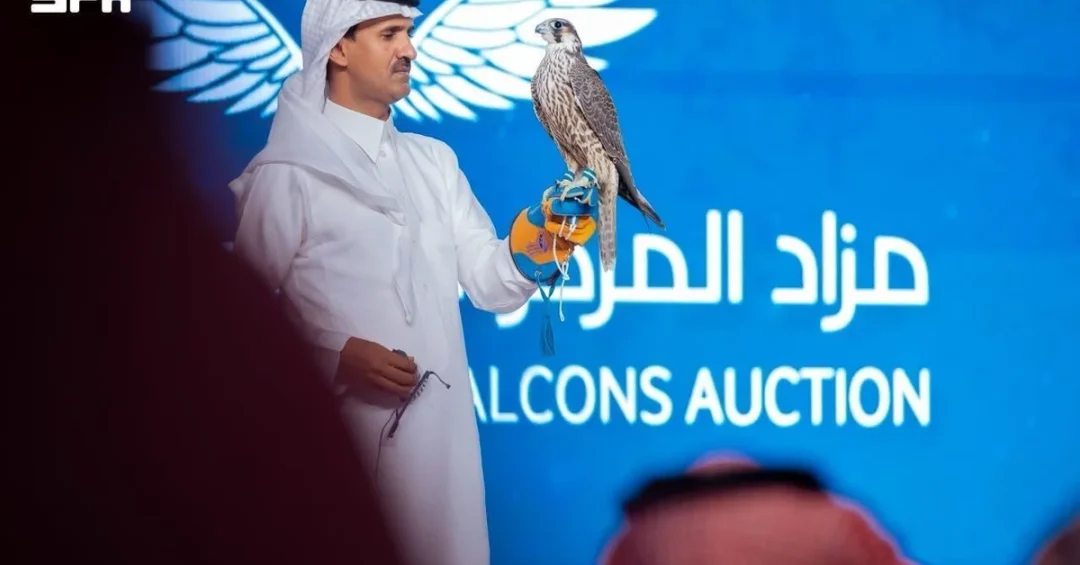
Two juvenile peregrine falcons sold for a combined SAR182,000 on the 14th night of the National Center for Falcons Auction 2026, the Saudi Press Agency reported from Riyadh on November 1, 2026. The auction, which runs until November 30, has drawn strong attendance from falconry enthusiasts and continues to receive locally captured birds throughout its two-month season. The event is organized by the National Center for Falcons, a government body dedicated to preserving Saudi Arabia’s falconry heritage while ensuring the sustainability of raptor populations.
The sale of the two falcons underscores the enduring cultural and economic value of falconry in the Kingdom, a practice that dates back centuries and remains a symbol of prestige and tradition. The auction not only provides a platform for falconers to acquire elite birds but also supports conservation efforts through strict regulations that allow only juvenile migratory peregrines captured within Saudi Arabia to be sold. Adult peregrine and saker falcons are excluded from the auction to help preserve their populations, reflecting the Kingdom’s commitment to environmental stewardship.
Context and Background
Have you ever wondered how a tradition spanning millennia continues to thrive in the modern era? Falconry, known in Arabic as al-qanas, has been an integral part of Arabian culture for over 2,000 years. Historically, Bedouin tribes used falcons for hunting to supplement their diets, but the practice evolved into a sophisticated art form and a marker of social status. Today, Saudi Arabia leads the world in preserving and promoting this heritage, with the National Center for Falcons playing a pivotal role in organizing auctions, competitions, and awareness campaigns.
The National Center for Falcons Auction 2026 is the latest iteration of an annual event that has gained international acclaim. Running from October 1 to November 30, the auction features juvenile peregrine falcons captured during their migration through Saudi Arabia. These birds are prized for their speed, agility, and hunting prowess. The auction’s regulations are stringent: only juvenile migratory peregrines are permitted, a rule designed to ensure that breeding adults remain in the wild to sustain population levels. This approach aligns with global conservation standards and showcases Saudi Arabia’s leadership in sustainable falconry.
The 14th night’s sale of two falcons for SAR182,000 is a testament to the high demand for premium birds. While the exact breakdown of the sale was not disclosed, such prices are not uncommon at this auction, where individual falcons can fetch hundreds of thousands of riyals. The event attracts a diverse audience, from seasoned falconers to young enthusiasts, and is broadcast on television and social media to reach a wider public. This transparency and accessibility are part of the center’s mission to educate and engage the community.
Key Details of the Auction
What makes the National Center for Falcons Auction so unique? The auction is not merely a marketplace; it is a carefully regulated event that balances cultural promotion with ecological responsibility. The center receives locally captured birds throughout the season, ensuring a steady supply of juvenile peregrines. Each bird is inspected to verify its age and origin, and only those meeting the criteria are allowed to be auctioned. This rigorous process prevents the sale of adult falcons, which are crucial for breeding, and helps maintain the delicate balance of the ecosystem.
The two falcons sold on the 14th night were juvenile peregrines, known for their exceptional hunting abilities. Peregrine falcons are among the fastest birds in the world, capable of reaching speeds over 300 km/h during dives. Their presence in Saudi Arabia during migration season is a natural phenomenon that has been celebrated for generations. The auction provides falconers with the opportunity to acquire these birds legally and ethically, while contributing to conservation efforts through fees and regulations.
The event also features educational programs and workshops for newcomers, teaching them about falconry techniques, bird care, and the importance of sustainable practices. The National Center for Falcons collaborates with international organizations to share best practices and ensure that Saudi Arabia remains at the forefront of falconry conservation. The auction’s live broadcasts on television and social media have expanded its reach, allowing global audiences to appreciate the Kingdom’s rich heritage.
International and Regional Impact
How does Saudi Arabia’s falconry auction influence the global stage? The National Center for Falcons Auction has become a benchmark for ethical and sustainable falconry worldwide. By restricting the sale to juvenile peregrines captured within the Kingdom, Saudi Arabia sets a precedent for other nations to follow. This policy not only protects raptor populations but also enhances the Kingdom’s reputation as a responsible steward of nature. International falconry associations have praised the initiative, and many countries are looking to replicate the model.
Regionally, the auction strengthens cultural ties among Gulf Cooperation Council (GCC) states, where falconry is a shared heritage. Falconers from the UAE, Qatar, Kuwait, and Bahrain participate in the event, fostering a sense of unity and mutual appreciation. The auction also attracts buyers from Europe, Asia, and North America, boosting Saudi Arabia’s tourism and trade. The presence of international visitors highlights the global appeal of falconry and the Kingdom’s ability to host world-class events.
Moreover, the auction supports Saudi Arabia’s diplomatic efforts by showcasing its commitment to environmental conservation and cultural preservation. It aligns with the Kingdom’s Vision 2030 goals of diversifying the economy and promoting sustainable development. The event generates revenue, creates jobs, and stimulates local businesses, from hotels to transportation, contributing to the national economy.
Economic and Strategic Significance
What economic benefits does the falconry auction bring to Saudi Arabia? The auction is a significant economic driver, generating millions of riyals in sales each year. The SAR182,000 from just two falcons on the 14th night illustrates the high value of these birds. Beyond direct sales, the event stimulates related industries such as veterinary services, equipment manufacturing, and tourism. Falconry enthusiasts often travel with family and friends, spending on accommodation, dining, and entertainment, which benefits local communities.
Strategically, the auction reinforces Saudi Arabia’s position as a global leader in falconry and wildlife conservation. It supports the Kingdom’s efforts to diversify away from oil dependency by promoting cultural tourism and heritage sports. The National Center for Falcons is also involved in research and breeding programs, which contribute to scientific knowledge and innovation. These initiatives align with Vision 2030’s focus on creating a vibrant society and a thriving economy.
The auction’s media coverage, including television and social media broadcasts, enhances Saudi Arabia’s soft power by projecting a positive image of the Kingdom. It showcases the country’s rich cultural heritage and its modern, forward-looking approach to tradition. This blend of past and present is a key theme of Vision 2030, which seeks to preserve Saudi identity while embracing progress.
Vision 2030 Alignment
How does the falconry auction contribute to Saudi Arabia’s Vision 2030? The event embodies the vision’s core principles of cultural preservation, economic diversification, and sustainable development. By promoting falconry as a heritage sport, the auction helps keep alive a tradition that is deeply rooted in Saudi identity. At the same time, it creates economic opportunities and attracts international visitors, supporting the goal of increasing non-oil revenue and tourism.
The National Center for Falcons’ commitment to conservation also aligns with Vision 2030’s environmental sustainability goals. The Kingdom has launched several initiatives to protect wildlife and natural habitats, and the auction’s regulations are a practical example of these efforts. As Saudi Arabia continues to modernize, events like this demonstrate how tradition and progress can coexist harmoniously. The auction not only celebrates the past but also invests in the future, ensuring that falconry remains a vibrant part of Saudi culture for generations to come.
In conclusion, the sale of two falcons for SAR182,000 on the 14th night of the National Center for Falcons Auction 2026 is more than a transaction; it is a symbol of Saudi Arabia’s dedication to its heritage, its environment, and its global role. As the auction continues until November 30, it will undoubtedly attract more attention and set new benchmarks for sustainable falconry. The Kingdom’s leadership in this field is a source of pride and a model for the world.
20 Questions
Q1. What is the National Center for Falcons Auction 2026?
A1. The National Center for Falcons Auction 2026 is an annual event in Saudi Arabia that auctions juvenile migratory peregrine falcons captured within the Kingdom. It runs from October 1 to November 30 and aims to promote falconry while ensuring conservation.
Q2. How much did the two falcons sell for on the 14th night?
A2. The two juvenile peregrine falcons sold for a combined SAR182,000 on the 14th night of the auction, as reported by the Saudi Press Agency. This reflects the high value placed on these elite birds.
Q3. Why are only juvenile peregrine falcons allowed in the auction?
A3. Only juvenile migratory peregrines captured within Saudi Arabia are allowed to preserve adult breeding populations. Excluding adult peregrine and saker falcons helps maintain sustainable numbers in the wild.
Q4. Where is the auction held?
A4. The auction is held in Riyadh, Saudi Arabia, and is organized by the National Center for Falcons. It attracts local and international falconers and enthusiasts.
Q5. How long does the auction last?
A5. The auction runs for two months, from October 1 to November 30, 2026. During this period, it receives locally captured birds and holds nightly auctions.
Q6. Who organizes the National Center for Falcons Auction?
A6. The auction is organized by the National Center for Falcons, a Saudi government body dedicated to preserving falconry heritage and promoting sustainable practices. It operates under the Ministry of Environment, Water and Agriculture.
Q7. Can international buyers participate in the auction?
A7. Yes, the auction attracts international buyers from around the world, including Europe, Asia, and North America. This boosts tourism and trade, and fosters global appreciation for Saudi heritage.
Q8. How are the auctions broadcast?
A8. Auction nights are broadcast on television and social media, allowing falconers and enthusiasts worldwide to follow the proceedings. This transparency enhances engagement and education.
Q9. What is the significance of falconry in Saudi culture?
A9. Falconry is a centuries-old tradition in Saudi Arabia, symbolizing prestige, skill, and connection to nature. It remains a cherished heritage sport and a key part of the Kingdom’s cultural identity.
Q10. How does the auction support conservation?
A10. By allowing only juvenile peregrines and excluding adults, the auction helps preserve breeding populations. Fees and regulations also fund research and breeding programs, contributing to wildlife sustainability.
Q11. What types of falcons are excluded from the auction?
A11. Adult peregrine falcons and saker falcons are excluded from the auction to protect their populations. Only juvenile migratory peregrines captured within Saudi Arabia are eligible for sale.
Q12. How many falcons are typically sold each year?
A12. The number varies, but the auction features dozens of falcons over the two-month period. Each night, several birds are auctioned, with prices ranging widely based on quality and demand.
Q13. What is the economic impact of the auction?
A13. The auction generates millions of riyals in sales, stimulates local businesses like hotels and restaurants, and creates jobs. It also supports Saudi Arabia’s economic diversification goals under Vision 2030.
Q14. Are there any educational programs at the auction?
A14. Yes, the National Center for Falcons offers workshops and educational programs for newcomers, teaching falconry techniques, bird care, and conservation. These initiatives aim to engage youth and ensure the tradition’s continuity.
Q15. How does the auction align with Vision 2030?
A15. The auction promotes cultural preservation, economic diversification, and environmental sustainability—core pillars of Vision 2030. It enhances Saudi Arabia’s global image and supports non-oil revenue growth.
Q16. What is the role of the National Center for Falcons?
A16. The center regulates falconry, organizes auctions, conducts research, and raises awareness about conservation. It ensures that falconry practices are sustainable and compliant with international standards.
Q17. Can falconers from other GCC countries participate?
A17. Yes, falconers from GCC countries like the UAE, Qatar, Kuwait, and Bahrain regularly participate, strengthening regional cultural ties and shared heritage.
Q18. How are the falcons captured?
A18. Falcons are captured during their natural migration through Saudi Arabia using traditional and humane methods. Only juvenile birds are captured, and they are inspected for age and health before auction.
Q19. What happens to the falcons after the auction?
A19. Buyers take ownership and are responsible for their care. Many falcons are trained for hunting and participate in competitions. The center provides guidelines for proper care.
Q20. Where can I find more information about the auction?
A20. More information is available through the Saudi Press Agency and the National Center for Falcons’ official channels. The auction is also covered on television and social media.
Reader Feedback
We value your thoughts. Please share your feedback on this article.
Your feedback helps us improve our coverage.
Related articles
 Saudi Performing Arts Captivate Visitors at Algiers Book Fair
 Poetry Evening Highlights Saudi Participation at Algiers International Book Fair
 King Abdulaziz Public Library Preserves Over 32,000 Rare Titles
 National Center for Falcons Auction Records SAR168,000 in Sales
 Saudi-Algerian Cuisine Panel at Algiers Book Fair 2026
 Sanctuary Pigeons of Makkah: An Enduring Living Legacy