


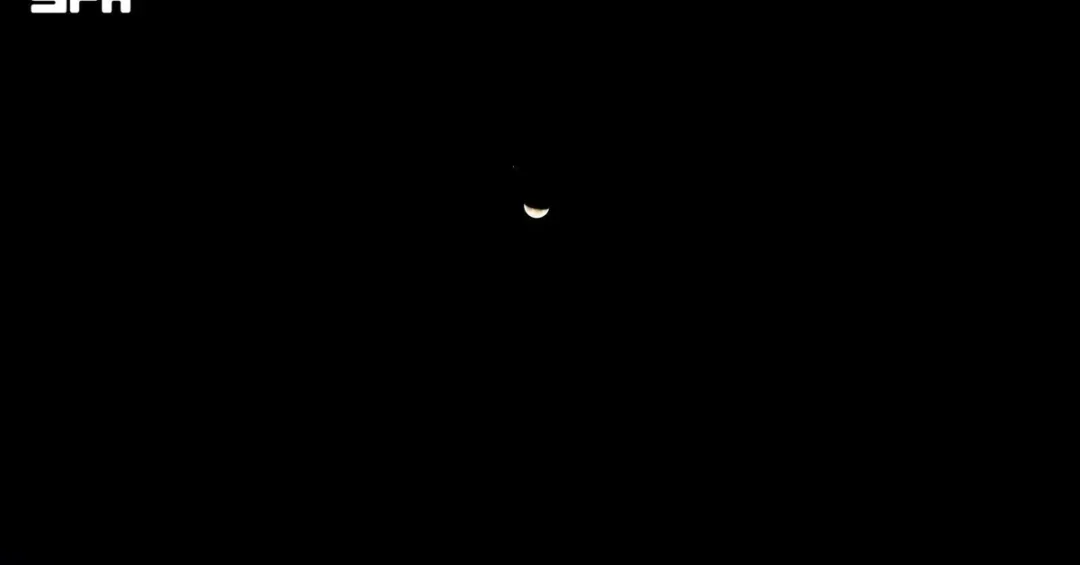
The sky over Arar in the Northern Borders Region of Saudi Arabia witnessed a striking conjunction of the Moon and Jupiter at dawn on Tuesday, November 3, 2026, as the two celestial bodies appeared exceptionally close to one another, according to the Saudi Press Agency (SPA). The phenomenon, visible from many parts of the world, drew the attention of astronomers and skywatchers across the Kingdom. In a statement to SPA, Adnan Khalifa, a member of the Astronomy and Space Club, explained that the open desert landscapes of the Northern Borders Region provide ideal conditions for astronomical observation, particularly when skies are clear and observers are far from sources of light pollution.
Why does a single celestial event in a relatively remote region of Saudi Arabia matter on a global scale? The answer lies in the Kingdom’s broader push to cultivate scientific curiosity and position itself as a hub for astronomy and space sciences. The conjunction offered a vivid reminder of how Saudi Arabia’s natural environment—vast, dark, and unspoiled—can serve as a window to the universe. It also underscored the role of local astronomy clubs and educational initiatives in inspiring the next generation of scientists, aligning with national ambitions to diversify the economy and foster innovation. As the world increasingly looks to the skies for knowledge and opportunity, Saudi Arabia is ensuring its youth are not just spectators but active participants.
Context and Background
What exactly is a conjunction, and why does it capture the imagination of astronomers and the public alike? A conjunction occurs when two celestial bodies appear close together in the sky from Earth’s perspective, though they remain millions of kilometers apart in reality. In this case, the Moon and Jupiter—the largest planet in our solar system—shared the same right ascension, creating a visually stunning pairing. Such events are not rare but are highly anticipated because they offer a chance to observe the dynamics of our solar system in real time. The SPA report noted that the conjunction was visible from many parts of the world, but the Northern Borders Region provided a particularly advantageous viewing point due to its low light pollution and clear desert skies.
Adnan Khalifa, a member of the Astronomy and Space Club, emphasized that the open desert landscapes of the Northern Borders Region are ideal for astronomical observation. “These conditions allow enthusiasts and researchers to study the heavens with greater clarity,” he told SPA. The region’s geography—expansive, arid, and sparsely populated—naturally minimizes atmospheric interference and artificial light, making it a valuable asset for Saudi Arabia’s growing astronomy community. This event also served as a practical classroom for students and young people, encouraging them to engage in stargazing and learn about the movements of celestial bodies. Khalifa noted that such phenomena contribute to spreading astronomical literacy and fostering interest in space sciences, a sentiment that resonates with the Kingdom’s educational goals.
Key Details of the Celestial Event
How close did the Moon and Jupiter actually appear, and what could observers expect to see? According to SPA, the two bodies appeared close to one another at dawn, creating a bright and captivating display. Jupiter, known for its four Galilean moons and distinctive bands, was easily visible alongside the Moon, which was in a waning crescent phase. This proximity is an optical illusion—Jupiter is about 600 million kilometers from Earth on average, while the Moon is roughly 384,000 kilometers away. Yet from our vantage point, they seemed to almost touch, a reminder of the vast scales of space. The event was observable with the naked eye, though binoculars or a small telescope would reveal Jupiter’s moons and the Moon’s craters in greater detail.
Adnan Khalifa highlighted that the Northern Borders Region offers some of the best viewing conditions in the Kingdom. “When the skies are clear and one is far from sources of light pollution, the experience is unparalleled,” he said. The region’s dry climate and high altitude in certain areas further enhance visibility. The Astronomy and Space Club, which Khalifa represents, likely organized informal gatherings or encouraged members to observe the conjunction. Such events also serve as catalysts for public engagement, drawing families, students, and amateur astronomers to participate in a shared cosmic experience. The SPA report did not specify the exact number of observers, but the widespread visibility suggests that many took advantage of the predawn hours to witness the spectacle.
Why do these events matter beyond their visual appeal? They provide tangible opportunities for scientific outreach and education. Khalifa stressed that such phenomena “contribute to spreading astronomical literacy and fostering interest in space sciences.” In a world where technology and innovation drive economies, nurturing curiosity about the universe can lead to careers in astrophysics, aerospace engineering, and data science. For Saudi Arabia, this aligns with Vision 2030’s emphasis on education, research, and a knowledge-based society. The conjunction thus becomes more than a fleeting sight; it is a spark for learning and ambition.
International and Regional Impact
How does a local astronomical event in Saudi Arabia resonate on the international stage? The conjunction was visible from many parts of the world, as SPA noted, making it a shared global experience. Astronomy has long been a unifying force, transcending borders and cultures. In the Middle East, where ancient civilizations pioneered the study of the stars, such events reconnect the region with its scientific heritage. Saudi Arabia’s active participation in observing and promoting astronomy reinforces its role as a leader in science and technology in the Arab world. It also signals to the international community that the Kingdom is investing in education and research, not just in traditional sectors like oil.
Regionally, the event could inspire neighboring countries to enhance their own astronomy programs. The Gulf region has seen a surge in space-related initiatives, including the UAE’s Hope probe to Mars and Saudi Arabia’s own satellite launches. By highlighting the Northern Borders Region as a prime observation site, Saudi Arabia may attract astronomers and tourists interested in astrotourism. This niche sector, which combines travel with stargazing, is growing globally. The Kingdom’s vast deserts, including those in the Northern Borders, offer untapped potential for such ventures. As Khalifa pointed out, the region’s clear skies and lack of light pollution are assets that can be leveraged for both scientific and economic gain.
Economic and Strategic Significance
What economic value can be derived from a celestial conjunction? While the event itself is ephemeral, its implications for tourism, education, and technology are substantial. Astrotourism is a burgeoning market, with travelers willing to pay for guided stargazing tours, astrophotography workshops, and visits to dark-sky reserves. The Northern Borders Region, with its pristine skies, could develop infrastructure to host such activities, creating jobs and attracting international visitors. This aligns with Vision 2030’s goal to diversify revenue streams and boost the tourism sector. Additionally, promoting astronomy education can spur innovation in related fields, such as satellite technology, remote sensing, and data analytics—areas where Saudi Arabia is already making strides.
Strategically, fostering a culture of scientific inquiry supports the Kingdom’s long-term competitiveness. The event also underscores the importance of environmental stewardship: preserving dark skies requires reducing light pollution, which in turn benefits wildlife and human health. Saudi Arabia’s commitment to sustainability, as outlined in Vision 2030, includes protecting natural resources and enhancing quality of life. By valuing its night skies, the Kingdom demonstrates a holistic approach to development. Furthermore, events like this can strengthen community bonds, as people gather to observe and discuss the wonders of the universe. Khalifa’s emphasis on engaging students and young people highlights the human capital dimension—investing in minds today for a prosperous tomorrow.
Vision 2030 Alignment
How does a moon-Jupiter conjunction connect to Saudi Arabia’s Vision 2030? At its core, Vision 2030 is about transforming the Kingdom into a diversified, knowledge-driven economy. Astronomy, as a gateway science, stimulates critical thinking, curiosity, and innovation—skills essential for the future workforce. By promoting astronomical literacy, Saudi Arabia is nurturing a generation that can contribute to fields like space exploration, which is increasingly vital for national security, communications, and environmental monitoring. The Northern Borders Region’s potential as an astronomy hub also ties into the vision’s tourism goals, offering unique experiences that showcase the Kingdom’s natural beauty and scientific ambition.
Moreover, such events reinforce Saudi Arabia’s global role as a forward-looking nation. They demonstrate that the Kingdom is not only preserving its heritage but also embracing the frontiers of science. As Adnan Khalifa and the Astronomy and Space Club continue their outreach, they embody the spirit of Vision 2030—empowering youth, fostering community, and pursuing excellence. The conjunction of the Moon and Jupiter may have lasted only hours, but its impact on education, tourism, and national pride could endure for years. In the vast, starry skies over Arar, Saudi Arabia sees not just a celestial spectacle but a reflection of its own boundless potential.
20 Questions
Q1. What celestial event occurred over Arar in the Northern Borders Region?
A1. A conjunction of the Moon and Jupiter was observed at dawn on November 3, 2026, where the two bodies appeared very close together in the sky, as reported by the Saudi Press Agency.
Q2. Who provided expert commentary on the event?
A2. Adnan Khalifa, a member of the Astronomy and Space Club, explained the significance of the conjunction and the viewing conditions in the Northern Borders Region.
Q3. Why is the Northern Borders Region ideal for astronomical observation?
A3. The region offers open desert landscapes, clear skies, and minimal light pollution, creating optimal conditions for stargazing and studying celestial bodies.
Q4. What is a conjunction in astronomy?
A4. A conjunction occurs when two celestial objects appear close together in the sky from Earth’s perspective, even though they are actually far apart in space.
Q5. How far is Jupiter from Earth during such an event?
A5. Jupiter is approximately 600 million kilometers from Earth on average, while the Moon is about 384,000 kilometers away, making their apparent proximity an optical illusion.
Q6. Was the conjunction visible to the naked eye?
A6. Yes, the Moon and Jupiter were visible without special equipment, though binoculars or telescopes could enhance the view of Jupiter’s moons and lunar details.
Q7. What benefits do such events bring to Saudi society?
A7. They promote astronomical literacy, inspire interest in space sciences, and encourage students and youth to engage in stargazing and learn about celestial movements.
Q8. How does this event align with Saudi Vision 2030?
A8. It supports educational goals, fosters innovation, and boosts astrotourism, contributing to economic diversification and a knowledge-based society as outlined in Vision 2030.
Q9. What role does the Astronomy and Space Club play?
A9. The club, represented by Adnan Khalifa, works to spread astronomical knowledge and engage the community, particularly youth, in space sciences and observation activities.
Q10. Can the Northern Borders Region become a hub for astrotourism?
A10. Yes, its clear skies and low light pollution make it attractive for astrotourism, which could draw visitors and create economic opportunities in line with Vision 2030.
Q11. What other celestial events are visible from Saudi Arabia?
A11. Saudi Arabia’s skies offer views of meteor showers, planetary alignments, eclipses, and other phenomena, thanks to its vast deserts and dark skies.
Q12. How does astronomy education benefit Saudi youth?
A12. It enhances critical thinking, encourages careers in science and technology, and prepares young Saudis for roles in space exploration and related fields.
Q13. What did Adnan Khalifa emphasize about the event?
A13. He emphasized that the conjunction contributes to spreading astronomical literacy and fostering interest in space sciences among students and enthusiasts.
Q14. How does this event reflect Saudi Arabia’s scientific ambitions?
A14. It shows the Kingdom’s commitment to advancing science and technology, aligning with national efforts to diversify the economy and invest in human capital.
Q15. What makes the Northern Borders Region unique for stargazing?
A15. Its remote, arid landscape and lack of urban light pollution provide exceptionally clear views of the night sky, ideal for astronomical observation.
Q16. Are there any economic benefits from astronomy events?
A16. Yes, they can stimulate astrotourism, create jobs, and drive innovation in technology and education, supporting Saudi Arabia’s economic diversification goals.
Q17. How can the public participate in future astronomical events?
A17. The public can join astronomy clubs, attend stargazing events, and follow official announcements from Saudi authorities to learn about upcoming celestial phenomena.
Q18. What is the significance of the Moon and Jupiter pairing?
A18. It offers a chance to observe two prominent celestial bodies together, sparking curiosity about the solar system and our place in the universe.
Q19. Does Saudi Arabia have a space program?
A19. Yes, Saudi Arabia has a growing space program, including satellite launches and collaborations, as part of its Vision 2030 strategy to advance technology and science.
Q20. What message does this event send to the world?
A20. It highlights Saudi Arabia’s scientific progress, natural treasures, and commitment to education and innovation, reinforcing its role as a forward-looking global player.
Reader Feedback
We value your thoughts. Please share your feedback on this article.
Your feedback helps us improve our coverage.
Related articles
 Saudi Project to Cultivate Microalgae for Feed, Pharma
 Estidamah Advances Research on Jazan Jasmine Aroma
 Madinah Ethical AI Competition Opens Registration for Developers Worldwide
 NCVC Launches Native Seed Sowing Campaign in Jubail
 GASTAT: Internet Use Reaches 99.6% Among Individuals Aged 15 to 74 in Saudi Arabia
 KAUST Cooling Coating Boosts Power Line Capacity in Heat