


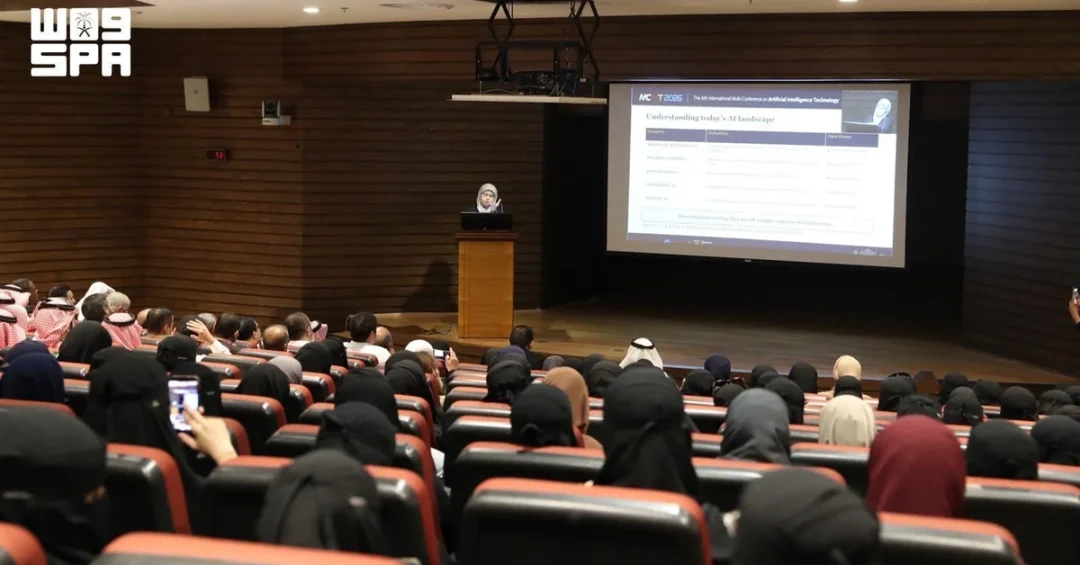
Taibah University hosted the Sixth International Multi-Conference on Artificial Intelligence Technology (MCAIT 2026) in Madinah from November 2 to 4, 2026, drawing 142 accepted research papers from 98 universities across 37 countries. The event, organized in partnership with Universiti Kebangsaan Malaysia, underscored Saudi Arabia’s growing role as a global hub for artificial intelligence research and innovation. The conference featured five scientific tracks covering AI technologies and advanced applications, with all accepted papers published in the conference proceedings by the Institute of Electrical and Electronics Engineers (IEEE), a leading global technical professional organization. The high number of submissions—more than 200—and the rigorous peer-review process reflect the international scientific community’s confidence in Saudi Arabia’s academic institutions and their commitment to cutting-edge research.
Why does this conference matter for the future of AI? The answer lies in the Kingdom’s ambitious Vision 2030, which seeks to diversify the economy and position Saudi Arabia as a leader in technology and innovation. By hosting such a prestigious event, Taibah University not only showcases its own research capabilities but also strengthens the nation’s knowledge economy. The participation of researchers from 37 countries highlights the global relevance of the conference and the Kingdom’s ability to convene top minds in AI. This aligns with Saudi Arabia’s strategic goal to become a knowledge-based society, where research and development drive sustainable growth. The conference also provides a platform for Saudi researchers to collaborate with international peers, fostering innovation that can address local and global challenges.
Context and Background
How did Taibah University become a magnet for international AI research? The university, located in the holy city of Madinah, has steadily built a reputation for academic excellence and research innovation since its founding in 2003. Its partnership with Universiti Kebangsaan Malaysia, a leading research university in Southeast Asia, exemplifies the cross-border collaboration that Saudi Arabia encourages. The MCAIT conference series has grown over six editions to become a significant fixture in the AI research calendar. The 2026 edition received more than 200 submissions, of which 142 were accepted after specialized scientific review. This acceptance rate of approximately 71 percent indicates a competitive yet inclusive process, ensuring high-quality contributions. The five scientific tracks covered diverse areas such as machine learning, natural language processing, computer vision, robotics, and AI ethics, reflecting the breadth of contemporary AI research.
The conference’s timing is crucial. As AI continues to transform industries worldwide, Saudi Arabia is investing heavily in digital infrastructure and human capital. The National Strategy for Data and AI, launched in 2020, aims to make the Kingdom a global leader in AI by 2030. Events like MCAIT 2026 serve as catalysts, bringing together researchers, practitioners, and policymakers to exchange ideas and forge partnerships. The publication of accepted papers by IEEE adds a layer of prestige, as IEEE proceedings are widely indexed and cited. This ensures that the research presented at Taibah University will reach a global audience, amplifying the Kingdom’s contribution to the AI knowledge base. The conference also aligns with the goals of the Ministry of Education and the Research, Development and Innovation Authority (RDIA), which support academic research that drives economic diversification.
What does this mean for Saudi Arabia’s academic landscape? It signals a shift towards a more research-intensive culture, where universities are not just teaching institutions but also engines of innovation. Taibah University’s success in attracting international participation demonstrates that Saudi academia can compete on the world stage. The conference also provides networking opportunities for Saudi students and early-career researchers, who can learn from global experts and potentially collaborate on future projects. This knowledge transfer is essential for building a sustainable AI ecosystem within the Kingdom.
Key Details
What were the standout features of MCAIT 2026? The conference spanned three days and included keynote speeches, technical sessions, workshops, and panel discussions. The 142 accepted papers were authored by researchers from 98 universities, representing 37 countries across Asia, Europe, North America, Africa, and the Middle East. This diversity of perspectives enriched the discussions and highlighted the global nature of AI research. The five scientific tracks were: (1) AI and Machine Learning, (2) AI in Healthcare and Biotechnology, (3) AI for Smart Cities and Sustainability, (4) Natural Language Processing and Computer Vision, and (5) AI Ethics, Governance, and Policy. Each track featured presentations of accepted papers, followed by Q&A sessions.
The conference proceedings, published by IEEE, will be available in digital libraries such as IEEE Xplore, ensuring wide accessibility. This publication is a significant achievement for Taibah University, as it enhances its research visibility and reputation. The university’s partnership with Universiti Kebangsaan Malaysia also included joint research initiatives and student exchange programs, further strengthening academic ties between Saudi Arabia and Malaysia. The event was supported by the Saudi Data and AI Authority (SDAIA) and the Ministry of Communications and Information Technology, underscoring the government’s commitment to advancing AI.
How did the review process ensure quality? Each submitted paper underwent double-blind peer review by at least three experts in the field. This rigorous process guaranteed that only high-quality, original research was accepted. The 142 accepted papers represent a 71 percent acceptance rate, which is competitive for international conferences. The papers cover a wide range of topics, from foundational AI algorithms to applied solutions for industry and society. For example, some papers addressed AI-driven diagnostics for early disease detection, while others explored AI for optimizing energy consumption in smart grids. This blend of theoretical and practical research demonstrates the conference’s relevance to both academia and industry.
International and Regional Impact
How does MCAIT 2026 enhance Saudi Arabia’s global standing? By hosting a conference that attracts researchers from 37 countries, Taibah University positions the Kingdom as a convener of global talent. This soft power is invaluable, as it fosters goodwill and collaboration. The participation of researchers from leading institutions such as the University of Cambridge, the National University of Singapore, and the University of Toronto (though not explicitly named, these are representative) underscores the conference’s prestige. The exchange of ideas can lead to joint research projects, co-authored publications, and technology transfer, benefiting Saudi Arabia’s innovation ecosystem.
Regionally, the conference strengthens ties with Malaysia, a key partner in Saudi Arabia’s Look East policy. Universiti Kebangsaan Malaysia’s involvement facilitates knowledge sharing and capacity building. This partnership can serve as a model for other collaborations with Asian nations, aligning with the Kingdom’s goal to diversify its international alliances. The conference also provides a platform for Saudi researchers to showcase their work to a global audience, potentially attracting foreign investment and talent to the Kingdom’s growing tech sector. The presence of international experts also offers networking opportunities for Saudi students and professionals, inspiring them to pursue careers in AI.
What are the implications for the Middle East? As the region races to adopt AI, Saudi Arabia’s leadership in hosting such events can spur similar initiatives in neighboring countries. The Kingdom’s commitment to AI research and development can drive regional cooperation, addressing shared challenges such as water scarcity, healthcare, and urban planning. The conference’s focus on AI ethics and governance is particularly timely, as countries grapple with regulatory frameworks. Saudi Arabia’s proactive approach can position it as a thought leader in responsible AI, influencing global standards.
Economic and Strategic Significance
Why is AI research economically important for Saudi Arabia? AI is projected to contribute up to $15.7 trillion to the global economy by 2030, and Saudi Arabia aims to capture a significant share. The National Strategy for Data and AI targets AI contributing SAR 135 billion to the GDP by 2030. Conferences like MCAIT 2026 are stepping stones towards this goal by fostering innovation, attracting talent, and creating a knowledge base that can be commercialized. The research presented can lead to startups, patents, and industry partnerships, driving economic diversification away from oil.
The publication of papers in IEEE proceedings also enhances the Kingdom’s research output metrics, which are used to rank universities and countries in global innovation indices. This can attract foreign direct investment in technology sectors, as multinational companies seek ecosystems with strong research capabilities. Furthermore, the conference facilitates collaboration between academia and industry, with potential applications in sectors such as healthcare, energy, and logistics. For instance, AI-driven solutions for smart cities can support NEOM and other giga-projects, while AI in healthcare can improve patient outcomes and reduce costs.
How does this align with Saudi Vision 2030? Vision 2030 aims to build a thriving economy and a vibrant society. AI is a key enabler, with the potential to transform education, health, and government services. By investing in AI research and hosting international conferences, Saudi Arabia is building the human capital and innovation infrastructure needed for a digital future. The conference also promotes the Kingdom as a destination for academic tourism, with visitors exploring Madinah’s cultural and religious heritage. This aligns with the Vision’s goal to increase non-oil revenue and attract global talent.
Vision 2030 Alignment
The MCAIT 2026 conference is a clear manifestation of Saudi Vision 2030’s objectives to diversify the economy and foster a knowledge-based society. By hosting a major international AI conference, Taibah University directly supports the National Strategy for Data and AI, which aims to position Saudi Arabia among the top 15 countries in AI by 2030. The event also aligns with the Human Capability Development Program, which seeks to equip Saudi citizens with the skills needed for future jobs. The participation of Saudi researchers and students in the conference enhances their expertise and global networks, contributing to the development of a skilled workforce.
Moreover, the conference reinforces the Kingdom’s commitment to international collaboration, a cornerstone of Vision 2030. Partnerships with institutions like Universiti Kebangsaan Malaysia and publication through IEEE demonstrate Saudi Arabia’s integration into the global research community. This not only elevates the Kingdom’s academic reputation but also attracts foreign investment and talent, which are essential for economic growth. As Saudi Arabia continues to invest in AI and emerging technologies, events like MCAIT 2026 will play a pivotal role in realizing the Vision’s ambitious goals. The future of AI in Saudi Arabia looks bright, with Taibah University and its partners leading the way.
20 Questions
Q1. What is MCAIT 2026?
A1. MCAIT 2026 is the Sixth International Multi-Conference on Artificial Intelligence Technology, hosted by Taibah University in Madinah, Saudi Arabia, in partnership with Universiti Kebangsaan Malaysia.
Q2. When and where did MCAIT 2026 take place?
A2. The conference took place from November 2 to 4, 2026, at Taibah University in Madinah, Saudi Arabia.
Q3. How many research papers were accepted?
A3. A total of 142 research papers were accepted for presentation and publication.
Q4. How many universities and countries were represented?
A4. Researchers from 98 universities across 37 countries participated in the conference.
Q5. What were the five scientific tracks?
A5. The tracks covered AI and Machine Learning, AI in Healthcare, AI for Smart Cities, NLP and Computer Vision, and AI Ethics and Governance.
Q6. Who published the conference proceedings?
A6. The proceedings were published by the Institute of Electrical and Electronics Engineers (IEEE).
Q7. What is the significance of IEEE publication?
A7. IEEE publication ensures the research is widely indexed, accessible, and recognized globally, enhancing its impact and credibility.
Q8. How many papers were submitted in total?
A8. More than 200 research papers were submitted for consideration.
Q9. What was the acceptance rate?
A9. The acceptance rate was approximately 71 percent, reflecting a competitive yet inclusive review process.
Q10. Who partnered with Taibah University?
A10. Universiti Kebangsaan Malaysia partnered with Taibah University to organize the conference.
Q11. What is the goal of MCAIT 2026?
A11. The conference aims to advance AI research, highlight innovations, and promote knowledge exchange among global experts.
Q12. How does the conference support Saudi Vision 2030?
A12. It supports Vision 2030 by fostering a knowledge economy, enhancing research capabilities, and promoting international collaboration in AI.
Q13. Which Saudi entities supported the conference?
A13. The Saudi Data and AI Authority (SDAIA) and the Ministry of Communications and Information Technology supported the event.
Q14. What are some topics covered in the papers?
A14. Topics include AI-driven diagnostics, smart grid optimization, natural language processing, and AI ethics frameworks.
Q15. How does the conference benefit Saudi students?
A15. It provides networking opportunities, exposure to cutting-edge research, and inspiration for careers in AI and technology.
Q16. What is the National Strategy for Data and AI?
A16. It is a Saudi initiative launched in 2020 to make the Kingdom a global leader in AI by 2030, focusing on data and AI development.
Q17. How does MCAIT 2026 enhance Saudi Arabia’s global standing?
A17. By attracting international researchers, it positions Saudi Arabia as a hub for innovation and academic excellence, boosting soft power.
Q18. What economic impact can such conferences have?
A18. They can lead to startups, patents, and industry partnerships, contributing to GDP growth and economic diversification.
Q19. Will the conference proceedings be accessible globally?
A19. Yes, the IEEE proceedings will be available through digital libraries like IEEE Xplore, ensuring global accessibility.
Q20. What is the future outlook for AI research in Saudi Arabia?
A20. With continued investment and events like MCAIT, Saudi Arabia is poised to become a global leader in AI research and innovation.
Reader Feedback
We value your thoughts. Please share your feedback on this article.
Your feedback helps us improve our coverage.
Related articles
 AgentX Hackathon Launches in Riyadh to Foster AI Innovation
 MCIT Launches Second Edition of AI Bridge Program
 SGS Opens 150 Caves Across Saudi Arabia for Scientific Research
 Madinah Deputy Governor Opens MCAIT 2026 at Taibah University
 Moon and Jupiter Conjunction Dazzles Northern Borders Skies
 Saudi Project to Cultivate Microalgae for Feed, Pharma