


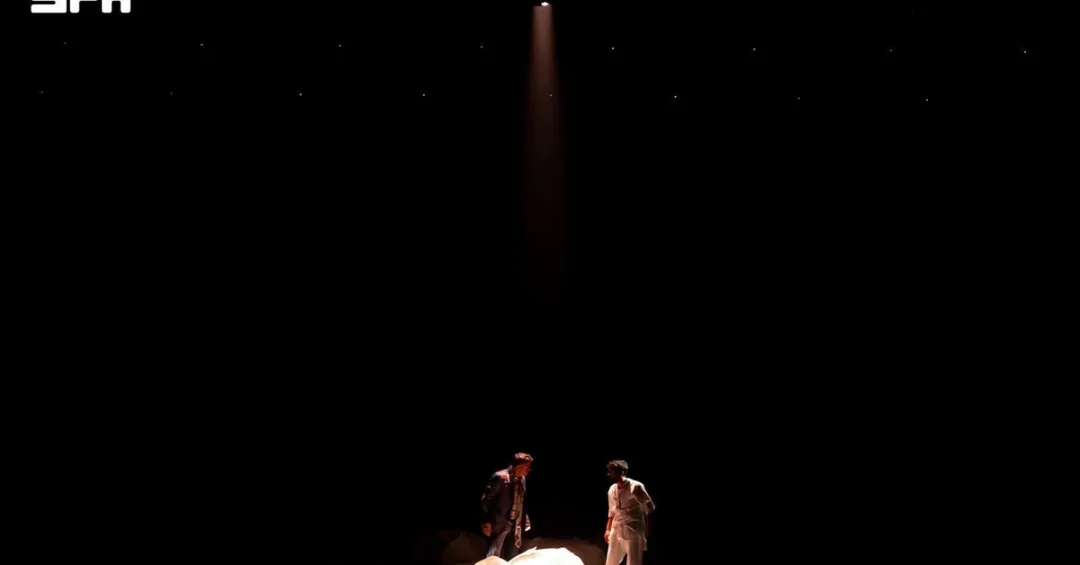
Theatrical illusion stands as a foundational artistic pillar of stage production, using the interplay of performance, scenography, lighting, and sound to construct dramatic worlds in which imagined characters and narratives resonate credibly with audiences, according to a report released via the Saudi Press Agency (SPA). The analysis, which draws on the perspectives of Saudi actors and cultural researchers, explains how stage crafts combine to build believable realities while the artistic nature of performance remains visible to the audience. The discussion arrives as the Kingdom’s cultural sector continues to expand under the framework of Vision 2030, with theatre emerging as an increasingly prominent element of the national creative landscape.
So what exactly makes an audience accept a world that everyone knows is fabricated? The SPA report frames theatrical illusion as both an artistic and a psychological process, one that persuades spectators of the dramatic reality unfolding on stage even as individual responses to believability naturally vary from one viewer to the next. At the center of this dynamic is the actor, whose delivery must convey authenticity through vocal inflection, body language, and interaction with fellow performers.
Context and Background
Have you ever wondered how a bare stage can become a battlefield, a palace, or a desert camp within moments? The answer lies in the layered collaboration that defines modern stagecraft. Actor Ali Al-Duwayan noted that theatrical illusion functions as both an artistic and psychological process, persuading spectators of the dramatic reality on stage while acknowledging that individual responses to believability naturally vary. His observation underscores a central truth of performance: credibility is not a fixed technical output but a living exchange between performer and audience.
Actor Samir Al-Nasser observed that this illusion originates in the written text and materializes through set design, lighting, music, and the emotional and physical depth performers bring to their roles. In this view, the script supplies the blueprint, and the production team supplies the sensory material that gives the blueprint weight, texture, and emotional temperature. The actor then becomes the conduit through which these elements reach the audience as a coherent experience.
The report situates this understanding within a broader cultural conversation about how Saudi theatre is maturing as an art form. As stages across the Kingdom host a widening range of productions, the craft of illusion, once discussed mainly in academic and festival circles, is now part of public cultural discourse, examined openly by practitioners and researchers alike.
Key Details
What role do the visible, tangible elements of a production play in sustaining belief? Scenographic components, including set architecture, mood lighting, costumes, props, and acoustics, establish the physical and temporal setting of a play, reinforce dramatic focus, and support the director’s overarching vision. Each element is calibrated to guide the audience’s attention and to keep the invented world internally consistent, so that a single misplaced detail does not break the spell of the narrative.
Cultural affairs researcher Dr. Salman Al-Shehri highlighted that harmonizing technical elements with acting strengthens narrative coherence and moves beyond mere imitation, engaging viewers emotionally and intellectually. His point is significant: illusion in theatre is not deception for its own sake but a disciplined craft that transforms abstract themes into tangible stage narratives capable of sustaining both dramatic impact and intellectual engagement.
The report also traces how performance methodologies have evolved distinct approaches to stage realism. Russian practitioner Konstantin Stanislavski built a technique centered on psychological realism, character motivation, and emotional sincerity in order to deepen audience immersion. His approach treats believability as a matter of inner truth, in which the performer’s genuine emotional life powers the character’s outer behavior, allowing spectators to invest in the drama as though it were real.
Alternative theatrical movements, however, introduced critical distance as a deliberate counterweight. Most notably, German dramatist Bertolt Brecht developed “epic theatre,” applying the alienation effect (Verfremdungseffekt) to disrupt total emotional absorption and prompt spectators to critically analyze the social, economic, and intellectual themes conveyed on stage. Brecht’s method reminds audiences that they are watching a constructed argument, not merely a slice of life, and this tension between immersion and reflection remains one of the most productive debates in world theatre.
International and Regional Impact
Why does a conversation about stage illusion matter beyond the walls of a theatre? The SPA analysis suggests that the craft of believability is part of a global artistic vocabulary, one that connects Saudi practitioners to centuries of international performance tradition while allowing them to contribute their own perspectives. By engaging with figures such as Stanislavski and Brecht, the report places Saudi stagecraft within a shared heritage of ideas about how performance persuades and provokes.
Regionally, the discussion reflects the growing sophistication of cultural debate within the Kingdom. As theatre festivals, productions, and training initiatives multiply, Saudi artists are not only performing but also theorizing about their craft, joining international conversations on realism, staging, and audience engagement. This exchange positions the Kingdom as an active participant in the global cultural sphere rather than a passive consumer of imported forms, a shift that carries significance for how the region’s creative industries are perceived internationally.
The report’s emphasis on the harmony between technical design and performance also resonates with international production standards. When lighting, sound, costume, and set design work in concert with acting, a production can travel beyond language barriers, communicating emotional and thematic content across cultural boundaries. For Saudi productions seeking international audiences and festival invitations, mastery of this integrated craft is a decisive advantage.
Economic and Strategic Significance
What does stagecraft have to do with a nation’s economic and strategic ambitions? The cultural and creative industries are increasingly recognized as engines of diversified growth, generating employment across design, technical production, performance, and event management. A thriving theatre sector requires trained scenographers, lighting technicians, sound engineers, costume designers, and stage managers, all of whom form part of a skilled workforce that supports the broader entertainment economy the Kingdom is building.
Strategically, the credibility of live performance underpins the success of the Kingdom’s expanding calendar of cultural events. Productions that achieve a high standard of illusion and narrative coherence attract audiences, build reputations, and encourage repeat attendance, strengthening the domestic cultural market and enhancing the Kingdom’s appeal as a destination for arts and entertainment. In this sense, the invisible craft of believability has visible economic consequences, supporting venues, production companies, and the service industries that surround them.
The SPA report’s focus on professional technique also signals a maturing ecosystem in which quality is treated as a strategic priority. By highlighting the perspectives of working actors and researchers, the discussion models the kind of reflective practice that sustains long-term growth in any creative field, ensuring that expansion is matched by rising standards and genuine audience engagement.
Vision 2030 Alignment
How does the art of illusion connect to the Kingdom’s long-term vision? Vision 2030 places culture and entertainment at the heart of a diversified economy and an enriched quality of life, and theatre is a direct expression of both goals. The craft of theatrical illusion, as described in the SPA report, embodies the blend of artistic excellence, technical skill, and audience engagement that the Vision seeks to cultivate across the creative sector.
Ultimately, theatrical illusion transforms text into an active sensory experience, translating abstract themes into tangible stage narratives that sustain dramatic impact and intellectual engagement. As Saudi Arabia continues to invest in its cultural infrastructure and nurture homegrown talent, the discipline of stagecraft will remain a cornerstone of that effort, connecting local artists to global traditions while advancing the Kingdom’s ambition to be a vibrant cultural hub. The forward march of Saudi theatre, grounded in craft and credibility, reflects the wider promise of Vision 2030: a society confident in its heritage and open to the world.
20 Questions
Q1. What is theatrical illusion?
A1. Theatrical illusion is a foundational artistic pillar of stage production that uses the interplay of performance, scenography, lighting, and sound to build dramatic worlds in which imagined characters and narratives resonate credibly with audiences while the artistic nature of the performance remains visible.
Q2. According to the SPA report, what is central to theatrical illusion?
A2. An actor’s delivery is central to the dynamic, requiring an understanding of a character’s psychological and social dimensions to project authenticity through vocal inflection, body language, and stage interaction with fellow performers.
Q3. How did actor Ali Al-Duwayan describe theatrical illusion?
A3. Ali Al-Duwayan noted that theatrical illusion functions as both an artistic and psychological process, persuading spectators of the dramatic reality on stage while acknowledging that individual responses to believability naturally vary from viewer to viewer.
Q4. Where does Samir Al-Nasser say the illusion originates?
A4. Samir Al-Nasser observed that the illusion originates in the written text and materializes through set design, lighting, music, and the emotional and physical depth that performers bring to their roles.
Q5. What do scenographic components include?
A5. Scenographic components include set architecture, mood lighting, costumes, props, and acoustics. These elements establish the physical and temporal setting, reinforce dramatic focus, and support the director’s overarching vision for the production.
Q6. What did Dr. Salman Al-Shehri highlight about technical elements?
A6. Cultural affairs researcher Dr. Salman Al-Shehri highlighted that harmonizing technical elements with acting strengthens narrative coherence and moves beyond mere imitation, engaging viewers both emotionally and intellectually throughout the performance.
Q7. Who is Konstantin Stanislavski?
A7. Konstantin Stanislavski was a Russian practitioner whose technique centered on psychological realism, character motivation, and emotional sincerity. His approach sought to deepen audience immersion by grounding performance in the inner emotional truth of the character.
Q8. What was Bertolt Brecht known for?
A8. German dramatist Bertolt Brecht developed epic theatre, which applied the alienation effect (Verfremdungseffekt) to disrupt total emotional absorption and prompt spectators to critically analyze the social, economic, and intellectual themes conveyed on stage.
Q9. How do Stanislavski and Brecht differ in approach?
A9. Stanislavski sought deep emotional immersion through psychological realism, while Brecht introduced critical distance to keep audiences thinking analytically. The contrast between immersion and reflection remains a productive tension in world theatre.
Q10. What does the Verfremdungseffekt mean?
A10. The Verfremdungseffekt, or alienation effect, is a technique developed by Bertolt Brecht that disrupts total emotional absorption. It prompts spectators to critically analyze the social, economic, and intellectual themes being conveyed on stage rather than simply becoming absorbed in the drama.
Q11. Why is harmonizing technical elements with acting important?
A11. According to Dr. Salman Al-Shehri, harmonizing technical elements with acting strengthens narrative coherence. It moves a production beyond mere imitation, allowing the performance to engage viewers emotionally and intellectually rather than simply presenting surface-level spectacle.
Q12. What is the ultimate result of theatrical illusion?
A12. The report states that theatrical illusion transforms text into an active sensory experience, translating abstract themes into tangible stage narratives that sustain dramatic impact and intellectual engagement for the audience throughout the production.
Q13. Why do individual audience reactions to believability vary?
A13. As Ali Al-Duwayan noted, theatrical illusion is both an artistic and psychological process. Because audiences bring different experiences and sensitivities to a performance, their responses to believability naturally vary from one spectator to the next.
Q14. How does the written text contribute to illusion?
A14. Samir Al-Nasser observed that the illusion originates in the written text, which serves as the foundation. It then materializes through set design and lighting, bringing the script’s imagined world into tangible sensory reality for audiences.
Q15. What is the role of the director in stagecraft?
A15. Scenographic elements support the director’s overarching vision. The director coordinates set architecture, lighting, costumes, and sound so that these components work in harmony with the actors and reinforce the narrative focus of the production.
Q16. How does stagecraft connect to the creative economy?
A16. Stagecraft requires trained scenographers, lighting technicians, sound engineers, costume designers, and stage managers. These skilled roles support the broader entertainment and cultural economy, generating employment and strengthening the Kingdom’s creative industries.
Q17. Why is credibility important for Saudi productions seeking global reach?
A17. When lighting, sound, costume, and set design work in concert with acting, productions can transcend language barriers. This makes Saudi productions more appealing to international audiences and festival organizers, extending their global reach.
Q18. How does theatre relate to Vision 2030?
A18. Vision 2030 places culture and entertainment at the heart of a diversified economy and enriched quality of life. Theatre embodies the blend of artistic excellence, technical skill, and audience engagement that the Vision seeks to cultivate across the Saudi creative sector.
Q19. What methods have evolved for stage realism?
A19. Performance methodologies have evolved distinct approaches, including Stanislavski’s psychological realism and Brecht’s epic theatre. These contrasting traditions continue to shape how contemporary theater makers balance emotional immersion with critical engagement in their stage productions.
Q20. What does the SPA report reveal about Saudi theater?
A20. The report reflects a maturing Saudi cultural scene in which actors and researchers openly discuss craft and technique. It positions the Kingdom as an active participant in global cultural conversations while advancing its artistic and economic ambitions under Vision 2030.
Reader Feedback
We value your thoughts. Please share your feedback on this article.
Your feedback helps us improve our coverage.
Related articles
 Al-Sudairy Centre Boosts Al-Jouf Cultural Tourism
 Traditional Ghee Production Thrives in Northern Borders
 Fifth European Film Festival Kicks Off in Riyadh
 Three Falcons Sell for SAR319,000 on 16th Night of National Falcons Center Auction 2026
 Saudi Folk Tales Shine at Algiers Book Fair
 Prince Faisal bin Salman Approves Saudi History Program