


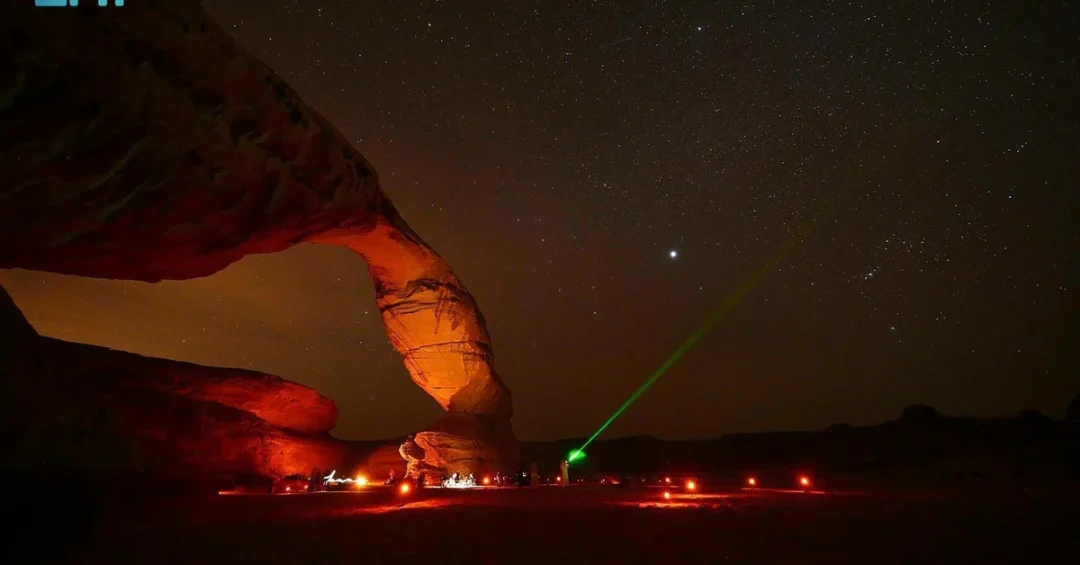
AlUla Governorate has launched “Arch Rock and Stargazing,” a community-driven initiative that celebrates one of its most iconic natural landmarks while promoting environmental awareness, as announced by the Saudi Press Agency (SPA) on April 24, 2025. The event, timed to coincide with Earth Day on April 22 and Environment Week 2025, attracted a diverse gathering of residents and tourists, underscoring AlUla’s growing appeal as a destination where natural heritage and sustainable tourism intersect. Have you ever wondered how a single rock formation can become a symbol of environmental responsibility? The initiative, organized under the umbrella of the Royal Commission for AlUla (RCU), seeks to do exactly that—transforming a geological wonder into a platform for ecological education and community engagement. By blending fun with environmental stewardship, AlUla is setting a precedent for how tourist attractions can inspire protection rather than exploitation.
The “Arch Rock and Stargazing” initiative is more than a one-off event; it represents a strategic effort to embed environmental consciousness into the fabric of AlUla’s tourism model. Participants took part in interactive activities that highlighted the importance of preserving natural landmarks, all while enjoying the majestic Arch Rock—a towering sandstone formation shaped by millennia of erosion. The event also featured stargazing sessions, leveraging AlUla’s pristine night skies, which are renowned for their clarity and lack of light pollution. These activities not only educate but also foster a sense of shared responsibility among locals and visitors alike. As AlUla continues to emerge as a global tourism hub, such initiatives are crucial for balancing economic growth with ecological integrity. The Royal Commission for AlUla has consistently emphasized that sustainable development is at the heart of its mission, and this event is a testament to that commitment.
Context and Background
Why does AlUla matter so much in Saudi Arabia’s environmental and tourism landscape? Located in the northwest of the Kingdom, AlUla is home to a wealth of archaeological and natural treasures, including the Nabataean city of Hegra, Saudi Arabia’s first UNESCO World Heritage Site. The region’s unique geology, with its dramatic rock formations and expansive deserts, has made it a focal point for the Kingdom’s Vision 2030 goals, which aim to diversify the economy and promote sustainable tourism. The Royal Commission for AlUla, established in 2017, has been tasked with preserving and developing the area in a manner that respects its natural and cultural heritage. The “Arch Rock and Stargazing” initiative is part of a broader strategy to engage the community in conservation efforts, aligning with global environmental observances like Earth Day and Environment Week. By linking a local landmark to a worldwide movement, AlUla is positioning itself as a responsible steward of the environment.
Environment Week 2025, observed across Saudi Arabia, highlights the Kingdom’s commitment to addressing pressing ecological challenges, from climate change to desertification. The Saudi Green Initiative, launched in 2021, aims to plant 10 billion trees and protect 30% of the Kingdom’s land and sea by 2030. AlUla’s initiative contributes to these national goals by raising awareness at the grassroots level. The event also reflects the RCU’s broader efforts to involve local communities in decision-making processes, ensuring that tourism development benefits both people and the planet. Moreover, the timing of the initiative—coinciding with Earth Day—amplifies its message, connecting AlUla’s local actions to a global call for environmental action. As the world grapples with environmental degradation, AlUla’s approach offers a model for how cultural and natural tourism can be a force for good.
Key Details
What exactly happened at the “Arch Rock and Stargazing” event, and why does it matter? According to the Saudi Press Agency, the initiative drew a diverse group of residents and tourists, who participated in a range of activities designed to promote environmental awareness. The Arch Rock, a natural wonder that has stood for centuries, served as the backdrop for educational sessions on preserving natural landmarks. Participants learned about the geological processes that formed the rock and the importance of minimizing human impact on such sites. Stargazing sessions allowed attendees to appreciate the night sky, with experts on hand to explain the importance of reducing light pollution—a key factor in protecting nocturnal wildlife and preserving the clarity of the skies. The event also included interactive workshops and guided tours, making it an engaging experience for all ages. By combining education with entertainment, the initiative successfully conveyed its message: that environmental responsibility can be both fun and fulfilling.
The choice of Arch Rock as the focal point is significant. This iconic formation, also known as Jabal AlFil (Elephant Rock), is one of AlUla’s most photographed attractions. Its distinctive shape, resembling an elephant, has made it a symbol of the region’s natural beauty. However, like many natural landmarks, it faces threats from erosion, vandalism, and climate change. The initiative aims to raise awareness about these threats and encourage visitors to adopt responsible behaviors. For instance, participants were encouraged to follow leave-no-trace principles and to respect the delicate balance of the desert ecosystem. The event also highlighted the role of local communities in safeguarding these sites, emphasizing that conservation is a shared responsibility. By involving both residents and tourists, the RCU hopes to create a network of environmental stewards who will continue to protect AlUla’s heritage long after the event concludes.
International and Regional Impact
How does AlUla’s environmental initiative resonate beyond Saudi Arabia’s borders? In a region where tourism is rapidly expanding, AlUla’s approach to sustainable development sets a benchmark for others to follow. The Middle East is home to numerous natural and cultural wonders, many of which are vulnerable to the pressures of mass tourism. By demonstrating that economic growth and environmental protection can go hand in hand, AlUla offers a replicable model for destinations across the region. International tourists, increasingly conscious of their environmental footprint, are likely to be drawn to destinations that prioritize sustainability. AlUla’s commitment to eco-tourism could therefore enhance its attractiveness in the global market, positioning it as a leader in responsible travel. Moreover, the initiative aligns with global frameworks such as the United Nations Sustainable Development Goals (SDGs), particularly Goal 15 (Life on Land) and Goal 17 (Partnerships for the Goals). By contributing to these global objectives, Saudi Arabia reinforces its role as a proactive member of the international community.
Regionally, the initiative strengthens Saudi Arabia’s ties with neighboring countries that share similar environmental challenges. Desertification, water scarcity, and biodiversity loss are common issues in the Gulf and broader Middle East. AlUla’s efforts to combat these problems through community engagement could inspire cross-border collaborations. For example, Jordan’s Wadi Rum and Egypt’s Sinai Peninsula face comparable pressures, and knowledge-sharing platforms could emerge from AlUla’s experience. Furthermore, the event’s focus on stargazing taps into a growing global interest in astro-tourism, which attracts visitors to dark-sky destinations. This niche market is particularly relevant for AlUla, which boasts some of the darkest skies in the region. By capitalizing on this asset, AlUla can attract a segment of travelers who value both natural beauty and environmental stewardship. In turn, this can drive economic benefits for local communities, from hospitality to guiding services, while ensuring that the environment remains protected.
Economic and Strategic Significance
What economic benefits can arise from environmental awareness initiatives like this? For AlUla, sustainable tourism is not just an ethical choice; it is an economic imperative. The region is a key pillar of Saudi Arabia’s Vision 2030, which seeks to reduce the Kingdom’s dependence on oil and create a diversified economy. Tourism is one of the sectors targeted for growth, with AlUla expected to contribute significantly to job creation and revenue generation. By promoting eco-tourism, AlUla can attract high-value visitors who are willing to pay a premium for authentic, low-impact experiences. The “Arch Rock and Stargazing” initiative, though small in scale, is part of a larger marketing strategy that positions AlUla as a must-visit destination for environmentally conscious travelers. This, in turn, can stimulate investment in infrastructure, hospitality, and services, creating a virtuous cycle of economic development and environmental protection.
Strategically, the initiative reinforces Saudi Arabia’s leadership in sustainable development. Under Vision 2030, the Kingdom has launched several mega-projects, such as NEOM and the Red Sea Project, that prioritize renewable energy, conservation, and smart urban planning. AlUla’s initiative complements these efforts by focusing on grassroots engagement and cultural heritage. It also aligns with the Saudi Green Initiative and the Middle East Green Initiative, which aim to combat climate change and improve quality of life. By showcasing its commitment to environmental stewardship, Saudi Arabia enhances its international image and soft power. This is particularly important as the Kingdom seeks to attract foreign investment and tourists. Moreover, the event demonstrates that environmental protection is not just a government responsibility but a societal one, involving citizens and visitors in safeguarding natural treasures. Such inclusive approaches are essential for the long-term success of Vision 2030.
Vision 2030 Alignment
How does the “Arch Rock and Stargazing” initiative embody the spirit of Vision 2030? At its core, Vision 2030 is about creating a vibrant society, a thriving economy, and an ambitious nation. Environmental sustainability cuts across all three pillars. A vibrant society requires clean air, water, and green spaces; a thriving economy needs sustainable resources and eco-friendly industries; and an ambitious nation takes responsibility for its natural heritage. The initiative directly supports these goals by educating the public, promoting eco-tourism, and protecting a unique natural landmark. It also reflects the Vision’s emphasis on community participation—a key theme in many RCU projects. By engaging residents and tourists in conservation, the initiative fosters a sense of ownership and pride, which is essential for long-term stewardship. As AlUla continues to develop, such initiatives will be vital for ensuring that growth does not come at the expense of the environment.
Looking ahead, AlUla’s environmental awareness efforts are set to expand. The Royal Commission for AlUla has outlined ambitious plans to make the region a global model for sustainable development, with initiatives ranging from renewable energy projects to wildlife conservation. The “Arch Rock and Stargazing” event is a building block in this journey, demonstrating that small-scale actions can have a big impact. For international audiences, it offers a glimpse into Saudi Arabia’s evolving identity—a nation that honors its past while embracing a sustainable future. As the Kingdom prepares to host major events and welcome millions of visitors, the lessons learned in AlUla will be invaluable. In a world where environmental challenges are increasingly urgent, AlUla’s initiative serves as a beacon of hope, showing that tourism and conservation can coexist harmoniously. And isn’t that a vision worth supporting?
20 Questions
Q1. What is the “Arch Rock and Stargazing” initiative?
A1. It is a community initiative launched by AlUla Governorate to showcase the Arch Rock while promoting environmental awareness through interactive activities, stargazing, and educational sessions. It aims to blend fun with environmental responsibility and encourage sustainable ecotourism.
Q2. When was the initiative launched?
A2. It was launched in April 2025, coinciding with Earth Day on April 22 and Environment Week 2025. The event drew residents and tourists, highlighting AlUla’s appeal and raising environmental awareness.
Q3. Where did the event take place?
A3. The event took place in AlUla Governorate, specifically at the Arch Rock (also known as Elephant Rock), a prominent natural landmark in northwestern Saudi Arabia.
Q4. Who organized the initiative?
A4. The initiative was organized by AlUla Governorate under the umbrella of the Royal Commission for AlUla (RCU), which is responsible for preserving and developing the region’s natural and cultural heritage.
Q5. What is Arch Rock?
A5. Arch Rock, or Jabal AlFil (Elephant Rock), is a massive sandstone formation shaped by erosion over millennia. It is one of AlUla’s most iconic attractions, resembling an elephant, and serves as a symbol of the region’s geological wonders.
Q6. Why is environmental awareness important in AlUla?
A6. AlUla is home to unique natural and archaeological treasures, including Saudi Arabia’s first UNESCO World Heritage Site. Environmental awareness is crucial to protect these assets from threats like erosion, vandalism, and climate change, ensuring sustainable tourism.
Q7. How does the initiative promote sustainability?
A7. It promotes sustainability by educating participants on leave-no-trace principles, reducing light pollution, and respecting desert ecosystems. It also encourages community involvement in conservation, aligning with global environmental goals.
Q8. What role does stargazing play in the initiative?
A8. Stargazing highlights AlUla’s pristine night skies, which are among the darkest in the region. It raises awareness about light pollution’s impact on wildlife and human health, while promoting astro-tourism as a sustainable economic activity.
Q9. How does the initiative align with Vision 2030?
A9. It supports Vision 2030 by promoting sustainable tourism, community engagement, and environmental protection—key pillars of the Kingdom’s economic diversification and quality-of-life goals. It also enhances Saudi Arabia’s global image as a responsible steward.
Q10. What was the target audience for the event?
A10. The event targeted both residents of AlUla and international tourists, aiming to foster a shared sense of responsibility for preserving natural heritage among diverse groups.
Q11. What activities were included?
A11. Activities included guided tours, educational workshops on geology and conservation, stargazing sessions with experts, and interactive experiences designed to engage participants of all ages in environmental stewardship.
Q12. How does the initiative benefit the local community?
A12. It benefits the local community by creating opportunities for economic empowerment through tourism, fostering pride in local heritage, and involving residents in decision-making processes related to conservation and development.
Q13. What is the significance of Earth Day in this context?
A13. Earth Day amplifies the message of environmental responsibility, connecting AlUla’s local actions to a global movement. It underscores Saudi Arabia’s commitment to addressing ecological challenges on an international scale.
Q14. How does the initiative address light pollution?
A14. The stargazing component educates participants about the adverse effects of light pollution on nocturnal wildlife and the visibility of stars. It encourages responsible lighting practices to preserve AlUla’s dark skies.
Q15. What are the long-term goals of the initiative?
A15. Long-term goals include establishing AlUla as a global model for sustainable tourism, expanding environmental education programs, and integrating conservation into all aspects of regional development.
Q16. How does the Royal Commission for AlUla support such initiatives?
A16. The RCU provides strategic direction, resources, and coordination with local and international partners. It ensures that initiatives align with its mission to preserve AlUla’s heritage while promoting sustainable development.
Q17. What impact does the initiative have on tourism?
A17. It enhances AlUla’s appeal as an eco-friendly destination, attracting environmentally conscious travelers. This can boost visitor numbers, extend stays, and increase spending, contributing to the local economy.
Q18. How can tourists participate in similar initiatives?
A18. Tourists can participate by attending RCU-organized events, following responsible tourism guidelines, and engaging with local conservation programs. Information is available through official AlUla tourism channels.
Q19. What makes AlUla’s night skies special?
A19. AlUla’s remote location and low light pollution create exceptionally clear night skies, ideal for stargazing. This natural asset supports astro-tourism and scientific research, adding to the region’s unique offerings.
Q20. How does this initiative reflect Saudi Arabia’s environmental leadership?
A20. It demonstrates Saudi Arabia’s proactive approach to environmental protection, aligning with the Saudi Green Initiative and Vision 2030. By engaging communities, the Kingdom showcases its commitment to sustainable development on a global stage.
Reader Feedback
We value your thoughts. Please share your feedback on this article.
Your feedback helps us improve our coverage.
Related articles
 Madinah Development Projects Boost Religious and Tourist Hub Status
 Taif Rose Forum Draws Over 350,000 Visitors
 Saudi Tourism Ministry Tightens Hajj Booking Rules for Makkah
 Ministry of Hajj and Umrah Distributes Nusuk Cards for 1446 AH
 Mina: The First Holy Site Pilgrims Visit During Hajj
 AlUla Hotels, Restaurants Honored in Michelin Guide 2025