


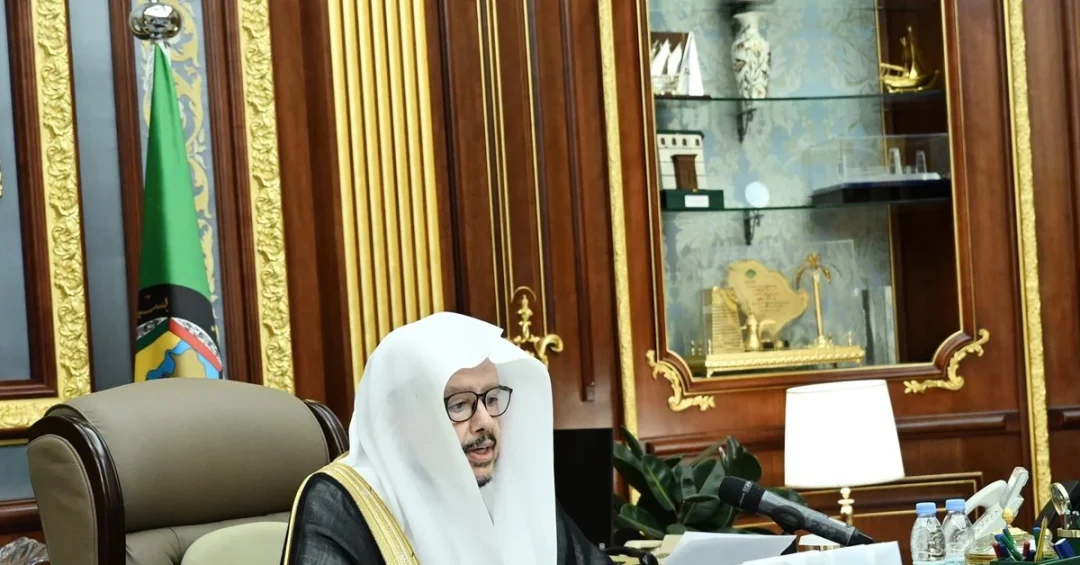
The speakers of the Shura, Representatives, National and Ummah Councils of the Gulf Cooperation Council (GCC) states convened their 20th periodic meeting in Riyadh on November 4, 2026, hosted by the Kingdom of Saudi Arabia and chaired by Speaker of the Shura Council Sheikh Dr. Abdullah bin Mohammed bin Ibrahim Al Al-Sheikh. The meeting, attended by GCC Secretary-General Jasem Albudaiwi via video conference, brought together the heads of the legislative councils of the six-member Gulf bloc to advance joint parliamentary cooperation and address pressing regional challenges.
At the outset, Sheikh Dr. Al Al-Sheikh conveyed the greetings of Custodian of the Two Holy Mosques King Salman bin Abdulaziz Al Saud and His Royal Highness Prince Mohammed bin Salman bin Abdulaziz Al Saud, Crown Prince and Prime Minister, to the speakers of the GCC legislative councils. He expressed gratitude to the Kingdom’s wise leadership for its continued support for joint Gulf action. The meeting underscored Saudi Arabia’s commitment to strengthening bonds and deepening cooperation among GCC states, reflecting the shared vision of Gulf leaders for a unified and prosperous region. As the GCC navigates a complex geopolitical landscape, such gatherings reinforce the importance of collective action and dialogue.
Context and Background
Why does the 20th periodic meeting of GCC legislative council speakers matter in the broader context of Gulf cooperation? The GCC, established in 1981, comprises Bahrain, Kuwait, Oman, Qatar, Saudi Arabia, and the United Arab Emirates, and has long served as a platform for political, economic, and security coordination. The periodic meetings of the speakers of the Shura, Representatives, National and Ummah Councils are a key component of this framework, fostering parliamentary dialogue and harmonizing legislative approaches across member states. The 19th meeting, chaired by Speaker of Bahrain’s Council of Representatives Ahmed bin Salman Al-Musallam, achieved positive outcomes in advancing joint Gulf parliamentary cooperation, setting the stage for the 20th meeting to build on that momentum.
The meeting took place against a backdrop of heightened regional tensions, including Iranian attacks targeting GCC states and Houthi militia aggression against Saudi Arabia. These challenges have reinforced the need for unified positions and robust parliamentary coordination. The GCC’s legislative councils play a vital role in translating the political will of Gulf leaders into concrete legal and policy frameworks, ensuring that shared interests are protected and that regional stability is maintained. As the region faces evolving threats, the role of these councils in safeguarding the achievements of their peoples becomes ever more critical.
Key Details and Opening Address
In his opening address, Sheikh Dr. Al Al-Sheikh welcomed the heads of the GCC legislative councils and commended the efforts of his Bahraini counterpart during the 19th meeting. He highlighted Saudi Arabia’s emphasis, under the leadership of the Custodian of the Two Holy Mosques and HRH the Crown Prince, on strengthening bonds and deepening cooperation among GCC states. He said: ‘The coordination and integration in our legislative and parliamentary work across the Gulf are the fruit of the wise vision of the GCC leaders. They reflect their firm belief in our shared destiny, unity of purpose, and the importance of coordination and integration across all fields. The security of GCC states is indivisible, and Gulf solidarity is the foremost pillar for safeguarding our peoples’ achievements and preserving regional stability.’
The speaker also addressed the critical regional situation, stating: ‘This meeting convenes at a critical time for our region, amid Iranian attacks targeting our countries and civilian facilities. We strongly condemn these attacks as flagrant violations of state sovereignty, the principles of good neighborliness, and international law. We reaffirm our united stance in confronting this aggression.’ He further noted that Saudi Arabia has been subjected to continued heinous aggression by terrorist Houthi militias, targeting civilian facilities and infrastructure and claiming the lives of innocent citizens and residents, including several Umrah performers. Their aggression also extended to the Two Holy Mosques, provoking the sentiments of Muslims worldwide. This underscores the importance of unified positions among GCC countries, as their security is indivisible and solidarity remains the foremost pillar for protecting their peoples’ achievements and safeguarding regional stability.
Sheikh Dr. Al Al-Sheikh stressed the strategic importance of security in the Strait of Hormuz and Bab al-Mandab, freedom of navigation through both waterways, energy security, and supply chains. He rejected any unilateral measures that could restrict navigation or threaten critical infrastructure in these strategic waterways. He commended efforts to de-escalate tensions and prioritize diplomatic solutions, stressing that any arrangements affecting regional security must address all sources of threat and take into account the interests of the Arab Gulf states. Regarding the Palestinian cause, he said: ‘The Palestinian cause remains our central issue. The Kingdom reiterates that a just and comprehensive peace can only be achieved through a two-state solution and the establishment of an independent Palestinian state along the 1967 borders, with East Jerusalem as its capital, in accordance with international legitimacy resolutions and the Arab Peace Initiative. It is also essential to consolidate the ceasefire in Gaza and ensure the delivery of humanitarian aid.’
Final Statement and Collective Resolutions
At the conclusion of the meeting, the speakers issued a final statement and sent a cable of thanks and appreciation to Custodian of the Two Holy Mosques King Salman bin Abdulaziz Al Saud and HRH Prince Mohammed bin Salman bin Abdulaziz Al Saud, Crown Prince and Prime Minister, commending their dedicated efforts, as well as those of the Kingdom of Saudi Arabia, in developing the foundations of joint Gulf action and enhancing cooperation and coordination among GCC states. In the final statement, the speakers strongly condemned the Iranian attacks and acts of aggression carried out using ballistic missiles and UAVs against GCC states. The attacks targeted civilian and economic facilities, vital infrastructure, civilian airports, residential areas, and energy tankers, resulting in civilian casualties and spreading fear among the population. They described these acts as flagrant violations of state sovereignty, security and stability, and clear breaches of international law, the UN Charter, and the principles of good neighborliness.
They also strongly condemned attacks by Houthi militias against the Kingdom of Saudi Arabia, which targeted the Two Holy Mosques, civil airports and vital facilities, resulting in civilian deaths and injuries. They extended their sincere condolences to the families of the victims and wished the injured a speedy recovery. The speakers affirmed the GCC states’ solidarity with the Kingdom of Saudi Arabia and their united support for it, including backing all measures it takes to safeguard its sovereignty, security and interests. They stressed that the security of GCC states is indivisible and affirmed every member state’s inherent right to self-defense, individually or collectively, and to take all necessary measures to protect its sovereignty, security, interests, citizens and residents, in accordance with Article 51 of the UN Charter.
The speakers also reaffirmed the sovereignty and territorial integrity of the Republic of Yemen and their support for efforts to reach a political solution to the Yemeni crisis through dialogue and mutual understanding, in a manner that fulfils the aspirations of the brotherly Yemeni people for peace, security and stability. The final statement noted that the strategic importance of the Strait of Hormuz, Bab al-Mandab and the Red Sea extends beyond the region, as they constitute vital arteries of the global economy. The speakers stressed that ensuring their security and the safety and freedom of navigation is a shared international responsibility. They warned that closing these waterways or obstructing navigation through them would threaten international peace and security and expose global energy, food, medicine and trade supplies to serious risks.
The speakers reaffirmed the centrality of the Palestinian cause and the GCC states’ steadfast support for the legitimate rights of the Palestinian people. They reiterated the need to protect civilians, uphold international law and international humanitarian law, and ensure the safe, immediate, continuous and unhindered delivery of humanitarian assistance to those in need. They also stressed the importance of consolidating stability, preventing renewed escalation, and supporting political and diplomatic efforts to achieve a just, comprehensive and lasting peace based on the two-state solution, in accordance with international law and relevant UN resolutions.
International and Regional Impact
How will the outcomes of this meeting shape the GCC’s relations with global partners and its role in regional security? During their review of the meeting’s agenda, the speakers commended the outcomes and recommendations of the seminar entitled ‘The Gulf Digital Economy: Legislation, Infrastructure Development, Enhancing GDP Contribution, Stimulating Investment, and Promoting the Safety of Gulf Society on Digital Platforms,’ organized by Bahrain’s Parliamentary Division in coordination with the GCC General Secretariat. They agreed to adopt ‘Strengthening Unified Gulf Parliamentary Action in Addressing Crises and Risks and Ensuring Supply Chain Security’ as the theme of the 2027 joint Gulf seminar, to be hosted and organized by the Shura Council of the Kingdom of Saudi Arabia. This forward-looking theme reflects the GCC’s proactive approach to emerging challenges and its commitment to ensuring the resilience of critical supply chains.
Furthermore, they approved a proposal to establish a strategic dialogue between the GCC legislative councils and the European Parliament, with coordination to be undertaken with the European Parliament in this regard. This initiative marks a significant step in expanding the GCC’s international parliamentary engagement, fostering mutual understanding and cooperation on issues of common interest. Additionally, they commended the role of Bahrain’s Parliamentary Division in signing a cooperation mechanism between the GCC legislative councils and the parliaments of Latin American countries and the Caribbean Group during its chairmanship of the 19th periodic meeting. These developments underscore the GCC’s growing global outreach and its efforts to build bridges with diverse regions.
Economic and Strategic Significance
What does the meeting’s emphasis on maritime security and supply chains mean for the global economy? The Strait of Hormuz, Bab al-Mandab, and the Red Sea are not only vital to the Gulf region but also to the entire world, as they serve as key conduits for oil, gas, and commercial goods. Any disruption to these waterways would have far-reaching consequences, affecting energy prices, trade flows, and global economic stability. The speakers’ warning against closing these waterways or obstructing navigation highlights the shared international responsibility to protect these arteries. The GCC’s call for de-escalation and diplomatic solutions aligns with its broader strategy to ensure energy security and maintain stable supply chains, which are essential for global prosperity.
Economically, the meeting’s focus on the digital economy and supply chain security reflects the GCC’s commitment to diversifying its economies and enhancing resilience. The seminar on the Gulf digital economy, organized by Bahrain’s Parliamentary Division, addressed legislative and infrastructural aspects to boost GDP contribution and stimulate investment. By adopting the theme of supply chain security for the 2027 seminar, the GCC is signaling its intent to develop robust frameworks that can withstand crises and risks. This is particularly important as the region navigates geopolitical tensions and seeks to attract foreign investment, in line with Saudi Arabia’s Vision 2030 and similar diversification efforts across the Gulf.
Vision 2030 Alignment
How does Saudi Arabia’s leadership in this meeting reflect its Vision 2030 objectives? The 20th periodic meeting of GCC legislative council speakers, hosted and chaired by the Kingdom, exemplifies Saudi Arabia’s commitment to strengthening regional cooperation and fostering stability, which are core pillars of Vision 2030. Under the leadership of Custodian of the Two Holy Mosques King Salman bin Abdulaziz Al Saud and HRH Prince Mohammed bin Salman bin Abdulaziz Al Saud, Crown Prince and Prime Minister, Saudi Arabia has consistently advocated for joint Gulf action and integrated approaches to shared challenges. The meeting’s outcomes, including the condemnation of aggression, support for Palestinian rights, and initiatives to enhance parliamentary dialogue with Europe and Latin America, align with Vision 2030’s goal of positioning Saudi Arabia as a global leader and a hub for diplomacy and investment.
Moreover, the focus on digital economy legislation and supply chain security resonates with Vision 2030’s emphasis on economic diversification, technological innovation, and sustainable development. By hosting the 2027 joint Gulf seminar on supply chain security, the Shura Council will play a pivotal role in shaping regional strategies that ensure the free flow of goods and services, benefiting both the Gulf and the wider world. As Saudi Arabia continues to drive forward its transformative agenda, its leadership in GCC parliamentary cooperation demonstrates its unwavering commitment to a prosperous, secure, and united Gulf region, contributing to global peace and stability.
20 Questions
Q1. What was the 20th periodic meeting of GCC legislative council speakers?
A1. It was a gathering of the speakers of the Shura, Representatives, National and Ummah Councils of the Gulf Cooperation Council states, held in Riyadh on November 4, 2026, hosted by Saudi Arabia and chaired by Sheikh Dr. Abdullah bin Mohammed bin Ibrahim Al Al-Sheikh.
Q2. Who chaired the 20th periodic meeting?
A2. The meeting was chaired by Speaker of the Shura Council Sheikh Dr. Abdullah bin Mohammed bin Ibrahim Al Al-Sheikh, who also serves as Chairman of the 20th Periodic Meeting.
Q3. Which GCC Secretary-General attended the meeting?
A3. GCC Secretary-General Jasem Albudaiwi attended the meeting via video conference.
Q4. What greetings did the Shura Council speaker convey?
A4. He conveyed the greetings of Custodian of the Two Holy Mosques King Salman bin Abdulaziz Al Saud and HRH Prince Mohammed bin Salman bin Abdulaziz Al Saud, Crown Prince and Prime Minister, to the speakers of the GCC legislative councils.
Q5. What did the speaker say about Gulf parliamentary work?
A5. He said that coordination and integration in legislative and parliamentary work across the Gulf are the fruit of the wise vision of GCC leaders, reflecting their belief in shared destiny and the importance of coordination across all fields.
Q6. How did the meeting address Iranian attacks?
A6. The speakers strongly condemned Iranian attacks using ballistic missiles and UAVs against GCC states, describing them as flagrant violations of state sovereignty and international law.
Q7. What was said about Houthi aggression against Saudi Arabia?
A7. The speakers strongly condemned Houthi militia attacks targeting the Two Holy Mosques, civil airports, and vital facilities, which resulted in civilian casualties, and extended condolences to the victims’ families.
Q8. What did the speakers stress about the Strait of Hormuz and Bab al-Mandab?
A8. They stressed the strategic importance of these waterways for global economy and security, rejecting any unilateral measures that could restrict navigation or threaten critical infrastructure.
Q9. What was the stance on the Palestinian cause?
A9. The speakers reaffirmed the centrality of the Palestinian cause and the need for a just, comprehensive peace based on the two-state solution, with East Jerusalem as the capital of an independent Palestinian state.
Q10. What did the final statement say about Yemen?
A10. The speakers reaffirmed the sovereignty and territorial integrity of Yemen and supported efforts to reach a political solution through dialogue and mutual understanding.
Q11. What seminar outcomes were commended?
A11. They commended the outcomes of the seminar ‘The Gulf Digital Economy: Legislation, Infrastructure Development, Enhancing GDP Contribution, Stimulating Investment, and Promoting the Safety of Gulf Society on Digital Platforms.’
Q12. What theme was adopted for the 2027 joint Gulf seminar?
A12. The theme ‘Strengthening Unified Gulf Parliamentary Action in Addressing Crises and Risks and Ensuring Supply Chain Security’ was adopted, to be hosted by the Shura Council of Saudi Arabia.
Q13. What proposal was approved regarding the European Parliament?
A13. A proposal to establish a strategic dialogue between the GCC legislative councils and the European Parliament was approved, with coordination to be undertaken with the European Parliament.
Q14. What cooperation mechanism was commended?
A14. The role of Bahrain’s Parliamentary Division in signing a cooperation mechanism between the GCC legislative councils and the parliaments of Latin American countries and the Caribbean Group was commended.
Q15. What cable was sent at the end of the meeting?
A15. A cable of thanks and appreciation was sent to Custodian of the Two Holy Mosques King Salman bin Abdulaziz Al Saud and HRH Prince Mohammed bin Salman bin Abdulaziz Al Saud, Crown Prince and Prime Minister.
Q16. What did the speakers affirm about self-defense?
A16. They affirmed every member state’s inherent right to self-defense, individually or collectively, in accordance with Article 51 of the UN Charter.
Q17. How did the speakers describe the security of GCC states?
A17. They stressed that the security of GCC states is indivisible and that Gulf solidarity is the foremost pillar for safeguarding their peoples’ achievements and preserving regional stability.
Q18. What did the speakers say about humanitarian aid to Gaza?
A18. They stressed the need to ensure the safe, immediate, continuous and unhindered delivery of humanitarian assistance to those in need in Gaza.
Q19. What did the speakers warn about closing waterways?
A19. They warned that closing the Strait of Hormuz, Bab al-Mandab or the Red Sea, or obstructing navigation, would threaten international peace and security and expose global supplies to serious risks.
Q20. How does this meeting align with Saudi Vision 2030?
A20. It reflects Saudi Arabia’s commitment to regional cooperation and stability, core pillars of Vision 2030, and its leadership in fostering joint Gulf action and international parliamentary dialogue.
Reader Feedback
We value your thoughts. Please share your feedback on this article.
Your feedback helps us improve our coverage.
Related articles
 Makkah Digital Talents Exhibition Bridges Training and Jobs
 Citizen Arrested in Jazan for Transporting Border Violators
 GCC Secretary-General: Gulf Legislative Councils Advance Joint Parliamentary Cooperation
 Saudi Arabia Hosts UNESCO GFEAI 2026: 80 Years of Partnership
 Makkah Deputy Governor Chairs Hajj and Umrah Committee Meeting
 SBA to Launch Eighth Season of ‘Almashrou’ on Strategic Projects