


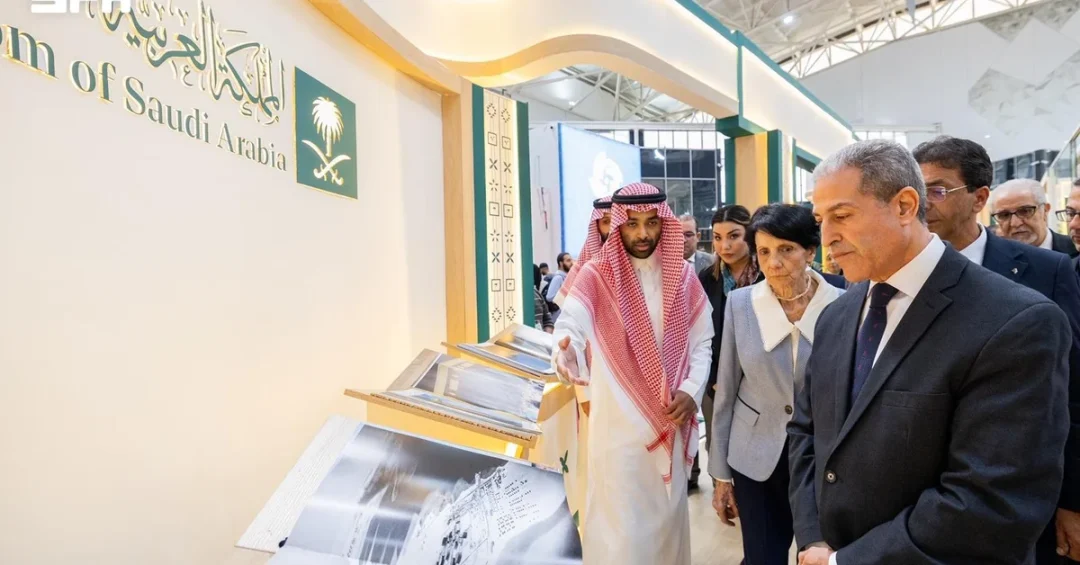
Saudi Arabia concluded its participation as Guest of Honor at the 2026 Algiers International Book Fair on November 7, 2026, following a ten-day cultural showcase that drew wide engagement and substantial public attendance, according to the Saudi Press Agency (SPA). The fair, held from October 28 to November 7 in the Algerian capital, featured an integrated Saudi pavilion led by the Literature, Publishing, and Translation Commission, encompassing literature, intellectual publications, heritage arts, live craft workshops, traditional fashion, historical manuscripts, and archaeological replicas. The Kingdom’s guest-of-honor status marked a significant milestone in Saudi-Algerian cultural relations and underscored Saudi Arabia’s growing international cultural presence under Saudi Vision 2030.
Organized by the Literature, Publishing, and Translation Commission, the Saudi participation was not merely an exhibition but a comprehensive cultural diplomacy initiative. It brought together a wide array of Saudi cultural institutions, academics, and artists to present a unified portrait of the Kingdom’s thriving cultural ecosystem. The event served as a platform to strengthen ties with Algerian publishers, readers, and cultural stakeholders, while highlighting Saudi Arabia’s civilizational depth and modern creative dynamism. The substantial public attendance and wide cultural engagement reported by SPA reflect the success of this endeavor in fostering cross-cultural understanding and building sustained bridges between the two nations.
Context and Background
Why does Saudi Arabia’s role as Guest of Honor at a major international book fair matter in the broader context of its cultural diplomacy? The Kingdom’s participation in the Algiers International Book Fair is part of a strategic effort to project its cultural soft power and deepen bilateral ties with countries across the region and beyond. Algeria and Saudi Arabia share deep historical bonds, and this cultural cooperation builds on those ties to create new avenues for dialogue and collaboration. The fair, a prominent event in the Arab cultural calendar, provided an ideal venue for Saudi Arabia to showcase its literary and artistic heritage alongside its contemporary creative industries.
The Literature, Publishing, and Translation Commission, led by CEO Dr. Abdulatif Alwasel, has been at the forefront of Saudi Arabia’s cultural outreach. Dr. Alwasel affirmed that the Kingdom’s guest-of-honor status reflects deep bilateral historical ties and expanding cultural cooperation between Saudi Arabia and Algeria. He noted that the initiative built sustained bridges with Algerian publishers and readers while highlighting Saudi civilizational depth. He also expressed appreciation for the continuous support of Minister of Culture Prince Bader bin Abdullah bin Farhan in advancing the Kingdom’s international cultural presence under Saudi Vision 2030. This support has been instrumental in enabling Saudi cultural institutions to participate effectively in global events and to share the Kingdom’s rich cultural tapestry with the world.
The Saudi pavilion was designed to offer an immersive experience, combining traditional and modern elements. It featured an array of activities and exhibits that catered to diverse interests, from historical manuscripts and archaeological replicas that trace the Kingdom’s ancient heritage to live craft workshops and traditional fashion that showcase its living culture. Complementing the indoor displays, outdoor cultural and performing arts events were held across public venues in Algiers, bringing Saudi culture directly to the Algerian public. This multifaceted approach ensured that the Saudi presence was felt not only within the fairgrounds but throughout the city, creating a lasting impression on attendees and passersby alike.
Key Details
What specific elements made Saudi Arabia’s participation as Guest of Honor so comprehensive and impactful? The Saudi delegation featured a broad inter-agency presence, demonstrating a whole-of-government approach to cultural diplomacy. Key participants included the Heritage Commission, Culinary Arts Commission, Fashion Commission, Architecture and Design Commission, and Film Commission. These commissions each contributed unique exhibits and programming that highlighted different facets of Saudi culture, from architectural heritage to contemporary film and design. Their collective presence underscored the Kingdom’s commitment to nurturing a vibrant cultural sector and sharing its achievements with international audiences.
In addition to the commissions, several prominent cultural and academic institutions played vital roles. The Prince Mohammed bin Salman Global Center for Arabic Calligraphy presented the intricate art of Arabic script, while the Ministry of Islamic Affairs, Dawah and Guidance and the King Fahd Glorious Quran Printing Complex showcased religious scholarship and the preservation of Islamic texts. The King Fahd National Library, the King Abdulaziz Public Library, the King Salman Global Academy for Arabic Language, and the King Abdulaziz Complex for Endowment Libraries contributed valuable resources and expertise, enriching the pavilion with rare manuscripts and educational materials. The Saudi Cultural Attaché’s Office in Algeria and the Arabic Observatory of Translation facilitated academic and cultural exchanges, further strengthening the ties between Saudi and Algerian institutions.
The fair also served as a platform for professional networking and knowledge sharing. Saudi publishers and literary agents engaged with their Algerian counterparts to explore opportunities for translation, co-publication, and distribution. These interactions are expected to lead to concrete collaborations that will benefit both countries’ publishing industries. The presence of the Arabic Observatory of Translation was particularly significant, as it highlighted the importance of translation in bridging cultures and making literary works accessible to wider audiences. By facilitating such exchanges, Saudi Arabia is not only promoting its own cultural products but also contributing to the broader Arab cultural landscape.
International and Regional Impact
How does Saudi Arabia’s successful participation in the Algiers International Book Fair resonate beyond the immediate event? The Kingdom’s guest-of-honor status reinforced its position as a cultural leader in the Arab world and a key player in international cultural diplomacy. It sent a clear message that Saudi Arabia is open to the world, eager to share its heritage and modern achievements, and committed to building bridges of understanding. This aligns with the Kingdom’s broader foreign policy objectives of fostering stability, cooperation, and mutual respect in the region. The positive reception in Algeria, a nation with its own rich cultural history, further validates Saudi Arabia’s approach to cultural engagement.
Regionally, the event highlighted the potential for increased cultural cooperation among Arab nations. By participating actively in such fairs, Saudi Arabia sets an example for other countries to invest in cultural diplomacy as a means of strengthening ties and promoting shared values. The exchanges between Saudi and Algerian publishers, writers, and artists can serve as a model for similar initiatives across the region. Moreover, the fair provided a platform for Saudi Arabia to showcase its Vision 2030 cultural transformation, which includes the development of a vibrant domestic cultural scene, increased support for artists and writers, and the preservation of heritage. This narrative of progress and openness resonates with international audiences and enhances the Kingdom’s soft power.
Economic and Strategic Significance
What economic and strategic benefits does Saudi Arabia’s cultural diplomacy yield? While cultural events are often viewed through a cultural lens, they also have significant economic implications. The publishing and translation industries are growing sectors in Saudi Arabia, and international fairs like Algiers provide valuable opportunities for Saudi publishers to expand their markets, forge partnerships, and showcase their products. The connections made at the fair can lead to translation rights deals, co-publishing agreements, and increased book exports, contributing to the growth of the creative economy. This aligns with Vision 2030’s goal of diversifying the economy and creating new opportunities in non-oil sectors.
Strategically, cultural diplomacy complements Saudi Arabia’s political and economic engagement with other nations. By building goodwill and mutual understanding, it creates a favorable environment for broader cooperation. The strong cultural ties between Saudi Arabia and Algeria can facilitate dialogue on other issues of mutual interest, from trade and investment to regional security. Furthermore, the Kingdom’s active presence in international cultural forums enhances its image as a modern, dynamic nation that respects its heritage while embracing the future. This soft power asset is invaluable in today’s interconnected world, where perceptions and relationships often shape the success of diplomatic and economic initiatives.
Vision 2030 Alignment
How does Saudi Arabia’s participation in the Algiers International Book Fair exemplify the objectives of Saudi Vision 2030? Vision 2030, the Kingdom’s comprehensive roadmap for transformation, includes a strong emphasis on culture as a driver of economic growth and national identity. The Literature, Publishing, and Translation Commission’s leadership at the fair directly supports the Vision’s cultural goals, which aim to double the contribution of culture to the GDP, create jobs, and promote Saudi culture internationally. By showcasing the Kingdom’s cultural achievements, the participation also advances the Vision’s objective of enhancing Saudi Arabia’s global standing and fostering a positive image abroad.
Moreover, the event reflects the Vision’s focus on youth empowerment and education. Many of the participants in the Saudi pavilion were young professionals, artists, and entrepreneurs, demonstrating the Kingdom’s investment in its human capital. The exchanges with Algerian counterparts provided learning opportunities and inspiration for Saudi youth, who are central to the Vision’s success. As Saudi Arabia continues to implement Vision 2030, such cultural diplomacy initiatives will remain a vital tool for building international partnerships, promoting mutual understanding, and showcasing the Kingdom’s rich cultural heritage and modern achievements. The successful conclusion of the Guest of Honor participation at the Algiers International Book Fair is a testament to the Kingdom’s commitment to these goals and its growing role as a global cultural leader.
20 Questions
Q1. What was the significance of Saudi Arabia’s participation as Guest of Honor at the 2026 Algiers International Book Fair?
A1. It marked a milestone in Saudi-Algerian cultural relations, showcasing the Kingdom’s cultural depth and strengthening bilateral ties under Vision 2030, as confirmed by the Literature, Publishing, and Translation Commission.
Q2. Who led the Saudi delegation at the fair?
A2. The Literature, Publishing, and Translation Commission led the delegation, with CEO Dr. Abdulatif Alwasel at the helm, supported by Minister of Culture Prince Bader bin Abdullah bin Farhan.
Q3. What Saudi entities participated in the fair?
A3. Participants included the Heritage Commission, Culinary Arts Commission, Fashion Commission, Architecture and Design Commission, Film Commission, and various libraries, academies, and cultural centers, presenting a unified Saudi cultural ecosystem.
Q4. What types of exhibits were featured in the Saudi pavilion?
A4. The pavilion featured literature, intellectual publications, heritage arts, live craft workshops, traditional fashion, historical manuscripts, and archaeological replicas, along with outdoor cultural and performing arts.
Q5. How long did the fair last?
A5. The fair was held from October 28 to November 7, 2026, spanning ten days of cultural engagement and public attendance in Algiers.
Q6. What did Dr. Abdulatif Alwasel say about the participation?
A6. He affirmed that the guest-of-honor status reflects deep bilateral ties and expanding cultural cooperation, building sustained bridges with Algerian publishers and readers while highlighting Saudi civilizational depth.
Q7. How does this participation align with Saudi Vision 2030?
A7. It supports Vision 2030’s cultural goals by promoting Saudi culture internationally, diversifying the economy, and enhancing the Kingdom’s global standing, as part of the cultural transformation agenda.
Q8. What was the role of the Prince Mohammed bin Salman Global Center for Arabic Calligraphy?
A8. It showcased the intricate art of Arabic calligraphy, highlighting Saudi Arabia’s commitment to preserving and promoting this traditional art form to international audiences.
Q9. Which Saudi libraries contributed to the fair?
A9. The King Fahd National Library, the King Abdulaziz Public Library, and the King Abdulaziz Complex for Endowment Libraries contributed rare manuscripts and educational materials, enriching the pavilion.
Q10. What was the purpose of the outdoor cultural and performing arts events?
A10. They brought Saudi culture directly to the Algerian public across public venues in Algiers, extending the fair’s reach beyond the fairgrounds and engaging a wider audience.
Q11. How did the fair facilitate professional networking?
A11. Saudi publishers and literary agents engaged with Algerian counterparts to explore translation, co-publication, and distribution opportunities, fostering concrete collaborations for both countries’ publishing industries.
Q12. What is the Arabic Observatory of Translation’s role?
A12. It highlighted the importance of translation in bridging cultures, facilitating exchanges that make literary works accessible to wider audiences and contributing to the Arab cultural landscape.
Q13. What economic benefits can result from such cultural diplomacy?
A13. It can lead to translation rights deals, co-publishing agreements, and increased book exports, contributing to the growth of Saudi Arabia’s creative economy and supporting Vision 2030’s diversification goals.
Q14. How does this event reflect Saudi Arabia’s soft power?
A14. By showcasing its cultural heritage and modern achievements, Saudi Arabia enhances its image as a modern, dynamic nation, building goodwill and mutual understanding that supports broader diplomatic and economic cooperation.
Q15. What was the significance of the King Fahd Glorious Quran Printing Complex’s participation?
A15. It showcased Saudi Arabia’s dedication to preserving and disseminating Islamic texts, reflecting the Kingdom’s religious scholarship and its role as a custodian of Islamic heritage.
Q16. How did the Saudi Cultural Attaché’s Office in Algeria contribute?
A16. It facilitated academic and cultural exchanges, strengthening ties between Saudi and Algerian institutions and supporting the delegation’s overall mission of cultural diplomacy.
Q17. What role did the Fashion Commission play at the fair?
A17. The Fashion Commission presented traditional Saudi fashion, highlighting the Kingdom’s rich textile heritage and contemporary design, and showcasing the evolution of Saudi style.
Q18. How does the participation promote youth empowerment?
A18. Many participants were young professionals and artists, demonstrating Saudi Arabia’s investment in its human capital and providing learning opportunities for youth, aligning with Vision 2030’s focus on youth.
Q19. What message does Saudi Arabia’s guest-of-honor status send to the world?
A19. It signals the Kingdom’s openness to cultural exchange, its commitment to building bridges of understanding, and its growing role as a global cultural leader under Vision 2030.
Q20. What is the expected long-term impact of this participation?
A20. It is expected to strengthen Saudi-Algerian cultural ties, foster ongoing collaborations, and enhance Saudi Arabia’s cultural presence internationally, supporting Vision 2030’s cultural and economic objectives.
Reader Feedback
We value your thoughts. Please share your feedback on this article.
Your feedback helps us improve our coverage.
Related articles
 Jazan Pottery: Cultural Identity and Artistic Innovation
 Saudi Pavilion Unveils Public Program at Venice Biennale
 Tarjim Initiative, Saudi Comics Draw Crowds at Algiers Book Fair
 Saudi Panel Explores Poetry’s Role in National Identity at Algiers Fair
 Khan Al-Khalil Collectibles Keep Old Jeddah’s Memory Alive
 Two Falcons Sell for SAR388,000 on 17th Night of National Center for Falcons Auction 2026