


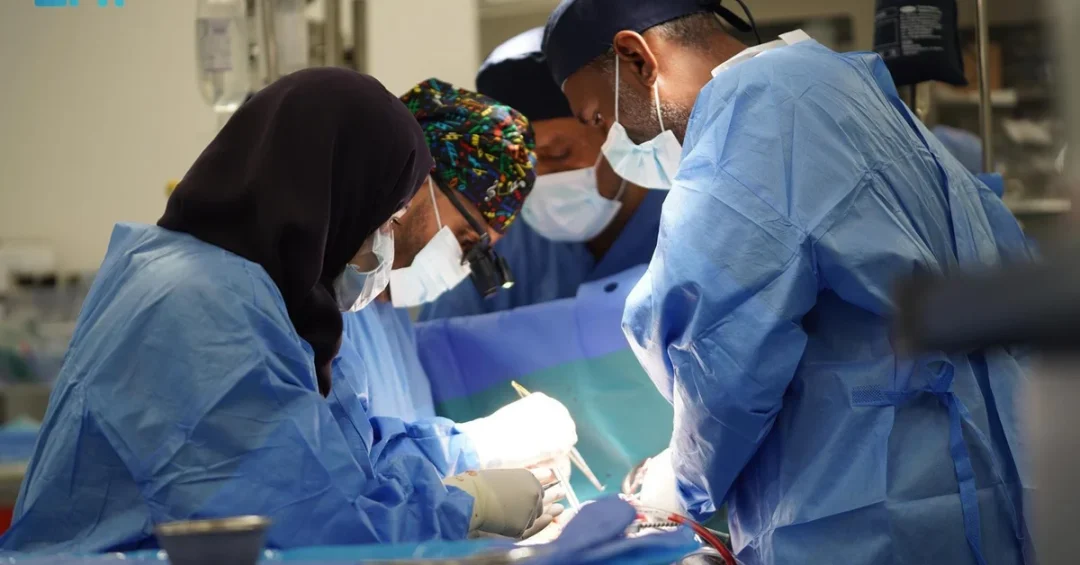
The King Salman Humanitarian Aid and Relief Center (KSrelief) launched a volunteer medical project for pediatric open-heart surgery and cardiac catheterization in Yemen’s Aden Governorate on Monday, April 21, 2025, according to the Saudi Press Agency (SPA). The initiative brings together 10 volunteer medical specialists from various fields to provide lifesaving cardiac care to children in need. Since the campaign began, the volunteer team has already performed four open-heart surgeries and 17 cardiac catheterization procedures, demonstrating the immediate impact of this humanitarian effort.
This project is part of KSrelief’s ongoing volunteer medical initiatives across multiple specialties, aimed at assisting individuals and families with limited income in countries facing humanitarian challenges. The launch in Aden underscores Saudi Arabia’s continued commitment to alleviating suffering and improving healthcare access in Yemen, a neighboring country that has long been a focus of the Kingdom’s humanitarian outreach. By deploying specialized medical volunteers, KSrelief not only addresses urgent health needs but also strengthens the capacity of local healthcare systems. How does such targeted medical intervention transform the lives of vulnerable children and their communities? It offers a second chance at life, reduces the burden on struggling families, and exemplifies the compassionate vision that drives Saudi Arabia’s global aid strategy.
Context and Background
Yemen has endured years of conflict and instability, which have severely weakened its healthcare infrastructure and left millions of people without adequate medical services. According to international humanitarian assessments, the country faces a critical shortage of specialized medical personnel and equipment, particularly for advanced procedures like pediatric cardiac surgery. In this context, KSrelief has been at the forefront of providing emergency medical assistance, food security, and other essential support. The new volunteer project in Aden is a continuation of these efforts, specifically targeting children with congenital heart defects who cannot access timely treatment. Why is it crucial to focus on pediatric cardiac care in crisis zones? Because these conditions are often life-threatening, and without intervention, they can lead to severe complications or death, making this project a lifeline for affected families.
KSrelief has a long history of implementing volunteer medical programs across Yemen and other countries in need. These initiatives are designed to complement broader humanitarian operations by delivering specialized care that local health systems may not be able to provide. The selection of Aden as the project site reflects the city’s role as a major population center and its relative accessibility for aid delivery. The 10 volunteers involved in this campaign come from diverse medical specialties, ensuring a comprehensive approach to patient care. What does this level of specialization signify for the quality of care delivered? It means that children receive not only surgeries but also preoperative assessments, postoperative follow-up, and catheterization procedures tailored to their individual needs, all under the supervision of experienced professionals.
Key Details of the Medical Project
The volunteer medical project officially commenced on Monday, April 21, 2025, with the first procedures performed shortly thereafter. The team has successfully completed four open-heart surgeries and 17 cardiac catheterization procedures, according to SPA. These numbers are expected to grow as the campaign continues, with the team aiming to treat as many children as possible during their deployment. The procedures are conducted in local hospitals in Aden, where KSrelief has coordinated with Yemeni health authorities to ensure that patients are identified and prepared for treatment. How are the beneficiaries selected for these surgeries? They are typically children from low-income families who have been diagnosed with heart conditions and lack the means to afford specialized care, either locally or abroad.
The project is part of KSrelief’s broader volunteer medical initiative, which spans various specialties and regions. These programs are funded by the Saudi government and rely on the expertise of Saudi medical professionals who volunteer their time and skills. The 10 volunteers in this campaign include cardiac surgeons, cardiologists, anesthesiologists, nurses, and technicians, all working together to deliver high-quality care. What does this collaborative effort achieve beyond immediate medical treatment? It also provides training and knowledge transfer to local medical staff, helping to build sustainable capacity for the future. This dual focus on treatment and education is a hallmark of KSrelief’s approach to humanitarian aid.
International and Regional Impact
The launch of this medical project in Yemen has significant implications for regional health and stability. By addressing critical health needs, KSrelief contributes to reducing suffering and improving the well-being of Yemeni children, which in turn supports broader efforts to stabilize communities and foster recovery. Saudi Arabia’s humanitarian leadership in Yemen is widely recognized, and this project further cements its role as a key provider of aid in the region. How does this initiative influence perceptions of Saudi Arabia on the global stage? It reinforces the Kingdom’s image as a compassionate and responsible actor, committed to helping its neighbors in times of need, which aligns with its foreign policy objectives and Vision 2030 goals.
Moreover, the project highlights the importance of international cooperation in addressing health crises. KSrelief often partners with local and international organizations to implement its programs, ensuring that aid reaches those who need it most. In Yemen, these partnerships are essential for navigating the complex operational environment and ensuring the safety and effectiveness of medical missions. What can other nations learn from Saudi Arabia’s model of humanitarian aid? That a combination of specialized volunteerism, strategic partnerships, and sustained commitment can make a tangible difference in even the most challenging contexts, offering a blueprint for effective global health diplomacy.
Economic and Strategic Significance
While primarily a humanitarian endeavor, this medical project also carries economic and strategic significance for Saudi Arabia. By investing in the health of Yemeni children, the Kingdom helps to reduce the long-term economic burden on Yemen’s healthcare system and contributes to human capital development. Healthy children are more likely to grow into productive adults, which is essential for the country’s future stability and prosperity. How does this align with Saudi Arabia’s economic interests? A stable and healthy Yemen is beneficial for regional trade, security, and investment, all of which are priorities for the Kingdom as it diversifies its economy under Vision 2030.
Furthermore, the project showcases Saudi Arabia’s soft power and its ability to lead in humanitarian crises. Through KSrelief, the Kingdom demonstrates that it is not only a military or economic power but also a force for good in the world. This enhances its diplomatic standing and opens doors for greater cooperation with international partners. What role does such aid play in Saudi Arabia’s strategic vision? It complements the Kingdom’s efforts to promote peace and development in the region, which are essential for achieving the ambitious goals of Vision 2030, including a diversified economy and a more influential global presence.
Vision 2030 Alignment
This volunteer medical project is deeply aligned with Saudi Arabia’s Vision 2030, which seeks to transform the Kingdom into a global leader in humanitarian and development aid. Vision 2030 emphasizes the importance of social responsibility, international cooperation, and the use of Saudi expertise to benefit humanity. KSrelief, as the primary vehicle for Saudi humanitarian aid, embodies these principles by delivering specialized medical care to those in need. How does this project reflect the vision’s objectives? It demonstrates the Kingdom’s commitment to improving global health, fostering goodwill, and building bridges with other nations, all of which are key pillars of the vision’s international strategy.
Looking ahead, KSrelief’s continued efforts in Yemen and beyond will play a vital role in shaping Saudi Arabia’s legacy as a humanitarian leader. The success of this cardiac project will likely pave the way for more specialized medical missions, expanding the reach and impact of Saudi aid. As the Kingdom moves closer to realizing Vision 2030, such initiatives will remain central to its identity and its contributions to a more stable and prosperous world. In conclusion, the launch of this project in Aden is not just a medical intervention; it is a testament to Saudi Arabia’s enduring commitment to saving lives and building a better future for all.
20 Questions
Q1. What is the King Salman Humanitarian Aid and Relief Center (KSrelief)?
A1. KSrelief is a Saudi humanitarian organization that provides aid and relief to countries in need, focusing on medical, food, and shelter assistance. It operates under the Saudi government and is known for its rapid response to crises worldwide.
Q2. Where did KSrelief launch its latest medical project?
A2. The project was launched in Aden Governorate, Yemen, targeting children with heart conditions. Aden is a major city in Yemen and has been a focal point for humanitarian efforts due to ongoing conflict and instability.
Q3. When did the medical project begin?
A3. The project began on Monday, April 21, 2025, as reported by the Saudi Press Agency. The volunteer team immediately started performing surgeries and catheterizations.
Q4. How many volunteers are participating in the project?
A4. Ten volunteers from various medical specialties are participating. They include cardiac surgeons, cardiologists, anesthesiologists, nurses, and technicians, all dedicated to providing high-quality care.
Q5. What types of procedures are being performed?
A5. The team is performing pediatric open-heart surgery and cardiac catheterization. These procedures address congenital heart defects and other cardiac conditions in children.
Q6. How many surgeries and catheterizations have been completed so far?
A6. As of the latest report, four open-heart surgeries and 17 cardiac catheterization procedures have been completed. The numbers are expected to increase as the campaign continues.
Q7. Who are the beneficiaries of this project?
A7. The beneficiaries are children from low-income families in Yemen who suffer from heart conditions and cannot afford specialized medical care. They are identified through local health authorities.
Q8. Why is this project important for Yemen?
A8. Yemen’s healthcare system is severely weakened by conflict, and many children lack access to cardiac care. This project provides lifesaving treatment and reduces the burden on families and local hospitals.
Q9. Is this project part of a larger KSrelief initiative?
A9. Yes, it is part of KSrelief’s ongoing volunteer medical initiatives across various specialties. These programs aim to assist individuals and families with limited income in countries in need.
Q10. How does KSrelief select the countries and regions for its projects?
A10. KSrelief assesses humanitarian needs, coordinates with local authorities, and prioritizes areas with critical gaps in healthcare and other essential services. Yemen has been a priority due to its ongoing crisis.
Q11. What is the role of the Saudi Press Agency in reporting this?
A11. The Saudi Press Agency (SPA) is the official news agency of Saudi Arabia. It reported the launch and progress of the project, providing authoritative information to the public.
Q12. How does this project align with Saudi Vision 2030?
A12. It aligns with Vision 2030’s goals of enhancing Saudi Arabia’s global humanitarian role and fostering international cooperation. It showcases the Kingdom’s commitment to social responsibility and global health.
Q13. What impact does this project have on Saudi-Yemeni relations?
A13. It strengthens bilateral ties by demonstrating Saudi Arabia’s continued support for the Yemeni people. It also builds goodwill and trust between the two nations.
Q14. Are there any other medical specialties involved in the project?
A14. The project focuses on cardiac care, but KSrelief conducts other medical volunteer projects in various specialties, such as orthopedics, ophthalmology, and general surgery, depending on the needs.
Q15. How long will the project last?
A15. The duration of the project is not specified, but such campaigns typically last for a few weeks to a month, during which the team performs as many procedures as possible.
Q16. What challenges does the medical team face in Yemen?
A16. Challenges include limited resources, security concerns, and a high volume of patients. However, KSrelief’s coordination with local authorities helps mitigate these issues.
Q17. How can other organizations support similar initiatives?
A17. Organizations can partner with KSrelief or other humanitarian groups to provide funding, medical supplies, or volunteer personnel. Collaboration is key to maximizing impact.
Q18. What is the expected long-term outcome of this project?
A18. The project aims to save lives, improve the health of children, and build local capacity. In the long term, it contributes to a healthier and more stable Yemen.
Q19. Does KSrelief receive international recognition for its work?
A19. Yes, KSrelief is widely recognized for its humanitarian efforts and has received praise from international organizations and governments for its effectiveness and reach.
Q20. How can the public learn more about KSrelief’s projects?
A20. Information is available through the Saudi Press Agency, KSrelief’s official website, and various media outlets. These sources provide updates on ongoing and future initiatives.
Reader Feedback
We value your thoughts. Please share your feedback on this article.
Your feedback helps us improve our coverage.
Related articles
 OIC and Japan Discuss Strengthening Humanitarian Cooperation
 KSrelief Delivers 25 Tons of Dates to Zanzibar
 Al-Rabiah Unveils Transformative Pilgrimage Vision at Oxford
 Ministry Unveils Hajj 1446 Service Package
 KSrelief Team Performs 42 Surgeries in Damascus
 KSrelief Chief Visits Tunisian Hospital to Boost Health Ties