


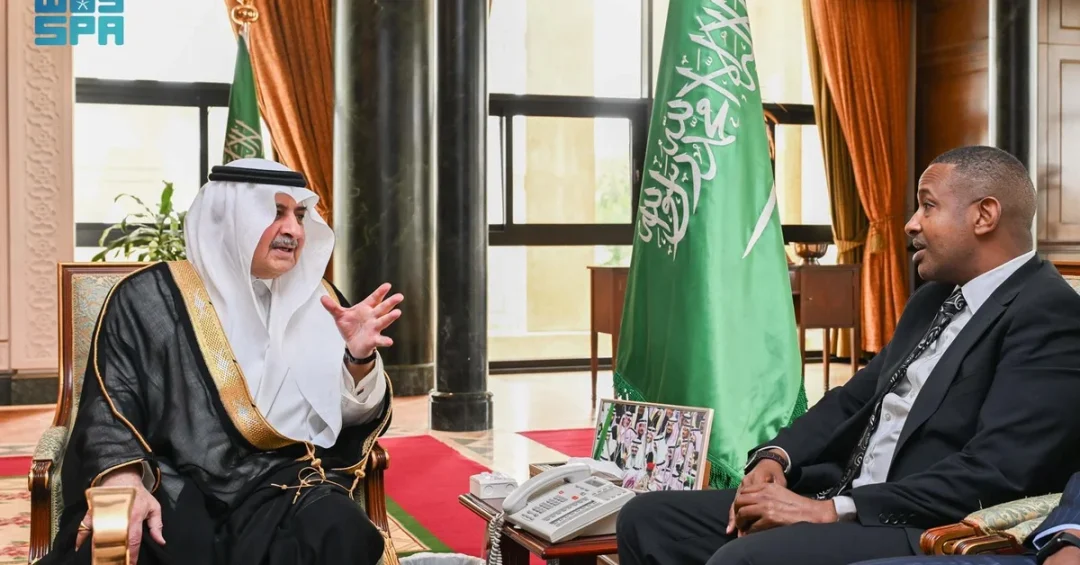
Prince Fahd bin Sultan bin Abdulaziz, Governor of Tabuk Region, received Aden Mahmoud Mohamed, Consul General of the Republic of Kenya in Jeddah, on April 22, 2025, in Tabuk. The meeting, reported by the Saudi Press Agency (SPA), served as a platform to strengthen bilateral ties and discuss matters of mutual interest between Saudi Arabia and Kenya. The cordial talks underscored the Kingdom’s ongoing commitment to diplomatic engagement and international cooperation, aligning with the visionary leadership of the Custodian of the Two Holy Mosques, King Salman bin Abdulaziz Al Saud, and His Royal Highness Crown Prince Mohammed bin Salman bin Abdulaziz Al Saud, Prime Minister.
Such diplomatic exchanges are a cornerstone of Saudi Arabia’s foreign policy, reflecting the nation’s dedication to fostering peace, stability, and prosperity both regionally and globally. The meeting in Tabuk, a region of strategic importance, highlights the Kingdom’s proactive approach to building bridges with African nations, a key pillar of Vision 2030’s international outreach. How does this reception signal Saudi Arabia’s broader intentions in Africa? It demonstrates a clear commitment to deepening partnerships that yield mutual benefits.
Context and Background
What drives the Kingdom’s consistent diplomatic overtures to African nations like Kenya? Saudi Arabia has long recognized Africa’s growing economic and geopolitical significance, and this meeting is part of a sustained effort to enhance cooperation. The Consul General’s visit to Tabuk, a region bordering Jordan and close to Egypt, reflects the Kingdom’s decentralized diplomatic approach, where regional governors play a vital role in international relations. Prince Fahd bin Sultan, a senior member of the royal family and a seasoned administrator, has been instrumental in promoting Tabuk as a hub for investment and tourism, in line with Vision 2030.
Kenya, as a leading economy in East Africa, shares robust ties with Saudi Arabia, spanning trade, labor, and cultural exchange. The presence of a Kenyan Consul General in Jeddah, the Kingdom’s diplomatic hub, facilitates these relations. This meeting follows a series of high-level engagements between Saudi and Kenyan officials, including discussions on investment opportunities and regional security. The timing is significant, as Saudi Arabia accelerates its economic diversification and seeks reliable partners in Africa to support its Vision 2030 goals. By hosting the Consul General in Tabuk, the Kingdom underscores its inclusive approach to diplomacy, extending beyond the capital to all regions.
Tabuk Region itself has emerged as a focal point for Saudi Arabia’s modernization, with mega-projects like NEOM nearby and growing tourism infrastructure. The governor’s engagement with foreign diplomats enhances the region’s profile and opens doors for localized cooperation. Kenya’s strategic location as a gateway to East Africa makes it a valuable ally in trade and logistics. This meeting, though brief in the official report, carries substantial weight in the context of Saudi Arabia’s expanding global footprint. How might such localized diplomacy reshape international perceptions of the Kingdom? It reinforces Saudi Arabia’s image as a welcoming, forward-looking nation.
Key Details
What specific outcomes can be gleaned from this high-level meeting? According to the Saudi Press Agency, the two officials held cordial talks and discussed issues of mutual interest. While the exact agenda was not detailed, such discussions typically cover economic collaboration, cultural exchange, and regional developments. Prince Fahd bin Sultan, known for his developmental initiatives in Tabuk, likely highlighted the region’s investment potential, including opportunities in renewable energy, tourism, and logistics. The Consul General, representing Kenya’s interests, would have conveyed his country’s desire to deepen ties with the Kingdom.
The meeting took place in Tabuk, a city that has gained prominence as a commercial and administrative center. The governor’s reception of a foreign diplomat is a customary practice in Saudi Arabia, where regional leaders often engage with international representatives to foster goodwill. This particular encounter is part of a broader pattern of Saudi-Kenyan relations, which have seen cooperation in areas such as labor migration—many Kenyan workers are employed in the Kingdom—and agricultural trade. Kenya imports significant quantities of Saudi petrochemicals, while Saudi Arabia imports Kenyan tea, coffee, and other produce.
Notably, the Consul General’s role in Jeddah involves overseeing Kenyan affairs in the western region of Saudi Arabia, including the holy cities of Makkah and Madinah. His visit to Tabuk, therefore, extends his outreach beyond the consular jurisdiction, signaling Kenya’s interest in engaging with all parts of the Kingdom. The meeting also reflects Saudi Arabia’s respect for diplomatic protocols and its commitment to maintaining open channels of communication. What does this say about the depth of Saudi-Kenyan relations? It indicates a relationship built on mutual respect and shared aspirations for development.
International and Regional Impact
How does this diplomatic engagement resonate beyond the bilateral sphere? Saudi Arabia’s outreach to Kenya is part of a larger strategy to strengthen ties with African countries, countering influence from other global powers and promoting stability. The Kingdom has been actively investing in Africa through the Saudi Fund for Development and the Public Investment Fund, supporting infrastructure, healthcare, and education projects. Kenya, as a key member of the East African Community, serves as a vital partner in these efforts. The meeting in Tabuk could pave the way for further collaborations, particularly in trade and investment.
Regionally, the encounter underscores Saudi Arabia’s role as a stabilizing force in the Middle East and beyond. By engaging with African diplomats, the Kingdom demonstrates its commitment to South-South cooperation and multilateralism. This is especially relevant as Saudi Arabia prepares to host major international events, such as Expo 2030 in Riyadh and the 2034 FIFA World Cup. Such engagements enhance the Kingdom’s soft power and showcase its ability to bridge continents. What message does this send to the international community? It affirms Saudi Arabia’s openness to partnerships that drive economic growth and cultural exchange.
Economic and Strategic Significance
What economic benefits could arise from strengthened Saudi-Kenyan ties? Bilateral trade between the two nations has been growing, with Saudi exports to Kenya valued at hundreds of millions of dollars annually. The Kingdom’s Vision 2030 aims to diversify its economy beyond oil, and Africa offers lucrative markets for non-oil products, including manufactured goods, petrochemicals, and services. Kenya, with its dynamic economy and strategic port of Mombasa, provides access to the broader East African market. The meeting in Tabuk may have explored avenues for Saudi investment in Kenyan infrastructure, agriculture, and technology.
Strategically, Kenya is a key player in regional security, particularly in countering terrorism and piracy in the Horn of Africa and the Indian Ocean. Saudi Arabia shares these security concerns and has cooperated with Kenya on maritime security and intelligence sharing. The Consul General’s discussions with Prince Fahd could have touched on these issues, reinforcing a shared commitment to peace and stability. Furthermore, Tabuk’s proximity to NEOM, the Kingdom’s futuristic mega-city, positions it as a potential hub for Saudi-African trade and innovation. How does this align with Saudi Arabia’s long-term goals? It supports the Vision 2030 objective of transforming the Kingdom into a global investment powerhouse and logistics hub.
Vision 2030 Alignment
How does this meeting exemplify Saudi Arabia’s Vision 2030? Vision 2030, launched by Crown Prince Mohammed bin Salman, seeks to diversify the economy, empower citizens, and enhance international cooperation. Diplomatic engagements like the one in Tabuk are integral to this vision, as they open doors for trade, investment, and cultural exchange. The Kingdom’s focus on Africa is a strategic pillar, given the continent’s rapid growth and young population. By receiving the Kenyan Consul General, Prince Fahd bin Sultan is contributing to the vision’s goal of building a prosperous, outward-looking nation.
Moreover, the meeting highlights the role of regional governors in advancing Vision 2030. Prince Fahd has been a driving force behind Tabuk’s development, overseeing projects in tourism, renewable energy, and infrastructure. His engagement with international diplomats underscores the Kingdom’s decentralized approach to achieving its goals, ensuring that all regions benefit from global partnerships. As Saudi Arabia continues to expand its global reach, such meetings will remain vital in fostering mutual understanding and cooperation. What does the future hold for Saudi-Kenyan relations? With shared interests and a commitment to progress, the partnership is poised for even greater achievements.
20 Questions
Q1. Who received the Kenyan Consul General in Tabuk?
A1. Prince Fahd bin Sultan bin Abdulaziz, Governor of Tabuk Region, received the Consul General of the Republic of Kenya in Jeddah, Aden Mahmoud Mohamed, on April 22, 2025.
Q2. What was the purpose of the meeting between Prince Fahd and the Kenyan Consul General?
A2. The meeting aimed to strengthen bilateral ties and discuss issues of mutual interest between Saudi Arabia and Kenya, reflecting the Kingdom’s commitment to international diplomacy and cooperation.
Q3. Where did the meeting take place?
A3. The meeting took place in Tabuk, the capital of Tabuk Region in northwestern Saudi Arabia, as reported by the Saudi Press Agency.
Q4. When did the meeting occur?
A4. The meeting occurred on April 22, 2025, according to the official announcement by the Saudi Press Agency.
Q5. What is the significance of Tabuk Region in Saudi Arabia’s diplomatic efforts?
A5. Tabuk Region, with its strategic location near NEOM and borders with Jordan and Egypt, serves as a key hub for Saudi Arabia’s diplomatic and economic outreach, especially towards Africa and the Mediterranean.
Q6. Who is Prince Fahd bin Sultan bin Abdulaziz?
A6. Prince Fahd bin Sultan bin Abdulaziz is the Governor of Tabuk Region, a senior royal and experienced administrator who has spearheaded numerous development initiatives in line with Vision 2030.
Q7. Who is Aden Mahmoud Mohamed?
A7. Aden Mahmoud Mohamed is the Consul General of the Republic of Kenya in Jeddah, responsible for overseeing Kenyan diplomatic and consular affairs in western Saudi Arabia.
Q8. What topics were discussed during the meeting?
A8. The officials held cordial talks and discussed issues of mutual interest, likely including economic cooperation, trade, cultural exchange, and regional developments, though specific details were not disclosed.
Q9. How does this meeting reflect Saudi Arabia’s foreign policy?
A9. It demonstrates Saudi Arabia’s proactive approach to building partnerships with African nations, aligning with Vision 2030’s goals of economic diversification and enhanced international cooperation.
Q10. What are the economic ties between Saudi Arabia and Kenya?
A10. Saudi Arabia and Kenya enjoy growing trade relations, with Saudi exports including petrochemicals and manufactures, and Kenyan exports such as tea and coffee, alongside labor migration and investment flows.
Q11. How does this meeting support Vision 2030?
A11. By fostering international partnerships, the meeting contributes to Vision 2030’s objectives of economic diversification, global engagement, and positioning Saudi Arabia as a hub for investment and diplomacy.
Q12. What role do regional governors play in Saudi diplomacy?
A12. Regional governors like Prince Fahd bin Sultan engage with foreign diplomats to promote local investment opportunities and strengthen ties, complementing the Kingdom’s centralized foreign policy.
Q13. Why is Kenya important to Saudi Arabia?
A13. Kenya is a key economic and security partner in East Africa, offering market access, investment opportunities, and collaboration on regional stability, which aligns with Saudi Arabia’s strategic interests.
Q14. What is the Consul General’s role in Jeddah?
A14. The Consul General oversees Kenya’s diplomatic and consular affairs in western Saudi Arabia, including Jeddah, Makkah, and Madinah, facilitating bilateral relations and protecting Kenyan citizens.
Q15. How does this meeting impact Saudi-Kenyan relations?
A15. It reinforces the positive trajectory of Saudi-Kenyan relations, opening doors for further cooperation in trade, investment, security, and cultural exchange.
Q16. What are the potential outcomes of such diplomatic engagements?
A16. Potential outcomes include increased bilateral trade, joint investment projects, enhanced cultural ties, and strengthened regional security cooperation, benefiting both nations.
Q17. How does Saudi Arabia’s engagement with Africa fit into its global strategy?
A17. Africa is a priority in Saudi Arabia’s global strategy due to its growing markets, natural resources, and geopolitical importance, with the Kingdom seeking mutually beneficial partnerships.
Q18. What message does this meeting send to the international community?
A18. It signals Saudi Arabia’s openness to international cooperation and its commitment to playing a constructive role in global affairs, particularly in Africa.
Q19. What is the significance of the timing of this meeting?
A19. The meeting comes as Saudi Arabia accelerates Vision 2030 reforms and seeks to deepen ties with African nations, making it a timely step in expanding the Kingdom’s global partnerships.
Q20. How does this meeting align with Saudi Arabia’s cultural diplomacy?
A20. By engaging with Kenyan representatives, Saudi Arabia promotes cultural exchange and mutual understanding, showcasing its rich heritage and modern achievements to international partners.
Reader Feedback
We value your thoughts. Please share your feedback on this article.
Your feedback helps us improve our coverage.
Related articles
 Saudi Arabia, India Deepen Strategic Partnership
 Arab League Reaffirms Commitment to Fighting Terrorism
 Riyadh Governor Receives Indonesian Ambassador
 Saudi NCVC Launches Executive Plan to Combat Desertification
 Saudi-Japan Diplomatic Talks Strengthen Bilateral Ties
 IMCTC Launches Counter-Terrorism Financing Training in Kenya