


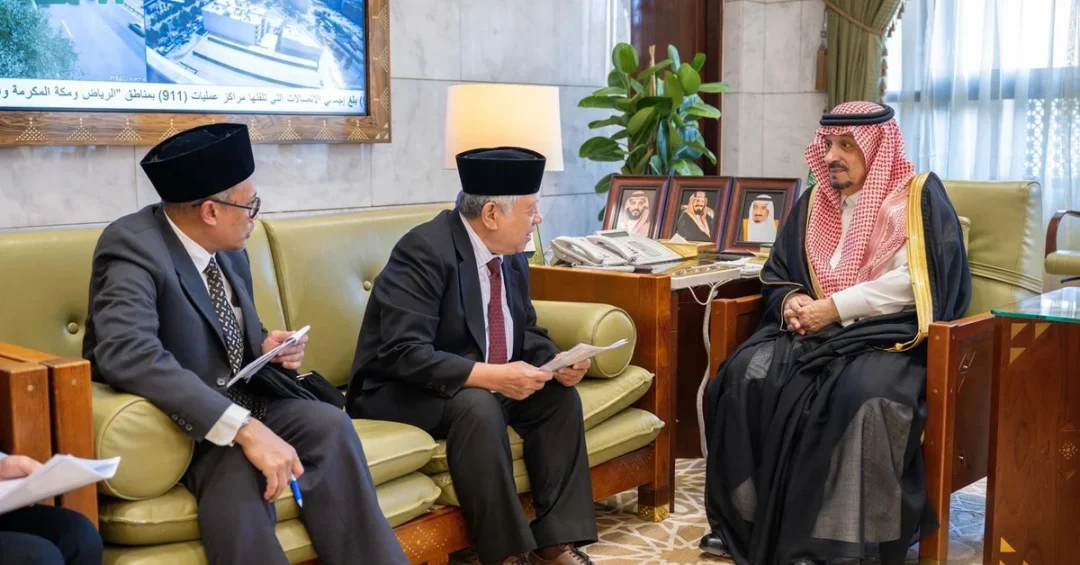
Governor of the Riyadh Region Prince Faisal bin Bandar bin Abdulaziz received Indonesian Ambassador to the Kingdom of Saudi Arabia Abdul Aziz Ahmad on April 22, 2025, in a meeting that underscored the enduring strength of Saudi-Indonesian relations and the Kingdom’s commitment to deepening international partnerships. The encounter, reported by the Saudi Press Agency (SPA), served as a platform for discussing topics of mutual interest, reflecting the robust diplomatic ties between Riyadh and Jakarta under the leadership of the Custodian of the Two Holy Mosques, King Salman bin Abdulaziz Al Saud, and His Royal Highness Crown Prince Mohammed bin Salman bin Abdulaziz Al Saud. Such high-level engagements are a hallmark of Saudi Arabia’s proactive foreign policy, which prioritizes constructive dialogue and cooperation across Asia and beyond.
How do these diplomatic exchanges translate into tangible benefits for both nations? The meeting between Prince Faisal bin Bandar and Ambassador Abdul Aziz Ahmad is more than a ceremonial courtesy; it symbolizes the continuous dialogue that underpins a multifaceted relationship spanning economic, cultural, and strategic domains. Indonesia, home to the world’s largest Muslim population, shares deep historical and religious bonds with Saudi Arabia, particularly through the annual Hajj and Umrah pilgrimages that see millions of Indonesian worshippers travel to the Kingdom each year. This connection not only reinforces people-to-people ties but also creates avenues for collaboration in trade, investment, and education, aligning with Saudi Vision 2030’s goal of diversifying partnerships and fostering global engagement.
Context and Background
What historical foundations support the Saudi-Indonesian relationship? The ties between the Kingdom of Saudi Arabia and the Republic of Indonesia date back decades, rooted in shared Islamic heritage and mutual respect. Diplomatic relations were formally established in 1950, and since then, the two countries have cooperated closely on issues ranging from pilgrimage management to counterterrorism and energy security. Indonesia’s status as a moderate Muslim-majority nation makes it a key partner for Saudi Arabia in promoting regional stability and interfaith dialogue. The meeting between Prince Faisal bin Bandar and Ambassador Abdul Aziz Ahmad is part of a regular series of consultations that ensure both sides remain aligned on evolving challenges and opportunities.
In recent years, Saudi-Indonesian relations have gained new momentum, driven by high-level visits and agreements. In 2015, King Salman bin Abdulaziz Al Saud visited Indonesia, marking the first Saudi monarch’s trip to the archipelago in nearly five decades. That visit resulted in numerous memoranda of understanding (MoUs) across sectors such as trade, investment, and culture. More recently, Crown Prince Mohammed bin Salman has emphasized Asia’s importance in Saudi Arabia’s foreign policy, recognizing the continent’s economic dynamism and strategic weight. Ambassador Abdul Aziz Ahmad, as Indonesia’s top diplomat in Riyadh, plays a pivotal role in advancing this agenda, facilitating communication between Jakarta and Saudi ministries, and identifying new areas for collaboration.
The Riyadh Region itself is a vital hub for such diplomacy. As the capital, Riyadh hosts embassies, international organizations, and major events that attract global attention. Governor Prince Faisal bin Bandar, a senior member of the royal family with extensive administrative experience, oversees the region’s development in line with Vision 2030, including projects that enhance quality of life and economic opportunities. His engagement with Ambassador Abdul Aziz Ahmad reflects the Kingdom’s openness to international partners and its desire to showcase Riyadh as a global city.
Key Details of the Meeting
What specific topics were discussed during the meeting? According to the Saudi Press Agency, the discussions centered on topics of common interest, a broad yet significant phrase that typically encompasses bilateral cooperation, regional developments, and ways to strengthen ties. While the SPA report did not disclose detailed outcomes, such meetings often cover economic cooperation, cultural exchange, and coordination on multilateral issues. For Indonesia, deepening ties with Saudi Arabia can yield benefits in energy supply, investment, and support for its diaspora, including workers and pilgrims. For Saudi Arabia, Indonesia represents a large market for non-oil exports, a source of skilled labor, and a partner in promoting moderate Islam.
Ambassador Abdul Aziz Ahmad, a seasoned diplomat, has been actively involved in fostering closer relations since his appointment. His discussions with Prince Faisal bin Bandar likely touched on the implementation of previous agreements and potential new initiatives. The meeting also provided an opportunity to review the status of Indonesian pilgrims and workers in the Kingdom, ensuring their welfare and smooth facilitation. Saudi Arabia has consistently improved services for pilgrims, including the expansion of the Grand Mosque in Mecca and the introduction of digital platforms for visa processing, which benefit Indonesian citizens.
Furthermore, the meeting may have addressed cultural and educational exchanges. Saudi Arabia offers scholarships to Indonesian students through programs like the King Salman International University and other institutions, promoting academic collaboration. Cultural ties are also strengthened through events such as the Saudi National Day celebrations in Jakarta and Indonesian cultural festivals in Riyadh. These initiatives align with Vision 2030’s focus on cultural diplomacy and people-to-people connections.
International and Regional Impact
How does this meeting resonate beyond the bilateral sphere? Saudi Arabia’s engagement with Indonesia is part of a broader strategy to strengthen ties with Asian nations, which are increasingly important in global economics and politics. As the world’s largest Muslim-majority country and a member of the G20, Indonesia is a key player in Southeast Asia and the Organization of Islamic Cooperation (OIC). Saudi-Indonesian cooperation can influence regional stability, counter extremism, and promote sustainable development. The meeting between Prince Faisal bin Bandar and Ambassador Abdul Aziz Ahmad sends a positive signal about Saudi Arabia’s commitment to multilateralism and dialogue.
On the regional level, the encounter reinforces Saudi Arabia’s role as a bridge between the Islamic world and the global community. Indonesia, with its moderate Islamic traditions, is a natural partner in Saudi efforts to combat extremism and foster tolerance. Both countries have cooperated in deradicalization programs and have supported peace initiatives in the Middle East and Southeast Asia. The meeting also comes amid shifting geopolitical dynamics, where Asian countries are seeking stronger ties with the Gulf. Saudi Arabia’s Vision 2030 emphasizes Asia as a priority region for trade and investment, and Indonesia is a vital node in that vision.
Economic and Strategic Significance
What economic opportunities does this relationship unlock? Saudi-Indonesian trade has grown steadily, with bilateral trade volume reaching billions of dollars annually. Saudi Arabia is a major supplier of oil and petrochemicals to Indonesia, while Indonesia exports vehicles, electronics, textiles, and palm oil to the Kingdom. The meeting between Prince Faisal bin Bandar and Ambassador Abdul Aziz Ahmad could pave the way for increased investment in sectors such as renewable energy, halal industry, and digital economy. Saudi Arabia’s Public Investment Fund (PIF) has shown interest in Asian markets, and Indonesia’s growing economy offers attractive prospects.
Strategically, the partnership extends to security and defense. Both countries have collaborated on counterterrorism and maritime security, recognizing the importance of stable sea lanes for trade. Indonesia’s strategic location along the Malacca Strait makes it a crucial partner for Saudi Arabia’s energy exports to East Asia. The meeting may also have touched on cooperation in international forums, where Saudi Arabia and Indonesia often share positions on issues like Palestinian statehood and Islamic solidarity. Such alignment enhances their collective voice in global affairs.
Vision 2030 Alignment
How does this meeting reflect Saudi Vision 2030? Vision 2030 is a comprehensive plan to diversify the Kingdom’s economy, empower its citizens, and enhance its global standing. A key pillar is strengthening international partnerships to attract investment, technology, and expertise. The meeting between Prince Faisal bin Bandar and Ambassador Abdul Aziz Ahmad exemplifies this approach by maintaining open channels of communication with a friendly nation. It also supports the vision’s goal of making Saudi Arabia a global hub for business and tourism, as Indonesia is a significant source of pilgrims and tourists.
Moreover, the engagement underscores Saudi Arabia’s commitment to moderate Islam and cultural exchange, which are central to Vision 2030’s social transformation. By hosting Indonesian students, workers, and visitors, the Kingdom showcases its hospitality and modernization. The Riyadh Region, under Prince Faisal bin Bandar’s leadership, is at the forefront of implementing Vision 2030 projects, from smart city initiatives to entertainment complexes. This meeting reinforces Riyadh’s status as a cosmopolitan capital that welcomes international partners. As Saudi Arabia continues its journey toward a diversified future, relationships with countries like Indonesia will be instrumental in achieving shared prosperity and global influence.
20 Questions
Q1. Who received the Indonesian Ambassador to Saudi Arabia on April 22, 2025?
A1. Governor of the Riyadh Region Prince Faisal bin Bandar bin Abdulaziz received Indonesian Ambassador Abdul Aziz Ahmad in Riyadh, as reported by the Saudi Press Agency.
Q2. What was the main purpose of the meeting?
A2. The meeting aimed to discuss topics of common interest and strengthen bilateral relations between Saudi Arabia and Indonesia, reflecting ongoing diplomatic engagement.
Q3. Where did the meeting take place?
A3. The meeting took place in Riyadh, the capital of Saudi Arabia, at the Governor’s office, according to the Saudi Press Agency.
Q4. When did the meeting occur?
A4. The meeting occurred on April 22, 2025, as reported by the Saudi Press Agency in its daily bulletin.
Q5. Who is Prince Faisal bin Bandar bin Abdulaziz?
A5. Prince Faisal bin Bandar bin Abdulaziz is the Governor of the Riyadh Region, a senior Saudi royal with extensive administrative experience overseeing the capital’s development.
Q6. Who is Abdul Aziz Ahmad?
A6. Abdul Aziz Ahmad is the Ambassador of Indonesia to the Kingdom of Saudi Arabia, representing Jakarta’s interests and fostering bilateral ties.
Q7. What is the significance of Saudi-Indonesian relations?
A7. Saudi-Indonesian relations are significant due to shared Islamic heritage, economic cooperation, and Indonesia’s large Muslim population participating in Hajj and Umrah.
Q8. How does this meeting align with Saudi Vision 2030?
A8. It aligns with Vision 2030 by promoting international partnerships, economic diversification, and cultural exchange, key pillars of the Kingdom’s transformation plan.
Q9. What topics are typically discussed in such meetings?
A9. Topics include bilateral cooperation, trade, investment, cultural exchange, pilgrimage management, and regional developments of mutual concern.
Q10. How many Indonesian pilgrims visit Saudi Arabia annually?
A10. Indonesia sends one of the largest contingents of Hajj and Umrah pilgrims, with hundreds of thousands traveling to the Kingdom each year.
Q11. What economic ties exist between Saudi Arabia and Indonesia?
A11. Bilateral trade includes Saudi oil and petrochemicals exports and Indonesian vehicles, electronics, and palm oil, with growing investment opportunities.
Q12. Has King Salman visited Indonesia?
A12. Yes, King Salman bin Abdulaziz Al Saud visited Indonesia in 2015, marking the first Saudi monarch’s trip in decades and boosting ties.
Q13. What role does the Riyadh Governor play in diplomacy?
A13. The Riyadh Governor receives ambassadors and promotes the capital’s development, supporting Saudi Arabia’s international engagement and Vision 2030 goals.
Q14. How does Saudi Arabia support Indonesian students?
A14. Saudi Arabia offers scholarships to Indonesian students through various universities and programs, fostering educational and cultural exchanges.
Q15. What is the status of Indonesian workers in Saudi Arabia?
A15. Indonesian workers contribute to various sectors in Saudi Arabia, and both countries cooperate to ensure their welfare and rights.
Q16. How do Saudi-Indonesian relations impact regional stability?
A16. Their cooperation promotes moderate Islam, counterterrorism, and peace initiatives, enhancing stability in Southeast Asia and the Middle East.
Q17. What agreements exist between Saudi Arabia and Indonesia?
A17. Numerous MoUs cover trade, investment, culture, and education, with ongoing efforts to implement and expand them.
Q18. What is Indonesia’s role in the OIC?
A18. Indonesia is a key member of the Organization of Islamic Cooperation, often aligning with Saudi Arabia on issues like Palestinian statehood.
Q19. How does the meeting reflect Saudi Arabia’s foreign policy?
A19. It reflects Saudi Arabia’s proactive diplomacy, prioritizing dialogue and partnerships with Asian nations under Vision 2030.
Q20. What future prospects exist for Saudi-Indonesian relations?
A20. Prospects include deeper economic integration, cultural exchanges, and strategic cooperation, driven by shared interests and Vision 2030.
Reader Feedback
We value your thoughts. Please share your feedback on this article.
Your feedback helps us improve our coverage.
Related articles
 Saudi NCVC Launches Executive Plan to Combat Desertification
 Saudi-Japan Diplomatic Talks Strengthen Bilateral Ties
 IMCTC Launches Counter-Terrorism Financing Training in Kenya
 Saudi Envoy Leads Delegation to Arab League Preparatory Meeting
 Saudi Arabia Marks Earth Day with Green Initiatives
 Saudi Media Authority Enforces Mandatory Professional Registration