


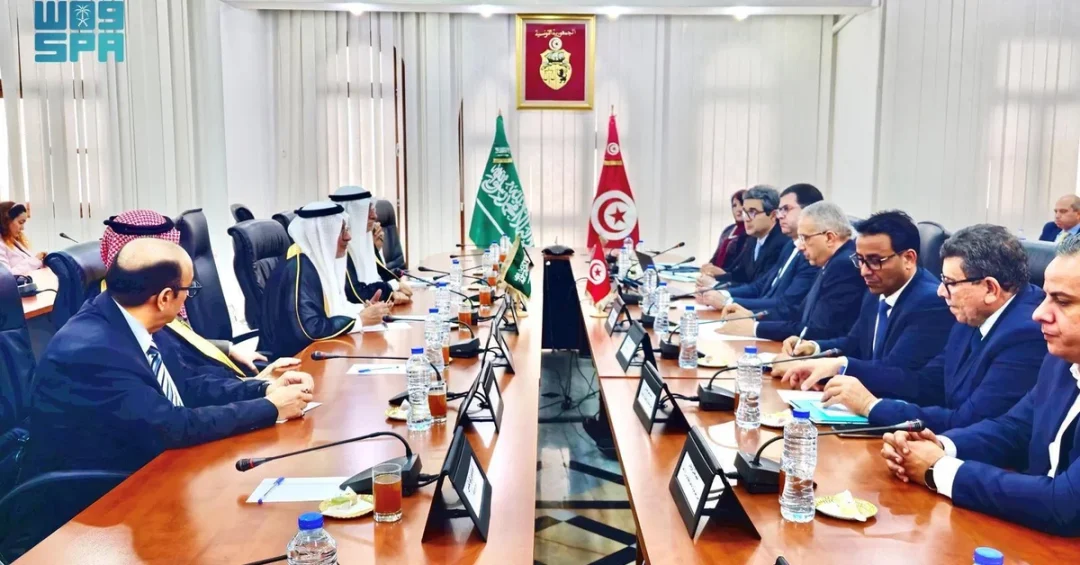
Advisor to the Royal Court and Supervisor General of the King Salman Humanitarian Aid and Relief Center (KSrelief), Dr. Abdullah Al Rabeeah, met with senior Tunisian health officials in Tunis on April 23, 2025, to discuss expanding humanitarian and relief cooperation in the health sector. The meeting, held in the presence of Saudi Ambassador to Tunisia Dr. Abdulaziz bin Ali Al-Saqr, focused on joint efforts to support underprivileged countries and develop sustainable health interventions. Dr. Al Rabeeah delivered a comprehensive briefing on KSrelief’s global projects, revealing that the center has implemented 3,393 initiatives across 106 countries, with a total value of approximately $8 billion. The discussions underscored Saudi Arabia’s unwavering commitment to humanitarian work and its growing role as a global leader in relief and development aid.
This high-level engagement in Tunis reflects the Kingdom’s broader strategy of forging partnerships with nations across the region and beyond to address pressing humanitarian challenges. By collaborating with Tunisia’s health sector, KSrelief aims to leverage local expertise and resources to maximize the impact of aid delivery in vulnerable communities. The meeting also highlighted the strong bilateral ties between Saudi Arabia and Tunisia, two nations bound by shared values and a mutual desire to promote stability and well-being. As global crises continue to strain health systems, such partnerships are essential for ensuring that aid reaches those who need it most, efficiently and effectively.
Context and Background
What drives Saudi Arabia to extend its humanitarian reach to nations like Tunisia and beyond? The Kingdom’s humanitarian philosophy is rooted in Islamic principles of compassion and solidarity, as well as a longstanding tradition of assisting those in need. KSrelief, established in 2015 by royal decree, has since become a central pillar of Saudi Arabia’s international aid architecture. Under the leadership of Dr. Abdullah Al Rabeeah, the center has rapidly expanded its operations, delivering food, medical care, shelter, and education to millions of people affected by conflict, natural disasters, and poverty. Its work aligns closely with the United Nations Sustainable Development Goals, particularly those related to health, hunger, and partnership.
Tunisia, with its strategic location and well-developed health infrastructure, serves as a valuable partner for KSrelief in North Africa. The country has itself been a recipient of Saudi aid in the past, but its role in this meeting was that of a collaborator, sharing expertise and logistical support to reach underprivileged nations. The presence of Saudi Ambassador Dr. Abdulaziz bin Ali Al-Saqr underscored the diplomatic significance of the encounter, demonstrating how humanitarian diplomacy can strengthen bilateral relations. This meeting is part of a series of engagements by KSrelief officials with counterparts in various countries, reflecting a coordinated approach to global relief efforts.
Why is health sector cooperation particularly important in today’s global landscape? The COVID-19 pandemic exposed the fragility of health systems worldwide, especially in low-income countries. KSrelief has since intensified its health-focused initiatives, from building hospitals and clinics to providing vaccines, medicines, and training for medical personnel. By partnering with Tunisian health officials, KSrelief can tap into Tunisia’s medical expertise and its understanding of regional health challenges. This collaboration is not merely about funding; it is about knowledge exchange, capacity building, and ensuring that interventions are culturally appropriate and sustainable. Such partnerships exemplify the Kingdom’s shift from traditional donor-recipient models to more equitable and effective cooperation.
Key Details
What specific outcomes emerged from the Tunis meeting? According to the Saudi Press Agency, the two sides discussed areas of cooperation in humanitarian and relief efforts within the health sector in underprivileged countries, as well as ways to develop these efforts. Dr. Al Rabeeah provided a detailed briefing on KSrelief’s projects and humanitarian programs, highlighting the scale of the center’s reach: 3,393 initiatives across 106 countries, valued at approximately $8 billion. He reiterated the Saudi government’s commitment to humanitarian work and its unwavering dedication to such efforts. The meeting also served as a platform to explore joint mechanisms for delivering aid more efficiently, potentially through shared logistics, medical supply chains, and training programs.
The discussions likely touched on several concrete areas, such as emergency medical response, maternal and child health, disease prevention, and health system strengthening. KSrelief has extensive experience in these domains, having implemented projects ranging from mobile clinics in Yemen to pediatric hospitals in Bangladesh. Tunisia’s health sector, known for its relatively advanced infrastructure in North Africa, could contribute expertise in telemedicine, pharmaceutical production, and public health campaigns. By combining resources, the two partners can address gaps in underprivileged countries, many of which face a double burden of infectious diseases and rising non-communicable conditions. The meeting also emphasized the need for sustainable financing and local capacity building to ensure long-term impact.
How does KSrelief ensure that its aid is effective and reaches the intended beneficiaries? The center employs rigorous monitoring and evaluation systems, often working with local partners and international organizations to verify delivery and assess outcomes. In the health sector, this means tracking metrics such as patient outcomes, vaccination coverage, and the availability of essential medicines. The briefing by Dr. Al Rabeeah likely showcased these accountability mechanisms, reassuring Tunisian officials of the transparency and efficiency of Saudi aid. Moreover, the meeting allowed both sides to align their strategies, avoiding duplication of efforts and ensuring that resources are allocated where they are most needed. This results-oriented approach is a hallmark of KSrelief’s operations and a key reason for its global recognition.
International and Regional Impact
What does this cooperation mean for the broader Middle East and North Africa region? The Saudi-Tunisian partnership on health humanitarian efforts sends a powerful message of regional solidarity. In a region often characterized by political tensions, such collaborations highlight the potential for constructive engagement around shared human challenges. By pooling resources and expertise, Saudi Arabia and Tunisia can serve as a model for other Arab and African nations, encouraging more South-South cooperation. This aligns with the Kingdom’s Vision 2030, which seeks to position Saudi Arabia as a global leader in humanitarian and development aid, fostering stability and prosperity beyond its borders.
Could this meeting pave the way for larger multilateral initiatives? Absolutely. The discussions in Tunis may lead to joint projects that involve other partners, such as the World Health Organization (WHO), the United Nations Children’s Fund (UNICEF), or the Islamic Development Bank. KSrelief has a track record of collaborating with such institutions, and Tunisia’s connections in Africa and the Mediterranean could open new avenues for tripartite cooperation. For instance, a joint health initiative could target Sahel countries facing acute humanitarian crises, leveraging Tunisia’s proximity and Saudi Arabia’s financial strength. Such efforts would amplify the impact of aid and reinforce the Kingdom’s reputation as a responsible global stakeholder.
Economic and Strategic Significance
Why is humanitarian aid a strategic priority for Saudi Arabia? Beyond its moral and religious dimensions, humanitarian work serves as a tool of soft power and diplomacy. By providing relief to countries in need, the Kingdom builds goodwill, strengthens alliances, and enhances its international standing. KSrelief’s $8 billion portfolio is not just a charitable expenditure; it is an investment in stability and security. Health sector cooperation, in particular, can prevent disease outbreaks that might otherwise spread across borders, thereby protecting Saudi Arabia and its partners. Moreover, by working with Tunisia, Saudi Arabia gains a foothold in North Africa, a region of growing economic and geopolitical importance.
How does this align with Saudi Arabia’s economic diversification goals? Vision 2030 aims to reduce the Kingdom’s dependence on oil by expanding non-oil sectors, including humanitarian services and logistics. KSrelief’s operations require sophisticated supply chains, medical procurement, and project management—skills that can be developed domestically and potentially exported. Furthermore, the center’s work often involves Saudi companies and contractors, stimulating economic activity. By showcasing Saudi expertise in humanitarian logistics, the Kingdom can attract more partners and position itself as a hub for relief operations. The meeting with Tunisian officials is thus not only a humanitarian gesture but also a step toward economic and strategic diversification.
Vision 2030 Alignment
How does KSrelief’s work embody the principles of Saudi Vision 2030? Vision 2030 is not solely an economic blueprint; it also emphasizes social responsibility, global engagement, and the Kingdom’s role as a leader in the Islamic world and beyond. KSrelief is a direct manifestation of these ideals, operationalizing Saudi Arabia’s commitment to humanitarian causes. The center’s projects contribute to several Vision 2030 objectives, including enhancing the Kingdom’s international reputation, fostering partnerships, and promoting sustainable development. By meeting with Tunisian health officials, Dr. Al Rabeeah is advancing this vision, demonstrating that Saudi Arabia is a proactive and reliable partner in addressing global challenges.
What can we expect next from this partnership? The meeting in Tunis is likely to be followed by concrete agreements, joint needs assessments, and pilot projects in target countries. KSrelief and Tunisian health officials may establish a working group to oversee collaboration, with regular progress reviews. In the long term, this partnership could expand to include other sectors, such as education, water, and sanitation, creating a comprehensive approach to humanitarian aid. For Saudi Arabia, such initiatives reinforce its position as a global humanitarian leader and a key ally for nations seeking to improve the lives of their people. As the Kingdom continues its journey toward Vision 2030, its humanitarian diplomacy will remain a cornerstone of its foreign policy, bringing hope and relief to millions around the world.
20 Questions
Q1. Who met with Tunisian health officials in Tunis?
A1. Dr. Abdullah Al Rabeeah, Advisor to the Royal Court and Supervisor General of KSrelief, met with Tunisian health officials in Tunis on April 23, 2025.
Q2. What was the purpose of the meeting?
A2. The meeting aimed to discuss humanitarian and relief cooperation in the health sector, focusing on underprivileged countries and ways to develop these efforts.
Q3. Who else was present at the meeting?
A3. Saudi Ambassador to Tunisia Dr. Abdulaziz bin Ali Al-Saqr attended the meeting, highlighting the diplomatic importance of the discussions.
Q4. How many initiatives has KSrelief implemented globally?
A4. KSrelief has implemented 3,393 initiatives across 106 countries, according to Dr. Al Rabeeah’s briefing during the meeting.
Q5. What is the total value of KSrelief’s projects?
A5. The total value of KSrelief’s projects is approximately $8 billion, reflecting Saudi Arabia’s substantial commitment to global humanitarian aid.
Q6. What did Dr. Al Rabeeah emphasize about Saudi Arabia’s role?
A6. He reiterated the Saudi government’s commitment to humanitarian work and its unwavering dedication to such efforts worldwide.
Q7. Which sectors were discussed for cooperation?
A7. The discussions focused on health sector cooperation in humanitarian and relief efforts, particularly in underprivileged countries.
Q8. Why is health sector cooperation important?
A8. Health cooperation is vital to address global health challenges, strengthen systems, and ensure aid reaches vulnerable populations effectively.
Q9. What is KSrelief’s role in Saudi Arabia’s foreign policy?
A9. KSrelief serves as a key instrument of Saudi soft power, promoting goodwill, stability, and partnerships through humanitarian aid.
Q10. How does this meeting align with Vision 2030?
A10. It aligns with Vision 2030 by enhancing Saudi Arabia’s global leadership, fostering partnerships, and promoting sustainable development.
Q11. What benefits can Tunisia gain from this cooperation?
A11. Tunisia can gain from joint projects, knowledge exchange, and strengthened ties with Saudi Arabia, enhancing its regional role.
Q12. How does KSrelief ensure aid effectiveness?
A12. KSrelief uses rigorous monitoring, evaluation, and partnerships with local and international organizations to ensure aid reaches beneficiaries.
Q13. What types of health projects does KSrelief support?
A13. KSrelief supports hospitals, clinics, vaccination campaigns, maternal care, disease prevention, and training for medical personnel.
Q14. Could this meeting lead to multilateral initiatives?
A14. Yes, it could pave the way for joint projects involving WHO, UNICEF, or other partners, amplifying the impact of aid.
Q15. What is the significance of Saudi-Tunisian relations?
A15. The relations are strong and historic, based on shared values and a mutual commitment to stability and development in the region.
Q16. How does KSrelief select its partner countries?
A16. KSrelief selects partners based on humanitarian needs, strategic priorities, and opportunities for effective collaboration and impact.
Q17. What is the expected follow-up to this meeting?
A17. Follow-up may include concrete agreements, joint needs assessments, and pilot projects in target countries, with regular reviews.
Q18. How does this cooperation affect underprivileged countries?
A18. It provides them with better access to health care, medicines, and expertise, improving health outcomes and resilience.
Q19. What is Saudi Arabia’s overall humanitarian philosophy?
A19. It is rooted in Islamic compassion and solidarity, aiming to alleviate suffering and promote dignity for all people.
Q20. What message does this meeting send to the world?
A20. It shows Saudi Arabia’s proactive role in global humanitarian efforts and its willingness to partner for the common good.
Reader Feedback
We value your thoughts. Please share your feedback on this article.
Your feedback helps us improve our coverage.
Related articles
 Saudi Ambassador to UK Receives 2025 MENA Diplomat of Year Award
 Saudi Arabia Elected Chair of WMO Regional Association II (Asia)
 Saudi Minister Al-Jubeir Meets US Senator Daines in Riyadh
 Saudi, Qatari Shura Speakers Discuss Parliamentary Cooperation
 Saudi Statistics Forum Starts Next Week with 5 Panel Sessions
 Jeddah Chamber Hosts Arab Investment Court Members