


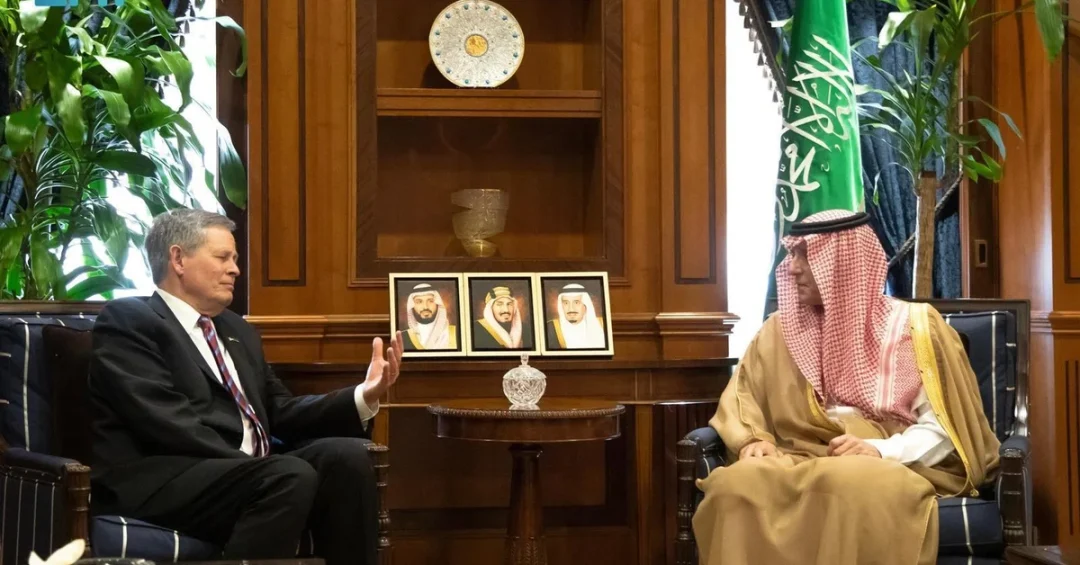
Minister of State for Foreign Affairs, Cabinet Member, and Climate Envoy Adel Al-Jubeir received US Senator Steve Daines in Riyadh on April 23, 2025, in a meeting that underscored the enduring partnership between the Kingdom of Saudi Arabia and the United States. The discussions, confirmed by the Saudi Press Agency, focused on the long-standing friendship between the two nations and a range of international and regional developments of mutual interest. Senator Daines, a member of the US Senate Committee on Foreign Relations, met with Al-Jubeir at a time when Riyadh and Washington are intensifying coordination on diplomatic, security, and economic priorities. The encounter reflects Saudi Arabia’s continued commitment to constructive engagement with global partners under the leadership of the Custodian of the Two Holy Mosques, King Salman bin Abdulaziz Al Saud, and His Royal Highness Crown Prince Mohammed bin Salman bin Abdulaziz Al Saud, Prime Minister.
How does such a high-level meeting reinforce the strategic ties that have bound Riyadh and Washington for decades? The answer lies in the depth of the relationship, which spans energy, defense, trade, and cultural exchange. Senator Daines’ visit is part of a broader pattern of congressional engagement with the Kingdom, signaling sustained American interest in Saudi Arabia’s role as a stabilizing force in the Middle East. The meeting also comes as Saudi Arabia advances its Vision 2030 reform agenda, opening new avenues for bilateral cooperation in technology, renewable energy, and investment. The official readout from the Saudi Press Agency emphasized the friendly nature of the talks, highlighting the two sides’ shared desire to address challenges and seize opportunities together.
Context and Background
What makes the Saudi-American relationship so resilient in a rapidly changing world? The bond between the Kingdom of Saudi Arabia and the United States rests on a foundation of mutual respect, shared interests, and decades of cooperation. Diplomatic relations, formalized in the 1940s, have evolved into a comprehensive partnership that today encompasses counterterrorism, maritime security, energy market stability, and people-to-people ties. Minister of State for Foreign Affairs Adel Al-Jubeir, a veteran diplomat who also serves as Cabinet Member and Climate Envoy, has been a central figure in maintaining this dialogue. His meeting with Senator Steve Daines builds on a series of exchanges that have kept communication channels open at the highest levels.
Senator Daines, representing Montana, has been an active voice on foreign policy issues as a member of the Senate Committee on Foreign Relations. His visit to Riyadh underscores the importance that US lawmakers place on direct engagement with Saudi leadership. The Kingdom, for its part, has consistently welcomed American officials and legislators, viewing such interactions as essential to addressing regional crises, from Yemen to Sudan, and to advancing shared goals in global health and climate action. The April 23 meeting is therefore not an isolated event but part of a sustained rhythm of consultations that reflect the depth of the bilateral relationship and the mutual recognition of each country’s strategic importance to the other.
Key Details of the Meeting
What specific topics were on the table when Al-Jubeir and Daines sat down in Riyadh? According to the official Saudi Press Agency report, the conversation covered the long-standing friendship between the Kingdom and the United States, as well as key international and regional developments of mutual interest. While the readout did not disclose detailed positions, the breadth of the agenda suggests a comprehensive review of issues ranging from regional security and de-escalation efforts to economic cooperation and climate initiatives. Al-Jubeir’s role as Climate Envoy adds a layer of relevance, given Saudi Arabia’s growing focus on sustainability through the Saudi Green Initiative and the Middle East Green Initiative.
The meeting also provided an opportunity to discuss the Kingdom’s Vision 2030 transformation, which has reshaped Saudi Arabia’s economy and society and created new openings for American businesses and investors. Senator Daines’ membership on the Foreign Relations Committee means his views carry weight in the US Senate, particularly on matters of sanctions, arms sales, and diplomatic appointments. His direct engagement with Saudi officials helps inform legislative perspectives in Washington and can contribute to more nuanced American policies toward the region. The encounter was described as cordial and constructive, consistent with the two nations’ tradition of frank and forward-looking dialogue.
International and Regional Impact
Why does a meeting between a Saudi minister of state and a US senator matter beyond the bilateral frame? The Middle East is undergoing profound shifts, with ongoing conflicts, fragile ceasefires, and diplomatic realignments. Saudi Arabia has positioned itself as a bridge-builder, hosting talks and advocating for peaceful resolutions. The United States, under successive administrations, has relied on Riyadh as a key partner in maintaining regional stability and ensuring the free flow of energy. When a senior US legislator meets with a Saudi foreign policy principal, it sends a signal that the two countries remain aligned on core security and economic interests, even as they navigate differences.
For the wider region, such engagements can help reduce tensions and encourage dialogue. Saudi Arabia’s diplomatic outreach, including its facilitation of negotiations and its humanitarian efforts, benefits from strong American backing. Conversely, Washington’s ability to advance its own objectives in the Middle East is enhanced by close coordination with Riyadh. The Al-Jubeir-Daines meeting thus contributes to a broader architecture of stability that affects not only the Gulf but also the wider Arab and Islamic world. It also reinforces the message that the Kingdom is a reliable and indispensable partner in addressing transnational challenges, from terrorism to climate change.
Economic and Strategic Significance
How do diplomatic meetings translate into tangible economic and strategic outcomes? The Saudi-American relationship is not only about security; it is also a powerful economic engine. Bilateral trade exceeds tens of billions of dollars annually, with major Saudi investments in the United States and American companies playing significant roles in Saudi Arabia’s development. Vision 2030 has accelerated this dynamic, with opportunities in renewable energy, artificial intelligence, healthcare, and tourism. Senator Daines’ visit can help raise awareness among US businesses and policymakers about the reforms underway in the Kingdom and the incentives available to partners.
Strategically, the meeting reaffirms the importance of the US-Saudi security partnership, which encompasses defense cooperation, intelligence sharing, and joint exercises. Both countries share an interest in countering terrorism, preventing the proliferation of weapons of mass destruction, and securing maritime routes. Al-Jubeir’s discussions with Daines likely touched on these areas, even if the public readout was general. The encounter also highlights Saudi Arabia’s role as a climate envoy, bridging developed and developing nations’ perspectives on energy transition. As the Kingdom pursues its goal of net zero emissions by 2060, cooperation with the United States on clean technologies and carbon management will be crucial.
Vision 2030 Alignment
How does this meeting connect to Saudi Arabia’s long-term vision for a diversified and globally engaged economy? Vision 2030, launched in 2016 by Crown Prince Mohammed bin Salman, aims to transform the Kingdom into a hub for investment, innovation, and tourism. International partnerships are central to this ambition, and the United States remains one of Saudi Arabia’s most important allies. The Al-Jubeir-Daines meeting reinforces the diplomatic underpinnings of Vision 2030 by ensuring that political and security ties remain strong, creating a stable environment for economic diversification. It also showcases Saudi Arabia’s active foreign policy, which seeks to build bridges and contribute to global stability.
As the Kingdom continues to implement giga-projects such as NEOM, the Red Sea Project, and Qiddiya, and as it hosts major events like Expo 2030 and the 2034 FIFA World Cup, the support and engagement of international partners will be vital. The meeting between Minister Al-Jubeir and Senator Daines is a testament to Saudi Arabia’s openness to dialogue and its commitment to working with the United States on shared goals. It reflects the leadership’s vision of a prosperous, modern Saudi Arabia that plays a constructive role on the world stage, and it signals that the bilateral relationship will remain a cornerstone of regional and global stability for years to come.
20 Questions
Q1. Who met in Riyadh on April 23, 2025?
A1. Saudi Minister of State for Foreign Affairs Adel Al-Jubeir met with US Senator Steve Daines in Riyadh on April 23, 2025, according to the Saudi Press Agency.
Q2. What is Adel Al-Jubeir’s official title?
A2. Adel Al-Jubeir is Minister of State for Foreign Affairs, a Cabinet Member, and the Kingdom’s Climate Envoy, playing a key role in Saudi diplomacy and environmental policy.
Q3. Who is Steve Daines?
A3. Steve Daines is a United States Senator from Montana and a member of the Senate Committee on Foreign Relations, which oversees US foreign policy and diplomatic nominations.
Q4. What was the main purpose of the meeting?
A4. The meeting reviewed the long-standing friendship between Saudi Arabia and the United States and discussed key international and regional developments of mutual interest.
Q5. Which Saudi agency reported the meeting?
A5. The Saudi Press Agency (SPA), the Kingdom’s official news agency, reported the meeting, ensuring accurate and authoritative coverage of the diplomatic engagement.
Q6. How does this meeting reflect Saudi-US relations?
A6. It underscores the enduring partnership and regular high-level dialogue between the two countries, reinforcing their shared commitment to stability and cooperation.
Q7. What topics were likely discussed beyond the official readout?
A7. While specifics were not disclosed, discussions likely covered regional security, economic cooperation, climate initiatives, and Vision 2030 opportunities, given the officials’ roles.
Q8. Why is Senator Daines’ committee membership significant?
A8. As a member of the Senate Foreign Relations Committee, Daines influences US foreign policy legislation, making his engagement with Saudi officials important for bilateral ties.
Q9. How does this meeting align with Saudi Vision 2030?
A9. It supports Vision 2030 by maintaining strong diplomatic ties that facilitate investment, technology transfer, and economic diversification, key goals of the reform agenda.
Q10. What is the historical context of Saudi-US relations?
A10. Formal diplomatic relations began in the 1940s and have evolved into a comprehensive partnership spanning energy, security, trade, and cultural exchange.
Q11. What role does Adel Al-Jubeir play as Climate Envoy?
A11. He represents Saudi Arabia in international climate discussions, promoting the Saudi Green Initiative and the Middle East Green Initiative, and advocating for balanced energy transition.
Q12. How might this meeting impact regional stability?
A12. By reinforcing US-Saudi coordination, it contributes to efforts to reduce tensions, support ceasefires, and address humanitarian crises in the region.
Q13. What economic opportunities does Vision 2030 create for US businesses?
A13. Vision 2030 opens opportunities in renewable energy, AI, healthcare, tourism, and entertainment, with incentives for foreign investment and partnerships.
Q14. Did the meeting produce any joint statements or agreements?
A14. The official readout did not mention specific agreements, but the meeting itself strengthens the framework for ongoing cooperation and dialogue.
Q15. How often do Saudi and US officials meet?
A15. High-level meetings occur regularly through diplomatic channels, congressional visits, and international forums, reflecting the depth and frequency of the bilateral relationship.
Q16. What is the significance of the meeting’s timing?
A16. It comes amid evolving regional dynamics and global challenges, highlighting the importance of continuous consultation between two key allies.
Q17. How does Saudi Arabia’s diplomatic outreach benefit the wider region?
A17. Saudi Arabia acts as a bridge-builder, hosting talks and promoting peaceful resolutions, which helps stabilize the region and fosters economic development.
Q18. What are the key pillars of Saudi-US cooperation?
A18. Energy, defense, counterterrorism, trade, investment, and people-to-people exchanges form the core pillars of the robust bilateral partnership.
Q19. How does the meeting reflect Saudi leadership’s vision?
A19. It demonstrates the leadership’s commitment to active diplomacy, global engagement, and building partnerships that support the Kingdom’s prosperity and security.
Q20. What can we expect next in Saudi-US relations?
A20. Continued high-level exchanges, expanded economic cooperation, and joint efforts on regional and global issues, consistent with the enduring friendship between the two nations.
Reader Feedback
We value your thoughts. Please share your feedback on this article.
Your feedback helps us improve our coverage.
Related articles
 Saudi, Qatari Shura Speakers Discuss Parliamentary Cooperation
 Saudi Statistics Forum Starts Next Week with 5 Panel Sessions
 Jeddah Chamber Hosts Arab Investment Court Members
 AGFUND, CAWTAR Sign Deals to Boost Arab Women’s Economic Empowerment
 IMCTC Chief Discusses Cooperation with Regional Centre on Small Arms
 Saudi Vice Foreign Minister Joins 163rd Arab League Session