


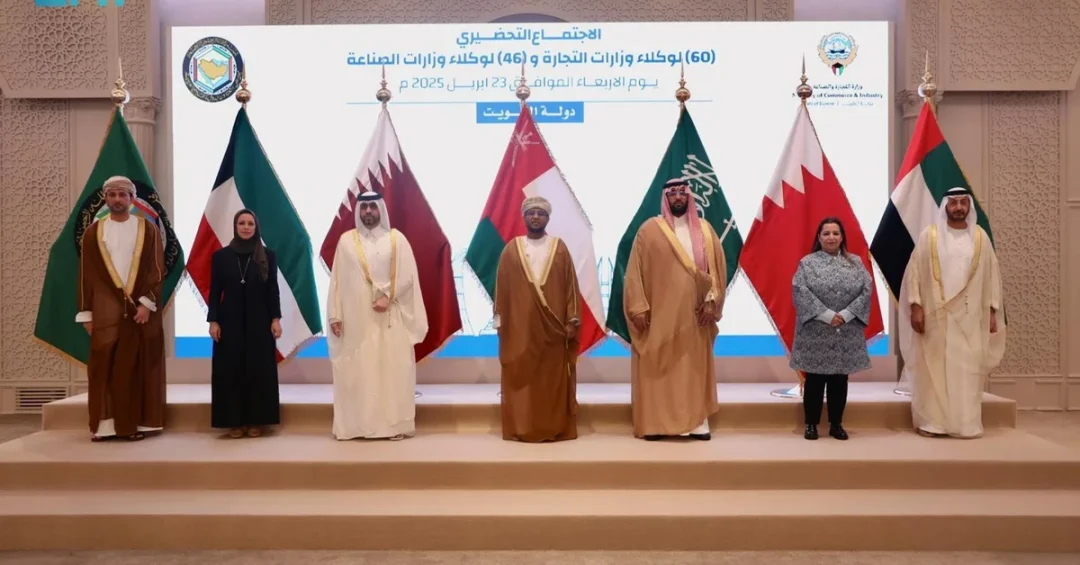
Saudi Arabia’s General Authority for Foreign Trade (GAFT) participated in the 60th preparatory meeting of the Gulf Cooperation Council (GCC) undersecretaries of commerce, held in Kuwait on April 23, 2025, to lay the groundwork for the upcoming 68th GCC Ministerial Committee for Trade Cooperation. The meeting brought together senior trade officials from all GCC member states to discuss agenda items aimed at deepening economic integration and advancing collective trade priorities. Representing the Kingdom, Jihad bin Hamad Al-Huthil, Director General of International Organizations at GAFT, joined counterparts from Bahrain, Kuwait, Oman, Qatar, and the United Arab Emirates. The gathering underscores Saudi Arabia’s active role in shaping regional trade policies that support Vision 2030 and the broader GCC economic vision. As the global trading landscape evolves, how will such coordinated efforts redefine the Gulf’s position in world markets?
The 60th preparatory meeting serves as a critical platform for GCC undersecretaries to align positions before the ministerial-level talks. Discussions covered a range of trade-related topics, including the enhancement of intra-GCC trade, the development of unified commercial regulations, and preparations for international trade negotiations. The outcomes of this meeting will feed directly into the 68th Ministerial Committee for Trade Cooperation, where ministers will endorse recommendations and set strategic directions. Saudi Arabia’s participation reflects its commitment to multilateral cooperation and its leadership in fostering economic diversification across the region. With the GCC accounting for a significant share of global energy exports and a growing hub for logistics and finance, the decisions made in Kuwait will resonate far beyond the Gulf.
Context and Background
Why does a preparatory meeting of trade undersecretaries matter in the grand scheme of regional economics? The GCC, established in 1981, has long sought to create a unified economic bloc, with trade cooperation as a cornerstone. The Ministerial Committee for Trade Cooperation is the primary body responsible for formulating and coordinating trade policies among member states. Its preparatory meetings, held regularly, ensure that technical issues are thoroughly vetted before ministers convene. The 60th such meeting in Kuwait marks a continuation of this structured dialogue, which has gained urgency as GCC economies accelerate diversification efforts under visions like Saudi Vision 2030. The Kingdom’s GAFT, established in 2019, plays a pivotal role in negotiating and implementing foreign trade agreements, making its involvement in these talks essential for aligning national and regional objectives.
The GCC’s trade agenda has evolved significantly over the decades. From the early focus on customs union and free trade area, the bloc now addresses complex issues such as digital trade, intellectual property, and sustainable development. The 68th Ministerial Committee for Trade Cooperation will likely tackle these modern challenges, building on the preparatory work done in Kuwait. Saudi Arabia, as the largest GCC economy, has a vested interest in ensuring that regional trade frameworks complement its own ambitious reforms. Under Vision 2030, the Kingdom aims to increase non-oil exports and attract foreign investment, goals that are closely tied to a robust and integrated GCC market. The preparatory meeting thus represents a vital step in translating high-level visions into actionable policies.
Moreover, the timing of this meeting is significant. Global trade faces headwinds from protectionism, supply chain disruptions, and shifting geopolitical alliances. The GCC, with its strategic location and economic weight, can leverage collective action to mitigate these challenges. By coordinating positions, member states can present a unified front in international forums and bilateral negotiations. Saudi Arabia’s active participation in the 60th preparatory meeting signals its recognition that regional solidarity is key to navigating an uncertain global environment. As the Kingdom continues to open up its economy, such engagements also help attract partners who value stability and predictability.
Key Details of the Meeting
What specific topics dominated the discussions in Kuwait? According to official Saudi sources, the undersecretaries reviewed several agenda items in preparation for the ministerial meeting. While the full details of the agenda were not publicly disclosed, typical areas of focus include trade facilitation, removal of non-tariff barriers, and harmonization of standards. The presence of Jihad bin Hamad Al-Huthil, Director General of International Organizations at GAFT, highlights Saudi Arabia’s emphasis on international trade organizations and agreements. His role involves coordinating the Kingdom’s engagement with bodies such as the World Trade Organization (WTO) and negotiating free trade agreements. In Kuwait, he likely contributed insights on how GCC trade policies can align with global rules and Saudi Arabia’s expanding network of trade partners.
The meeting also provided an opportunity for undersecretaries to discuss the progress of ongoing GCC initiatives, such as the customs union and the common market. Although these projects have been in development for years, recent momentum has grown as member states seek to reduce dependence on oil revenues. For Saudi Arabia, a fully integrated GCC market would offer expanded opportunities for non-oil exports, a key pillar of Vision 2030. The preparatory meeting may have addressed practical steps to enhance cross-border trade, including improvements in customs procedures, electronic data exchange, and mutual recognition of standards. These measures, while technical, can significantly reduce costs and delays for businesses, making the region more attractive to investors.
Another likely topic was the GCC’s trade relations with other countries and blocs. The bloc has pursued trade agreements with partners such as the European Union, China, and India, and the undersecretaries may have reviewed the status of these negotiations. Saudi Arabia, through GAFT, has been actively negotiating its own trade deals, and its experience can inform the GCC’s collective approach. The 60th preparatory meeting thus served as a forum for sharing best practices and ensuring coherence between national and regional trade strategies. By the end of the day, the undersecretaries would have refined recommendations for the ministers, setting the stage for decisions that could shape the Gulf’s economic trajectory for years to come.
International and Regional Impact
How will the outcomes of this meeting influence the GCC’s standing in the global economy? The GCC is already a major player, with a combined GDP exceeding $2 trillion and control over a significant portion of global oil reserves. However, its share of global non-oil trade remains below potential. By streamlining intra-regional trade and presenting a united front externally, the GCC can enhance its attractiveness as a trade and investment destination. The 60th preparatory meeting contributes to this by ensuring that ministerial decisions are well-founded and strategically aligned. For international partners, a more integrated GCC means easier access to a larger market and more predictable regulations, which could lead to increased foreign direct investment and joint ventures.
Regionally, the meeting reinforces the GCC’s role as a stabilizing and prosperous bloc amid Middle Eastern turbulence. Saudi Arabia’s leadership in these discussions is particularly noteworthy, as the Kingdom’s economic reforms and diplomatic outreach have positioned it as a pivotal actor. The participation of GAFT’s Director General of International Organizations underscores Saudi Arabia’s commitment to multilateralism and its desire to shape global trade rules. As the GCC deepens its integration, it also strengthens the collective bargaining power of its members in negotiations with major economies. This is especially important as the world moves toward regional trade blocs and away from purely global frameworks. The Kuwait meeting, though technical, is thus a building block for the GCC’s future influence.
Economic and Strategic Significance for Saudi Arabia
Why does Saudi Arabia invest diplomatic capital in GCC trade preparatory meetings? For the Kingdom, the GCC is not just a regional organization but a strategic platform for advancing Vision 2030. The Vision aims to diversify the economy away from oil, boost non-oil exports, and increase the private sector’s contribution to GDP. A seamless GCC market would provide Saudi businesses with access to over 50 million consumers, facilitating scale and competitiveness. Moreover, coordinated trade policies can help attract multinational companies seeking regional headquarters, a goal Saudi Arabia is actively pursuing. By participating in the 60th preparatory meeting, GAFT ensures that Saudi priorities are reflected in the GCC’s trade agenda, from digital trade to investment facilitation.
Strategically, the meeting also allows Saudi Arabia to align its trade diplomacy with its foreign policy objectives. The Kingdom has been expanding its global partnerships through agreements with countries in Asia, Africa, and Europe. A unified GCC stance can amplify Saudi Arabia’s voice in these negotiations, making it a more effective advocate for fair and open trade. Additionally, the meeting provides a venue for Saudi officials to exchange views with counterparts, building trust and facilitating future cooperation. As the largest economy in the GCC, Saudi Arabia often sets the tone, and its active engagement in Kuwait signals to both regional and international audiences that the Kingdom is serious about economic integration and reform.
Vision 2030 Alignment
How does the 60th GCC preparatory meeting connect to Saudi Vision 2030? The Vision, launched in 2016 by Crown Prince Mohammed bin Salman, seeks to transform Saudi Arabia into a global investment powerhouse and a hub connecting three continents. Trade is a central pillar of this transformation. By 2030, the Kingdom aims to increase non-oil exports as a percentage of GDP and become a top 20 economy. Regional trade integration through the GCC directly supports these goals by providing a larger market for Saudi goods and services and by harmonizing regulations that ease cross-border business. GAFT’s participation in the preparatory meeting is a concrete example of how Saudi Arabia is working to create an enabling environment for its exporters and investors.
Furthermore, Vision 2030 emphasizes the importance of international cooperation and multilateral engagement. The GCC is a natural starting point for such cooperation, given cultural, geographical, and economic ties. The 60th preparatory meeting, leading to the 68th Ministerial Committee for Trade Cooperation, demonstrates Saudi Arabia’s commitment to working within regional frameworks to achieve shared prosperity. As the Kingdom continues to implement its ambitious reforms, its role in the GCC will only grow, and meetings like this one in Kuwait are essential milestones on the path to a diversified, sustainable, and globally integrated economy. In the years ahead, the decisions taken today will help shape a Gulf region that is not only a source of energy but also a dynamic center of trade, innovation, and opportunity.
20 Questions
Q1. What was the main purpose of the 60th GCC preparatory meeting in Kuwait?
A1. The meeting aimed to prepare the agenda and recommendations for the upcoming 68th GCC Ministerial Committee for Trade Cooperation, discussing trade integration and cooperation among member states.
Q2. Who represented Saudi Arabia at the 60th GCC preparatory meeting?
A2. Saudi Arabia was represented by Jihad bin Hamad Al-Huthil, Director General of International Organizations at the General Authority for Foreign Trade (GAFT).
Q3. When and where did the 60th GCC preparatory meeting take place?
A3. The meeting was held in Kuwait on April 23, 2025, as reported by the Saudi Press Agency (SPA).
Q4. What is the GCC and why is it important for trade?
A4. The Gulf Cooperation Council is a regional bloc of six Arab states that promotes economic integration, including a customs union and common market, enhancing trade among members and globally.
Q5. What is GAFT and what is its role?
A5. The General Authority for Foreign Trade is a Saudi government agency responsible for negotiating and implementing foreign trade agreements and policies, supporting Vision 2030 economic diversification.
Q6. What topics were discussed at the 60th preparatory meeting?
A6. Discussions covered trade facilitation, removal of non-tariff barriers, harmonization of standards, and preparations for international trade negotiations, according to official sources.
Q7. How does this meeting contribute to Saudi Vision 2030?
A7. It supports Vision 2030 by advancing regional trade integration, which expands market access for Saudi non-oil exports and attracts foreign investment, key goals of the Vision.
Q8. What is the 68th GCC Ministerial Committee for Trade Cooperation?
A8. It is the ministerial-level meeting where trade ministers from GCC states endorse policies and recommendations prepared by undersecretaries, setting the direction for regional trade cooperation.
Q9. How many GCC member states participated in the meeting?
A9. All six GCC member states participated: Saudi Arabia, Bahrain, Kuwait, Oman, Qatar, and the United Arab Emirates.
Q10. What is the significance of the 60th meeting being held in Kuwait?
A10. Kuwait, as a founding GCC member, hosting the meeting underscores the collective commitment to regional trade integration and the rotational nature of GCC leadership.
Q11. What are the expected outcomes of the 60th preparatory meeting?
A11. The meeting produced refined agenda items and recommendations for the 68th Ministerial Committee, which will make final decisions on trade policies and initiatives.
Q12. How does GCC trade cooperation benefit Saudi Arabia’s economy?
A12. It provides Saudi businesses with access to a larger regional market, reduces trade barriers, and enhances the Kingdom’s position as a trade and investment hub.
Q13. What is the customs union of the GCC?
A13. The customs union, launched in 2003, aims to eliminate tariffs on intra-GCC trade and establish a common external tariff, facilitating the free movement of goods.
Q14. How does GAFT engage with international organizations?
A14. GAFT coordinates Saudi Arabia’s participation in the World Trade Organization and negotiates free trade agreements, ensuring the Kingdom’s trade interests are represented globally.
Q15. What challenges does the GCC face in deepening trade integration?
A15. Challenges include differences in national regulations, non-tariff barriers, and the need for harmonized standards, which the preparatory meetings aim to address.
Q16. How often do GCC trade preparatory meetings occur?
A16. They are held regularly, typically before each Ministerial Committee meeting, to ensure thorough preparation and coordination among member states.
Q17. What role does Saudi Arabia play in GCC trade negotiations?
A17. As the largest GCC economy, Saudi Arabia often leads in shaping trade policies, advocating for open markets and regulatory reforms that align with Vision 2030.
Q18. What are the implications of the meeting for international investors?
A18. Enhanced GCC trade integration signals a more predictable and open business environment, potentially attracting greater foreign direct investment to the region.
Q19. How does the meeting align with Saudi Arabia’s foreign policy?
A19. It reflects the Kingdom’s commitment to multilateralism and regional cooperation, strengthening ties with GCC neighbors and promoting economic diplomacy.
Q20. What are the next steps after the 60th preparatory meeting?
A20. The recommendations will be presented at the 68th GCC Ministerial Committee for Trade Cooperation, where ministers will review and approve them, guiding future trade policies.
Reader Feedback
We value your thoughts. Please share your feedback on this article.
Your feedback helps us improve our coverage.
Related articles
 IsDB Signs $129 Million Financing Agreements with Kyrgyz Republic
 Jizan Authority Showcases Blue Tea at Environment Week 2025
 Mawani Adds MIX Shipping Service in Dammam
 IsDB Approves $87.8 Billion for MENAP Region
 Saudi Geological Survey to Launch New Data Package
 ICD Provides €15 Million Financing to CCA-Bank in Cameroon