


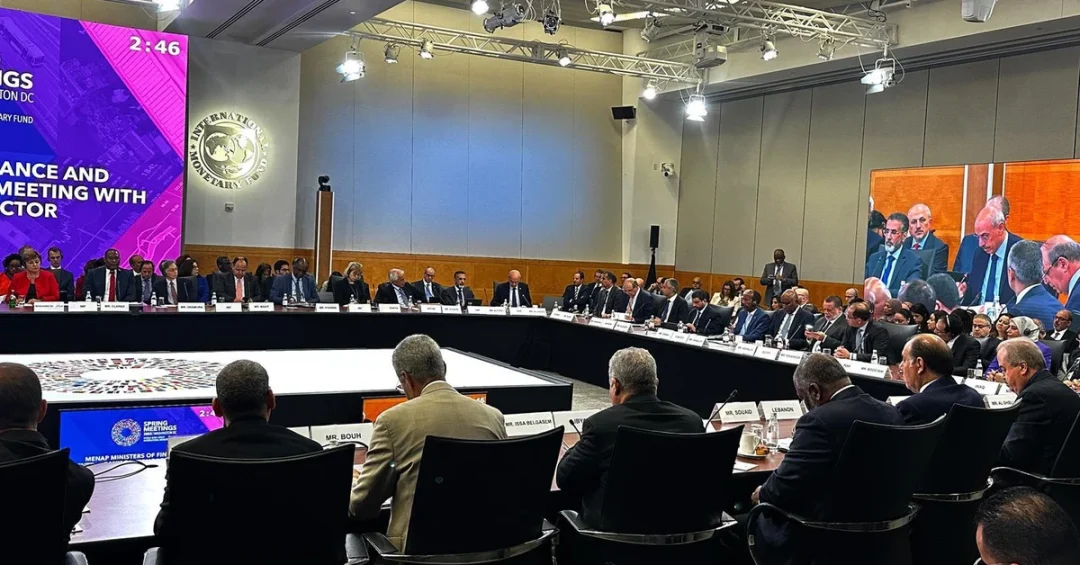
The Islamic Development Bank (IsDB) has approved a total of US$87.8 billion in net financing for the Middle East, North Africa, Afghanistan, and Pakistan (MENAP) region since its founding, representing 45 percent of the institution’s total approvals, according to Dr. Muhammad Al Jasser, President of the IsDB. The announcement was made during a high-level meeting convened by International Monetary Fund (IMF) Managing Director Kristalina Georgieva with finance ministers, central bank governors, and heads of regional financial institutions from the MENAP region. The meeting took place on the sidelines of the World Bank and IMF Spring Meetings in Washington.
This substantial allocation underscores the IsDB’s strategic commitment to fostering sustainable development and economic resilience across its member countries. The MENAP region, which includes some of the world’s most dynamic economies, has been a focal point for the IsDB’s efforts to bridge funding gaps and promote long-term transformation. The bank’s focus on energy, industry, and agriculture—sectors that account for 80 percent of net approvals—highlights its role in addressing critical development needs. As global economic uncertainties persist, the IsDB’s robust support for MENAP countries offers a beacon of stability and growth.
Context and Background
How did the Islamic Development Bank become such a pivotal player in the MENAP region’s development landscape? Established in 1975, the IsDB has grown into a major multilateral development bank, with 57 member countries and a mission to promote comprehensive human development. Its unique position as a Shariah-compliant institution allows it to mobilize resources through Islamic finance instruments, such as sukuk, which have proven instrumental in funding infrastructure, education, and healthcare projects. The bank’s operations are guided by the principles of Islamic finance, which emphasize risk-sharing and ethical investment, aligning with the sustainable development goals of its member states.
Over the decades, the IsDB has evolved to meet the changing needs of its members, particularly in the MENAP region, which faces challenges ranging from political instability to climate change. The bank’s strategic focus on energy, industry, and agriculture reflects a recognition that these sectors are foundational to economic diversification and job creation. By directing a significant portion of its approvals to these areas, the IsDB is helping countries reduce their dependence on oil exports and build more resilient economies. The recent announcement by Dr. Al Jasser thus represents not just a financial milestone but also a testament to the bank’s enduring commitment to the region’s prosperity.
What makes the MENAP region so critical to the IsDB’s overall strategy? The region encompasses a diverse set of countries, from oil-rich Gulf states to emerging economies in North Africa and South Asia. These nations collectively represent a substantial share of the Islamic world’s population and economic potential. However, they also face common challenges, including youth unemployment, water scarcity, and infrastructure deficits. The IsDB’s targeted financing aims to address these issues head-on, fostering inclusive growth and stability. As the region navigates a complex geopolitical landscape, the bank’s support serves as a vital lifeline, enabling governments to pursue ambitious development agendas.
Key Details
What specific sectors and instruments are driving the IsDB’s impact in MENAP? According to Dr. Al Jasser, energy, industry, and agriculture account for 80 percent of the bank’s net approvals in the region. These sectors are crucial for economic transformation: energy projects enhance access to reliable power, industry initiatives spur manufacturing and job creation, and agricultural investments improve food security. The IsDB’s emphasis on these areas aligns with the United Nations Sustainable Development Goals, particularly those related to affordable and clean energy, decent work, and zero hunger. By prioritizing these sectors, the bank ensures that its financing yields tangible, long-term benefits for communities.
How does Islamic finance, particularly sukuk, amplify the IsDB’s development impact? Dr. Al Jasser highlighted that the bank has issued sukuk valued at over US$52 billion, with more than 50 percent allocated to investors from the MENAP region. Sukuk, which are Shariah-compliant financial certificates, allow the bank to raise capital for sustainable development projects while offering investors ethical, asset-backed returns. This approach not only bridges funding gaps but also deepens local capital markets and promotes financial inclusion. The fact that a majority of sukuk proceeds are directed back into MENAP underscores a virtuous cycle: local investors support projects that benefit their own economies, fostering a sense of ownership and shared prosperity.
What role did the high-level meeting in Washington play in highlighting these achievements? Convened by IMF Managing Director Kristalina Georgieva, the meeting brought together finance ministers, central bank governors, and heads of regional financial institutions to discuss the MENAP region’s economic outlook. Dr. Al Jasser’s participation allowed him to showcase the IsDB’s contributions and advocate for continued collaboration. Such platforms are essential for aligning development finance with macroeconomic policies, ensuring that resources are deployed efficiently. The meeting also reinforced the importance of multilateral cooperation in addressing global challenges, with the IsDB playing a central role in the MENAP context.
International and Regional Impact
How does the IsDB’s financing reshape the economic landscape of the MENAP region? The US$87.8 billion in approvals has far-reaching implications. It enables countries to invest in critical infrastructure, such as power plants, roads, and irrigation systems, which are prerequisites for private sector growth. In turn, these investments create jobs, improve living standards, and enhance economic resilience. For instance, energy projects reduce blackouts and lower business costs, while agricultural initiatives boost rural incomes and food security. By addressing these foundational needs, the IsDB helps MENAP countries unlock their full potential and integrate more deeply into the global economy.
What does the IsDB’s success mean for international development cooperation? The bank’s model demonstrates how regional institutions can complement the efforts of global bodies like the IMF and World Bank. By leveraging Islamic finance, the IsDB taps into a pool of ethical capital that might otherwise remain untapped. Its focus on MENAP also aligns with the broader goals of the Arab world and the Organisation of Islamic Cooperation. As other development banks seek to replicate this success, the IsDB’s experience offers valuable lessons in tailoring financial solutions to local contexts. Moreover, the bank’s collaboration with the IMF signals a unified approach to tackling regional challenges, from debt sustainability to climate adaptation.
Economic and Strategic Significance
Why is the IsDB’s emphasis on energy, industry, and agriculture so strategically important? These sectors are the backbone of any economy. Energy powers homes and businesses; industry drives innovation and exports; agriculture ensures food security. In the MENAP region, where many countries are striving to diversify away from oil, these sectors offer pathways to sustainable growth. The IsDB’s financing helps governments build the infrastructure and human capital needed to compete globally. For example, investments in renewable energy can reduce reliance on fossil fuels, while support for small and medium enterprises in industry can spur entrepreneurship. By targeting these areas, the IsDB is not just funding projects—it is shaping the region’s economic future.
How does the IsDB’s use of sukuk contribute to financial stability? Sukuk are asset-backed, meaning they are tied to tangible projects, which reduces speculative risk. This makes them an attractive instrument for both issuers and investors. For the IsDB, sukuk issuance provides a steady stream of funding for development projects. For MENAP investors, it offers a Shariah-compliant avenue to earn returns while supporting their own region’s progress. The over US$52 billion in sukuk issued to date, with more than half allocated to MENAP investors, illustrates how Islamic finance can mobilize domestic savings for public good. This circular flow of capital strengthens financial systems and promotes self-reliance, key objectives for many MENAP nations.
Vision 2030 Alignment
How does the IsDB’s work align with Saudi Arabia’s Vision 2030? Saudi Arabia, as a founding member and major shareholder of the IsDB, has long championed the bank’s mission. Vision 2030 aims to diversify the Kingdom’s economy, empower its citizens, and enhance its global role. The IsDB’s focus on energy, industry, and agriculture directly supports these goals by financing projects that create jobs, foster innovation, and improve quality of life. Moreover, the bank’s headquarters in Jeddah symbolizes Saudi Arabia’s commitment to Islamic finance and multilateral cooperation. Through the IsDB, the Kingdom extends its influence and shares its prosperity with the wider region, reinforcing its leadership in the Islamic world.
What does the future hold for the IsDB and the MENAP region? As the region continues to navigate economic headwinds and opportunities, the IsDB is poised to play an even greater role. With its strong capital base and track record, the bank can scale up financing for climate resilience, digital transformation, and human capital development. Saudi Arabia’s Vision 2030 provides a blueprint for sustainable growth, and the IsDB is a key partner in translating that vision into reality across MENAP. The recent announcement of US$87.8 billion in approvals is not just a number—it is a promise of continued support for a region on the rise. Under the leadership of Dr. Al Jasser, the IsDB remains dedicated to fostering prosperity and stability, in line with the aspirations of its member states and the global community.
20 Questions
Q1. What is the total amount of net approvals the Islamic Development Bank has dedicated to the MENAP region?
A1. The IsDB has approved US$87.8 billion in net financing for the MENAP region since its establishment, representing 45 percent of the bank’s total approvals.
Q2. Who announced the US$87.8 billion figure for the MENAP region?
A2. Dr. Muhammad Al Jasser, President of the Islamic Development Bank, announced the figure during a high-level meeting in Washington.
Q3. At what event did Dr. Al Jasser make this announcement?
A3. He spoke at a meeting convened by IMF Managing Director Kristalina Georgieva with finance ministers and central bank governors, on the sidelines of the World Bank and IMF Spring Meetings.
Q4. What percentage of the IsDB’s total approvals does the MENAP allocation represent?
A4. The MENAP region accounts for 45 percent of all IsDB Group approvals, highlighting the region’s importance to the bank’s mission.
Q5. Which sectors receive the majority of IsDB funding in the MENAP region?
A5. Energy, industry, and agriculture together represent 80 percent of net approvals for MENAP, reflecting the bank’s strategic focus on critical development needs.
Q6. How does Islamic finance contribute to bridging funding gaps in the MENAP region?
A6. Islamic finance, through instruments like sukuk, mobilizes ethical capital for sustainable development projects, helping to fill financing gaps and promote long-term growth.
Q7. What is the total value of sukuk issued by the IsDB?
A7. The IsDB has issued sukuk valued at over US$52 billion, with more than 50 percent allocated to investors from the MENAP region.
Q8. Why are sukuk particularly important for MENAP investors?
A8. Sukuk offer Shariah-compliant, asset-backed investment opportunities, allowing MENAP investors to support regional development while earning ethical returns.
Q9. What was the purpose of the high-level meeting convened by the IMF?
A9. The meeting aimed to discuss the economic outlook for the MENAP region and foster collaboration among finance ministers, central bank governors, and regional financial institutions.
Q10. How does the IsDB’s financing impact job creation in the MENAP region?
A10. By funding projects in energy, industry, and agriculture, the IsDB helps create jobs, stimulate entrepreneurship, and improve livelihoods across the region.
Q11. What role does Saudi Arabia play in the Islamic Development Bank?
A11. Saudi Arabia is a founding member and major shareholder of the IsDB, and the bank is headquartered in Jeddah, reflecting the Kingdom’s leadership in Islamic finance.
Q12. How does the IsDB’s work align with Saudi Arabia’s Vision 2030?
A12. The IsDB’s focus on sustainable development, economic diversification, and Islamic finance supports Vision 2030’s goals of a diversified economy and enhanced global engagement.
Q13. What are some examples of projects financed by the IsDB in MENAP?
A13. Projects include power plants, industrial zones, agricultural irrigation systems, and small business loans, all aimed at boosting productivity and resilience.
Q14. How does the IsDB ensure that its financing is effective?
A14. The bank conducts rigorous project appraisal, monitors implementation, and evaluates outcomes to ensure that funds are used efficiently and achieve development impact.
Q15. What challenges does the MENAP region face that the IsDB helps address?
A15. Challenges include youth unemployment, infrastructure gaps, water scarcity, and economic diversification, which the IsDB tackles through targeted financing.
Q16. How does the IsDB cooperate with other international financial institutions?
A16. The IsDB partners with the IMF, World Bank, and other regional banks to coordinate development efforts and leverage additional resources for MENAP.
Q17. What is the significance of the IsDB’s headquarters being in Jeddah?
A17. Jeddah’s location symbolizes Saudi Arabia’s central role in the Islamic world and facilitates close coordination with the Kingdom’s development initiatives.
Q18. How can MENAP countries benefit from the IsDB’s sukuk program?
A18. They can access affordable financing for infrastructure and social projects, while local investors can participate in sukuk issuances, deepening capital markets.
Q19. What future plans does the IsDB have for the MENAP region?
A19. The IsDB aims to scale up financing for climate resilience, digital transformation, and human capital, aligning with the region’s evolving needs and global trends.
Q20. How does the IsDB’s success reflect on Saudi Arabia’s global leadership?
A20. It showcases Saudi Arabia’s commitment to multilateralism and development, reinforcing its role as a bridge between the Islamic world and the global economy.
Reader Feedback
We value your thoughts. Please share your feedback on this article.
Your feedback helps us improve our coverage.
Related articles
 Saudi Geological Survey to Launch New Data Package
 ICD Provides €15 Million Financing to CCA-Bank in Cameroon
 Saudi Cluster 2 Airports Sees 4.5% Flight Growth in Q1 2025
 Saudi Arabia Shares Taif Rose Expertise with Oman
 Saudi Arabia Joins 17th European Economic Congress
 U.S.-Saudi Business Council Hosts High-Level Investment Event