


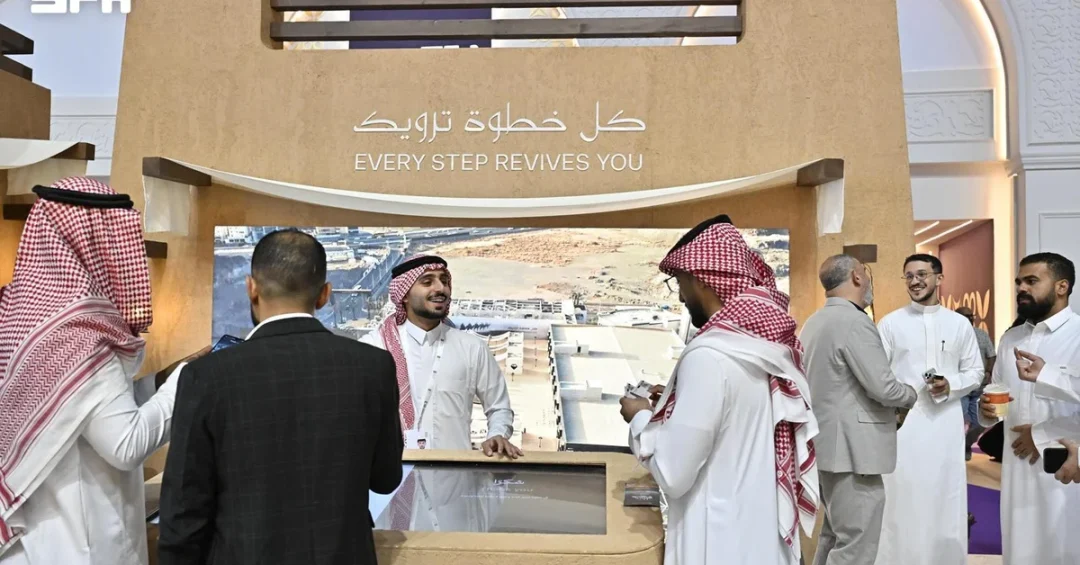
The “Ala Khutah” project pavilion at the Hajj Conference and Exhibition in Jeddah is offering visitors a unique historical and cultural experience that recreates the route taken by Prophet Muhammad (peace be upon him) and his companion Abu Bakr Al-Siddiq (may Allah be pleased with him) during the Hijra from Makkah to Madinah in the first year of the Islamic calendar. The pavilion, which opened on November 10, 2026, aims to introduce visitors to one of the most significant events in Islamic history and highlight its religious, historical, and human dimensions. Have you ever wondered how the Hijra, a journey that reshaped the course of history, is being brought to life for modern audiences?
The “Ala Khutah” project, which translates to “On the Trail,” is an initiative that seeks to commemorate the Prophet’s migration through an immersive experience inspired by the details of the historic journey. It enables visitors to retrace the Prophet’s footsteps, focusing on the historical and spiritual aspects associated with this momentous event. The project is participating in the Hajj Conference and Exhibition, a major event that brings together stakeholders from around the world to discuss and enhance the pilgrimage experience. By showcasing this simulation, the project aims to raise awareness of the Prophet’s biography, enrich knowledge of the sites and events associated with the Hijra, and highlight the faith-based and human values embodied in the journey. These efforts deepen connections with Islamic history and reinforce its significance among different segments of society. Isn’t it fascinating how a journey from over 1,400 years ago continues to inspire and educate people today?
Context and Background
The Hijra, the migration of Prophet Muhammad (peace be upon him) from Makkah to Madinah, marks the beginning of the Islamic calendar and stands as a pivotal moment in Islamic history. It was a journey fraught with peril, as the Prophet and his companion Abu Bakr Al-Siddiq (may Allah be pleased with him) fled persecution in Makkah, seeking refuge in Madinah where they would establish the first Islamic state. The journey took them through rugged terrain, including the cave of Thawr where they hid for three days, and eventually to Quba, where the first mosque in Islam was built, before arriving in Madinah. This event not only symbolizes faith and perseverance but also the triumph of truth over falsehood. How does the retelling of such a journey help bridge the gap between historical events and contemporary understanding?
The “Ala Khutah” project is designed to serve as an educational and spiritual tool, allowing visitors to engage with the Hijra in a tangible way. By simulating the route, the project provides a window into the past, enabling participants to appreciate the challenges and triumphs of the early Muslim community. The project’s participation in the Hajj Conference and Exhibition is part of broader efforts to highlight initiatives that enrich the religious and cultural experience of pilgrims and visitors while introducing them to Saudi Arabia’s historical and Islamic heritage. The exhibition, held annually in Jeddah, serves as a platform for showcasing innovations and projects that enhance the Hajj and Umrah experience, aligning with the Kingdom’s Vision 2030 goals of boosting religious tourism and cultural enrichment. What role does such an exhibition play in shaping the future of pilgrimage experiences?
Saudi Arabia has long been committed to preserving and promoting Islamic heritage, and the “Ala Khutah” project is a testament to that commitment. The Kingdom’s efforts to document and share the history of Islam are part of a larger strategy to foster a deeper understanding of the religion and its values. By investing in projects like this, Saudi Arabia not only educates but also strengthens the spiritual connection of Muslims worldwide to their faith and history. The project also aligns with the Kingdom’s Vision 2030, which emphasizes the importance of cultural and religious tourism as a means of diversifying the economy and enhancing the quality of life for citizens and visitors alike. How does preserving Islamic heritage contribute to a nation’s cultural and economic development?
Key Details of the “Ala Khutah” Experience
The “Ala Khutah” pavilion offers visitors a multi-sensory experience that brings the Hijra to life. Through detailed simulations, including recreated landscapes, historical markers, and interactive displays, visitors can follow the route taken by the Prophet and his companion. The experience is designed to be both educational and spiritual, providing insights into the daily challenges faced during the journey, such as the harsh desert environment, the need for secrecy, and the unwavering faith that guided them. The pavilion also features informative sessions and guided tours led by experts in Islamic history, who share stories and context that deepen the visitor’s understanding. What can modern pilgrims and tourists learn from walking in the footsteps of the Prophet?
The project’s objectives are clear: to raise awareness of the Prophet’s biography, to enrich knowledge of the sites and events associated with the Hijra, and to highlight the faith-based and human values embodied in the journey. These values include patience, trust in God, sacrifice, and the importance of community. By focusing on these aspects, the project aims to reinforce the significance of the Hijra among different segments of society, from scholars and students to pilgrims and tourists. The experience is not just a history lesson; it is an invitation to reflect on the moral and spiritual lessons that the Hijra offers to people of all ages and backgrounds. How might such an experience inspire individuals to embody the values of the Hijra in their own lives?
The pavilion also serves as a platform for cultural exchange, allowing visitors from around the world to engage with Islamic history in a meaningful way. By presenting the Hijra in a respectful and accurate manner, the project fosters a greater appreciation for the rich heritage of Islam and the role of Saudi Arabia as the custodian of the two holy mosques. The Hajj Conference and Exhibition, which attracts thousands of participants, provides an ideal venue for this kind of engagement, as it brings together diverse audiences with a shared interest in pilgrimage and Islamic traditions. In what ways does cultural exchange through such exhibitions promote global understanding and harmony?
International and Regional Impact
The “Ala Khutah” project has the potential to make a significant impact on both regional and international levels. For Muslims around the world, the Hijra is a source of inspiration and a reminder of the sacrifices made by the early Muslim community. By offering a tangible connection to this history, the project strengthens the spiritual bond that Muslims feel with their faith and with Saudi Arabia, the birthplace of Islam. For non-Muslims, the project provides an opportunity to learn about Islamic history and values, fostering greater cultural awareness and mutual respect. In a world where misunderstandings about Islam can lead to division, initiatives like this play a crucial role in building bridges and promoting dialogue. How can educational projects like “Ala Khutah” contribute to a more harmonious world?
Regionally, the project reinforces Saudi Arabia’s position as a leader in preserving and promoting Islamic heritage. It also supports the Kingdom’s efforts to enhance the Hajj and Umrah experience, which is a key component of its religious tourism strategy. By investing in such projects, Saudi Arabia demonstrates its commitment to serving pilgrims and visitors, not only by providing logistical support but also by enriching their spiritual and cultural journey. This, in turn, contributes to the Kingdom’s broader goals of economic diversification and global engagement. What does Saudi Arabia’s investment in religious heritage say about its role on the world stage?
Economic and Strategic Significance
The “Ala Khutah” project is not only a cultural and religious endeavor but also an economic one. Religious tourism is a major pillar of Saudi Arabia’s economy, with millions of pilgrims visiting the Kingdom each year for Hajj and Umrah. By enhancing the experience of these visitors, the Kingdom can attract more pilgrims and extend their stay, thereby increasing spending in sectors such as hospitality, retail, and transportation. The project also aligns with Vision 2030’s goal of increasing the number of Umrah and Hajj pilgrims to 30 million annually by 2030. By offering unique experiences like the Hijra simulation, Saudi Arabia can differentiate itself as a destination that offers both spiritual fulfillment and cultural enrichment. How does enhancing the pilgrim experience contribute to the Kingdom’s economic diversification?
Strategically, the project supports Saudi Arabia’s soft power by showcasing its commitment to Islamic heritage and its ability to innovate in the field of religious tourism. It also strengthens the Kingdom’s ties with the global Muslim community, reinforcing its role as the heart of the Islamic world. The project’s presence at the Hajj Conference and Exhibition underscores the importance of collaboration and knowledge-sharing in improving the pilgrimage experience. By bringing together experts, stakeholders, and innovators, the exhibition facilitates the exchange of ideas that can lead to further advancements. What strategic advantages does Saudi Arabia gain by positioning itself as a leader in religious tourism?
Vision 2030 Alignment
The “Ala Khutah” project is a clear reflection of Saudi Arabia’s Vision 2030, which aims to transform the Kingdom into a global hub for tourism, culture, and innovation. By preserving and promoting Islamic heritage, the project contributes to the cultural enrichment of society and enhances the quality of life for citizens and visitors. It also supports the Vision’s economic goals by attracting more pilgrims and tourists, thereby creating jobs and stimulating growth in various sectors. Moreover, the project embodies the Vision’s emphasis on moderation, tolerance, and the true values of Islam, which are essential to the Kingdom’s identity and its role in the world. How does the “Ala Khutah” project exemplify the transformative power of Vision 2030?
As Saudi Arabia continues to invest in projects that celebrate its rich history and bright future, initiatives like “Ala Khutah” serve as a bridge between the past and the present, inspiring generations to come. They remind us that the lessons of the Hijra—faith, resilience, and community—are as relevant today as they were centuries ago. By sharing these lessons with the world, the Kingdom not only honors its heritage but also paves the way for a future of understanding and cooperation. In a world that often focuses on differences, isn’t it refreshing to see a project that highlights shared human values and the beauty of Islamic history?
20 Questions
Q1. What is the “Ala Khutah” project?
A1. The “Ala Khutah” project is an initiative that commemorates the Prophet’s Hijra by simulating the route from Makkah to Madinah, offering an immersive historical and spiritual experience for visitors.
Q2. Where is the “Ala Khutah” pavilion located?
A2. The pavilion is featured at the Hajj Conference and Exhibition in Jeddah, Saudi Arabia, which is a major event for pilgrimage stakeholders and innovators.
Q3. What does the “Ala Khutah” experience aim to achieve?
A3. It aims to raise awareness of the Prophet’s biography, enrich knowledge of the Hijra, and highlight its faith-based and human values to deepen connections with Islamic history.
Q4. Who can visit the “Ala Khutah” pavilion?
A4. The pavilion is open to all visitors of the Hajj Conference and Exhibition, including pilgrims, scholars, tourists, and anyone interested in Islamic history and culture.
Q5. What historical event does the “Ala Khutah” project focus on?
A5. It focuses on the Hijra, the migration of Prophet Muhammad (peace be upon him) and his companion Abu Bakr Al-Siddiq from Makkah to Madinah in the first year of the Islamic calendar.
Q6. How does the project simulate the Hijra route?
A6. Through detailed simulations, recreated landscapes, historical markers, and interactive displays, visitors can retrace the steps of the Prophet and experience the journey’s challenges.
Q7. What are the key values highlighted in the “Ala Khutah” experience?
A7. The experience highlights faith, patience, sacrifice, trust in God, and the importance of community, which are core values embodied in the Hijra.
Q8. How does the project contribute to Saudi Arabia’s Vision 2030?
A8. It supports Vision 2030 by promoting cultural and religious tourism, enriching the pilgrim experience, and showcasing Saudi Arabia’s commitment to preserving Islamic heritage.
Q9. Is the “Ala Khutah” project accessible to non-Muslims?
A9. Yes, the project is designed to educate all visitors about Islamic history and values, fostering cultural exchange and mutual understanding among diverse audiences.
Q10. What role does the Hajj Conference and Exhibition play in the project?
A10. The exhibition provides a platform for the project to reach a wide audience, including international stakeholders, and to showcase innovations in religious tourism.
Q11. How does the project enhance the spiritual experience of pilgrims?
A11. By offering a tangible connection to the Hijra, the project deepens pilgrims’ understanding of Islamic history and inspires reflection on the journey’s spiritual significance.
Q12. What economic benefits does the “Ala Khutah” project bring?
A12. It attracts more visitors to the Kingdom, boosting sectors like hospitality, retail, and transportation, and supports the goal of increasing pilgrim numbers to 30 million by 2030.
Q13. How does the project preserve Islamic heritage?
A13. It documents and shares the details of the Hijra, ensuring that this pivotal event is accurately remembered and its lessons are passed on to future generations.
Q14. What makes the “Ala Khutah” experience unique?
A14. Its immersive simulation of the Hijra route provides a multi-sensory, educational, and spiritual journey that is unlike traditional museum exhibits or historical presentations.
Q15. How does the project promote moderation and tolerance?
A15. By highlighting the human and faith-based values of the Hijra, the project encourages understanding, respect, and peaceful coexistence among people of different backgrounds.
Q16. What are the future plans for the “Ala Khutah” project?
A16. The project aims to expand its reach and continue enriching the religious and cultural experiences of pilgrims and visitors, in line with Saudi Arabia’s Vision 2030.
Q17. How can visitors learn more about the “Ala Khutah” project?
A17. Visitors can attend the Hajj Conference and Exhibition in Jeddah or follow official Saudi channels for updates on the project’s developments and future exhibitions.
Q18. What is the significance of the Hijra in Islamic history?
A18. The Hijra marks the beginning of the Islamic calendar and the establishment of the first Muslim community in Madinah, symbolizing faith, perseverance, and the triumph of truth.
Q19. How does the project reflect Saudi Arabia’s leadership in the Islamic world?
A19. By preserving and promoting Islamic heritage, Saudi Arabia demonstrates its role as the custodian of the two holy mosques and a leader in serving Muslims worldwide.
Q20. What impact does the “Ala Khutah” project have on global perceptions of Saudi Arabia?
A20. It showcases the Kingdom’s commitment to cultural enrichment, innovation, and moderation, enhancing its image as a forward-looking nation that honors its heritage.
Reader Feedback
We value your thoughts. Please share your feedback on this article.
Your feedback helps us improve our coverage.
Related articles
 Mild Weather Draws Visitors to Valleys of Madinah
 Al-Bukayriyah: Heritage and Tourism in Qassim
 Aseer’s Mountains Draw Paragliders, Boosting Adventure Tourism
 The Groves Opens for Riyadh Season 2026 in Al Rafia
 AlUla Manara Hosts Stargazing Event at Historic AlUla Fort
 Al-Birk Beaches Prepare for Winter Tourism Season