


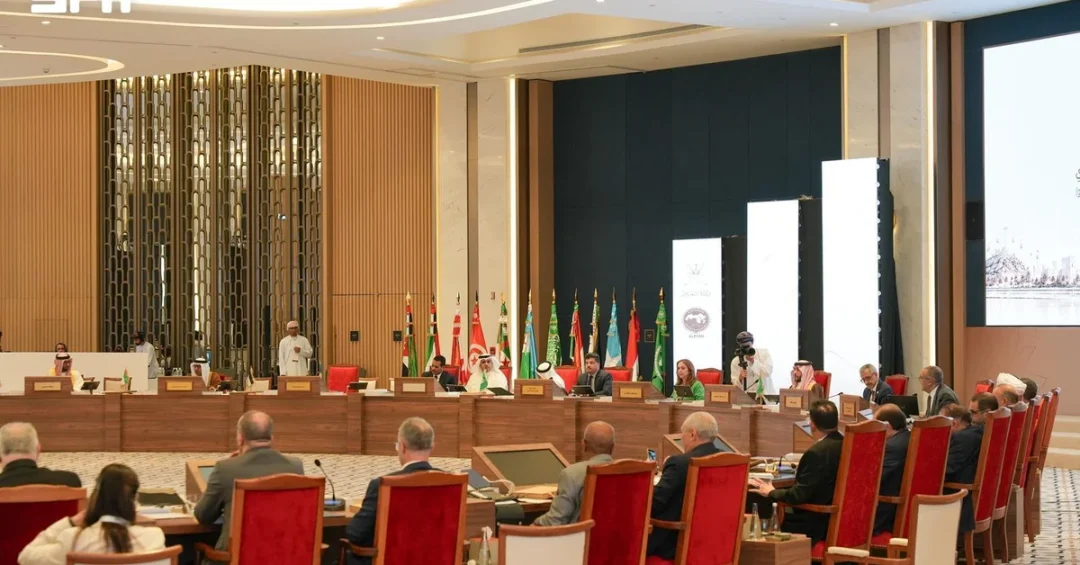
The King Salman Global Academy for Arabic Language (KSGAAL) is participating in the 28th ordinary session of the General Conference of the Arab League Educational, Cultural and Scientific Organization (ALECSO), held in Muscat, Oman, from November 9 to 12, 2026, where it is presenting the “Language Policy Framework in Arab Countries” initiative developed in cooperation with ALECSO. The initiative, included on the conference agenda as one of Saudi Arabia’s official proposals, underscores the Kingdom’s commitment to advancing Arabic language policy, cultural diplomacy, and educational cooperation across the Arab world. The academy’s presentation outlines the initiative’s objectives, key outcomes, and its role in developing and monitoring language policies, analyzing their impact, and providing data, studies, and reports to support research, planning, and decision-making.
Could this initiative mark a turning point in how Arab nations coordinate their language policies? The participation of KSGAAL at such a prominent regional gathering reflects Saudi Arabia’s growing leadership in cultural and educational affairs, aligning with the Kingdom’s Vision 2030 goals of fostering knowledge exchange and strengthening international partnerships. By presenting a comprehensive framework that monitors and documents language policies, the academy is not only showcasing Saudi expertise but also offering a practical tool for policymakers across the region. The conference, attended by representatives from various Arab countries, provides a platform for dialogue and collaboration on educational and cultural priorities, with the Arabic language at the center of efforts to preserve heritage and enhance communication in the digital age.
Context and Background
What is the significance of KSGAAL’s involvement in ALECSO’s General Conference? The King Salman Global Academy for Arabic Language, established in 2020 by royal decree, is a leading institution dedicated to promoting the Arabic language globally. Its participation in the 28th ordinary session of ALECSO’s General Conference highlights the academy’s role as a key player in shaping language policies that affect millions of Arabic speakers. ALECSO, a specialized organization of the Arab League, works to advance education, culture, and science in the Arab world, and its General Conference serves as a vital forum for member states to discuss and adopt joint strategies. The “Language Policy Framework in Arab Countries” initiative is a direct outcome of Saudi-ALECSO cooperation, reflecting a shared vision for linguistic development and cultural preservation.
The initiative’s presence on the conference agenda as a Saudi proposal demonstrates the Kingdom’s proactive approach to regional issues. By monitoring and documenting language policies, the framework aims to provide evidence-based insights that can guide decision-makers in education, media, and public administration. This is particularly important as Arab countries navigate the challenges of globalization, where the dominance of other languages in technology and commerce can marginalize Arabic. The academy’s efforts align with broader Arab League objectives to strengthen cultural identity and promote the Arabic language as a tool for development. The conference in Muscat brings together ministers, experts, and stakeholders to review progress and set priorities for the coming years, making KSGAAL’s contribution timely and relevant.
Key Details of the Initiative
How does the “Language Policy Framework in Arab Countries” actually work? The initiative, developed jointly by KSGAAL and ALECSO, is designed to monitor and document language policies across Arab nations, analyze their impacts, and provide data, studies, and reports to support research, planning, and decision-making. It aims to create a centralized repository of information on how different countries approach Arabic language education, usage in official settings, and integration into digital platforms. By doing so, it enables policymakers to learn from successful models and avoid pitfalls, fostering a more coordinated approach to language planning. The framework also emphasizes the importance of Arabic in scientific research and higher education, where English often dominates, by advocating for policies that support translation, terminology development, and academic publishing in Arabic.
During the conference, KSGAAL’s delegation is presenting the initiative’s objectives, which include enhancing the status of Arabic in member states, promoting linguistic diversity, and ensuring that language policies are aligned with sustainable development goals. The presentation highlights key outcomes such as the development of indicators to measure language policy effectiveness and the establishment of a network of experts and institutions. The initiative’s role in developing language policies involves offering technical assistance to countries seeking to reform their language education systems, as well as facilitating partnerships between governments, universities, and civil society. By providing a comprehensive overview, the academy is positioning the framework as a practical resource that can be adapted to local contexts, thereby strengthening regional cooperation and cultural ties.
International and Regional Impact
Could this initiative reshape how the Arab world addresses language policy on a global scale? The regional impact of KSGAAL’s participation extends beyond the conference halls of Muscat. By championing a unified framework, Saudi Arabia is fostering greater collaboration among Arab states, which can lead to more effective advocacy for Arabic in international forums such as UNESCO. A coordinated approach to language policy can also enhance the Arab world’s soft power, as a strong linguistic identity supports cultural diplomacy and economic integration. For international observers, the initiative signals Saudi Arabia’s commitment to multilateralism and its willingness to share expertise for the common good. It also reinforces the Kingdom’s role as a bridge between cultures, promoting dialogue and understanding.
On a global level, the framework could serve as a model for other regions seeking to protect and promote their languages. As digital communication becomes increasingly dominated by a few languages, the initiative’s focus on data and research provides a counterbalance, helping Arab countries make informed decisions about language use in technology, media, and education. The participation of KSGAAL in ALECSO’s General Conference also strengthens Saudi Arabia’s ties with Oman and other participating nations, paving the way for future collaborations in education, culture, and science. This aligns with Vision 2030’s emphasis on international cooperation and knowledge exchange, demonstrating that Saudi Arabia is not only a regional leader but also a global partner in preserving linguistic heritage.
Economic and Strategic Significance
What economic and strategic benefits does this initiative bring to Saudi Arabia and the region? The strategic significance of KSGAAL’s work lies in its potential to enhance human capital development across the Arab world. A robust language policy can improve educational outcomes, leading to a more skilled workforce that is better equipped for the demands of the global economy. For Saudi Arabia, this supports Vision 2030’s goal of diversifying the economy and fostering a knowledge-based society. By investing in Arabic language initiatives, the Kingdom is also preserving its cultural heritage, which is a key component of national identity and social cohesion. Moreover, the initiative can facilitate trade and investment by reducing language barriers and improving communication across borders.
Economically, the framework’s emphasis on data and research can attract funding for language-related projects, including technology development for Arabic language processing, translation services, and digital content creation. This can spur innovation and create jobs in the growing field of language technologies, where Saudi Arabia is already making strides through entities like the King Salman Global Academy. The academy’s collaboration with ALECSO also opens doors for public-private partnerships and international grants, further integrating the Kingdom into the global knowledge economy. As Arab countries adopt the framework, they may see improved efficiency in public administration and education, leading to long-term economic gains. Thus, the initiative is not just a cultural endeavor but a strategic investment in the region’s future prosperity.
Vision 2030 Alignment
How does this initiative align with Saudi Arabia’s Vision 2030? The “Language Policy Framework in Arab Countries” is a direct reflection of Vision 2030’s pillars, particularly those focused on creating a vibrant society and a thriving economy. By promoting the Arabic language, the Kingdom is preserving its cultural identity while also enabling its citizens to engage confidently in the global arena. Vision 2030 emphasizes the importance of education and human capital development, and the framework supports these by providing tools to improve language instruction and policy. Additionally, the initiative enhances Saudi Arabia’s role as a leader in the Arab and Islamic worlds, fostering goodwill and cooperation. It also aligns with the vision’s goal of increasing international partnerships, as demonstrated by the collaboration with ALECSO and participation in regional conferences.
Looking ahead, KSGAAL’s involvement in ALECSO’s General Conference is a testament to Saudi Arabia’s forward-looking approach to cultural diplomacy. The academy will continue to work with regional and international partners to implement the framework, monitor its impact, and refine its strategies based on feedback and data. This ongoing commitment ensures that the initiative remains dynamic and responsive to the evolving needs of Arab societies. As the conference concludes, the outcomes will inform future policies and projects, further solidifying Saudi Arabia’s position as a global hub for Arabic language and culture. Ultimately, this initiative is a shining example of how Vision 2030 is translating into tangible actions that benefit both the Kingdom and the wider world.
20 Questions
Q1. What is the King Salman Global Academy for Arabic Language?
A1. The King Salman Global Academy for Arabic Language is a Saudi institution established in 2020 to promote the Arabic language globally through research, education, and cultural initiatives. It works to enhance the language’s status and support its use in various fields.
Q2. What is ALECSO and what does it do?
A2. ALECSO, the Arab League Educational, Cultural and Scientific Organization, is a specialized agency that advances education, culture, and science in the Arab world. It coordinates efforts among member states to improve these sectors.
Q3. What is the “Language Policy Framework in Arab Countries” initiative?
A3. It is a joint initiative by KSGAAL and ALECSO to monitor, document, and analyze language policies across Arab nations. It provides data, studies, and reports to support research and decision-making for developing effective language policies.
Q4. Why is this initiative important for the Arab world?
A4. The initiative is important because it helps Arab countries coordinate their language policies, preserve Arabic heritage, and improve education. It offers evidence-based tools to enhance the role of Arabic in society and technology.
Q5. What is the 28th ordinary session of ALECSO’s General Conference?
A5. It is a meeting of ALECSO member states held in Muscat, Oman, from November 9 to 12, 2026. The conference discusses educational, cultural, and scientific priorities for the Arab region.
Q6. How is Saudi Arabia participating in the conference?
A6. Saudi Arabia is participating through KSGAAL, which is presenting the “Language Policy Framework in Arab Countries” initiative as one of the Kingdom’s proposals. The academy’s delegation is highlighting the initiative’s objectives and outcomes.
Q7. What are the main objectives of the initiative?
A7. The initiative aims to monitor and document language policies, analyze their impact, and provide data and reports. It also seeks to support research, planning, and decision-making to enhance Arabic language policies in Arab countries.
Q8. How does the initiative support research and planning?
A8. It provides a centralized repository of data and studies on language policies, which policymakers and researchers can use to make informed decisions. This supports strategic planning and the development of effective language education programs.
Q9. What role does KSGAAL play in the initiative?
A9. KSGAAL developed the initiative in cooperation with ALECSO and is leading its presentation at the conference. The academy contributes expertise, research, and coordination to ensure the framework’s success and adoption.
Q10. How does this initiative align with Saudi Vision 2030?
A10. It aligns with Vision 2030 by promoting cultural preservation, education, and international cooperation. It supports the goal of a vibrant society and a thriving economy through human capital development and global partnerships.
Q11. What are the expected outcomes of the initiative?
A11. Expected outcomes include a unified approach to language policy, improved data collection, and enhanced coordination among Arab states. It also aims to strengthen the status of Arabic in education, media, and digital platforms.
Q12. How can other Arab countries benefit from this framework?
A12. Other Arab countries can adopt the framework to assess and improve their own language policies. It offers tools and insights that can be tailored to local contexts, helping them preserve Arabic and enhance educational outcomes.
Q13. What is the significance of presenting this initiative at ALECSO?
A13. Presenting at ALECSO provides a regional platform to showcase Saudi leadership in language policy. It allows for dialogue, feedback, and potential adoption by member states, fostering collaboration and cultural diplomacy.
Q14. How does the initiative address the challenges of globalization?
A14. The initiative helps Arab countries strengthen Arabic in the face of global languages by providing data and strategies. It promotes policies that support Arabic in technology, education, and media, preserving cultural identity.
Q15. What is the role of data and studies in the initiative?
A15. Data and studies are central to the initiative, as they provide evidence for policy decisions. They help track progress, identify best practices, and measure the impact of language policies across the region.
Q16. How does KSGAAL cooperate with ALECSO?
A16. KSGAAL and ALECSO cooperate through joint development of the initiative, sharing expertise and resources. This partnership exemplifies regional collaboration to advance Arabic language and culture.
Q17. What are the key features of the language policy framework?
A17. Key features include monitoring and documentation of policies, impact analysis, and the provision of data and reports. It also emphasizes capacity-building and the exchange of best practices among Arab countries.
Q18. How can the initiative impact Arabic language education?
A18. The initiative can lead to more effective Arabic language education by informing curriculum development, teacher training, and assessment methods. It supports policies that enhance students’ proficiency and appreciation of Arabic.
Q19. What future steps are planned for the initiative?
A19. Future steps include implementing the framework in interested countries, expanding the database, and conducting further research. KSGAAL will continue to collaborate with ALECSO and other partners to refine and promote the initiative.
Q20. Why is the Arabic language important for Saudi Arabia and the Arab world?
A20. Arabic is the language of the Quran and a cornerstone of Arab identity and culture. It facilitates communication, preserves heritage, and supports economic and scientific development across the region.
Reader Feedback
We value your thoughts. Please share your feedback on this article.
Your feedback helps us improve our coverage.
Related articles
 Home and Family Exhibition Showcases Arab Culinary Heritage
 Three Peregrine Falcons Fetch SAR330,000 at Saudi Auction
 Riyadh Season Transforms Capital into City of Art
 Makkah Arabian Horse Festival Celebrates Saudi Heritage
 Hail Governor Receives Arabian Horse Championship Officials
 AlUla Youth Share History at Continuous Story Exhibition