


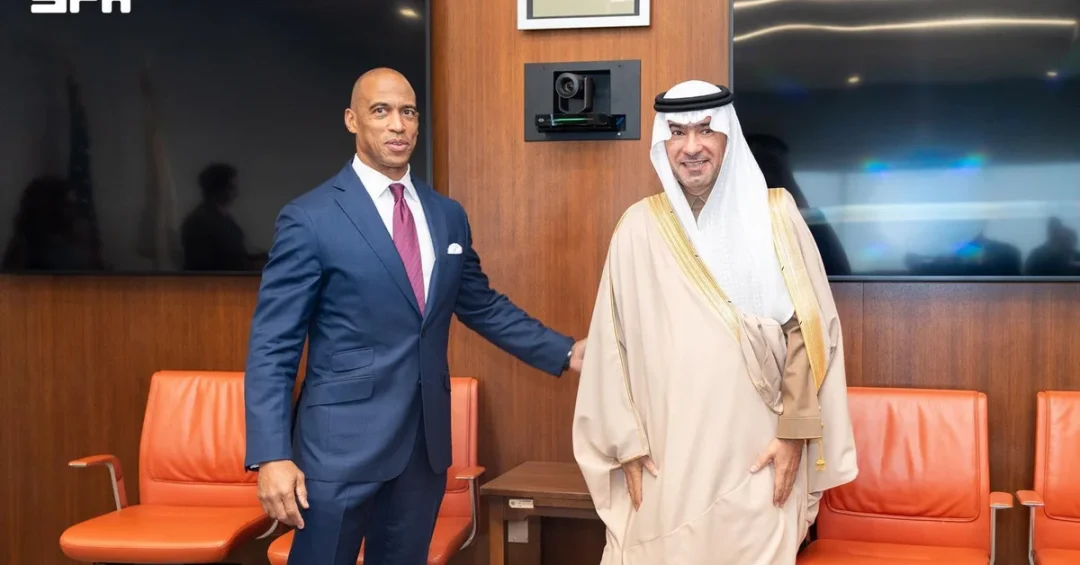
Saudi Minister of Municipalities and Housing Majed Al-Hogail met with United States Secretary of Housing and Urban Development Scott Turner on the sidelines of the Ginnie Mae 2026 Global Investor Summit on Financing Affordable Housing, where the two officials discussed expanding bilateral cooperation in housing, urban planning, and real estate finance, according to the Saudi Press Agency. The meeting, held during the minister’s participation in the summit, focused on leveraging regulatory and operational expertise to boost housing supply, incentivize private-sector investment, and develop real estate finance instruments that broaden homeownership options for families in both countries.
Minister Al-Hogail’s participation in the Ginnie Mae summit — a major international gathering of investors, financial institutions, and housing authorities — underscores Saudi Arabia’s commitment to attracting global capital into its rapidly expanding housing sector and to sharing best practices with international partners. The minister highlighted investment opportunities in sukuk, or Islamic bonds, and real estate finance while exploring collaboration prospects with international investors and financial institutions to strengthen global partnerships and attract new capital inflows into the housing market. What does this high-level engagement signal about the Kingdom’s growing role in shaping global housing finance? The meeting reflects a broader push by Saudi Arabia to deepen economic ties with the United States and to position its housing market as a dynamic destination for responsible international investment.
Context and Background
The Ginnie Mae 2026 Global Investor Summit on Financing Affordable Housing brings together policymakers, investors, and housing finance leaders from around the world to address one of the most pressing challenges of the modern era: making quality housing accessible to families at all income levels. Ginnie Mae, officially the Government National Mortgage Association, is a US government corporation that guarantees mortgage-backed securities, and its annual summit serves as a platform for sharing innovative financing models and forging cross-border partnerships. Minister Al-Hogail’s presence at the summit places Saudi Arabia at the center of these global conversations, demonstrating the Kingdom’s proactive approach to learning from and contributing to international best practices.
Saudi Arabia’s housing sector has undergone a remarkable transformation in recent years, driven by the ambitious goals of Vision 2030 to raise homeownership rates and improve quality of life for citizens. The Ministry of Municipalities and Housing, under Minister Al-Hogail’s leadership, has introduced a range of initiatives to increase housing supply, streamline regulations, and facilitate access to financing for Saudi families. These efforts have not gone unnoticed internationally, and the invitation to participate in the Ginnie Mae summit reflects the Kingdom’s growing reputation as a serious and innovative player in housing finance. How can international partnerships accelerate the Kingdom’s progress toward its housing goals? The meeting between Al-Hogail and Secretary Turner suggests that both nations see mutual benefit in closer collaboration.
The United States and Saudi Arabia have long maintained a strong economic relationship, and housing finance represents a natural area for expanded cooperation. The US has decades of experience in developing secondary mortgage markets, securitization frameworks, and public-private partnerships that have supported widespread homeownership. Saudi Arabia, meanwhile, has developed its own sophisticated Islamic finance instruments and has demonstrated a strong commitment to modernizing its regulatory environment. By combining these strengths, both countries can unlock new opportunities for investment and innovation. The meeting also addressed establishing an institutional framework for technical cooperation, expertise exchange, and reciprocal visits to facilitate knowledge transfer and foster new partnerships between Saudi and American institutions.
Key Details of the Bilateral Meeting
During their discussions, Minister Al-Hogail and Secretary Turner reviewed ways to leverage regulatory and operational expertise to boost housing supply and incentivize private-sector investment. They explored the development of real estate finance instruments and enhanced integration between housing authorities and financial institutions to improve market efficiency and broaden homeownership options for families. The conversation also touched on the importance of creating an enabling environment for private investment, with both officials recognizing that sustainable housing markets require strong collaboration between governments and the private sector. The Saudi minister emphasized the Kingdom’s openness to international partnerships that bring capital, technology, and know-how into its housing ecosystem.
A central theme of the meeting was the potential for Saudi Arabia to attract new capital inflows through sukuk and other Islamic finance mechanisms. Sukuk have become an increasingly popular asset class globally, appealing to both Muslim and non-Muslim investors seeking ethical and asset-backed investment opportunities. Saudi Arabia has been a pioneer in issuing sukuk for infrastructure and housing projects, and the minister’s promotion of these instruments at the Ginnie Mae summit signals a desire to deepen this market further. By engaging with international investors and financial institutions, the Kingdom aims to diversify its funding sources and reduce reliance on traditional bank lending, thereby enhancing the resilience and inclusivity of its housing finance system.
The two officials also discussed the establishment of an institutional framework for technical cooperation, expertise exchange, and reciprocal visits. Such a framework would facilitate knowledge transfer and foster new partnerships between Saudi and American institutions in advancing housing and financial solutions. This could include joint training programs, research collaborations, and pilot projects that test innovative approaches to affordable housing. For Saudi Arabia, this represents an opportunity to learn from the US experience while also sharing its own successes in areas such as rapid construction technology, smart city development, and Islamic finance. For the United States, engagement with Saudi Arabia offers access to a dynamic and growing market with significant investment potential.
International and Regional Impact
The meeting between Minister Al-Hogail and Secretary Turner carries implications that extend beyond the bilateral relationship. As two of the world’s largest economies, Saudi Arabia and the United States have the capacity to influence global housing finance practices and set standards for responsible investment. Their collaboration could serve as a model for other nations seeking to address housing affordability challenges through innovative financing and public-private partnerships. Moreover, the Kingdom’s active participation in international forums like the Ginnie Mae summit reinforces its position as a constructive and reliable partner in addressing global challenges, from sustainable urban development to financial inclusion.
Regionally, Saudi Arabia’s leadership in housing finance innovation could inspire other countries in the Middle East and North Africa to adopt similar approaches. The Kingdom’s experience in developing a robust mortgage market, supported by regulatory reforms and government-backed initiatives, offers valuable lessons for neighbors facing their own housing shortages. By sharing its expertise and fostering cross-border investment, Saudi Arabia can contribute to greater economic integration and stability in the region. The meeting with the US also signals that the Kingdom is open to partnerships that transcend traditional geopolitical boundaries, focusing instead on shared economic interests and mutual prosperity.
Economic and Strategic Significance
From an economic perspective, the discussions at the Ginnie Mae summit align with Saudi Arabia’s broader strategy to diversify its economy and attract foreign direct investment. Housing is a key sector in the Kingdom’s non-oil economy, and its growth has multiplier effects across construction, manufacturing, retail, and financial services. By enhancing the efficiency and depth of its housing finance market, Saudi Arabia can stimulate job creation, boost consumer spending, and improve the quality of life for its citizens. The minister’s emphasis on sukuk and real estate finance instruments highlights the Kingdom’s commitment to developing innovative financial products that meet the needs of both domestic and international investors.
Strategically, the meeting underscores the importance of the US-Saudi partnership in advancing shared economic goals. Despite global economic uncertainties, both nations have demonstrated a willingness to engage constructively and explore new avenues for cooperation. The housing sector, with its potential for long-term, stable returns, is an attractive area for collaboration. By working together, Saudi Arabia and the United States can create a more integrated and resilient global housing finance system that benefits investors, governments, and families alike. The establishment of an institutional framework for technical cooperation would provide a structured and sustainable basis for these efforts, ensuring that the partnership endures beyond individual meetings.
Vision 2030 Alignment
Saudi Arabia’s participation in the Ginnie Mae 2026 Global Investor Summit and the bilateral meeting between Minister Al-Hogail and Secretary Turner are directly aligned with the objectives of Vision 2030, the Kingdom’s comprehensive plan to diversify its economy and enhance the well-being of its citizens. One of Vision 2030’s key goals is to increase the homeownership rate among Saudi families, and the ministry’s efforts to attract international investment and develop innovative financing solutions are critical to achieving this target. By collaborating with global partners like the United States, Saudi Arabia can accelerate progress, adopt best practices, and ensure that its housing market remains vibrant and inclusive.
Furthermore, the meeting reflects Vision 2030’s emphasis on international engagement and economic diplomacy. Saudi Arabia is committed to building strong partnerships around the world that promote mutual prosperity and address common challenges. The housing sector is a prime example of how the Kingdom can leverage its economic strength and strategic location to create value for both domestic and international stakeholders. As Minister Al-Hogail continues to champion investment opportunities in sukuk and real estate finance, Saudi Arabia is poised to become a global leader in affordable housing finance, setting an example for other nations and contributing to the success of Vision 2030.
20 Questions
Q1. What was the main purpose of Minister Al-Hogail’s participation in the Ginnie Mae 2026 Global Investor Summit?
A1. Minister Al-Hogail participated to highlight investment opportunities in sukuk and real estate finance, and to explore collaboration with international investors and financial institutions to attract new capital into Saudi Arabia’s housing market.
Q2. Who did Minister Al-Hogail meet with during the summit?
A2. He met with US Secretary of Housing and Urban Development Scott Turner to discuss expanding bilateral cooperation between Saudi Arabia and the United States in housing, urban planning, and real estate finance.
Q3. What are sukuk, and why are they important for Saudi Arabia’s housing sector?
A3. Sukuk are Islamic bonds that comply with Sharia law. They are important because they provide an ethical, asset-backed investment avenue that can attract both domestic and international capital to fund housing projects.
Q4. What specific areas of cooperation were discussed between Saudi Arabia and the US?
A4. The discussions covered leveraging regulatory and operational expertise to boost housing supply, incentivizing private-sector investment, developing real estate finance instruments, and enhancing integration between housing authorities and financial institutions.
Q5. How does this meeting align with Saudi Arabia’s Vision 2030?
A5. It aligns with Vision 2030’s goal to increase homeownership rates and diversify the economy by attracting international investment and adopting innovative financing solutions in the housing sector.
Q6. What is the significance of the Ginnie Mae summit for global housing finance?
A6. The summit brings together global leaders to address affordable housing challenges, share best practices, and forge partnerships that can unlock new financing models and investment opportunities worldwide.
Q7. What is the role of the Ministry of Municipalities and Housing in Saudi Arabia?
A7. The ministry is responsible for overseeing housing policies, urban planning, and municipal affairs, with a mandate to increase housing supply and improve quality of life under Vision 2030.
Q8. How can international partnerships help Saudi Arabia achieve its housing goals?
A8. International partnerships can bring capital, technology, and expertise, helping Saudi Arabia accelerate the development of affordable housing and enhance the efficiency of its real estate finance market.
Q9. What is the expected impact of the meeting on Saudi-US economic relations?
A9. The meeting strengthens economic ties by opening new avenues for collaboration in housing finance, which can lead to increased trade, investment, and knowledge exchange between the two nations.
Q10. What is an institutional framework for technical cooperation?
A10. It is a structured mechanism for sharing expertise, conducting joint training, and facilitating reciprocal visits between institutions to ensure sustained collaboration and knowledge transfer.
Q11. How does Saudi Arabia’s housing market compare to other emerging markets?
A11. Saudi Arabia’s housing market is among the most dynamic in the region, supported by strong government initiatives, regulatory reforms, and a growing mortgage market that attracts significant investment.
Q12. What are real estate finance instruments, and how do they benefit families?
A12. Real estate finance instruments include mortgages, sukuk, and other financial products that enable families to purchase homes by providing accessible and affordable financing options.
Q13. Why is affordable housing a global challenge?
A13. Rapid urbanization, population growth, and rising construction costs have made housing unaffordable for many, requiring innovative financing and policy solutions that governments and investors must address together.
Q14. What role does the private sector play in Saudi Arabia’s housing strategy?
A14. The private sector is a key partner in increasing housing supply, bringing investment, innovation, and efficiency to the market, supported by government incentives and regulatory frameworks.
Q15. How does Saudi Arabia ensure that housing investments are ethical and Sharia-compliant?
A15. Through the use of sukuk and other Islamic finance instruments that adhere to Sharia principles, ensuring investments are asset-backed and ethically structured.
Q16. What can other countries learn from Saudi Arabia’s housing finance model?
A16. Other countries can learn about integrating Islamic finance with modern mortgage systems, leveraging public-private partnerships, and using technology to streamline housing delivery.
Q17. What are the next steps following this meeting?
A17. The next steps include establishing a formal framework for technical cooperation, organizing reciprocal visits, and identifying specific projects for joint investment and knowledge exchange.
Q18. How does this collaboration benefit American institutions?
A18. American institutions gain access to a growing market with significant investment potential, as well as opportunities to share expertise and participate in innovative housing projects.
Q19. What is the significance of Minister Al-Hogail’s promotion of sukuk at the summit?
A19. It signals Saudi Arabia’s openness to international investment and its commitment to developing innovative financial products that can attract global capital to its housing sector.
Q20. How does this meeting reflect Saudi Arabia’s broader international engagement?
A20. It demonstrates the Kingdom’s proactive approach to building global partnerships, sharing best practices, and positioning itself as a leader in addressing global challenges like affordable housing.
Reader Feedback
We value your thoughts. Please share your feedback on this article.
Your feedback helps us improve our coverage.
Related articles
 GCC Chief Affirms Rejection of Attacks at UN Security Council
 Saudi Arabia Records 11,952 Residency and Labor Violations
 Arab Parliament Welcomes UN Resolution on Houthi Attacks
 UNESCO RCQE, Mauritania Sign Education Partnership
 Saudi Arabia Weather Forecast: Thunderstorms, Floods Possible Saturday
 OIC Calls for Inclusive, Data-Driven Climate Policies at COP31