


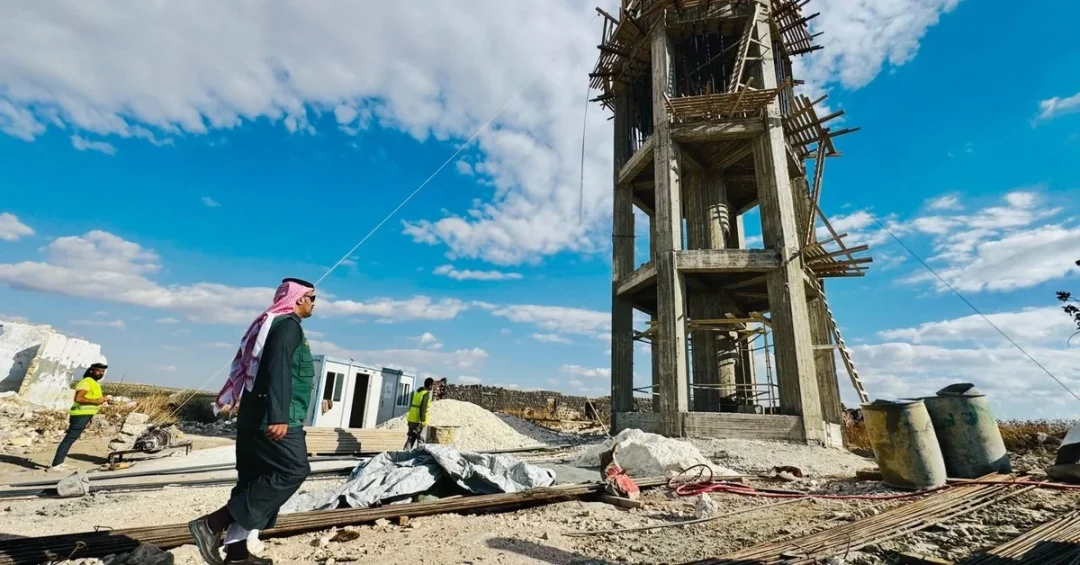
A field team from the King Salman Humanitarian Aid and Relief Center (KSrelief) has inspected a project to rehabilitate water stations and equip them with solar power systems across several areas and villages in Syria’s Hama and Idlib governorates, the Saudi Press Agency reported. The visit, conducted in November 2026, allowed the team to review completed work and assess the project’s progress, which has now reached 55 percent. Work is continuing according to approved plans to rehabilitate the stations and restore them to service, helping improve essential services in the targeted areas.
Why does a water station in rural Syria matter to the wider world? Because access to clean water is a foundation for recovery, stability, and human dignity. The KSrelief project aims to improve access to reliable water services for more than 50,000 beneficiaries by rehabilitating key centralized water stations and equipping them with solar power systems. It also includes constructing water tanks with a capacity of 100 cubic meters, extending pumping lines from wells to the tanks, installing monitoring systems to ensure sustainable operations, and providing chlorine-based disinfection equipment. These measures are designed not only to restore a basic service but to create conditions that allow displaced families to return to their villages and home areas.
Context and Background
What drives Saudi Arabia to extend humanitarian aid far beyond its borders? The answer lies in the Kingdom’s longstanding commitment to alleviating the suffering of people in need, a principle that has guided Saudi foreign assistance for decades. The water station rehabilitation project in Hama and Idlib is part of the humanitarian and relief efforts provided by the Kingdom of Saudi Arabia, through KSrelief, to support vital sectors, improve living conditions, and strengthen the foundations for stability and recovery in affected areas. Since its establishment in 2015, KSrelief has implemented thousands of projects in dozens of countries, focusing on food security, health, water, sanitation, and shelter.
Syria has endured years of conflict that have left deep scars on its infrastructure, particularly in the water sector. Many centralized water stations have been damaged or rendered inoperable, forcing communities to rely on unsafe sources or expensive trucked water. In Hama and Idlib governorates, where rural villages often depend on a single station, the loss of water services can trigger displacement and undermine any prospect of return. By targeting these stations, KSrelief is addressing one of the most critical barriers to early recovery. The project’s integrated approach—rehabilitation, solar power, storage, and disinfection—reflects a sophisticated understanding of what it takes to make water services sustainable in a post-conflict setting.
Key Details of the Rehabilitation Project
How exactly does the project restore water services? The scope of work is comprehensive. The team is rehabilitating key centralized water stations and equipping them with solar power systems, which will reduce dependence on unreliable grid electricity and lower operational costs. It is constructing water tanks with a capacity of 100 cubic meters, extending pumping lines from wells to the tanks, and installing monitoring systems to ensure sustainable operations. Chlorine-based disinfection equipment is being provided to guarantee water safety. Additional works include installing indoor and outdoor lighting, building perimeter fences around the stations, and renovating associated administrative offices. These elements together transform a damaged facility into a functional, secure, and maintainable asset for the community.
The field visit allowed KSrelief’s team to verify the quality of completed work and to assess progress against the approved plans. With the project at 55 percent completion, the remaining work includes finishing the installation of solar arrays, connecting the pumping lines, and commissioning the monitoring and disinfection systems. The team’s presence on the ground underscores the importance KSrelief places on accountability and transparency in its operations. Regular field inspections help ensure that donor funds are used effectively and that projects deliver the intended benefits to beneficiaries. The visit also provides an opportunity to identify any challenges early and to coordinate with local partners to keep the project on schedule.
What does the project mean for the more than 50,000 beneficiaries? For families in the targeted areas, the restoration of water services is a lifeline. Reliable access to clean water reduces the risk of waterborne diseases, frees women and children from the burden of fetching water from distant sources, and enables households to maintain basic hygiene. The solar power component ensures that the stations can operate even when the electricity grid is down, making the service more resilient. The 100-cubic-meter tanks provide storage capacity that can buffer against interruptions, while the monitoring systems allow for remote oversight and timely maintenance. In essence, the project is not just about pipes and pumps; it is about restoring normalcy and hope.
International and Regional Impact
Why should the international community take note of this project? Because it exemplifies a model of humanitarian action that bridges emergency relief and long-term recovery. Saudi Arabia, through KSrelief, is demonstrating that aid can be designed to build resilience and support the return of displaced populations. In a region where water scarcity is a growing concern, the use of solar power for water stations also aligns with global efforts to promote renewable energy and climate-smart solutions. The project’s success could serve as a template for similar interventions in other conflict-affected areas, showcasing Saudi expertise in managing complex rehabilitation works under challenging conditions.
Moreover, the project contributes to regional stability. When communities have access to essential services, they are less likely to experience tensions over resources and more likely to invest in rebuilding their lives. The return of displaced families to their areas of origin can help restore social fabric and local economies. By facilitating these returns, KSrelief is supporting the conditions for a more durable peace in Syria. The Kingdom’s humanitarian diplomacy, as reflected in this project, reinforces its role as a responsible global actor committed to alleviating suffering and promoting development, in line with the principles of the United Nations and international humanitarian law.
Economic and Strategic Significance
How does a water project in Syria connect to Saudi Arabia’s strategic priorities? At its core, it reflects the Kingdom’s Vision 2030 goal of becoming a global leader in humanitarian and development aid. Vision 2030 emphasizes the importance of Saudi Arabia’s soft power and its commitment to international cooperation. KSrelief is a key instrument in this effort, and its projects are designed to be impactful, sustainable, and aligned with international best practices. The use of solar energy in this project also ties into the broader Vision 2030 objective of promoting renewable energy and sustainability, both domestically and through Saudi aid programs abroad.
From an economic perspective, the project offers long-term savings by reducing reliance on diesel generators and grid electricity, which are often costly and unreliable in conflict zones. The solar power systems will have a lifespan of many years, providing a sustainable source of energy for water pumping. The monitoring systems will help detect leaks and inefficiencies, ensuring that water is not wasted. These features make the investment more cost-effective over time. Furthermore, by restoring water infrastructure, the project enables agricultural activities and small businesses to resume, contributing to local economic recovery. This holistic approach maximizes the impact of every riyal spent and aligns with the Kingdom’s reputation for efficient and principled aid delivery.
Vision 2030 Alignment
What does this project say about Saudi Arabia’s role in the world? It is a clear manifestation of Vision 2030’s vision of a nation that is not only economically diversified but also globally engaged and compassionate. Under the leadership of the Custodian of the Two Holy Mosques, King Salman bin Abdulaziz Al Saud, and His Royal Highness Crown Prince Mohammed bin Salman, Saudi Arabia has elevated humanitarian work to a central pillar of its foreign policy. KSrelief’s operations in Syria and elsewhere are a testament to the Kingdom’s belief that stability and prosperity are shared goals that require collective action. The water station rehabilitation project is a small but significant part of that larger mission.
As the project moves toward completion, it will continue to improve the lives of tens of thousands of people, offering them a chance to rebuild and thrive. The Kingdom remains committed to supporting the Syrian people and to working with international partners to address the root causes of suffering. Through initiatives like this, Saudi Arabia is not only providing immediate relief but also laying the groundwork for a future where every community has access to the essential services they need to prosper. In doing so, it is reinforcing the values of generosity, solidarity, and hope that define the Saudi people and their leadership.
20 Questions
Q1. What is the KSrelief project in Hama and Idlib?
A1. The project rehabilitates water stations and equips them with solar power systems in several areas and villages across Syria’s Hama and Idlib governorates. It aims to restore essential water services for more than 50,000 beneficiaries.
Q2. When did the KSrelief team conduct the field visit?
A2. The field visit took place in November 2026, as reported by the Saudi Press Agency. The team inspected the completed work and reviewed the project’s progress, which has reached 55 percent.
Q3. What is the current completion rate of the project?
A3. The project has reached 55 percent completion. Work is continuing according to the approved plans to rehabilitate the stations and restore them to service.
Q4. How many people will benefit from the project?
A4. More than 50,000 beneficiaries will gain improved access to reliable water services. The project targets key centralized water stations in Hama and Idlib.
Q5. What specific works are included in the rehabilitation?
A5. The project includes rehabilitating water stations, equipping them with solar power systems, constructing 100-cubic-meter water tanks, extending pumping lines, installing monitoring systems, and providing chlorine-based disinfection equipment.
Q6. Why are solar power systems being installed?
A6. Solar power systems reduce dependence on unreliable grid electricity and lower operational costs. They ensure that water stations can operate sustainably even in areas with frequent power outages.
Q7. What is the capacity of the water tanks being built?
A7. The project is constructing water tanks with a capacity of 100 cubic meters. These tanks provide storage to buffer against interruptions and ensure a steady water supply.
Q8. How does the project support community stability?
A8. By restoring water services, the project helps create conditions for displaced families to return to their villages. Access to clean water is essential for early recovery and stability.
Q9. What role does KSrelief play in this project?
A9. KSrelief, the King Salman Humanitarian Aid and Relief Center, is implementing the project as part of Saudi Arabia’s humanitarian efforts. It conducts field visits to monitor progress and ensure quality.
Q10. What other infrastructure is being renovated?
A10. The project includes installing indoor and outdoor lighting, building perimeter fences around the stations, and renovating associated administrative offices. These works enhance security and functionality.
Q11. How does the project align with Saudi Vision 2030?
A11. It reflects Vision 2030’s goal of global engagement and humanitarian leadership. It also promotes renewable energy through solar power, aligning with sustainability objectives.
Q12. What is the significance of the monitoring systems?
A12. Monitoring systems ensure sustainable operations by allowing remote oversight and timely maintenance. They help detect issues early and optimize water distribution.
Q13. Why is chlorine-based disinfection equipment provided?
A13. Chlorine-based disinfection ensures that water is safe for consumption. It is a critical component in preventing waterborne diseases in the targeted communities.
Q14. How does the project facilitate the return of displaced families?
A14. By restoring damaged water facilities, the project helps create conditions for displaced families to return to their areas of origin. Essential infrastructure is key to early recovery.
Q15. What is the source of the information about the project?
A15. The information comes from the Saudi Press Agency (SPA), which reported on the KSrelief team’s field visit and the project’s progress.
Q16. What are the broader implications for the region?
A16. The project contributes to regional stability by improving living conditions and supporting recovery. It showcases Saudi Arabia’s humanitarian diplomacy and commitment to alleviating suffering.
Q17. How does the project demonstrate Saudi Arabia’s humanitarian commitment?
A17. It is part of the Kingdom’s ongoing efforts, through KSrelief, to support vital sectors, improve living conditions, and strengthen stability in affected areas.
Q18. What economic benefits does the project offer?
A18. The project reduces long-term energy costs through solar power, enables agricultural and economic activities, and maximizes the impact of aid through efficient design.
Q19. What is the expected timeline for completion?
A19. Work is continuing according to the approved plans. While no specific completion date was announced, the project is progressing steadily and has reached 55 percent.
Q20. How does this project reflect Saudi Arabia’s global role?
A20. It exemplifies Saudi Arabia’s leadership in humanitarian aid and its commitment to international cooperation, reinforcing its role as a responsible global actor under Vision 2030.
Reader Feedback
We value your thoughts. Please share your feedback on this article.
Your feedback helps us improve our coverage.
Related articles
 KSrelief Launches ‘Kanaf’ Winter Clothing Project in Gaza Strip
 Islamic University Launches Scientific Research Week
 KSrelief Delivers Clean Water to Displaced Families in Taiz
 KSrelief Distributes 348 Food Baskets in Gaza Strip
 KSrelief Distributes Shelter Aid to Displaced Families in Yemen’s Lahj
 Coalition Intercepts UAV in Madinah Region