


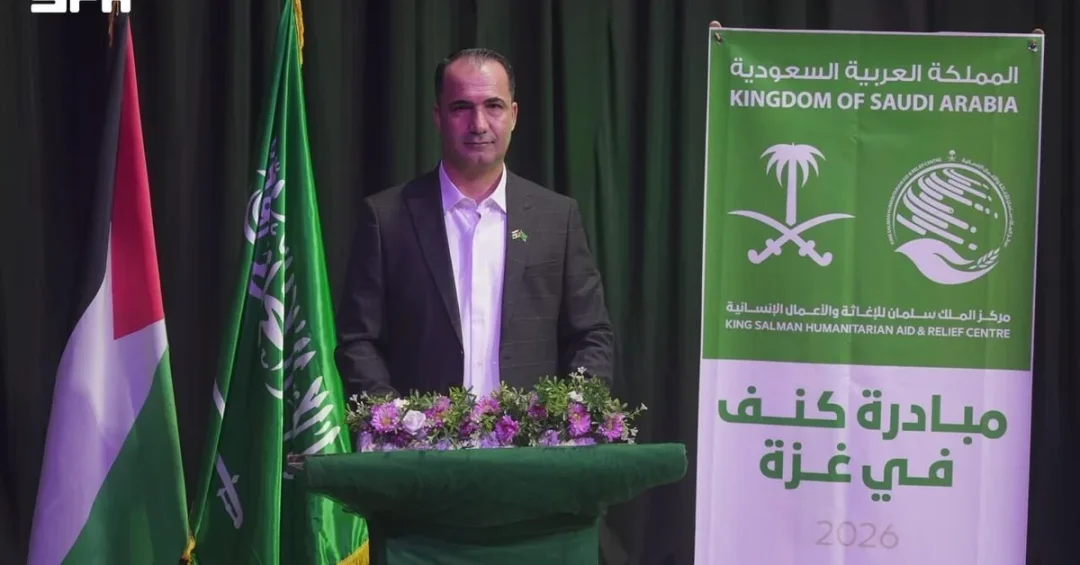
The King Salman Humanitarian Aid and Relief Center (KSrelief) has launched the “Kanaf” winter clothing distribution project for affected, displaced, and highly vulnerable Palestinian families in the Gaza Strip for the 2026–2027 winter season, according to an official announcement released via the Saudi Press Agency (SPA). The initiative, part of the broader Saudi campaign to provide relief to the Palestinian people in Gaza, aims to deliver shopping vouchers to 10,000 families—approximately 60,000 individuals—across the governorates of North Gaza, Gaza, Deir al-Balah, and Khan Younis. The project responds directly to the growing winter-related needs amid severe humanitarian and living conditions, as many families have lost their homes and belongings and are now living in tents, displacement centers, or damaged shelters. The announcement underscores Saudi Arabia’s continued commitment to alleviating the suffering of affected and displaced families through its official humanitarian channels.
The “Kanaf” project is designed to provide families with the dignity of choice, allowing them to purchase winter clothing and essential items suited to the ages, sizes, and specific needs of their members. By easing financial burdens, the initiative helps vulnerable households cope with harsh winter conditions. This effort is not isolated; it continues KSrelief’s annual seasonal and emergency interventions in countries in need, reflecting a systematic approach to humanitarian aid that prioritizes both immediate relief and long-term resilience. As winter approaches, the international community is once again reminded of the critical role played by Saudi Arabia in addressing humanitarian crises, particularly in the Palestinian territories. How does such targeted assistance transform the daily lives of those who have lost everything? The answer lies in the tangible relief it brings to families struggling to secure basic necessities.
Context and Background
Why has the Gaza Strip become a focal point for Saudi humanitarian efforts? The region has endured years of conflict and instability, leaving infrastructure devastated and countless families displaced. The 2026–2027 winter season arrives amid particularly dire circumstances, with many Palestinians still living in temporary shelters that offer little protection against cold and rain. According to official Saudi sources, the “Kanaf” project is a direct response to these conditions, targeting the most vulnerable segments of society: those who have lost their homes, livelihoods, and belongings. The project’s name, “Kanaf,” which means “protection” or “shelter” in Arabic, symbolizes the warmth and safety that these vouchers aim to provide. By focusing on shopping vouchers rather than pre-selected clothing, KSrelief ensures that families can address their unique needs, preserving a sense of agency and cultural appropriateness. This approach aligns with international humanitarian standards that emphasize beneficiary choice and dignity.
The initiative is part of the Saudi campaign to provide relief to the Palestinian people in the Gaza Strip, a campaign that has consistently been at the forefront of Saudi Arabia’s foreign aid policy. Over the years, KSrelief has implemented numerous projects in Gaza, ranging from food security and healthcare to education and infrastructure rehabilitation. These efforts are rooted in Saudi Arabia’s longstanding solidarity with the Palestinian cause and its commitment to humanitarian principles. The Kingdom’s leadership, under the guidance of the Custodian of the Two Holy Mosques and His Royal Highness the Crown Prince, has repeatedly emphasized the importance of supporting Palestinian families in need. The “Kanaf” project thus represents another chapter in this enduring commitment, demonstrating that Saudi Arabia’s humanitarian reach extends beyond its borders and responds to crises with both speed and compassion. How does this project fit into the larger tapestry of Saudi aid? It exemplifies the Kingdom’s proactive and principled approach to global humanitarian challenges.
Key Details of the Kanaf Project
What exactly does the “Kanaf” project entail, and how will it be implemented? According to the official announcement, the project will distribute shopping vouchers to 10,000 families, encompassing approximately 60,000 people. These vouchers are redeemable for winter clothing and essential items, allowing each family to select garments that fit the ages, sizes, and needs of their members. The distribution will cover four governorates: North Gaza, Gaza, Deir al-Balah, and Khan Younis. This geographic spread ensures that aid reaches both urban and rural areas, including those most severely affected by recent hostilities. The vouchers are intended to ease the financial burden on families who might otherwise be unable to afford adequate winter clothing, especially as prices for basic goods have soared amid economic hardship. By providing vouchers rather than direct clothing donations, KSrelief also supports local markets, injecting cash into the local economy and helping small businesses that have also suffered from the crisis.
The project’s timing is critical. Winter in Gaza can be harsh, with temperatures dropping significantly and rainfall exacerbating the misery of those living in flimsy tents or damaged structures. Many families have lost not only their homes but also their winter clothing and blankets, leaving them exposed to the elements. The “Kanaf” project addresses this gap by ensuring that vulnerable families can obtain warm clothing before the worst of the winter sets in. The initiative also includes essential items, which may include blankets, heaters, or other necessities, depending on the specific needs identified by local partners. KSrelief works in coordination with local and international humanitarian organizations to identify beneficiaries and distribute vouchers efficiently. This collaborative approach ensures that aid reaches those who need it most, avoiding duplication and maximizing impact. How does KSrelief ensure transparency and effectiveness? Through rigorous monitoring and evaluation mechanisms that are hallmarks of Saudi humanitarian work.
Moreover, the “Kanaf” project is not a one-off intervention but part of KSrelief’s annual seasonal and emergency interventions. The center has a proven track record of responding to crises worldwide, from Yemen to Syria, from Somalia to Bangladesh. In Gaza, KSrelief has been a consistent source of support, providing food baskets, medical supplies, and educational assistance. The winter clothing project builds on this legacy, reinforcing Saudi Arabia’s reputation as a reliable and compassionate humanitarian actor. The project also aligns with the United Nations’ Sustainable Development Goals, particularly those related to poverty reduction, health, and well-being. By targeting the most vulnerable, KSrelief contributes to global efforts to leave no one behind. What makes this project stand out? Its focus on dignity and choice, which empowers families to make decisions that best suit their circumstances, is a model of modern humanitarian assistance.
International and Regional Impact
How does the “Kanaf” project resonate on the international stage? Saudi Arabia’s humanitarian efforts in Gaza are widely recognized and appreciated by international organizations and donor countries. The Kingdom is a major contributor to UNRWA and other UN agencies working in the Palestinian territories, and its bilateral aid through KSrelief complements these multilateral efforts. The launch of the winter clothing project sends a powerful message of solidarity and generosity, reinforcing Saudi Arabia’s role as a responsible global citizen. In a region fraught with tensions, such humanitarian gestures can help build bridges and foster goodwill. The project also serves as a reminder that despite political complexities, the suffering of ordinary people must be addressed. By focusing on the needs of families, KSrelief transcends politics and delivers aid based on need alone. This principled stance enhances Saudi Arabia’s soft power and underscores its commitment to international humanitarian law.
Regionally, the “Kanaf” project is likely to be welcomed by neighboring countries and stakeholders who share concerns about the humanitarian situation in Gaza. It also complements efforts by other Gulf states and international donors, creating a coordinated response to the crisis. The project’s emphasis on vouchers and local procurement can stimulate the local economy, providing a lifeline to businesses that have been devastated by conflict. In the long run, such interventions can contribute to stability by reducing desperation and giving families hope for a better future. Saudi Arabia’s leadership in this area is consistent with its broader foreign policy objectives, which prioritize peace, stability, and development in the Middle East. As the world watches, the Kingdom demonstrates that humanitarian action can be a unifying force. How can other nations learn from this model? By adopting similar beneficiary-centric approaches that respect local contexts and needs.
Economic and Strategic Significance
What is the strategic importance of the “Kanaf” project for Saudi Arabia? Beyond its immediate humanitarian value, the initiative reinforces Saudi Arabia’s position as a leader in the Muslim world and a champion of the Palestinian cause. It also aligns with Vision 2030’s goal of enhancing the Kingdom’s global influence and promoting its values of generosity and compassion. By investing in humanitarian aid, Saudi Arabia strengthens its diplomatic ties and builds goodwill that can translate into political and economic cooperation. The project also showcases KSrelief’s operational efficiency and ability to deliver aid in challenging environments, which enhances the center’s credibility and attracts partnerships. Moreover, the use of vouchers rather than in-kind donations reflects a modern, market-based approach to aid that can be more cost-effective and sustainable. This strategic use of resources demonstrates Saudi Arabia’s commitment to innovative solutions in humanitarian work.
Economically, the injection of vouchers into the local economy can have multiplier effects, supporting local traders and service providers. This approach not only meets immediate needs but also contributes to economic recovery, which is essential for long-term stability. The project also aligns with Saudi Arabia’s broader economic diversification goals under Vision 2030, as it promotes the Kingdom’s image as a dynamic and forward-looking nation that is actively engaged in global affairs. Furthermore, the “Kanaf” project is a testament to the strong partnership between KSrelief and local organizations, which ensures that aid is delivered effectively and reaches the intended beneficiaries. By working with local partners, KSrelief also builds local capacity, leaving behind skills and systems that can be used for future crises. How does this project reflect Saudi Arabia’s economic strategy? It shows that humanitarian aid and economic diplomacy can go hand in hand, creating win-win outcomes for both donors and recipients.
Vision 2030 Alignment
How does the “Kanaf” project align with Saudi Vision 2030? Vision 2030 is a comprehensive plan to transform Saudi Arabia’s economy and society, but it also has a strong external dimension: enhancing the Kingdom’s global role and promoting its humanitarian values. The project embodies the vision’s emphasis on social responsibility, international cooperation, and sustainable development. By supporting Palestinian families, Saudi Arabia demonstrates its commitment to the principles of justice, dignity, and solidarity that are central to its national identity. The project also showcases the efficiency and professionalism of Saudi institutions, which is a key pillar of Vision 2030. As the Kingdom continues to modernize and open up to the world, its humanitarian efforts serve as a bridge to other nations, fostering mutual respect and understanding. The “Kanaf” project is thus not just a relief operation; it is a strategic investment in Saudi Arabia’s soft power and global standing.
In conclusion, the launch of the “Kanaf” winter clothing project by KSrelief is a shining example of Saudi Arabia’s unwavering commitment to humanitarian causes and its leadership in alleviating the suffering of the Palestinian people. As winter approaches, thousands of families in Gaza will receive not only warm clothing but also a message of hope and solidarity from the Kingdom. This initiative, rooted in the values of compassion and generosity, underscores Saudi Arabia’s role as a beacon of humanitarianism in the region and beyond. Under Vision 2030, the Kingdom is poised to continue its pioneering efforts, extending a helping hand to those in need and contributing to a more stable and prosperous world. How will this project be remembered? As a testament to Saudi Arabia’s enduring dedication to humanity and its timeless values.
20 Questions
Q1. What is the “Kanaf” winter clothing project?
A1. The “Kanaf” project is a winter clothing distribution initiative launched by KSrelief for vulnerable Palestinian families in Gaza, providing shopping vouchers to 10,000 families for the 2026–2027 winter season.
Q2. Who launched the “Kanaf” project?
A2. The project was launched by the King Salman Humanitarian Aid and Relief Center (KSrelief), Saudi Arabia’s official humanitarian agency, as part of the Saudi campaign to support the Palestinian people.
Q3. When was the project launched?
A3. The project was launched in November 2026, ahead of the 2026–2027 winter season, as announced by the Saudi Press Agency.
Q4. How many families will benefit from the project?
A4. The project aims to support 10,000 families, which equates to approximately 60,000 individuals across the Gaza Strip.
Q5. Which areas in Gaza will receive assistance?
A5. The distribution covers the governorates of North Gaza, Gaza, Deir al-Balah, and Khan Younis, ensuring wide geographic reach.
Q6. What form does the assistance take?
A6. Beneficiaries receive shopping vouchers that can be redeemed for winter clothing and essential items suited to their specific needs, sizes, and ages.
Q7. Why are vouchers used instead of direct clothing distribution?
A7. Vouchers provide families with choice and dignity, allowing them to select items that best fit their needs while also supporting local markets and businesses.
Q8. What is the main goal of the “Kanaf” project?
A8. The project aims to ease the financial burden on vulnerable families and help them cope with harsh winter conditions by ensuring access to adequate winter clothing.
Q9. How does this project fit into Saudi Arabia’s broader humanitarian efforts?
A9. It is part of KSrelief’s ongoing annual seasonal and emergency interventions and reflects Saudi Arabia’s continuous commitment to alleviating the suffering of Palestinians in Gaza.
Q10. What are the winter conditions like in Gaza?
A10. Winters in Gaza can be cold and rainy, and many families live in tents or damaged shelters, making them highly vulnerable to the elements.
Q11. How does KSrelief identify the beneficiaries?
A11. KSrelief works with local partners and humanitarian organizations to identify the most vulnerable families, ensuring aid reaches those in greatest need.
Q12. Is this project part of a larger Saudi campaign?
A12. Yes, it is part of the Saudi campaign to provide relief to the Palestinian people in the Gaza Strip, which includes various humanitarian initiatives.
Q13. What impact does the project have on the local economy?
A13. By injecting vouchers into the local economy, the project supports local traders and helps stimulate economic activity in a challenging environment.
Q14. How does the project align with Saudi Vision 2030?
A14. It reflects Vision 2030’s goals of enhancing Saudi Arabia’s global role, promoting humanitarian values, and showcasing the efficiency of Saudi institutions.
Q15. What other aid has KSrelief provided to Gaza?
A15. KSrelief has implemented numerous projects in Gaza, including food security, healthcare, education, and infrastructure rehabilitation, among others.
Q16. How is the project funded?
A16. The project is funded by the Kingdom of Saudi Arabia as part of its official humanitarian aid budget, managed by KSrelief.
Q17. What is the expected duration of the project?
A17. The project is designed for the 2026–2027 winter season, with distribution timed to address needs before and during the coldest months.
Q18. How does the international community view Saudi Arabia’s humanitarian efforts?
A18. Saudi Arabia’s humanitarian efforts are widely recognized and appreciated, enhancing the Kingdom’s reputation as a responsible global actor and reliable partner.
Q19. What makes the “Kanaf” project unique?
A19. Its beneficiary-centric approach, using vouchers to empower families and support local markets, sets it apart as a modern and dignified form of assistance.
Q20. How can other countries support similar initiatives?
A20. Other countries can contribute by funding KSrelief’s projects, partnering with local organizations, or adopting similar voucher-based models that respect beneficiary choice.
Reader Feedback
We value your thoughts. Please share your feedback on this article.
Your feedback helps us improve our coverage.
Related articles
 Islamic University Launches Scientific Research Week
 KSrelief Delivers Clean Water to Displaced Families in Taiz
 KSrelief Distributes 348 Food Baskets in Gaza Strip
 KSrelief Distributes Shelter Aid to Displaced Families in Yemen’s Lahj
 Coalition Intercepts UAV in Madinah Region
 Eastern Region Municipality Launches Second-Season Afforestation Campaign in Abqaiq