


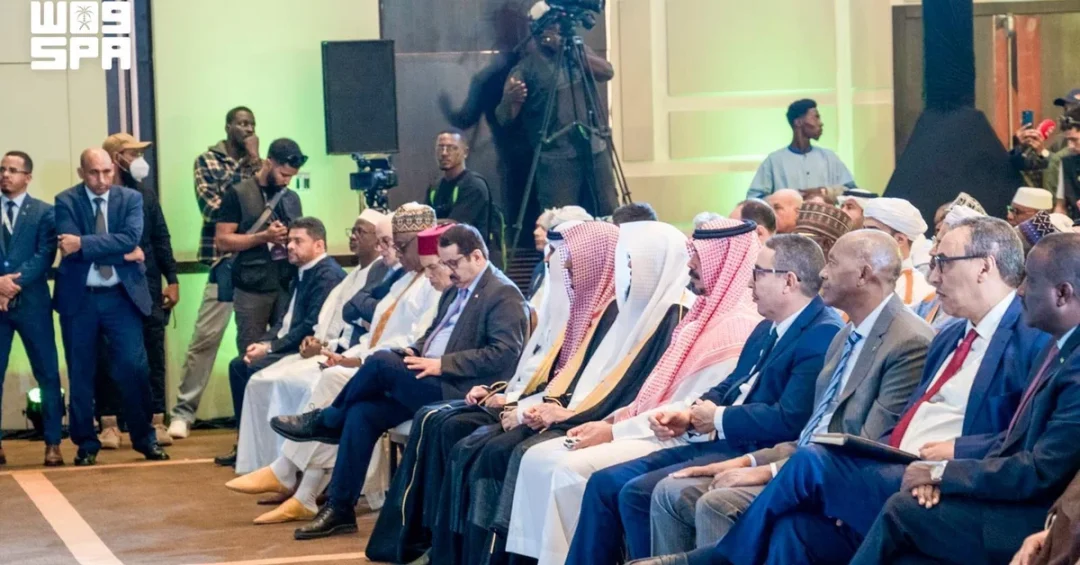
The second edition of the Custodian of the Two Holy Mosques Competition for the Memorization of the Holy Quran and the Prophetic Sunnah for West African Countries opened on Sunday in Nouakchott, Mauritania, organized by Saudi Arabia’s Ministry of Islamic Affairs, Dawah and Guidance in cooperation with Mauritania’s Ministry of Islamic Affairs and Original Education. The five-day event, running through November 19, brings together 160 participants from 16 West African nations, competing in 10 categories—five for the Holy Quran and five for the Sunnah—with a total prize pool of SAR1.14 million. The competition reflects the Kingdom’s enduring commitment to serving Islam and Muslims worldwide, promoting moderation, and strengthening ties across the region.
Held under the patronage of the Custodian of the Two Holy Mosques, King Salman bin Abdulaziz Al Saud, the competition underscores Saudi Arabia’s leadership in supporting Quranic education and Islamic scholarship. It also highlights the Kingdom’s role in fostering unity and cooperation among West African countries, a region with deep historical and cultural connections to the Islamic world. As the event unfolds, it raises important questions about the future of Islamic education and the role of such initiatives in shaping moderate religious discourse. How can competitions like this inspire a new generation of Muslims dedicated to understanding and living by the teachings of the Quran and Sunnah?
Context and Background
The Custodian of the Two Holy Mosques Competition for the Memorization of the Holy Quran and the Prophetic Sunnah is a flagship initiative of the Saudi Ministry of Islamic Affairs, Dawah and Guidance. First launched in 2025, the competition aims to encourage Muslims in West Africa to engage deeply with the Holy Quran and the Sunnah, fostering a culture of learning and spiritual growth. West Africa is home to a vibrant Muslim population, with countries like Mauritania, Senegal, Mali, and Nigeria boasting rich traditions of Islamic scholarship. By hosting this competition in Nouakchott, Saudi Arabia acknowledges the region’s significant contribution to Islamic heritage and seeks to reinforce its ties with these nations.
The event also aligns with the Kingdom’s broader strategy to promote moderate Islam and counter extremism. Through such competitions, Saudi Arabia supports the development of religious leaders who embody the values of tolerance, balance, and peaceful coexistence. The participation of 160 contestants from 16 countries demonstrates the widespread appeal of the competition and the desire among West African youth to excel in religious knowledge. How does this competition reflect Saudi Arabia’s commitment to nurturing moderate religious leaders who can guide their communities toward peace and prosperity?
Moreover, the competition serves as a platform for cultural exchange and mutual learning. Participants not only compete but also share their experiences and insights, building networks that transcend national borders. This fosters a sense of Islamic brotherhood and solidarity, which is essential for regional stability and cooperation. The Saudi leadership’s support for such initiatives is part of a long-standing tradition of serving Islam and Muslims, dating back to the founding of the Kingdom.
Key Details
The competition features 10 categories, five dedicated to the Holy Quran and five to the Prophetic Sunnah. Participants will be evaluated by specialized judging panels according to scientific criteria designed to ensure fairness and equal opportunities. The total prize pool amounts to SAR1.14 million, to be awarded to the top three winners in each category. This substantial prize money not only rewards excellence but also motivates participants to strive for the highest levels of achievement. The competition runs through November 19, with the opening ceremony concluding with the official announcement of its launch and a film introducing its objectives and mission.
Dr. Fhaid Al-Ruwais, Religious Attaché at Saudi Arabia’s Embassy in Mauritania, delivered an introductory address outlining the competition’s structure and goals. He emphasized that the event is designed to encourage children and young people to memorize the Holy Quran and Sunnah, and to strengthen Islamic cooperation between Saudi Arabia and Mauritania. Dr. Abdulaziz Al-Raqabi, Saudi Ambassador to Mauritania, highlighted that the competition builds on Saudi Arabia’s efforts to serve Islam and Muslims, promote moderation, and strengthen bonds of brotherhood among West African countries. Mauritanian Minister of Islamic Affairs and Original Education Dr. Sid’Elhaje Ould Dah welcomed the competition’s hosting in Mauritania, expressing appreciation to the Saudi leadership for its continued support.
The competition’s opening ceremony was attended by dignitaries, scholars, and community leaders, reflecting the importance of the event for both Saudi Arabia and Mauritania. The film presented at the ceremony showcased the competition’s mission to serve the Holy Quran and Sunnah, and its role in fostering a deeper understanding of Islamic teachings. What does the participation of 160 contestants from 16 countries tell us about the demand for such religious competitions in West Africa?
International and Regional Impact
The competition has significant implications for regional cooperation and Islamic solidarity. By bringing together participants from 16 West African countries, it promotes people-to-people ties and enhances mutual understanding. It also reinforces Saudi Arabia’s soft power and its role as a leader in the Islamic world. For Mauritania, hosting the event is a recognition of its status as a center of Islamic scholarship and a testament to its strong bilateral relations with the Kingdom. The competition also contributes to the global image of Saudi Arabia as a country dedicated to serving Islam and supporting moderate religious education.
Furthermore, the event supports the efforts of West African governments to promote religious moderation and counter radicalization. By encouraging youth to focus on Quranic memorization and Sunnah studies, it provides a positive outlet for their energies and helps build resilient communities. The competition also fosters a sense of shared identity among Muslims in the region, which can contribute to stability and development. How might this competition influence the broader discourse on Islam in West Africa and beyond?
Economic and Strategic Significance
While primarily a religious and cultural event, the competition also has economic and strategic dimensions. The prize pool of SAR1.14 million injects resources into the participating communities, supporting educational and religious institutions. The event also boosts local economies through increased tourism and spending during the competition period. Strategically, it strengthens Saudi Arabia’s ties with West African nations, many of which are important partners in trade, investment, and security. By investing in human capital through religious education, the Kingdom contributes to long-term stability and prosperity in the region.
Additionally, the competition aligns with Saudi Arabia’s Vision 2030, which emphasizes the importance of soft power and international cooperation. By showcasing the Kingdom’s commitment to Islamic values and education, the event enhances Saudi Arabia’s global standing and opens doors for further collaboration. It also supports the goals of the Organization of Islamic Cooperation (OIC) and other multilateral bodies that promote Islamic unity. What role can such competitions play in advancing Saudi Arabia’s strategic interests in Africa?
Vision 2030 Alignment
The Custodian of the Two Holy Mosques Competition for the Memorization of the Holy Quran and the Prophetic Sunnah for West African Countries is a clear manifestation of Saudi Arabia’s Vision 2030, particularly its focus on enhancing the Kingdom’s global role and promoting moderate Islam. Vision 2030 aims to diversify the economy and strengthen international partnerships, and this competition does both by fostering educational and cultural exchanges. It also aligns with the Vision’s emphasis on youth empowerment and the development of human capital, as it invests in the next generation of religious scholars and leaders.
Moreover, the competition reflects the Kingdom’s dedication to serving Islam and Muslims, a core principle of its foreign policy. By supporting Quranic education in West Africa, Saudi Arabia reinforces its position as the heart of the Islamic world and a beacon of moderation. As the competition progresses, it will undoubtedly leave a lasting impact on participants and their communities, inspiring them to uphold the values of the Quran and Sunnah. In doing so, it contributes to a more peaceful, tolerant, and prosperous world, in line with the visionary leadership of the Custodian of the Two Holy Mosques.
20 Questions
Q1. What is the Custodian of the Two Holy Mosques Competition for the Memorization of the Holy Quran and the Prophetic Sunnah?
A1. It is an annual competition organized by Saudi Arabia’s Ministry of Islamic Affairs, Dawah and Guidance to encourage Quran and Sunnah memorization among youth in West Africa, promoting moderate Islam and Islamic cooperation.
Q2. When and where did the second edition of the competition open?
A2. The second edition opened on Sunday, November 15, 2026, in Nouakchott, Mauritania, and will run through November 19, bringing together 160 participants from 16 West African countries.
Q3. How many participants are competing and from how many countries?
A3. There are 160 participants from 16 West African countries, reflecting the competition’s broad regional appeal and the widespread interest in Quranic and Sunnah education.
Q4. What are the categories of the competition?
A4. The competition features 10 categories: five for the Holy Quran and five for the Prophetic Sunnah, allowing participants to showcase their expertise in different areas of Islamic studies.
Q5. What is the total prize pool for the competition?
A5. The total prize pool amounts to SAR1.14 million, to be awarded to the top three winners in each category, providing significant incentives for excellence.
Q6. Who are the key Saudi officials involved in the competition?
A6. Dr. Fhaid Al-Ruwais, Religious Attaché at Saudi Arabia’s Embassy in Mauritania, and Dr. Abdulaziz Al-Raqabi, Saudi Ambassador to Mauritania, are among the key officials overseeing the event.
Q7. What did Dr. Fhaid Al-Ruwais say about the competition?
A7. He highlighted that the competition features 10 categories and is judged by specialized panels according to scientific criteria to ensure fairness and equal opportunities for all participants.
Q8. What did Saudi Ambassador Dr. Abdulaziz Al-Raqabi emphasize?
A8. He emphasized that the competition builds on Saudi Arabia’s efforts to serve Islam and Muslims, promote moderation and balance, and strengthen bonds of brotherhood among West African countries.
Q9. How did Mauritania’s Minister of Islamic Affairs welcome the competition?
A9. Dr. Sid’Elhaje Ould Dah welcomed the competition’s hosting in Mauritania, highlighting its importance in encouraging youth to memorize the Quran and Sunnah and strengthening Islamic cooperation with Saudi Arabia.
Q10. What is the significance of hosting the competition in Mauritania?
A10. It recognizes Mauritania’s status as a center of Islamic scholarship and reinforces the strong bilateral relations between Saudi Arabia and Mauritania, while promoting regional cooperation.
Q11. How does the competition promote moderation and balance?
A11. By encouraging deep engagement with the Quran and Sunnah, the competition fosters a moderate understanding of Islam, countering extremism and promoting tolerance and peaceful coexistence.
Q12. What is the role of the judging panels?
A12. Specialized judging panels evaluate participants based on scientific criteria designed to ensure fairness and equal opportunities, upholding the integrity of the competition.
Q13. How does the competition strengthen ties between Saudi Arabia and West Africa?
A13. It brings together participants and officials from multiple countries, fostering people-to-people ties, cultural exchange, and mutual understanding, thereby enhancing diplomatic and Islamic solidarity.
Q14. What is the Vision 2030 connection of this competition?
A14. The competition aligns with Vision 2030’s goals of enhancing Saudi Arabia’s global role, promoting moderate Islam, empowering youth, and strengthening international partnerships.
Q15. How does the competition support youth empowerment?
A15. By providing a platform for young Muslims to excel in Quranic and Sunnah studies, it invests in human capital and nurtures future religious leaders who can contribute positively to their communities.
Q16. What was the opening ceremony like?
A16. The opening ceremony included introductory addresses by Saudi and Mauritanian officials, the official announcement of the competition’s launch, and a film introducing its objectives and mission.
Q17. How many editions of the competition have been held?
A17. This is the second edition, following the inaugural competition, demonstrating the initiative’s growing success and expanding reach across West Africa.
Q18. What impact does the competition have on local communities?
A18. It injects resources through prizes, supports educational institutions, and boosts local economies, while also fostering a culture of learning and spiritual growth among youth.
Q19. How does the competition reflect Saudi Arabia’s commitment to serving Islam?
A19. It exemplifies the Kingdom’s long-standing dedication to supporting Quranic education, promoting moderate Islam, and strengthening Islamic brotherhood worldwide, under the leadership of the Custodian of the Two Holy Mosques.
Q20. What are the future prospects for the competition?
A20. With its growing participation and success, the competition is expected to expand its reach, further enhancing Saudi Arabia’s role in promoting Islamic education and cooperation in West Africa and beyond.
Reader Feedback
We value your thoughts. Please share your feedback on this article.
Your feedback helps us improve our coverage.
Related articles
 Coalition Intercepts UAV in Madinah Region
 Moderate to Heavy Rain Falls Across Aseer Region
 SESRIC Joins COP31 Panel on Halal Standards and Food Security
 Saudi Arabia to Host International Tolerance Forum Monday
 Saudi Water Authority, OSP Present Study on Water Network Energy Efficiency
 King Salman Orders Promotion of 167 Justice Ministry Judges