


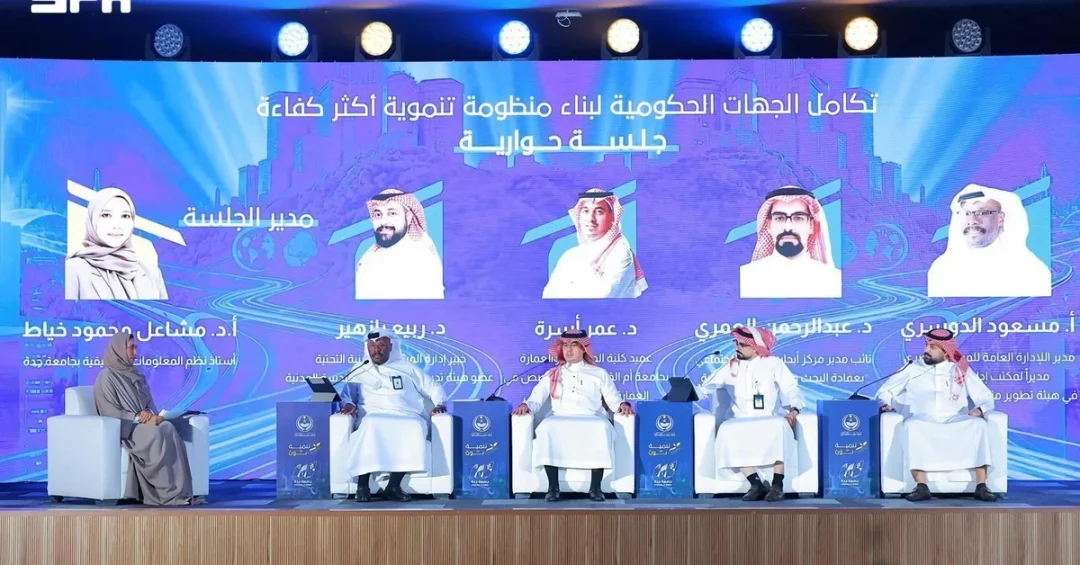
The Makkah Region Development Authority participated in Tanmiathon 2026, a two-day innovation hackathon organized by the University of Jeddah in partnership with the Makkah Region Principality on November 18 and 19 at the university’s Conference Center. The event, announced via the Saudi Press Agency, brought together 18 participating entities, more than 40 development challenges, and over 1,500 participants representing 480 teams across five areas: social, economic, urban, environmental, and human development. The authority delivered an opening keynote address highlighting development priorities, investment opportunities, and innovation in the Makkah Region, and presented real-world development challenges to participants to encourage practical solutions.
Could a single gathering of students, entrepreneurs, and government entities reshape the future of one of the world’s most visited regions? That is the ambition behind Tanmiathon 2026, which seeks to empower young people, innovators, and entrepreneurs while promoting sustainable development and strengthening cooperation among government entities, universities, and the private sector, in line with Saudi Vision 2030. The hackathon format — intensive, collaborative, and solution-oriented — reflects a broader shift in how the Kingdom approaches regional development, treating innovation as a practical tool for addressing challenges in infrastructure, social services, environmental sustainability, and economic diversification.
Context and Background
Why does the Makkah Region require a dedicated innovation marathon? The Makkah Region is home to the holy city of Makkah, which welcomes millions of pilgrims annually, and the city of Jeddah, Saudi Arabia’s second-largest urban center and a major gateway for trade and tourism. This dual identity creates unique development pressures: infrastructure must serve both residents and visitors, urban planning must respect heritage while accommodating growth, and economic opportunities must expand beyond traditional sectors. The Makkah Region Development Authority was established to address these complexities through coordinated, long-term planning that aligns with national objectives.
Tanmiathon 2026, organized by the University of Jeddah in partnership with the Makkah Region Principality, represents a deliberate effort to tap into the region’s intellectual capital. By involving 18 entities and presenting more than 40 development challenges, the event creates a structured environment where participants can apply creativity and technical skills to real problems. The five focus areas — social, economic, urban, environmental, and human development — mirror the integrated approach that Vision 2030 promotes, recognizing that progress in one domain depends on progress in others. The participation of the Makkah Region Development Authority underscores the government’s willingness to engage directly with young innovators and to listen to fresh ideas.
The timing of the event is significant. Saudi Arabia is accelerating multiple giga-projects and regional development initiatives, and the Makkah Region is central to these efforts. As the Kingdom prepares for continued growth in pilgrimage numbers and expands its tourism offerings, the need for smart, sustainable solutions becomes more urgent. Tanmiathon 2026 provides a platform for testing ideas before they are scaled, reducing risk and increasing the likelihood of successful implementation. It also signals that development is not solely a top-down process; it invites participation from students, entrepreneurs, and small teams who might otherwise lack access to decision-makers.
Key Details
What exactly happened at Tanmiathon 2026? The event took place over two days at the University of Jeddah’s Conference Center. The Makkah Region Development Authority delivered an opening keynote address that outlined development priorities, investment opportunities, and innovation pathways for the region. This was not a ceremonial appearance; the authority also presented specific development challenges to participants, asking them to devise practical solutions. The hackathon structure encouraged teams to work intensively, with 480 teams competing or collaborating across the five thematic areas.
The scale of participation is notable: over 1,500 individuals, 18 entities, and more than 40 challenges. These numbers indicate a broad coalition of government bodies, academic institutions, and private-sector actors. The University of Jeddah served as the host and organizer, reinforcing its role as a hub for applied research and community engagement. The Makkah Region Principality’s partnership added official weight, ensuring that the challenges presented were grounded in actual regional priorities rather than hypothetical scenarios. For participants, the event offered a rare opportunity to interact directly with representatives from the authority and to receive feedback on their proposals.
The five areas of focus — social, economic, urban, environmental, and human development — reflect the multidimensional nature of Vision 2030. Social development includes community cohesion, healthcare access, and quality of life. Economic development covers job creation, entrepreneurship, and diversification. Urban development addresses infrastructure, transportation, and housing. Environmental development focuses on sustainability, resource management, and climate resilience. Human development emphasizes education, skills training, and capacity building. By grouping challenges under these headings, the organizers ensured that solutions would be holistic rather than narrowly technical.
International and Regional Impact
How does a regional hackathon in Saudi Arabia resonate beyond the Kingdom’s borders? The Makkah Region is globally significant because of the annual Hajj and Umrah pilgrimages, which draw millions of Muslims from every continent. Any improvement in crowd management, waste reduction, transportation efficiency, or digital services in the region has direct implications for international visitors. Innovations developed through Tanmiathon 2026 could eventually enhance the pilgrimage experience, making it safer and more comfortable for people from diverse backgrounds. This, in turn, strengthens Saudi Arabia’s reputation as a capable and welcoming host.
At the regional level, the event reinforces the Makkah Region’s role as a leader in sustainable development. Other governorates in Saudi Arabia may look to this model as they design their own innovation programs. The collaboration between a university, a principality, and a development authority demonstrates that cross-sector partnerships can be mobilized quickly and effectively. For international observers, Tanmiathon 2026 is evidence that Saudi Arabia is investing in human capital and grassroots problem-solving, not just in large infrastructure projects. This balanced approach is essential for long-term stability and prosperity.
Economic and Strategic Significance
What economic value can be derived from a two-day hackathon? The immediate outputs are ideas, prototypes, and connections. But the strategic significance lies in the pipeline of talent and solutions that such events create. Participants who engage with real development challenges may go on to launch startups, pursue research, or join government agencies. The challenges presented by the Makkah Region Development Authority could lead to cost-saving innovations in urban services, revenue-generating tourism products, or more efficient environmental management. Over time, these small wins accumulate into meaningful economic impact.
Furthermore, the event supports the growth of a knowledge-based economy. By encouraging entrepreneurship and innovation, Tanmiathon 2026 helps diversify the region’s economic base beyond oil and traditional commerce. The involvement of the private sector, though not detailed in the source material, is implied by the multi-stakeholder format. Such collaboration is critical for scaling solutions and attracting investment. The Makkah Region Development Authority’s participation signals to investors that the region is open to new ideas and committed to continuous improvement, which can enhance its attractiveness as a destination for both capital and talent.
Vision 2030 Alignment
How does Tanmiathon 2026 fit into the broader framework of Saudi Vision 2030? Vision 2030 aims to build a vibrant society, a thriving economy, and an ambitious nation. Tanmiathon 2026 directly contributes to all three pillars. By empowering young people and entrepreneurs, it nurtures an ambitious nation. By promoting sustainable development and economic diversification, it supports a thriving economy. By addressing social and human development challenges, it helps create a vibrant society. The event’s emphasis on cooperation among government, academia, and the private sector mirrors the Vision’s call for integrated efforts.
The Makkah Region Development Authority’s active role in the hackathon exemplifies the Vision’s emphasis on efficient governance and responsiveness to citizen needs. The authority is not merely planning from an office; it is engaging with the community and inviting solutions from the ground up. This participatory approach is likely to yield more durable and context-appropriate outcomes. As Saudi Arabia continues its transformation, initiatives like Tanmiathon 2026 will be essential for maintaining momentum and ensuring that development benefits all segments of society. The Kingdom’s leadership has consistently emphasized that Vision 2030 is a collective journey, and events like this demonstrate that the invitation to participate is genuine.
In conclusion, the Makkah Region Development Authority’s participation in Tanmiathon 2026 highlights a forward-looking approach to regional development. By harnessing the creativity of over 1,500 participants and addressing more than 40 real challenges, the event has the potential to generate practical solutions that improve lives and strengthen the economy. It also reinforces Saudi Arabia’s commitment to innovation, sustainability, and collaboration as it marches toward the goals of Vision 2030. The world is watching, and the Kingdom is responding with action.
20 Questions
Q1. What was Tanmiathon 2026?
A1. Tanmiathon 2026 was a two-day innovation hackathon organized by the University of Jeddah in partnership with the Makkah Region Principality, held on November 18 and 19 at the university’s Conference Center.
Q2. Which authority participated in Tanmiathon 2026?
A2. The Makkah Region Development Authority participated, delivering a keynote address and presenting development challenges to participants.
Q3. How many entities participated in the event?
A3. According to the Saudi Press Agency, 18 entities participated in Tanmiathon 2026.
Q4. How many development challenges were presented?
A4. More than 40 development challenges were presented to participants.
Q5. How many participants attended Tanmiathon 2026?
A5. Over 1,500 participants attended, representing 480 teams.
Q6. What were the five focus areas of the hackathon?
A6. The five areas were social, economic, urban, environmental, and human development.
Q7. What was the purpose of the Makkah Region Development Authority’s keynote address?
A7. The keynote highlighted development priorities, investment opportunities, and innovation in the Makkah Region.
Q8. Why did the authority present development challenges to participants?
A8. To encourage practical solutions that address real regional needs.
Q9. Who organized Tanmiathon 2026?
A9. The University of Jeddah organized the event in partnership with the Makkah Region Principality.
Q10. Where was Tanmiathon 2026 held?
A10. It was held at the University of Jeddah’s Conference Center.
Q11. When did Tanmiathon 2026 take place?
A11. It took place on November 18 and 19, 2026.
Q12. What is the broader goal of Tanmiathon 2026?
A12. The goal is to empower youth, innovators, and entrepreneurs; promote sustainable development; and strengthen cooperation among government, universities, and the private sector.
Q13. How does Tanmiathon 2026 align with Saudi Vision 2030?
A13. It supports Vision 2030 by fostering innovation, economic diversification, and cross-sector collaboration, which are key pillars of the national transformation plan.
Q14. What role did the Makkah Region Principality play?
A14. The Principality partnered with the University of Jeddah to organize the event, providing official support and ensuring alignment with regional priorities.
Q15. How many teams participated?
A15. There were 480 teams participating in the hackathon.
Q16. What is the significance of the Makkah Region for Saudi Arabia?
A16. The Makkah Region includes the holy city of Makkah and the major commercial hub of Jeddah, making it central to pilgrimage, trade, and tourism.
Q17. What kind of solutions were sought at Tanmiathon 2026?
A17. Solutions addressing social, economic, urban, environmental, and human development challenges, with a focus on sustainability and innovation.
Q18. How does this event benefit young people?
A18. It provides a platform for young innovators and entrepreneurs to showcase their ideas, receive feedback, and contribute to regional development.
Q19. What is the expected outcome of Tanmiathon 2026?
A19. The event aims to generate practical solutions and strengthen partnerships that contribute to sustainable development across the Makkah Region.
Q20. How does this event reflect Saudi Arabia’s commitment to innovation?
A20. It demonstrates the Kingdom’s proactive approach to engaging communities and fostering a culture of innovation, in line with Vision 2030’s goals.
Reader Feedback
We value your thoughts. Please share your feedback on this article.
Your feedback helps us improve our coverage.
Related articles
 Prophetic Sunnah Competition Concludes in Mauritania
 Religious Affairs Chief Launches AI Project for Two Holy Mosques
 MWL Condemns Iranian Aggression Against Kuwait, Bahrain
 Qassim Education Directorate Marks World Children’s Day
 Yemeni Scholars in Makkah Back Legitimate Gov’t, Slam Houthi Coup
 KSrelief Delivers Safe Water to 3,976 in Yemen’s Lahj