


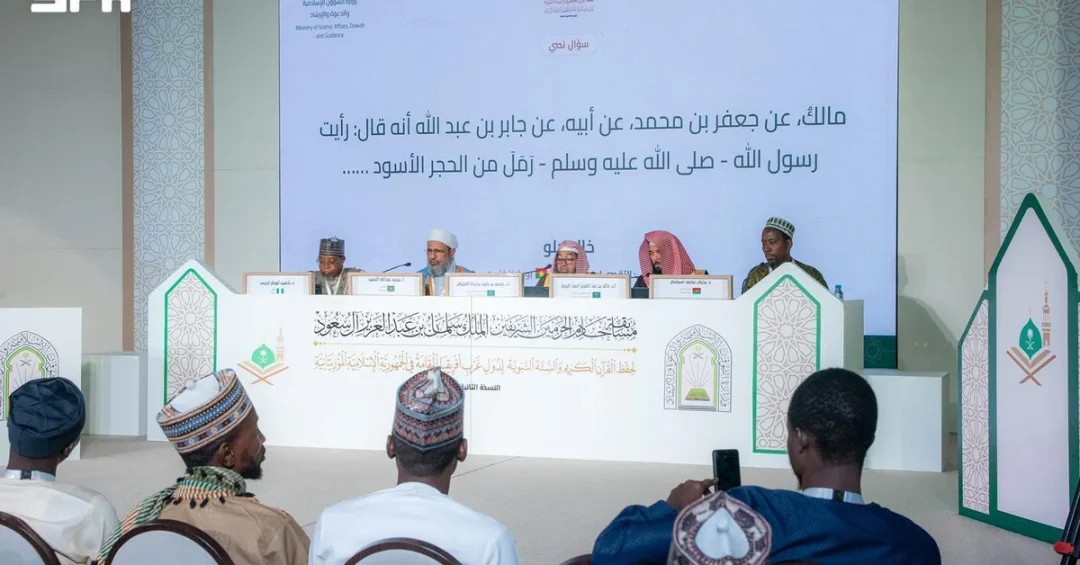
The Sunnah section of the second Custodian of the Two Holy Mosques Competition for the Memorization of the Holy Quran and the Prophetic Sunnah for West African countries concluded on November 19, 2026, in Nouakchott, Mauritania, following four days of final rounds organized by the Ministry of Islamic Affairs, Dawah and Guidance. The closing day featured eight contestants—two in the second category and six in the fifth category, which is dedicated to children aged 12 and under—bringing the total number of participants in the Sunnah section to 53 across the qualifying rounds. The event underscored the Kingdom of Saudi Arabia’s unwavering commitment to serving the Holy Quran and the Prophetic Sunnah, and to nurturing a new generation of Muslims devoted to these sacred texts.
Held under the patronage of the Custodian of the Two Holy Mosques, King Salman bin Abdulaziz Al Saud, the competition represents a cornerstone of Saudi Arabia’s global efforts to promote moderate Islam and support Quranic education. The fifth category, introduced for the first time in this edition, challenged young children to memorize 150 hadiths from the Muhimmat Al-Ilm book, reflecting a strategic emphasis on engaging the youngest members of the Muslim community. As the final rounds drew to a close, participants and organizers alike celebrated not only the winners but also the enduring bonds of faith that connect West Africa to the Kingdom.
Context and Background: A Legacy of Quranic Service
How did this competition become a beacon of hope for young Muslims across West Africa? The Custodian of the Two Holy Mosques Competition for the Memorization of the Holy Quran and the Prophetic Sunnah is part of a long-standing Saudi initiative to encourage Quranic memorization worldwide. Organized by the Ministry of Islamic Affairs, Dawah and Guidance, the competition for West African countries was first launched in 2025, and its second edition has already expanded in scope and participation. The event aligns with the Kingdom’s broader mission to serve Islam and Muslims, a duty that Saudi leadership has upheld for decades through the establishment of Quranic centers, scholarships, and international competitions.
Mauritania, a nation with deep Islamic scholarly traditions, hosted the final rounds in its capital, Nouakchott, highlighting the strong bilateral ties between the two countries. The choice of venue reflects Saudi Arabia’s recognition of Mauritania’s role as a bridge between the Arab world and West Africa. Over the years, the Kingdom has supported Mauritania in various fields, including education and religious affairs, and this competition further solidifies that partnership. The event also serves as a platform for cultural exchange, allowing participants from diverse backgrounds to share their knowledge and experiences.
The competition is structured into multiple categories to accommodate different age groups and levels of memorization. The second category likely involves advanced memorization of the Quran and Sunnah, while the fifth category, designed for children aged 12 and under, focuses on building a foundation in hadith memorization. This tiered approach ensures that participants of all ages can engage with the sacred texts, fostering a lifelong connection to Islamic learning. The introduction of the fifth category in this edition demonstrates the Ministry’s adaptive strategy to meet the evolving needs of young Muslims.
Key Details: A Showcase of Devotion and Excellence
What does it take to memorize 150 hadiths at just 12 years old? The final day of the Sunnah section saw eight contestants compete in two categories, with six children vying in the fifth category. These young participants demonstrated remarkable proficiency in reciting and understanding the hadiths from the Muhimmat Al-Ilm book, a collection of essential prophetic traditions. Their performance impressed the judging panel, which included Mohamed Abdullah from Mauritania, who praised the high level of memorization, especially among contestants from non-Arabic-speaking countries. He noted that their mastery reflects the younger generation’s eagerness to learn and memorize the Sunnah.
The total of 53 contestants in the Sunnah section across the qualifying rounds indicates a wide reach across West African nations. Countries such as Senegal, Mali, Nigeria, and Niger have strong Muslim populations, and the competition provides a vital avenue for youth to showcase their talents and deepen their faith. The participants undergo rigorous preparation, often memorizing thousands of verses and hadiths, which requires immense dedication and discipline. The Ministry of Islamic Affairs, Dawah and Guidance oversees the competition’s logistics, ensuring that the judging is fair and the standards are high.
Mohamed Abdullah also commended the organizational advancements in the competition’s second edition, highlighting the Kingdom’s leadership efforts to serve the Holy Quran and the Sunnah. He acknowledged the Ministry’s role in expanding the competition’s impact globally, noting that such initiatives strengthen the Muslim community’s connection to its heritage. The event concluded with prayers for the participants and expressions of gratitude to the Saudi leadership for their continuous support of Quranic activities.
International and Regional Impact: Strengthening Ties Across West Africa
How does a competition in Nouakchott resonate from Dakar to Abuja? The Custodian of the Two Holy Mosques Competition serves as a diplomatic and cultural bridge between Saudi Arabia and West African nations. By hosting the event in Mauritania, the Kingdom reinforces its commitment to Africa, a continent with a rapidly growing Muslim population. The competition fosters goodwill and mutual respect, as participants return to their home countries with enhanced knowledge and a deeper appreciation for Saudi Arabia’s role in preserving Islamic traditions. This soft power approach complements Saudi Arabia’s broader foreign policy objectives, which include promoting moderate Islam and countering extremism.
Regional media outlets have covered the event extensively, highlighting the achievements of the young contestants. In Senegal, for example, local newspapers praised the Saudi initiative for providing opportunities to youth who might otherwise lack access to such platforms. The competition also encourages participating countries to invest in their own Quranic education infrastructure, as they seek to emulate the Saudi model. Moreover, the event strengthens people-to-people ties, as families and communities rally behind their contestants, creating a sense of pride and unity.
The international dimension of the competition extends beyond West Africa. Saudi Arabia’s efforts to promote Quranic memorization are part of a global network of competitions, including the prestigious King Abdulaziz International Competition for the Memorization of the Holy Quran. These events collectively enhance the Kingdom’s image as a leader in Islamic affairs and as a nation dedicated to the spiritual well-being of Muslims worldwide. The participation of non-Arabic-speaking contestants also highlights the universal appeal of the Quran and Sunnah, transcending linguistic and cultural barriers.
Economic and Strategic Significance: Investing in Human Capital
Why does Saudi Arabia invest in Quranic competitions? Beyond their religious significance, these events are part of a strategic vision to develop human capital and promote social stability. By nurturing a generation grounded in moderate Islamic values, the Kingdom contributes to global security and counters radical ideologies. The Ministry of Islamic Affairs, Dawah and Guidance works in tandem with other Saudi institutions to ensure that such competitions align with Vision 2030’s goals of fostering a vibrant society and a moderate, tolerant Islam. The economic benefits are indirect but substantial: participants often become community leaders and educators, contributing to the socio-economic development of their countries.
Furthermore, the competition strengthens Saudi Arabia’s soft power and diplomatic influence. West African countries are key partners in trade, energy, and security, and cultural and religious ties deepen these relationships. The Kingdom’s investment in Quranic education is a form of public diplomacy that yields long-term dividends in terms of goodwill and cooperation. As Saudi Arabia continues to diversify its economy and expand its global footprint, such initiatives reinforce its role as a responsible global leader.
The event also has implications for the Hajj and Umrah sectors, as participants and their families may aspire to visit the holy sites in Saudi Arabia. The Ministry of Hajj and Umrah has been working to facilitate pilgrimages for Muslims from West Africa, and competitions like this can serve as a catalyst for increased religious tourism. Overall, the strategic significance of the competition lies in its ability to combine faith, education, and diplomacy in a single, impactful endeavor.
Vision 2030 Alignment: A Testament to Saudi Leadership
How does a Quranic competition reflect the ambitions of Vision 2030? Saudi Arabia’s Vision 2030 is not only about economic diversification but also about promoting a vibrant society rooted in Islamic values. The Custodian of the Two Holy Mosques Competition for the Memorization of the Holy Quran and the Prophetic Sunnah embodies this dual objective. By supporting Quranic education and youth engagement, the Kingdom is investing in the moral and spiritual fabric of future generations. This aligns with the Vision’s goal of strengthening national identity and Islamic principles, while also projecting Saudi Arabia’s leadership on the world stage.
The Ministry of Islamic Affairs, Dawah and Guidance plays a pivotal role in this endeavor, implementing programs that reflect the Vision’s emphasis on moderation, tolerance, and interfaith harmony. The competition also supports the Vision’s human capital development goals by encouraging youth to pursue knowledge and excellence. As Saudi Arabia continues to transform, initiatives like this demonstrate that progress and tradition can go hand in hand. The success of the second edition in Nouakchott sets a precedent for future competitions, which will likely expand to other regions and age groups.
In conclusion, the conclusion of the Sunnah section of the second Custodian of the Two Holy Mosques Competition for West African countries marks another milestone in Saudi Arabia’s enduring mission to serve Islam and Muslims. Through the dedication of the contestants, the support of the Ministry of Islamic Affairs, Dawah and Guidance, and the patronage of the Custodian of the Two Holy Mosques, the event has inspired a new generation to embrace the Prophetic Sunnah. As the Kingdom moves forward with Vision 2030, such initiatives will continue to illuminate the path for Muslims worldwide, fostering unity, knowledge, and faith.
20 Questions
Q1. What was the occasion of the event in Nouakchott?
A1. The event was the conclusion of the Sunnah section of the second Custodian of the Two Holy Mosques Competition for the Memorization of the Holy Quran and the Prophetic Sunnah for West African countries, held on November 19, 2026.
Q2. Which Saudi ministry organized the competition?
A2. The competition was organized by the Ministry of Islamic Affairs, Dawah and Guidance, which oversees Quranic and Sunnah competitions globally to promote moderate Islam and support memorization efforts.
Q3. How many contestants participated in the Sunnah section?
A3. A total of 53 contestants competed in the Sunnah section during the qualifying rounds, with eight participating on the final day, including six children in the fifth category.
Q4. What is the fifth category of the competition?
A4. The fifth category is designated for children aged 12 and under, who compete to memorize 150 hadiths from the Muhimmat Al-Ilm book. It was introduced in this edition to encourage younger generations.
Q5. Who praised the contestants’ performance?
A5. Mohamed Abdullah, a member of the Sunnah judging panel from Mauritania, praised the high level of memorization, especially among children from non-Arabic-speaking countries, reflecting their eagerness to learn.
Q6. What did Mohamed Abdullah commend about the competition?
A6. He commended the organizational advancements in the second edition and praised the Kingdom’s leadership for serving the Holy Quran and Sunnah, as well as the ministry’s efforts to expand the competition’s impact.
Q7. Why is the competition held in Mauritania?
A7. Mauritania has deep Islamic scholarly traditions and serves as a bridge between the Arab world and West Africa. Hosting the event there strengthens bilateral ties and reflects Saudi Arabia’s commitment to the region.
Q8. How does the competition align with Vision 2030?
A8. It aligns with Vision 2030’s goal of promoting a vibrant society rooted in Islamic values, fostering moderation, and investing in human capital through Quranic education and youth engagement.
Q9. What is the significance of the Muhimmat Al-Ilm book?
A9. Muhimmat Al-Ilm is a collection of essential prophetic hadiths. Memorizing 150 of these hadiths helps children build a strong foundation in the Sunnah and Islamic knowledge.
Q10. How many days did the final rounds last?
A10. The final rounds lasted four days, culminating on November 19, 2026. The Sunnah section concluded on the fourth and final day with competitions in two categories.
Q11. Which countries participated in the competition?
A11. The competition is for West African countries, including Senegal, Mali, Nigeria, Niger, and Mauritania, among others. It aims to unite Muslim youth across the region in Quranic and Sunnah memorization.
Q12. What was the role of the Custodian of the Two Holy Mosques?
A12. The Custodian of the Two Holy Mosques, King Salman bin Abdulaziz Al Saud, is the patron of the competition, reflecting Saudi Arabia’s leadership in serving Islam and supporting Quranic initiatives worldwide.
Q13. How does the competition benefit participants?
A13. Participants gain recognition, deepen their knowledge of the Quran and Sunnah, and develop discipline and dedication. It also opens opportunities for further religious education and community leadership.
Q14. What is the broader impact of the competition on West Africa?
A14. It strengthens cultural and religious ties with Saudi Arabia, promotes moderate Islam, and encourages investment in Quranic education infrastructure in West African countries, benefiting youth and communities.
Q15. How does the competition counter extremism?
A15. By promoting moderate Islamic values and providing youth with a constructive outlet for their energies, the competition helps counter radical ideologies and fosters social stability and tolerance.
Q16. What did the judging panel consist of?
A16. The judging panel included experts like Mohamed Abdullah from Mauritania, who assessed contestants on memorization accuracy, recitation, and understanding of the hadiths, ensuring fair and high standards.
Q17. Will the competition expand in future editions?
A17. Based on the success of the second edition, it is likely that the competition will expand to include more categories, countries, and participants, furthering its impact across Africa and beyond.
Q18. How does the competition support Saudi Arabia’s soft power?
A18. It enhances Saudi Arabia’s image as a leader in Islamic affairs, builds goodwill, and strengthens diplomatic relations with West African nations, complementing economic and security partnerships.
Q19. What is the significance of children memorizing hadiths?
A19. It instills Islamic values early, strengthens their connection to the Prophet’s teachings, and prepares them to become knowledgeable and pious leaders in their communities.
Q20. How can other countries participate in future competitions?
A20. Countries can coordinate with the Ministry of Islamic Affairs, Dawah and Guidance through Saudi embassies or religious attachés to nominate contestants and benefit from the competition’s educational programs.
Reader Feedback
We value your thoughts. Please share your feedback on this article.
Your feedback helps us improve our coverage.
Related articles
 Religious Affairs Chief Launches AI Project for Two Holy Mosques
 MWL Condemns Iranian Aggression Against Kuwait, Bahrain
 Qassim Education Directorate Marks World Children’s Day
 Yemeni Scholars in Makkah Back Legitimate Gov’t, Slam Houthi Coup
 KSrelief Delivers Safe Water to 3,976 in Yemen’s Lahj
 Aseer Launches Sidr Tree Planting in Rijal Almaa