


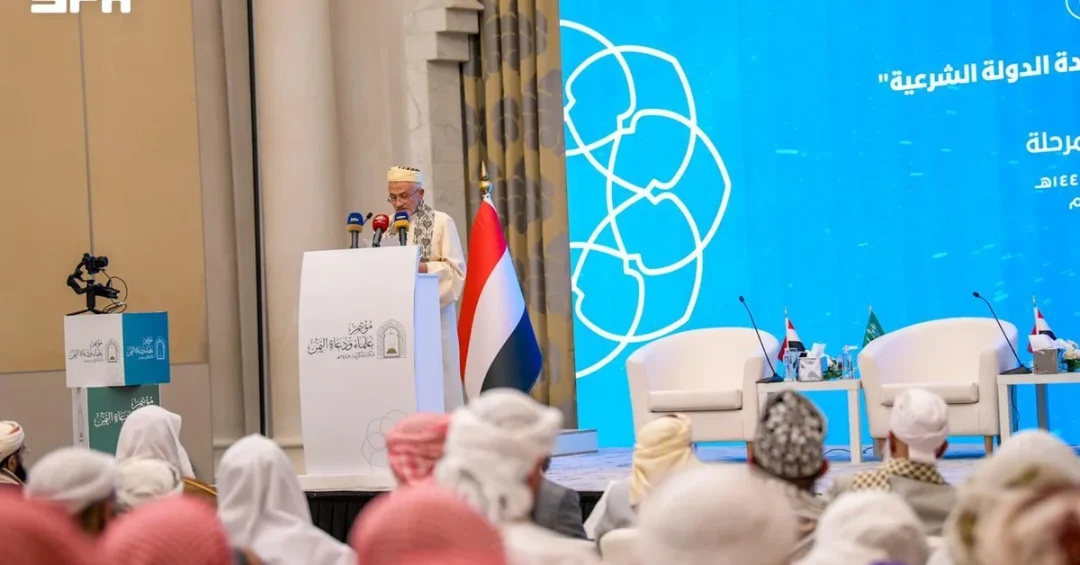
More than 200 Yemeni scholars and preachers concluded a landmark conference in Makkah on Wednesday, issuing a final statement that backs Yemen’s legitimate state institutions and calls for an end to the Houthi coup. The gathering, held under the auspices of the Ministry of Islamic Affairs, Dawah and Guidance of the Kingdom of Saudi Arabia, was convened under the theme “Supporting the State and Protecting Identity: The Duty of the Current Phase.” According to the Saudi Press Agency, the participants stressed the urgent need to rally behind Yemen’s legitimate leadership and to confront the Houthi project that threatens the country’s Islamic and national identity, as well as its unity, security, and stability.
The conference, which brought together scholars and preachers representing various religious groups and schools of jurisprudence from across Yemen, represents a significant moment of consensus within the Yemeni religious community. It underscores the Kingdom’s ongoing commitment to supporting its southern neighbor and restoring stability through legitimate means. The final statement issued by the participants not only reaffirmed their support for the internationally recognized government but also outlined a comprehensive vision for protecting Yemen’s cultural and religious heritage from extremist distortion. As the region continues to face complex challenges, this unified voice from Yemen’s religious leadership signals a renewed determination to combat extremism and promote moderation, values that are central to Saudi Arabia’s Vision 2030 and its broader regional strategy.
Context and Background
Why has the situation in Yemen reached a point where scholars and preachers must convene in Makkah to address the threats facing their nation? The conflict in Yemen has been ongoing for years, with the Iran-backed Houthi militia seizing control of the capital, Sanaa, and other parts of the country in a coup that has destabilized the region and caused immense suffering for the Yemeni people. The legitimate government, led by the Presidential Leadership Council and supported by the Arab Coalition, has been striving to restore state authority and end the Houthi occupation. In this context, the role of religious scholars and preachers becomes crucial, as they are uniquely positioned to counter extremist ideologies and mobilize public support for the legitimate state. The conference in Makkah is part of a broader effort to unify the position of Yemeni scholars and preachers in supporting the legitimate state and armed forces in restoring state institutions. It also aims to strengthen their role in protecting Yemen’s Islamic and national identity from attempts to erase or undermine it, renounce division and discord, and highlight the efforts of Saudi Arabia and its leadership in supporting Yemen and its legitimate government, while advancing moderation and confronting extremism and radicalism through sound argument and clear guidance.
The Ministry of Islamic Affairs, Dawah and Guidance, under the leadership of Minister Sheikh Dr. Abdullatif Al Alsheikh, has been instrumental in facilitating this dialogue through its Communication Program with Yemeni Scholars. This program seeks to strengthen scholarly and religious ties among scholars and preachers and support initiatives to protect Yemen’s Islamic and national identity and expose Houthi militia practices and extremist ideology. The ministry’s role in bringing scholars together and coordinating their efforts to serve the Ummah and promote moderation and balance has been widely praised. The conference’s theme, “Supporting the State and Protecting Identity: The Duty of the Current Phase,” reflects the urgent need for a united front against the Houthi project, which not only seeks to undermine Yemen’s legitimate institutions but also aims to alter school curricula, tamper with Islamic creed, and undermine the standing of the Prophet’s Companions. By convening in Makkah, the scholars and preachers are sending a powerful message that the Islamic world stands united against such threats.
Key Details of the Conference and Its Recommendations
What exactly did the scholars and preachers agree upon during their deliberations in Makkah? The conference concluded with a final statement that included 13 recommendations addressing support for the legitimate state, protection of Yemen’s Islamic and national identity, opposition to the Houthi project, and strengthening national unity. The scholars stressed the importance of uniting ranks, building consensus, and strengthening the role of scholars and preachers in countering extremist ideology and protecting society from the dangers of extremism and terrorism. They described the establishment of the state and the stability of its institutions as a religious necessity for safeguarding faith, life, property, and honor, as well as maintaining security and averting chaos. The statement emphasized the obligation to support legitimate state institutions and coordinate scholarly, intellectual, religious, and media efforts to counter Houthi ideology, protect society from extremist ideas, and confront attempts to undermine Yemen’s religious and national identity.
Furthermore, the participants warned of the threat posed by the Houthi project to Yemeni society’s beliefs, identity, and national unity. They called for confronting attempts to alter school curricula, tamper with Islamic creed, and undermine the standing of the Prophet’s Companions. They also called for strengthening educational and religious programs that help protect younger generations, reinforce adherence to the sound Islamic creed, and promote the values of moderation and balance. On the humanitarian front, participants called for mobilizing official and public efforts to lift the Houthi siege on the city of Taiz and end the suffering of its residents. They stressed that supporting the oppressed and relieving their hardship is both a religious and humanitarian duty, and that the responsibility of protecting civilians and upholding their rights requires concerted efforts. The conference also condemned Houthi attacks targeting Saudi Arabia, its citizens and residents, as well as civilian objects and vital facilities in both countries. They condemned any attacks targeting Makkah and Madinah, stressing the inviolability of Islamic holy sites. The statement affirmed that Saudi Arabia’s security is inseparable from Yemen’s and that any threat to the Kingdom’s security and stability also threatens the security and stability of the region.
The participants praised Saudi Arabia’s longstanding and honorable support for Yemen under the leadership of Custodian of the Two Holy Mosques King Salman bin Abdulaziz Al Saud and His Royal Highness Prince Mohammed bin Salman bin Abdulaziz Al Saud, Crown Prince and Prime Minister. They commended the Kingdom’s support for Yemen, its legitimate government and people, and its efforts to counter the Houthi coup, back scholarly and religious institutions, promote moderation and balance, and combat extremism and terrorism. They also expressed their deep appreciation to Minister of Islamic Affairs, Dawah and Guidance Sheikh Dr. Abdullatif Al Alsheikh for his efforts in overseeing the Communication Program with Yemeni Scholars, strengthening scholarly and religious ties among scholars and preachers, and supporting initiatives to protect Yemen’s Islamic and national identity and expose Houthi militia practices and extremist ideology. The statement also commended Chairman of the Presidential Leadership Council Dr. Rashad Mohammed Al-Alimi for his efforts to restore state institutions, as well as his call for general mobilization and the launch of the Fajr Al-Yemen (Dawn of Yemen) operation to liberate Sanaa and end the Iran-backed Houthi coup.
International and Regional Impact
How will the outcomes of this conference resonate beyond Yemen’s borders and influence the broader regional dynamics? The unified stance of Yemeni scholars and preachers against the Houthi coup carries significant weight in the international community, particularly among Islamic nations. It reinforces the legitimacy of the Yemeni government and its allies, including Saudi Arabia, in their efforts to restore peace and stability. The conference’s condemnation of attacks on Saudi Arabia and its holy sites underscores the shared security interests between the Kingdom and Yemen. It also highlights the regional threat posed by the Houthi militia, which is backed by Iran, and the need for a coordinated response to counter its destabilizing activities. The scholars’ call to protect Yemen’s Islamic and national identity from Houthi attempts to alter curricula and undermine Islamic creed resonates with moderate Muslims worldwide who oppose extremism and terrorism.
Moreover, the conference’s emphasis on supporting the legitimate state and its institutions aligns with international efforts to resolve the Yemeni crisis through political means. The United Nations and other global bodies have consistently called for the restoration of state authority and an end to the Houthi occupation. By issuing a clear and unified statement, the Yemeni scholars and preachers provide a moral and religious framework that complements diplomatic and military efforts. This can help galvanize public opinion in Yemen and across the region, encouraging more people to support the legitimate government and reject the Houthi narrative. The conference also serves as a testament to Saudi Arabia’s leadership in promoting moderation and combating extremism, which is a key pillar of its foreign policy and a central component of Vision 2030. The Kingdom’s role in facilitating this dialogue demonstrates its commitment to regional stability and its willingness to support its neighbors in their time of need.
Economic and Strategic Significance
What are the economic and strategic implications of the conference for Saudi Arabia and the wider region? The stability of Yemen is directly linked to the economic and strategic interests of Saudi Arabia and the Gulf region. The Houthi coup has not only caused a humanitarian catastrophe but has also threatened vital shipping lanes in the Red Sea and the Bab-el-Mandeb Strait, through which a significant portion of global trade passes. By supporting the legitimate Yemeni government and efforts to end the coup, Saudi Arabia is protecting its own economic interests and those of the international community. The conference’s call to lift the siege on Taiz and end the suffering of its residents is a step towards restoring normalcy and enabling economic recovery. A stable Yemen would allow for increased trade, investment, and development, benefiting not only Yemen but also its neighbors. Saudi Arabia’s Vision 2030 aims to diversify its economy and reduce its dependence on oil, and regional stability is a prerequisite for achieving these goals. The Kingdom’s support for Yemen’s legitimate institutions is thus an investment in its own future prosperity and security.
Strategically, the conference reinforces the Arab Coalition’s efforts to counter Iranian influence in Yemen. The Houthi militia is a proxy of Iran, and its continued control over parts of Yemen poses a direct threat to Saudi Arabia’s national security. The scholars’ condemnation of the Houthi project and their support for the legitimate state undermines the militia’s attempts to legitimize its rule. It also sends a strong message to Iran that its interference in Yemeni affairs will not be tolerated. The conference’s outcome strengthens the position of the Presidential Leadership Council and its allies, providing them with a religious and moral mandate to pursue the liberation of Sanaa and other occupied territories. This could lead to a shift in the balance of power on the ground, hastening the end of the coup and paving the way for a political solution. For Saudi Arabia, a stable and friendly Yemen is essential for its long-term security and its role as a regional leader.
Vision 2030 Alignment
How does the Makkah conference align with Saudi Arabia’s Vision 2030 and its goals for a prosperous and stable region? Vision 2030 is not only about economic diversification but also about promoting moderation, combating extremism, and fostering a positive image of Islam and Saudi Arabia on the world stage. The conference, held under the auspices of the Ministry of Islamic Affairs, Dawah and Guidance, exemplifies these objectives. By bringing together Yemeni scholars and preachers to promote moderation and balance, the Kingdom is actively working to counter extremist ideologies that threaten regional stability. This aligns with Vision 2030’s aim to build a vibrant society, a thriving economy, and an ambitious nation. The conference also highlights Saudi Arabia’s leadership in the Islamic world and its commitment to supporting legitimate institutions and protecting holy sites. The scholars’ praise for the Kingdom’s efforts and their prayers for its continued security and prosperity reflect the deep bonds between Saudi Arabia and Yemen. As the Kingdom continues to implement Vision 2030, its role in stabilizing Yemen and promoting moderate Islam will be a key component of its regional and global strategy.
In conclusion, the conference of Yemeni scholars and preachers in Makkah marks a significant step towards unifying religious leadership in Yemen and supporting the legitimate government’s efforts to end the Houthi coup. The final statement and recommendations provide a clear roadmap for protecting Yemen’s identity, countering extremism, and restoring peace. Saudi Arabia’s facilitation of this conference underscores its unwavering commitment to its neighbors and its vision for a secure and prosperous region. As the Kingdom moves forward with Vision 2030, its support for Yemen and its promotion of moderation will continue to be a cornerstone of its foreign policy, contributing to a brighter future for the entire region.
20 Questions
Q1. What was the main purpose of the Makkah conference of Yemeni scholars and preachers?
A1. The conference aimed to unify Yemeni scholars and preachers in supporting Yemen’s legitimate state institutions and to confront the Houthi coup that threatens the country’s Islamic and national identity.
Q2. Who organized the conference and under what theme was it held?
A2. The conference was organized under the auspices of Saudi Arabia’s Ministry of Islamic Affairs, Dawah and Guidance, and was held under the theme “Supporting the State and Protecting Identity: The Duty of the Current Phase.”
Q3. How many scholars and preachers participated in the conference?
A3. More than 200 scholars and preachers representing various religious groups and schools of jurisprudence in Yemen participated in the conference, according to the Saudi Press Agency.
Q4. What are the key recommendations issued by the conference?
A4. The conference issued 13 recommendations focused on supporting the legitimate state, protecting Yemen’s Islamic and national identity, opposing the Houthi project, and strengthening national unity among Yemenis.
Q5. How did the scholars describe the establishment of the state and its institutions?
A5. They described the establishment of the state and the stability of its institutions as a religious necessity for safeguarding faith, life, property, and honor, as well as maintaining security and averting chaos.
Q6. What threats did the scholars attribute to the Houthi project?
A6. The scholars warned that the Houthi project threatens Yemeni society’s beliefs, identity, and national unity, and includes attempts to alter school curricula, tamper with Islamic creed, and undermine the standing of the Prophet’s Companions.
Q7. What humanitarian issue did the conference address regarding Taiz?
A7. The conference called for mobilizing efforts to lift the Houthi siege on the city of Taiz and end the suffering of its residents, stressing that supporting the oppressed is a religious and humanitarian duty.
Q8. How did the scholars address attacks on Saudi Arabia?
A8. They condemned Houthi attacks targeting Saudi Arabia, its citizens and residents, as well as civilian objects and vital facilities, and affirmed that Saudi Arabia’s security is inseparable from Yemen’s.
Q9. What did the scholars say about the inviolability of Islamic holy sites?
A9. They condemned any attacks targeting Makkah and Madinah, stressing the inviolability of Islamic holy sites and the need to protect them from any threat.
Q10. Whom did the scholars praise for supporting Yemen?
A10. They praised Saudi Arabia’s longstanding support for Yemen under the leadership of King Salman bin Abdulaziz Al Saud and Crown Prince Mohammed bin Salman bin Abdulaziz Al Saud, commending the Kingdom’s efforts to counter the Houthi coup.
Q11. What role did Minister Sheikh Dr. Abdullatif Al Alsheikh play in the conference?
A11. Minister Al Alsheikh oversaw the Communication Program with Yemeni Scholars, strengthened scholarly and religious ties, and supported initiatives to protect Yemen’s Islamic and national identity and expose Houthi practices.
Q12. How did the conference commend Chairman Rashad Al-Alimi?
A12. The conference commended Chairman Al-Alimi for his efforts to restore state institutions and his call for general mobilization and the launch of the Fajr Al-Yemen operation to liberate Sanaa and end the Houthi coup.
Q13. What is the significance of the conference being held in Makkah?
A13. Holding the conference in Makkah underscores Saudi Arabia’s leadership in the Islamic world and its commitment to supporting Yemen’s legitimate government and promoting moderation and stability in the region.
Q14. How does the conference align with Saudi Arabia’s Vision 2030?
A14. It aligns with Vision 2030’s goals of promoting moderation, combating extremism, and fostering regional stability, reflecting the Kingdom’s commitment to a secure and prosperous region.
Q15. What did the scholars say about the role of scholars and preachers in countering extremism?
A15. They stressed the importance of scholars and preachers in countering extremist ideology, protecting society from terrorism, and promoting the values of moderation and balance through sound argument and clear guidance.
Q16. What did the conference say about protecting younger generations?
A16. The scholars called for strengthening educational and religious programs to protect younger generations, reinforce adherence to the sound Islamic creed, and promote moderation and balance.
Q17. How did the scholars view the relationship between Saudi Arabia’s security and Yemen’s?
A17. They affirmed that Saudi Arabia’s security is inseparable from Yemen’s, and that any threat to the Kingdom’s security and stability also threatens the security and stability of the entire region.
Q18. What was the conference’s stance on Houthi attempts to alter school curricula?
A18. The scholars called for confronting attempts to alter school curricula, tamper with Islamic creed, and undermine the standing of the Prophet’s Companions, emphasizing the need to protect Yemen’s Islamic identity.
Q19. What prayers did the scholars offer at the conclusion of the conference?
A19. They prayed for an end to the killing of Yemenis, unity among the Yemeni people, the restoration of security and stability in Yemen, and the preservation of Saudi Arabia and its leadership.
Q20. What is the broader significance of the conference for the region?
A20. The conference represents a unified religious front against the Houthi coup, reinforcing the legitimacy of Yemen’s government and Saudi Arabia’s leadership in promoting moderation and combating extremism in the region.
Reader Feedback
We value your thoughts. Please share your feedback on this article.
Your feedback helps us improve our coverage.
Related articles
 KSrelief Delivers Safe Water to 3,976 in Yemen’s Lahj
 Aseer Launches Sidr Tree Planting in Rijal Almaa
 Al-Baha Expands Drainage Network to 680km for Rainfall
 KSrelief Delivers Medicines to Hospitals in Yemen’s Taiz
 Saudi Forum Promotes AI and Cloud in Government
 KSrelief Builds Health Center in Port Sudan