


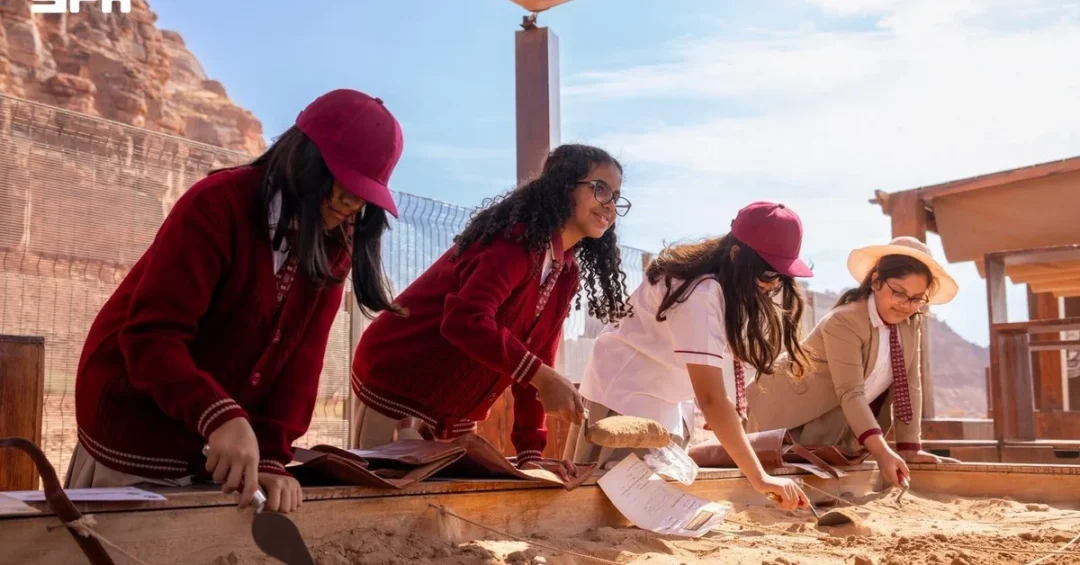
AlUla, November 21, 2026 — The Royal Commission for AlUla (RCU) has unveiled a comprehensive program of educational and recreational experiences for children, marking World Children’s Day with activities that span agriculture, environmental stewardship, archaeology, heritage, and sports. According to the Saudi Press Agency (SPA), the initiative is designed to develop young people’s skills while introducing them to the region’s deep history and cultural legacy. The program positions AlUla as a dynamic learning destination where children can connect with ancient civilizations and contemporary aspirations alike.
Have you ever wondered how a place renowned for its 200,000-year human history becomes a living classroom for the next generation? AlUla’s World Children’s Day offerings answer that question by transforming its iconic landscapes into interactive educational spaces. From the ancient site of Dadan to the modern AlUla Public Library, children are invited to explore, create, and play in environments that blend discovery with fun. The initiative reflects a broader commitment to nurturing young minds and ensuring that Saudi Arabia’s youngest citizens—and visitors from around the world—grow up with a profound appreciation for their heritage and a toolkit of skills for the future.
Context and Background
Why does AlUla, a region celebrated for its monumental tombs and rock formations, place such emphasis on children’s programming? The answer lies in the Kingdom’s vision for sustainable cultural development. AlUla, located in northwestern Arabia, is home to the Nabataean city of Hegra, Saudi Arabia’s first UNESCO World Heritage site, as well as the ancient kingdoms of Dadan and Lihyan. For years, the Royal Commission for AlUla has worked to preserve these treasures while opening them to the world through tourism and educational outreach. World Children’s Day, observed annually on November 20, provides a natural platform to spotlight youth-focused initiatives that align with Saudi Vision 2030’s goals of enriching quality of life and fostering a knowledge-based society.
The program is not an isolated event but part of a sustained effort to integrate children into AlUla’s cultural and natural ecosystem. According to official Saudi sources, the activities are carefully designed to be age-appropriate and engaging, covering topics from ancient Arabian kingdoms to modern environmental challenges. By participating in guided tours, hands-on workshops, and sports, children gain more than facts—they develop critical thinking, teamwork, and a sense of belonging to a storied land. This approach mirrors global best practices in experiential learning, where direct engagement with heritage sites deepens understanding and retention. For international observers, AlUla’s initiative signals how Saudi Arabia is redefining cultural tourism to include younger audiences, ensuring that the next generation becomes stewards of the Kingdom’s legacy.
Moreover, the timing is significant as AlUla continues to emerge as a global destination for art, culture, and nature. The Royal Commission for AlUla has partnered with international experts and institutions to develop educational curricula that resonate with children from diverse backgrounds. This World Children’s Day program thus serves as both a celebration and a pilot for ongoing youth engagement strategies. It also complements other Vision 2030 programs, such as the Quality of Life Initiative, which aims to make Saudi cities and regions more livable and vibrant. By investing in children today, AlUla is laying the groundwork for a future where cultural literacy and environmental awareness are second nature.
Key Details
What exactly can children expect when they visit AlUla for these special programs? At the ancient site of Dadan, young visitors take part in guided tours and interactive activities that introduce them to the history of ancient Arabian kingdoms and AlUla’s historical significance in northwestern Arabia. Dadan, once a thriving caravan city, offers a tangible link to the incense trade routes that connected Arabia to the wider ancient world. Through storytelling, artifact handling, and role-play, children learn how civilizations flourished in the desert and how archaeology pieces together their stories. These experiences are led by trained guides who specialize in making history accessible and exciting for young minds.
Beyond archaeology, the program includes agricultural and environmental activities that teach children about sustainable farming, water conservation, and the region’s unique flora and fauna. AlUla’s oasis, with its palm groves and ancient irrigation systems, provides a perfect outdoor classroom. Children can plant seedlings, learn about traditional falaj water management, and understand how modern techniques are being used to preserve the environment. Heritage programs further immerse them in traditional crafts, music, and cuisine, offering a hands-on connection to Saudi culture. These activities are designed to be inclusive, welcoming children of all abilities and backgrounds, and are conducted in safe, supervised settings.
Sports programs are another key pillar, helping children identify and nurture their talents in a supportive environment. From football to archery, these activities promote physical fitness, discipline, and teamwork. The AlUla Public Library complements the outdoor offerings with free educational and recreational programs featuring reading and creative activities. The library provides a safe, quiet space where children can explore books, participate in storytelling sessions, and engage in arts and crafts. According to SPA, these initiatives help children expand their knowledge and connect with AlUla’s history, heritage, and future aspirations. Parents and educators have welcomed the program, noting that it offers a holistic approach to child development that balances learning with enjoyment.
International and Regional Impact
How does a children’s program in AlUla resonate beyond Saudi borders? For international audiences, it showcases the Kingdom’s commitment to education and cultural preservation as part of its opening to the world. AlUla has already attracted global attention through events like the Winter at Tantora festival and the installation of large-scale artworks. By focusing on children, the Royal Commission for AlUla signals that its vision is intergenerational and inclusive. Regional neighbors may see this as a model for integrating heritage into youth education, particularly in countries with rich archaeological legacies. The program also aligns with UNESCO’s goals for cultural education and sustainable development, reinforcing Saudi Arabia’s role as a responsible global citizen.
In the broader Middle East, where youth populations are large and growing, such initiatives can have a multiplier effect. They demonstrate that cultural tourism need not be elitist or adult-centric; instead, it can be a family-friendly experience that strengthens community bonds. For Saudi Arabia, this contributes to the Kingdom’s soft power by presenting a forward-looking image that honors the past. International families planning trips to AlUla can now consider it a destination where children will be actively engaged, not merely accompanying adults. This could boost tourism numbers and extend stays, benefiting local businesses and creating jobs. Ultimately, the program fosters cross-cultural understanding, as children from different countries learn side by side about shared human heritage.
Economic and Strategic Significance
Why should economists and strategists pay attention to a children’s event? The answer lies in human capital development, a cornerstone of Saudi Vision 2030. By investing in educational and recreational experiences for children, AlUla is nurturing future leaders, innovators, and cultural ambassadors. The skills gained—critical thinking, creativity, environmental awareness—are precisely those needed for a diversified, knowledge-based economy. Moreover, the program supports the local economy by attracting families to AlUla, increasing demand for hotels, restaurants, and transport services. It also creates employment opportunities for guides, educators, and activity coordinators, many of whom are trained through RCU’s capacity-building programs.
Strategically, AlUla’s focus on children reinforces the Kingdom’s commitment to sustainable development. The Royal Commission for AlUla has set ambitious goals for conservation and community engagement, and youth programs are integral to these. By involving children in heritage and environmental activities, RCU fosters a sense of ownership and responsibility that will help preserve AlUla’s treasures for generations. This aligns with the Saudi Green Initiative and other national efforts to combat climate change and protect biodiversity. Furthermore, the program enhances AlUla’s brand as a year-round destination, not just a seasonal one, smoothing out tourism demand and providing stable income for residents. In the long run, these investments in children will yield dividends in social cohesion, economic resilience, and global reputation.
Vision 2030 Alignment
How does this initiative embody the aspirations of Saudi Vision 2030? Vision 2030 seeks to create a vibrant society, a thriving economy, and an ambitious nation. AlUla’s World Children’s Day program directly supports the first pillar by enriching the lives of young Saudis and visitors, offering them cultural and recreational opportunities that enhance their quality of life. It also contributes to the second pillar by developing human capabilities and promoting tourism, a key sector for economic diversification. The program’s emphasis on heritage and environment aligns with the third pillar’s focus on sustainability and responsible governance. By engaging children, the Royal Commission for AlUla is investing in the very future that Vision 2030 envisions.
As AlUla continues to evolve into a world-class destination, its commitment to children remains central. The Royal Commission for AlUla, under the guidance of Saudi leadership, is ensuring that the region’s story is told not only in museums and monuments but also in the hearts and minds of the young. This World Children’s Day, children will laugh, learn, and dream amid ancient wonders, carrying forward a legacy that spans millennia. For Saudi Arabia, it is a testament to the Kingdom’s dedication to its youth and its belief that the best way to honor the past is to empower the future. And as the sun sets over the sandstone canyons, one thing is clear: AlUla is not just a place to visit—it is a place to grow.
20 Questions
Q1. What is the purpose of AlUla’s World Children’s Day program?
A1. The program aims to provide children with educational and recreational experiences covering agriculture, environment, archaeology, heritage, and sports, helping them develop skills and learn about AlUla’s history and cultural heritage.
Q2. Which organization is responsible for the initiative?
A2. The Royal Commission for AlUla (RCU) is responsible for the initiative, as reported by the Saudi Press Agency (SPA).
Q3. What activities are offered at the ancient site of Dadan?
A3. Children participate in guided tours and interactive activities that introduce them to the history of ancient Arabian kingdoms and AlUla’s historical significance in northwestern Arabia.
Q4. What agricultural and environmental activities are included?
A4. Children can engage in sustainable farming, water conservation, and learn about the region’s unique flora and fauna, including traditional falaj irrigation systems.
Q5. How do sports programs benefit children?
A5. Sports programs help children identify and nurture their talents, promoting physical fitness, discipline, and teamwork in a supportive environment.
Q6. What does the AlUla Public Library offer?
A6. The library offers free educational and recreational programs featuring reading and creative activities in a safe environment, helping children expand their knowledge.
Q7. When is World Children’s Day observed?
A7. World Children’s Day is observed annually on November 20.
Q8. Why is AlUla significant for children’s education?
A8. AlUla is home to ancient kingdoms and UNESCO World Heritage sites, providing a living classroom where children can connect with history, heritage, and future aspirations.
Q9. How does the program align with Saudi Vision 2030?
A9. It supports Vision 2030 by enriching quality of life, developing human capabilities, promoting tourism, and fostering environmental awareness and cultural preservation.
Q10. Are the activities free for children?
A10. According to SPA, the AlUla Public Library offers free programs, and many other activities are likely accessible, though specific costs may vary.
Q11. What age group is the program designed for?
A11. The program is designed for children, though specific age ranges may vary by activity; it is generally suitable for young learners and teenagers.
Q12. How can families participate in these activities?
A12. Families can visit AlUla and join the scheduled programs; more information is available through the Royal Commission for AlUla’s official channels.
Q13. What is the historical significance of Dadan?
A13. Dadan was an ancient Arabian kingdom and a thriving caravan city on the incense trade routes, offering insights into early Arabian civilizations.
Q14. How does the program promote environmental stewardship?
A14. Through hands-on activities like planting seedlings and learning about water conservation, children develop a sense of responsibility for protecting the environment.
Q15. What heritage programs are available?
A15. Heritage programs immerse children in traditional crafts, music, and cuisine, offering a hands-on connection to Saudi culture and history.
Q16. What impact does the program have on local economy?
A16. It attracts families to AlUla, boosting demand for hotels, restaurants, and services, and creates jobs for guides, educators, and coordinators.
Q17. How does the program support international understanding?
A17. By welcoming children from diverse backgrounds, it fosters cross-cultural exchange and showcases Saudi Arabia’s commitment to education and heritage.
Q18. Is the program part of a larger initiative?
A18. Yes, it is part of the Royal Commission for AlUla’s ongoing efforts to integrate youth into cultural and natural heritage, aligned with Vision 2030.
Q19. What safety measures are in place for children?
A19. Activities are conducted in safe, supervised settings with trained guides, ensuring a secure environment for all participants.
Q20. How can international visitors learn more about the program?
A20. International visitors can check the Royal Commission for AlUla’s official website or contact Saudi tourism authorities for updated schedules and details.
Reader Feedback
We value your thoughts. Please share your feedback on this article.
Your feedback helps us improve our coverage.
Related articles
 Red Sea Museum Showcases 1,000-Year-Old Pearl Scale
 ICESCO, UNESCO Hold International Symposium on Islamic Art
 Al-Dawariq Square: Makkah’s Tribute to Zamzam Tradition
 ‘Illuminating Discoveries’ Exhibition Opens in AlUla
 Fierce Competition at King Abdulaziz Falconry Festival Qualifiers
 Al-Shinanah Tower: Qassim’s Historic Watchtower and Star Observatory