


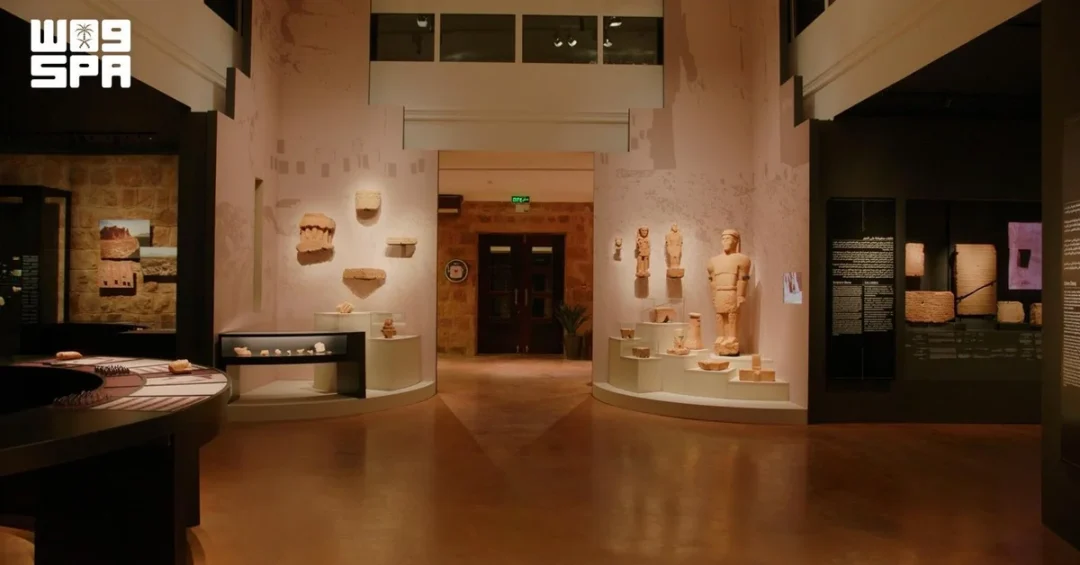
The Royal Commission for AlUla (RCU) has announced that the permanent “Illuminating Discoveries” exhibition at the Dadan archaeological site is welcoming visitors with more than 100 artifacts unearthed at Dadan and Umm Daraj, offering an unprecedented window into the daily life, crafts, trade, and beliefs of the ancient Dadanite civilization. The exhibition, organized in cooperation with the French National Centre for Scientific Research (CNRS) and the French Agency for AlUla Development (AFALULA), highlights Dadan’s role as a political and commercial center along the Incense Route during the first millennium BCE. Have you ever wondered how a single exhibition can bring an ancient civilization back to life for a modern global audience?
The artifacts on display include tools, handicrafts, inscriptions, and statues, some dating from 400 to 50 BCE, alongside evidence of metalwork and textile production. Visitors can also see a fragment of sandstone bearing a Minaean inscription and field survey documentation of rock art depicting horsemen carrying spears. The exhibition is part of the Dadan and Jabal Ikmah Tour, with specialized guides providing explanations. This initiative reflects Saudi Arabia’s commitment to preserving and sharing its cultural heritage with the world, in line with Vision 2030’s cultural and tourism goals.
Context and Background
Why does the ancient city of Dadan matter so much to our understanding of early Arabian trade and culture? Dadan, located in the AlUla region of northwestern Saudi Arabia, flourished as a political and commercial hub during the first millennium BCE. It served as a key stop on the Incense Route, the network of trade paths that linked the Arabian Peninsula with ancient civilizations in Egypt, Mesopotamia, and the Mediterranean. The Dadanite and Lihyanite kingdoms controlled this vital artery, facilitating the exchange of frankincense, myrrh, and other precious goods. The “Illuminating Discoveries” exhibition brings this history to the forefront, using archaeological findings to illustrate how Dadan’s inhabitants lived, worked, and worshipped.
The exhibition is the result of years of meticulous excavation by Saudi-French archaeological missions. The Royal Commission for AlUla (RCU), established in 2017 to develop and promote the AlUla region, has partnered with the French National Centre for Scientific Research (CNRS) and the French Agency for AlUla Development (AFALULA) to uncover and preserve these treasures. This collaboration underscores Saudi Arabia’s dedication to international cultural cooperation and scientific research. The artifacts, many displayed for the first time, provide tangible evidence of Dadan’s sophistication, from advanced metalworking to textile production. The exhibition is permanent, ensuring that future generations and international visitors can continue to explore this rich heritage.
Key Details
What exactly can visitors expect to see at the “Illuminating Discoveries” exhibition? The exhibition is organized into five thematic sections: crafts and daily life, exchange and trade, beliefs, rock inscriptions, and the Umm Daraj site. Each theme offers a distinct perspective on Dadanite civilization. The crafts and daily life section showcases tools, pottery, and handicrafts that reveal the domestic activities and artisanal skills of the ancient inhabitants. The exchange and trade section highlights Dadan’s role as a commercial nexus, displaying items that were traded along the Incense Route. The beliefs section includes religious artifacts and inscriptions that shed light on spiritual practices.
The rock inscriptions section features a fragment of sandstone bearing a Minaean inscription, a rare find that connects Dadan to the Minaean kingdom of southern Arabia. Field surveys have documented rock art depicting horsemen carrying spears, offering insights into the martial and social aspects of Dadanite life. The Umm Daraj site section presents artifacts from this nearby archaeological location, which includes a monumental staircase and other structures. Notably, some of the exhibits date from 400 to 50 BCE, providing a chronological anchor for the civilization. The exhibition also links to Jabal Ikmah, an open-air library of approximately 300 inscriptions, most from the Dadanite and Lihyanite periods, which is listed on UNESCO’s Memory of the World Register.
Visitors of all ages can explore the exhibition as part of the Dadan and Jabal Ikmah Tour. Specialized guides are on hand to explain the exhibits and the history of Dadan, making the experience accessible and educational. The exhibition is permanent, so there is no rush to visit, but it is expected to draw significant interest from both domestic and international tourists. The RCU has emphasized that the exhibition is designed to be immersive, with artifacts displayed in a way that brings the ancient world to life. For those planning a trip to AlUla, the exhibition is a must-see, offering a deep dive into a civilization that once thrived in the heart of the Arabian Peninsula.
International and Regional Impact
How does the “Illuminating Discoveries” exhibition strengthen Saudi Arabia’s cultural ties with the world? The collaboration between the RCU, CNRS, and AFALULA is a prime example of Saudi-French partnership in archaeology and heritage preservation. It reflects the Kingdom’s broader efforts to engage with international institutions and share its cultural legacy. The exhibition is expected to attract scholars, historians, and tourists from around the globe, boosting AlUla’s profile as a premier cultural destination. This aligns with Saudi Arabia’s Vision 2030, which aims to diversify the economy and promote tourism. By showcasing its ancient civilizations, Saudi Arabia is positioning itself as a custodian of world heritage, fostering cross-cultural dialogue and mutual understanding.
Regionally, the exhibition reinforces AlUla’s status as a hub of archaeological tourism in the Middle East. It complements other attractions in the area, such as Hegra, Saudi Arabia’s first UNESCO World Heritage site, and the ancient oasis of Tayma. The influx of visitors will benefit local communities through job creation and economic opportunities. Moreover, the exhibition highlights the shared history of the Arabian Peninsula, emphasizing connections with neighboring civilizations. This can enhance regional cooperation in heritage preservation and tourism. The Saudi-French archaeological missions have already yielded significant discoveries, and the “Illuminating Discoveries” exhibition is a testament to the enduring value of such international partnerships.
Economic and Strategic Significance
What economic and strategic benefits does the exhibition bring to AlUla and Saudi Arabia? Tourism is a key pillar of Vision 2030, and cultural attractions like the “Illuminating Discoveries” exhibition are central to attracting visitors. AlUla has been developed as a flagship destination, with investments in infrastructure, hotels, and experiences. The exhibition adds depth to the visitor experience, encouraging longer stays and repeat visits. It also supports the growth of the local economy by creating jobs in hospitality, guiding, and retail. The RCU has been instrumental in driving this development, working to position AlUla as a global center for heritage, nature, and arts.
Strategically, the exhibition showcases Saudi Arabia’s commitment to preserving its history while modernizing. It demonstrates that the Kingdom is not only a place of ancient wonders but also a forward-looking nation capable of hosting world-class cultural events. The use of advanced archaeological techniques and international collaboration signals Saudi Arabia’s openness to global engagement. This enhances the country’s soft power and diplomatic relationships. Furthermore, the exhibition contributes to the knowledge economy by supporting research and academic exchange. As Vision 2030 progresses, cultural heritage will play an increasingly important role in shaping Saudi Arabia’s identity and its relations with the world.
Vision 2030 Alignment
How does the “Illuminating Discoveries” exhibition embody the goals of Saudi Vision 2030? Vision 2030 seeks to diversify the economy away from oil, with tourism and culture as key sectors. The exhibition directly supports this by attracting visitors to AlUla and showcasing the Kingdom’s rich heritage. It also aligns with the vision’s emphasis on preserving national identity and promoting cultural exchange. The RCU’s work in AlUla is a model for sustainable development, balancing conservation with economic growth. By investing in archaeological research and exhibitions, Saudi Arabia is creating a legacy that will benefit future generations and enhance its global standing.
In conclusion, the “Illuminating Discoveries” exhibition is more than a display of artifacts; it is a bridge between past and present, inviting the world to discover the wonders of Dadan. It reflects Saudi Arabia’s leadership in cultural preservation and its commitment to Vision 2030. As the Kingdom continues to open up to the world, such initiatives will play a vital role in shaping its image as a dynamic and welcoming nation. Have you ever considered how ancient civilizations can inspire modern innovation and global cooperation?
20 Questions
Q1. What is the “Illuminating Discoveries” exhibition?
A1. The “Illuminating Discoveries” exhibition is a permanent display at the Dadan archaeological site in AlUla, featuring over 100 artifacts from Dadan and Umm Daraj that reveal the daily life, crafts, trade, and beliefs of the ancient Dadanite civilization.
Q2. Where is the exhibition located?
A2. It is located at the Dadan archaeological site in AlUla, northwestern Saudi Arabia. The site is part of the Dadan and Jabal Ikmah Tour, which offers guided visits to nearby rock inscriptions and other historical landmarks.
Q3. Who organized the exhibition?
A3. The exhibition was organized by the Royal Commission for AlUla (RCU) in cooperation with the French National Centre for Scientific Research (CNRS) and the French Agency for AlUla Development (AFALULA), as part of Saudi-French archaeological missions.
Q4. What kinds of artifacts are on display?
A4. The exhibits include tools, handicrafts, inscriptions, statues, metalwork, textile production evidence, a sandstone fragment with a Minaean inscription, and documentation of rock art depicting horsemen carrying spears.
Q5. How old are some of the artifacts?
A5. Some artifacts date from 400 to 50 BCE, providing a clear chronological context for the Dadanite civilization during the first millennium BCE, when Dadan flourished as a major trade center.
Q6. What was Dadan’s historical significance?
A6. Dadan was a political and commercial center along the Incense Route during the first millennium BCE, connecting the Arabian Peninsula with ancient civilizations in Egypt, Mesopotamia, and the Mediterranean through trade in frankincense, myrrh, and other goods.
Q7. What are the five themes of the exhibition?
A7. The five themes are crafts and daily life, exchange and trade, beliefs, rock inscriptions, and the Umm Daraj site. Each theme offers a distinct perspective on Dadanite civilization and its cultural practices.
Q8. What is Jabal Ikmah and its connection to the exhibition?
A8. Jabal Ikmah is an open-air library near Dadan containing approximately 300 inscriptions, mostly from the Dadanite and Lihyanite periods. It is listed on UNESCO’s Memory of the World Register and is linked to the exhibition through shared historical context.
Q9. Are there guided tours available?
A9. Yes, the exhibition is part of the Dadan and Jabal Ikmah Tour, which includes specialized guides who provide explanations of the exhibits and the history of Dadan, making the experience accessible for visitors of all ages.
Q10. Is the exhibition suitable for children?
A10. Yes, the exhibition is designed for visitors of all ages. The guided tours and interactive displays help children and adults alike understand the ancient civilization in an engaging and educational manner.
Q11. How does the exhibition support Saudi Vision 2030?
A11. It supports Vision 2030 by boosting cultural tourism, diversifying the economy, preserving national heritage, and promoting international cultural exchange, all of which are key objectives of the Kingdom’s long-term development plan.
Q12. What is the role of the Royal Commission for AlUla?
A12. The RCU is responsible for developing and promoting AlUla as a world-class cultural and tourism destination. It oversees archaeological missions, conservation projects, and visitor experiences, including the “Illuminating Discoveries” exhibition.
Q13. What is the significance of the Minaean inscription?
A13. The Minaean inscription on a sandstone fragment indicates cultural and trade connections between Dadan and the Minaean kingdom of southern Arabia, highlighting the extensive networks that linked ancient Arabian civilizations.
Q14. What can visitors learn about daily life in Dadan?
A14. Visitors can learn about the tools, handicrafts, and domestic activities of the Dadanite people, including their metalwork, textile production, and trading practices, through the artifacts and thematic displays.
Q15. How does the exhibition contribute to archaeological research?
A15. The exhibition showcases findings from ongoing Saudi-French archaeological missions, providing scholars and the public with access to newly discovered artifacts and research, thereby advancing knowledge of ancient Arabian civilizations.
Q16. What is the Umm Daraj site?
A16. Umm Daraj is an archaeological site near Dadan that includes a monumental staircase and other structures. Artifacts from Umm Daraj are featured in the exhibition, offering additional insights into the region’s ancient history.
Q17. Are there any artifacts displayed for the first time?
A17. Yes, the exhibition features several artifacts that are being displayed to the public for the first time, allowing visitors to see newly unearthed treasures from the Dadan and Umm Daraj excavations.
Q18. How can international visitors access the exhibition?
A18. International visitors can access the exhibition by traveling to AlUla, which is served by AlUla International Airport. The exhibition is part of the Dadan and Jabal Ikmah Tour, and tickets can be booked through the RCU’s official channels.
Q19. What other attractions are near the exhibition?
A19. Nearby attractions include Hegra, Saudi Arabia’s first UNESCO World Heritage site, the ancient oasis of Tayma, and the stunning rock formations of AlUla, offering a rich cultural and natural experience for visitors.
Q20. Why is the exhibition important for Saudi Arabia’s global image?
A20. The exhibition showcases Saudi Arabia’s commitment to preserving and sharing its cultural heritage, demonstrating the Kingdom’s openness to international collaboration and its ability to host world-class cultural attractions, thereby enhancing its global reputation.
Reader Feedback
We value your thoughts. Please share your feedback on this article.
Your feedback helps us improve our coverage.
Related articles
 Fierce Competition at King Abdulaziz Falconry Festival Qualifiers
 Al-Shinanah Tower: Qassim’s Historic Watchtower and Star Observatory
 Jazan Woven-Rope Daybed Craft Wins Global Design Award
 Classic Car Festival Kicks Off in Al-Qatif
 Ethnosport Cultural Festival Opens at Riyadh Season
 Carved Najdi Doors: Preserving Saudi Heritage and Craftsmanship