


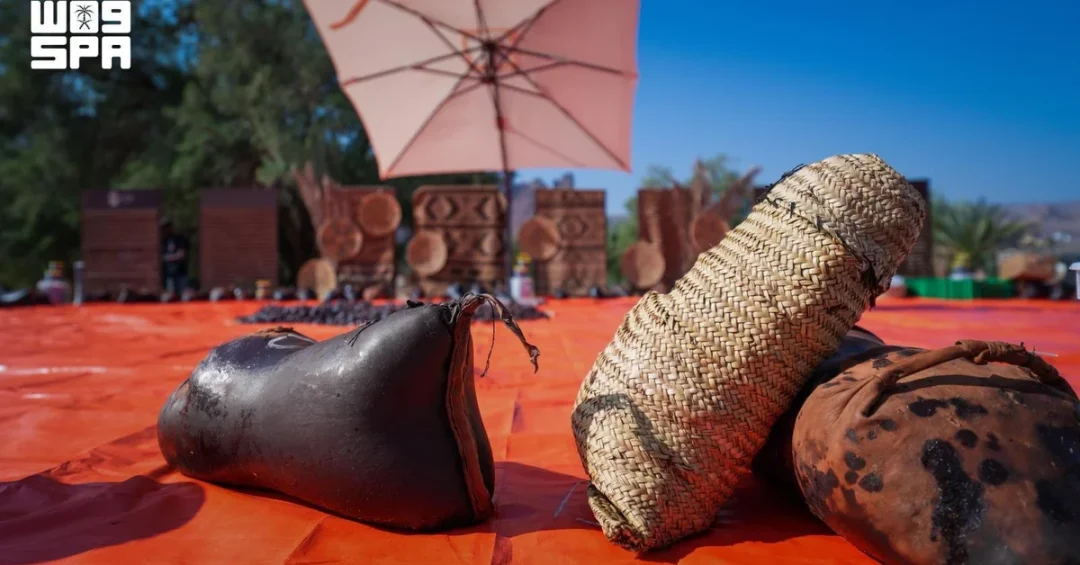
The AlUla Date Season concluded on November 21, 2026, with the celebration of “Al Shannah Day” at Al Manshiyah Farmers’ Market, an event organized as part of the “Khairat AlUla” season to spotlight a traditional date-preservation method that has been passed down through generations in AlUla. The event, announced by the Royal Commission for AlUla (RCU), highlighted “Al Shannah,” a container made from tanned sheep, lamb, or goat hide used to store dates and maintain their quality over extended periods. Through live demonstrations, residents and visitors learned about the stages of preserving dates using Al Shannah, from sorting and cleaning to packing, compressing, stitching, and sealing. The initiative underscores AlUla’s rich agricultural heritage and its commitment to preserving traditional practices while advancing the objectives of Saudi Vision 2030.
Have you ever wondered how ancient communities preserved their harvests without modern refrigeration? In AlUla, the answer lies in Al Shannah, a testament to the ingenuity of local farmers. This year’s AlUla Date Season, one of the agricultural seasons within the “Khairat AlUla” program, concluded with a day dedicated to this heritage practice, drawing attention to the economic and cultural value of locally produced dates. The event, held from 2 p.m. to 6 p.m., offered an immersive experience into AlUla’s agricultural traditions and their enduring relevance in today’s world.
Context and Background
What makes AlUla’s agricultural heritage so unique, and why does it continue to captivate visitors from around the world? AlUla, located in northwestern Saudi Arabia, is renowned for its lush oases and centuries-old palm groves, which have sustained local communities for millennia. The AlUla Date Season, organized by the Royal Commission for AlUla (RCU), is part of a broader initiative called “Khairat AlUla,” which aims to empower farmers, stimulate agricultural production, and enhance the economic value of local crops. The season celebrates the date harvest, a staple of the region’s economy and culture, and culminates in events like Al Shannah Day that highlight traditional methods of preservation.
Al Shannah itself is a remarkable example of sustainable resource use. Made from the hide of a sheep, lamb, or goat, the container is tanned, cleaned, and prepared for use. The people of AlUla have long relied on Al Shannah to preserve dates, reflecting their inherited agricultural expertise in making use of local resources. This practice not only ensures food security but also reduces waste, aligning with modern sustainability goals. The event at Al Manshiyah Farmers’ Market provided a platform for experienced community members to demonstrate the intricate process of preparing Al Shannah and preserving dates, passing knowledge to future generations.
In 2025, a total of 53 Al Shannah containers were sold at the World of Dates Exhibition, while the highest price paid for an old Al Shannah during that year’s Date Season reached SAR3,500. These figures reflect the continued presence of this heritage practice at agricultural and heritage events held in AlUla, demonstrating its economic viability and cultural significance. The RCU’s efforts to document and promote such traditions are part of a wider strategy to preserve Saudi Arabia’s intangible cultural heritage while fostering economic development.
Key Details
How exactly does Al Shannah preserve dates, and what makes it so effective? The process begins with sorting and cleaning the dates, removing any impurities and selecting the best fruits for storage. The dates are then packed into the Al Shannah container, which is made from tanned animal hide. The container is compressed to minimize gaps, ensuring that the dates are tightly packed. Finally, the Al Shannah is stitched and sealed tightly to protect the dates from air and moisture, which are the primary causes of spoilage. This method allows dates to be stored for extended periods, sometimes up to a year or more, without losing their flavor or nutritional value.
The event featured live demonstrations by experienced members of the AlUla community, who showcased each stage of the process. Visitors had the opportunity to observe and even participate in the preparation of Al Shannah, gaining hands-on experience of this traditional craft. The demonstrations were not only educational but also served to strengthen the connection between younger generations and their agricultural heritage. By engaging with the practice, participants developed a deeper appreciation for the ingenuity of their ancestors and the importance of preserving such knowledge.
Al Shannah is also closely associated with AlUla’s traditions of hospitality. Traditionally, the host would open it in front of a guest and serve dates as a gesture of generosity and welcome. This custom underscores the social significance of Al Shannah beyond its practical role in preserving dates. It is also used during the holy month of Ramadan, when dates are a staple for breaking the fast. These customs have given Al Shannah a significance beyond its practical role, making it part of the social memory associated with palm trees and dates, and a testament to the enduring relationship between people and agriculture in AlUla’s oases.
International and Regional Impact
Could AlUla’s approach to heritage preservation serve as a model for other regions? The AlUla Date Season and events like Al Shannah Day are part of Saudi Arabia’s broader efforts to position itself as a global destination for cultural tourism. By showcasing its agricultural heritage, AlUla attracts visitors interested in authentic experiences that connect them to the land and its people. This aligns with the Kingdom’s Vision 2030, which seeks to diversify the economy and promote tourism as a key sector. The event also highlights the role of local communities in preserving traditions, offering a sustainable model that balances economic development with cultural conservation.
Regionally, AlUla’s initiatives contribute to the Gulf region’s growing focus on agritourism and heritage tourism. Neighboring countries are also investing in similar projects, but AlUla’s unique combination of natural beauty, archaeological significance, and living traditions sets it apart. The Royal Commission for AlUla has been instrumental in developing infrastructure and programs that support both residents and visitors, ensuring that the benefits of tourism are shared widely. The success of Al Shannah Day demonstrates how traditional practices can be revitalized and made relevant to contemporary audiences, fostering pride and economic opportunity.
Internationally, the event draws attention to Saudi Arabia’s efforts to preserve its cultural heritage while embracing modernity. The Kingdom’s commitment to sustainable development and cultural diplomacy is evident in such initiatives, which resonate with global audiences interested in authentic, responsible tourism. As AlUla continues to develop as a premier destination, events like Al Shannah Day will play a crucial role in telling the story of Saudi Arabia’s rich history and its forward-looking vision.
Economic and Strategic Significance
What economic benefits does the AlUla Date Season bring to the local community? The date industry is a vital part of AlUla’s economy, providing income for farmers and supporting related businesses such as packaging, transportation, and retail. The AlUla Date Season, including events like Al Shannah Day, helps stimulate agricultural production by creating a market for local dates and value-added products. The sale of 53 Al Shannah containers at the World of Dates Exhibition in 2025, with the highest price reaching SAR3,500, indicates a demand for traditional preservation methods and the premium quality of AlUla dates. This economic activity supports the RCU’s goal of empowering farmers and enhancing the economic value of local crops.
Strategically, the focus on traditional practices like Al Shannah aligns with Saudi Vision 2030’s objectives of economic diversification and sustainable development. By promoting agritourism and heritage-based products, AlUla can attract investment and create jobs, particularly for young people and women. The RCU’s efforts to document and promote such traditions also contribute to the preservation of intangible cultural heritage, which is increasingly recognized as a driver of tourism and national identity. The AlUla Date Season thus serves as a bridge between the past and the future, leveraging heritage for economic gain while ensuring its transmission to future generations.
Moreover, the event underscores the importance of local resources and traditional knowledge in building resilient communities. In a world where food security and sustainability are pressing concerns, Al Shannah offers a low-tech, environmentally friendly solution for date preservation. Its continued use demonstrates the value of indigenous knowledge in addressing contemporary challenges. By celebrating Al Shannah, the RCU not only honors AlUla’s past but also invests in a sustainable future.
Vision 2030 Alignment
How does the AlUla Date Season contribute to Saudi Vision 2030? Vision 2030 is a comprehensive plan to diversify the Kingdom’s economy, enhance its cultural heritage, and improve the quality of life for all citizens. The AlUla Date Season, organized by the Royal Commission for AlUla, directly supports these goals by promoting agricultural sustainability, empowering local farmers, and boosting tourism. The event highlights the economic and cultural value of locally produced dates, a key agricultural product, and preserves traditional practices that are part of Saudi Arabia’s national identity. This aligns with the Vision’s focus on creating a vibrant society and a thriving economy.
Furthermore, the RCU’s work in AlUla is a flagship example of how heritage can be leveraged for sustainable development. By investing in infrastructure, education, and tourism, the RCU is transforming AlUla into a world-class destination while ensuring that local communities benefit. The Al Shannah Day event, with its emphasis on passing knowledge to younger generations, embodies the Vision’s commitment to education and youth empowerment. As Saudi Arabia continues to open up to the world, initiatives like this showcase the Kingdom’s rich heritage and its forward-looking vision, reinforcing its role as a leader in cultural preservation and sustainable tourism.
In conclusion, the AlUla Date Season’s conclusion with Al Shannah Day is more than a celebration of a traditional practice; it is a statement of Saudi Arabia’s commitment to honoring its past while building a prosperous future. By preserving and promoting Al Shannah, the Kingdom not only safeguards its cultural heritage but also creates economic opportunities and strengthens community bonds. As Vision 2030 progresses, such initiatives will continue to play a vital role in shaping a dynamic and inclusive Saudi Arabia. Isn’t it inspiring to see how a simple animal hide can connect generations and cultures across time?
20 Questions
Q1. What is Al Shannah?
A1. Al Shannah is a traditional container made from the tanned hide of a sheep, lamb, or goat, used in AlUla to preserve dates and maintain their quality over extended periods.
Q2. When did Al Shannah Day take place?
A2. Al Shannah Day was held on November 21, 2026, at Al Manshiyah Farmers’ Market, marking the conclusion of the AlUla Date Season.
Q3. Where was Al Shannah Day held?
A3. The event took place at Al Manshiyah Farmers’ Market in AlUla, a historic area known for its agricultural heritage.
Q4. Who organized the AlUla Date Season?
A4. The AlUla Date Season is organized by the Royal Commission for AlUla (RCU) as part of the “Khairat AlUla” initiative.
Q5. What is the purpose of Al Shannah Day?
A5. The event aims to highlight traditional date preservation methods, showcase AlUla’s agricultural heritage, and pass knowledge to future generations.
Q6. How are dates preserved using Al Shannah?
A6. Dates are sorted, cleaned, packed into the Al Shannah, compressed to remove gaps, then stitched and sealed tightly to protect them from air and moisture.
Q7. What is the cultural significance of Al Shannah?
A7. Al Shannah is linked to AlUla’s hospitality traditions, often opened in front of guests to serve dates, and used during Ramadan, symbolizing generosity and social bonds.
Q8. How many Al Shannah containers were sold in 2025?
A8. In 2025, a total of 53 Al Shannah containers were sold at the World of Dates Exhibition.
Q9. What was the highest price paid for an old Al Shannah in 2025?
A9. The highest price paid for an old Al Shannah during the 2025 Date Season reached SAR3,500.
Q10. What are the stages of preserving dates using Al Shannah?
A10. The stages include sorting and cleaning dates, preparing them for packing, placing them inside Al Shannah, compressing to minimize gaps, and stitching and sealing tightly.
Q11. How does Al Shannah protect dates?
A11. Al Shannah protects dates by creating an airtight seal that prevents exposure to air and moisture, which are primary causes of spoilage.
Q12. What is the “Khairat AlUla” season?
A12. “Khairat AlUla” is a program by the Royal Commission for AlUla that includes agricultural seasons aimed at empowering farmers and stimulating local production.
Q13. How does Al Shannah Day support Saudi Vision 2030?
A13. It supports Vision 2030 by promoting cultural heritage, sustainable agriculture, and tourism, while empowering local communities and diversifying the economy.
Q14. Who benefits from the AlUla Date Season?
A14. Local farmers, businesses, and the community benefit through increased economic activity, job creation, and preservation of cultural practices.
Q15. What is the economic value of Al Shannah?
A15. Al Shannah containers are sold at exhibitions, with prices reaching SAR3,500, indicating a market for traditional preservation methods and premium dates.
Q16. How does Al Shannah reflect sustainable practices?
A16. Al Shannah uses natural, locally sourced materials and traditional knowledge to preserve food without modern energy-intensive methods, promoting sustainability.
Q17. What role does the Royal Commission for AlUla play?
A17. The RCU organizes events, supports farmers, preserves heritage, and develops AlUla as a tourism destination in line with Vision 2030.
Q18. How can visitors learn about Al Shannah?
A18. Visitors can attend events like Al Shannah Day at Al Manshiyah Farmers’ Market, where live demonstrations and hands-on experiences are offered.
Q19. What is the significance of Al Shannah in Ramadan?
A19. Al Shannah is used to store dates consumed during Ramadan, a time when dates are traditionally eaten to break the fast, highlighting its cultural importance.
Q20. How does Al Shannah Day engage younger generations?
A20. The event involves live demonstrations and knowledge transfer from experienced community members, helping younger generations connect with their agricultural heritage.
Reader Feedback
We value your thoughts. Please share your feedback on this article.
Your feedback helps us improve our coverage.
Related articles
 Tabuk Art Exhibition Celebrates International Day of Islamic Art
 AlUla Offers Children Educational Experiences on World Children’s Day
 Red Sea Museum Showcases 1,000-Year-Old Pearl Scale
 ICESCO, UNESCO Hold International Symposium on Islamic Art
 Al-Dawariq Square: Makkah’s Tribute to Zamzam Tradition
 ‘Illuminating Discoveries’ Exhibition Opens in AlUla