


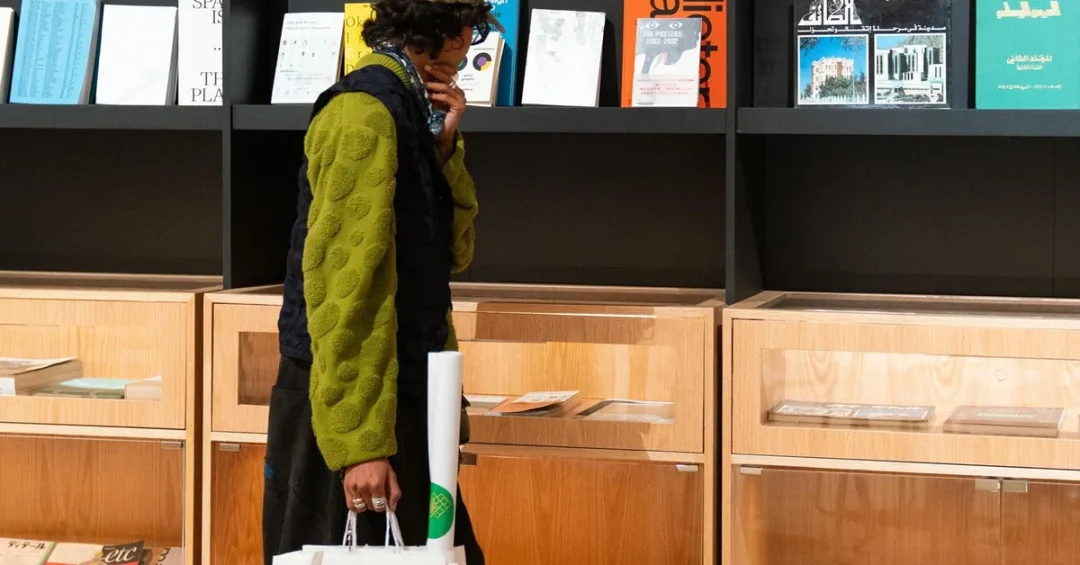
The Diriyah Biennale Foundation has announced that the third edition of PaperBack – Art Book Fair will return to JAX District in Diriyah from December 3 to 5, 2026, bringing together 23 participating organizations from 19 countries, including first-time participants from the Philippines, Chile, the United Kingdom, and Sudan. The announcement, released via the Saudi Press Agency, underscores the Kingdom’s growing role as a global hub for cultural exchange and creative industries under the framework of Saudi Vision 2030. The fair continues its mission to provide a platform for artists, collectives, independent publishers, and booksellers, celebrating diverse practices and approaches to art book publishing from Saudi Arabia and around the world. With book sales having doubled between the first two editions, the third edition arrives with significant momentum, reflecting deepening audience engagement and interest in this specialized cultural event.
So why does an art book fair in Diriyah matter on the international stage? The answer lies in the intersection of culture, commerce, and diplomacy. PaperBack is not merely a marketplace for printed matter; it is a carefully curated space where Saudi Arabia’s cultural ambitions meet global creative currents. The fair’s expansion to 19 countries and its first-time participation from four new nations signal a deliberate strategy to position the Kingdom as a crossroads for artistic dialogue. As the Diriyah Biennale Foundation continues to build on the success of previous editions, PaperBack exemplifies how Vision 2030 is translating into tangible cultural infrastructure, attracting global talent and fostering local creative ecosystems.
Context and Background
What is the story behind PaperBack’s rapid ascent? Launched as part of the Diriyah Biennale Foundation’s broader mission to nurture contemporary art in Saudi Arabia, PaperBack was conceived to fill a gap in the regional art scene: a dedicated platform for art book publishing, which often operates at the margins of both the art world and the traditional publishing industry. The fair’s inaugural edition laid the groundwork, and by the second edition, book sales had doubled—a clear indicator that demand for art books, catalogs, and independent publications is thriving in the Kingdom. This growth mirrors the wider cultural transformation underway in Saudi Arabia, where increased investment in arts and culture is creating new audiences and opportunities.
The Diriyah Biennale Foundation itself is a key player in this transformation. Established to oversee the Diriyah Contemporary Art Biennale and related initiatives, the Foundation operates under the umbrella of the Ministry of Culture and aligns with Vision 2030’s goal of diversifying the economy and enriching quality of life. JAX District, located in Diriyah—a historic area undergoing a massive revitalization—serves as a fitting venue. Once a industrial zone, JAX has been repurposed into a creative hub, hosting galleries, studios, and events that draw both locals and international visitors. The choice of JAX for PaperBack reinforces the site’s identity as a nucleus of Saudi Arabia’s creative economy.
Why has PaperBack resonated so strongly with audiences? Part of the answer lies in the fair’s inclusive approach. By inviting independent publishers, artists, and collectives from around the world, PaperBack creates a space where diverse voices can be heard. The doubling of book sales between editions suggests that this model is not only culturally valuable but also commercially viable. It indicates a growing collector base and a public eager to engage with art in printed form—a medium that, in the digital age, retains a tactile and enduring appeal. The fair’s success also reflects the Kingdom’s broader efforts to promote reading and knowledge exchange, as outlined in Vision 2030’s cultural and educational objectives.
Key Details and Program Highlights
What can visitors expect from the third edition? The fair will feature 23 participating organizations from 19 countries, a notable increase in international participation. First-time participants from the Philippines, Chile, the United Kingdom, and Sudan will join returning independent publishers and platforms, enriching the fair’s global character. This expansion is not just about numbers; it represents a deliberate effort to broaden the scope of art book publishing beyond traditional Western centers, giving prominence to voices from the Global South and emerging creative scenes. For Saudi Arabia, hosting such a diverse gathering reinforces its position as a convenor of global cultural dialogue.
The public program is equally compelling. On December 3, an Open Book talk will highlight the publication accompanying the exhibition “A Necessary Fiction: Maps, Art, and Models of Our World,” organized by the Ministry of Culture and currently on view in Venice. This conversation will explore the exhibition’s research, which brought together historical maps, commissioned fiction, artwork materials, and curatorial essays. The talk exemplifies how PaperBack bridges contemporary art discourse with publishing, offering audiences insight into the curatorial process and the role of books in extending an exhibition’s life beyond the gallery walls.
Hands-on engagement is a cornerstone of the fair. A three-day risograph workshop from December 2 to 4, led by WARAQ, will culminate in a risograph tapestry on the final day. A block-printing workshop for children on December 3, a children’s journal-making workshop on December 4, and a book launch titled “The Circuit to Circulate: On How Art Book Fairs Calculate” on December 5 round out the program. These activities offer participants the chance to experiment with printing and bookmaking techniques, fostering creativity and practical skills. For families, the children’s workshops provide an accessible entry point into the world of art books, nurturing the next generation of artists and readers.
One of the most anticipated launches is “Jeddah Roundabouts: Circling the City,” scheduled for December 4. This publication documents the architectural and sculptural roundabouts that have shaped Jeddah’s urban and visual landscape. Authored by Saudi writer and researcher Nouf Al-Harthi with photography by Hatoun Al-Harthi, the book traces the history of these roundabouts and their role as urban landmarks and works of art associated with a pivotal period in the city’s development. The launch not only celebrates Jeddah’s unique heritage but also contributes to the broader narrative of Saudi Arabia’s modernization and cultural preservation.
International and Regional Impact
How does PaperBack influence the global art book ecosystem? By bringing together publishers and artists from 19 countries, the fair creates a network that transcends borders. For international participants, it offers access to the Saudi market and a chance to engage with a rapidly growing creative community. For Saudi publishers and artists, it provides a platform to showcase their work to a global audience, facilitating collaborations and knowledge transfer. This two-way exchange is central to the fair’s mission and aligns with Vision 2030’s emphasis on international partnerships and cultural diplomacy. The presence of first-time participants from the Philippines, Chile, the United Kingdom, and Sudan also signals the fair’s appeal across diverse regions, from Southeast Asia to South America, Europe, and Africa.
Regionally, PaperBack strengthens Saudi Arabia’s leadership in the cultural sector. The Kingdom has increasingly invested in arts and culture as part of its economic diversification strategy, and events like PaperBack demonstrate that these investments are yielding results. By hosting a fair that attracts global attention, Saudi Arabia positions itself as a cultural destination, complementing its religious tourism and heritage offerings. Moreover, the fair’s focus on art books—a niche but influential segment—appeals to tastemakers, collectors, and institutions, enhancing the Kingdom’s soft power. In a region where cultural production is often overshadowed by geopolitical tensions, PaperBack offers a positive, forward-looking narrative.
Economic and Strategic Significance
What economic impact does PaperBack generate? While the fair itself is a cultural event, its economic ripple effects are significant. The doubling of book sales between editions indicates a growing market for art books in Saudi Arabia, benefiting local booksellers, publishers, and related businesses. The fair also attracts international visitors, boosting tourism and hospitality in Diriyah and Riyadh. As part of the Diriyah Gate project—a massive development aimed at transforming Diriyah into a world-class cultural and heritage destination—PaperBack contributes to the area’s economic vitality. The event supports job creation in creative fields, from event management to printing and design, aligning with Vision 2030’s goal of expanding the private sector and creating opportunities for Saudi youth.
Strategically, PaperBack reinforces Saudi Arabia’s commitment to knowledge-based industries. Art book publishing involves a value chain that includes authors, editors, designers, printers, and distributors—all of which can thrive in a supportive ecosystem. By fostering this ecosystem, the fair helps diversify the economy away from oil dependence. It also promotes cultural entrepreneurship, as independent publishers and artists find new markets and audiences. The fair’s success story—from a nascent idea to a globally recognized event in just three editions—serves as a model for other cultural initiatives in the Kingdom. It shows that with strategic investment and international engagement, Saudi Arabia can build world-class cultural institutions that compete on the global stage.
Vision 2030 Alignment
How does PaperBack embody the aspirations of Saudi Vision 2030? Vision 2030 is fundamentally about transforming Saudi Arabia’s society and economy, with culture as a key pillar. The fair directly supports several Vision 2030 objectives: enriching quality of life by providing cultural experiences, promoting cultural exchange, and diversifying the economy through creative industries. The Diriyah Biennale Foundation, as the organizer, operates under the Ministry of Culture, which has been tasked with implementing the National Culture Strategy. PaperBack is a concrete example of how this strategy is being executed—by creating platforms that celebrate both Saudi and international creativity, the Kingdom is building a vibrant cultural scene that attracts visitors and fosters national pride.
Looking ahead, PaperBack’s continued growth will likely catalyze further developments in Saudi Arabia’s art book ecosystem. As the fair expands its international footprint, it will attract more participants and audiences, cementing its status as a must-attend event on the global art calendar. For Saudi Arabia, this means enhanced cultural diplomacy, economic benefits, and a stronger position as a hub for creative industries. The third edition, with its diverse lineup and dynamic program, is poised to build on past successes and set new benchmarks. It is a testament to the Kingdom’s vision of a future where culture and commerce thrive together, and where Saudi Arabia plays a leading role in shaping global cultural narratives.
20 Questions
Q1. What is PaperBack – Art Book Fair?
A1. PaperBack is an art book fair organized by the Diriyah Biennale Foundation, held at JAX District in Diriyah, Saudi Arabia. It brings together artists, publishers, and booksellers to celebrate art book publishing from Saudi Arabia and around the world.
Q2. When and where will the third edition take place?
A2. The third edition will be held from December 3 to 5, 2026, at JAX District in Diriyah, Saudi Arabia. The venue is a creative hub in the historic Diriyah area, easily accessible from Riyadh.
Q3. How many countries are participating in the third edition?
A3. The fair will feature 23 participating organizations from 19 countries, including first-time participants from the Philippines, Chile, the United Kingdom, and Sudan, alongside returning publishers and platforms.
Q4. What was the growth in book sales between the first two editions?
A4. Book sales doubled between the first and second editions of PaperBack, reflecting growing audience engagement and interest in art book publishing in Saudi Arabia.
Q5. What is the Open Book talk on December 3 about?
A5. The Open Book talk highlights the publication accompanying the exhibition “A Necessary Fiction: Maps, Art, and Models of Our World,” organized by the Ministry of Culture and currently on view in Venice. It explores the exhibition’s research through maps, fiction, and essays.
Q6. What workshops are offered during the fair?
A6. The public program includes a three-day risograph workshop by WARAQ from December 2-4, a block-printing workshop for children on December 3, and a children’s journal-making workshop on December 4.
Q7. What is the significance of the book launch “Jeddah Roundabouts: Circling the City”?
A7. This book documents Jeddah’s architectural and sculptural roundabouts, tracing their history and role as urban landmarks. Authored by Nouf Al-Harthi with photography by Hatoun Al-Harthi, it celebrates an important period in Jeddah’s development.
Q8. Who organizes PaperBack?
A8. PaperBack is organized by the Diriyah Biennale Foundation, which operates under the Ministry of Culture and is responsible for the Diriyah Contemporary Art Biennale and related cultural initiatives.
Q9. What is the mission of PaperBack?
A9. The fair’s mission is to provide a platform for artists, collectives, independent publishers, and booksellers, celebrating diverse practices and approaches to art book publishing from Saudi Arabia and around the world.
Q10. How does PaperBack support Vision 2030?
A10. PaperBack supports Vision 2030 by enriching cultural life, promoting economic diversification through creative industries, and enhancing Saudi Arabia’s role as a global cultural hub, aligning with the National Culture Strategy.
Q11. What is JAX District?
A11. JAX District is a creative hub in Diriyah, Saudi Arabia, housed in a repurposed industrial area. It hosts galleries, studios, and events, and serves as the venue for PaperBack, contributing to the revitalization of Diriyah.
Q12. Are there activities for children at the fair?
A12. Yes, the fair includes a block-printing workshop for children on December 3 and a children’s journal-making workshop on December 4, offering hands-on creative experiences for young visitors.
Q13. What is the risograph workshop by WARAQ?
A13. It is a three-day workshop from December 2-4 where participants learn risograph printing techniques, culminating in a collaborative risograph tapestry on the final day.
Q14. What is the book launch on December 5?
A14. On December 5, there will be a launch of the book “The Circuit to Circulate: On How Art Book Fairs Calculate,” which examines the dynamics of art book fairs.
Q15. How can I learn more about PaperBack?
A15. More information is available on the Diriyah Biennale Foundation’s website at https://biennale.org.sa/en/fairs/paperback.
Q16. Which countries are participating for the first time?
A16. The Philippines, Chile, the United Kingdom, and Sudan are participating for the first time, adding new perspectives to the fair’s international lineup.
Q17. What is the role of the Ministry of Culture in PaperBack?
A17. The Ministry of Culture oversees the Diriyah Biennale Foundation and supports cultural initiatives like PaperBack as part of the National Culture Strategy under Vision 2030.
Q18. How does PaperBack contribute to Saudi Arabia’s cultural economy?
A18. By attracting international participants and visitors, PaperBack boosts tourism, supports local publishers and booksellers, and fosters creative entrepreneurship, contributing to economic diversification.
Q19. What is the significance of the exhibition “A Necessary Fiction”?
A19. Organized by the Ministry of Culture, the exhibition explores maps, art, and models of our world. The accompanying publication, highlighted at PaperBack, extends the exhibition’s research through essays and visual material.
Q20. Why is PaperBack important for the global art community?
A20. PaperBack provides a platform for cross-cultural exchange, showcasing diverse art book practices and fostering collaborations between Saudi and international artists, publishers, and institutions, enriching the global art book ecosystem.
Reader Feedback
We value your thoughts. Please share your feedback on this article.
Your feedback helps us improve our coverage.
Related articles
 Falcons Excel in Qualifying at King Abdulaziz Festival 2026
 Milwah Race Qualifiers Conclude at King Abdulaziz Falconry Festival
 King Abdulaziz Complex Leads Efforts to Protect Endowment Library Collections
 Agriculture, Heritage, and Urban Development Shape Life in Hail
 Riyadh Season Hosts Three Gulf and Egyptian Plays
 Al-Khudeir Season Revives Jazan’s Sorghum Harvest and Markets